Thursday, June 13, 2019

Walk around Lake Bled

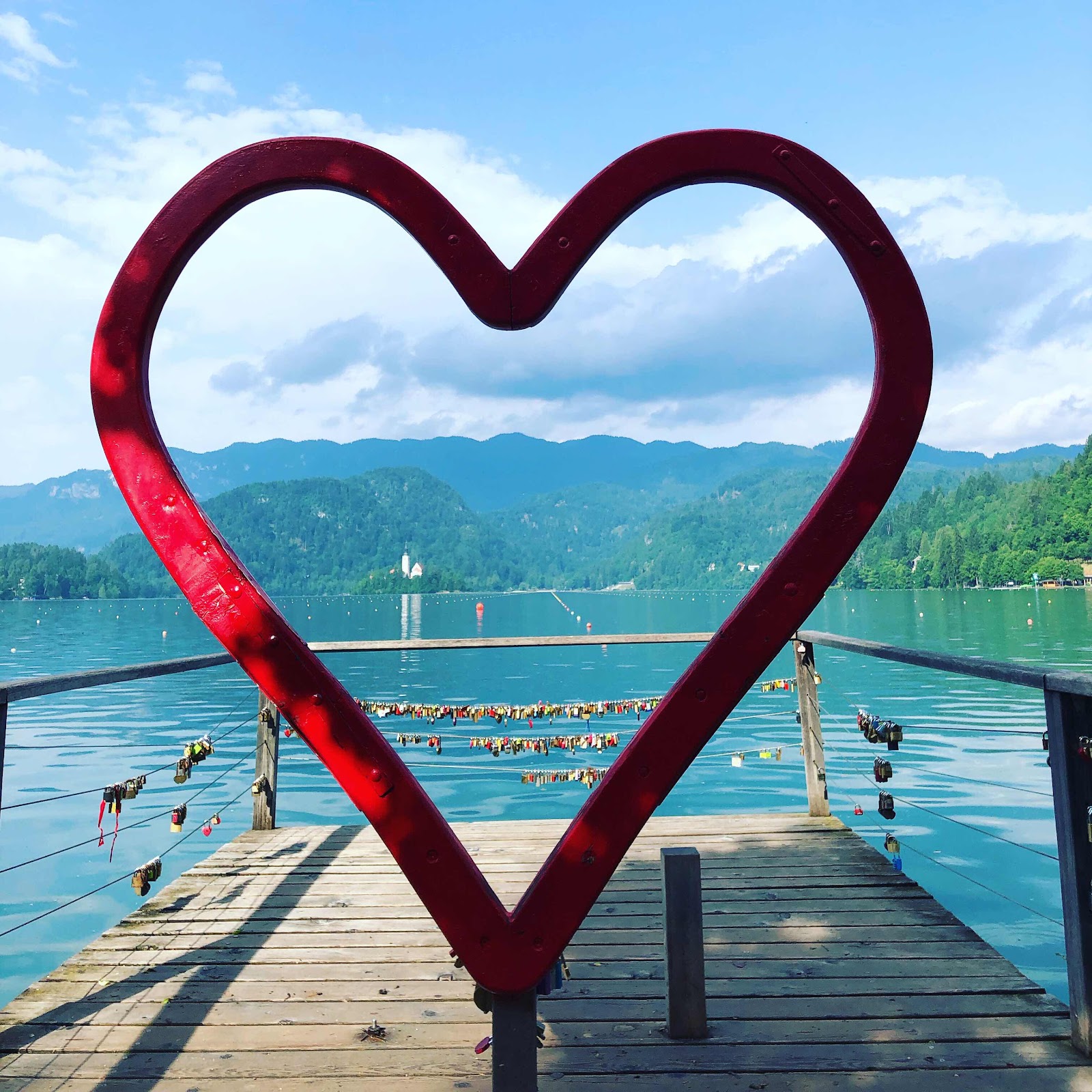
The biggest attraction to the town (there really isn’t much of one!) of Bled is the lake. It is stunning: turquoise water, no motorized water crafts and green mountains surrounding it. In the center of the lake is a small island with a beautiful chapel on it, and overlooking the lake, high on a cliff is an old castle. Fairy tale-esque, right? Absolutely.


As there aren’t many “sites” here, our goal was to see the beauty of this small nation. We started our day with a short stroll down to the lake, watching as the town came to life, tourist offices began opening windows and restaurant owners swept the patios of their dining establishments. Ducks swam peacefully with schools of fish following them, but nothing in the tranquil town seemed anxious or in any sort of a hurry.

There is a lovely walking path that goes the 3.5 miles around the lake. It’s busy with locals out for a jog or walking their dogs, and fellow tourists strolling or biking along, continuously stopping to gawk at the color of the water and the beauty of the small island. Our host had told us that there was a great lookout point at the end of the lake where you could see both castle and island in the same photo. It was a steep climb, albeit not too terribly far, up a rocky path, no doubt made by water rushing down the hills. From the top, though, there were perfect vistas for viewing the wander of this place, and few of the crowd from the walking path ventured this far. Sounds of thunder and fears of the water pushing us down the rocky path speeded our exit a bit, but the clouds never followed through with their threats.


Our leisurely stroll around the lake continued. There were beaches with water “toys” to rent and places to swim in the chilly water. A course for this weekend’s rowing competition was already marked, so we watched competitors from around the world, including some sporty young ladies from Tulsa, practice with remarkable skill and ease. 

Our dinner included local venison with homemade bread dumplings smothered in some sort of rich gravy.


I think we are all going to enjoy this little slice of paradise!


Incredible Istria

This part of the world had truly never been on my radar, and now, I cannot imagine what kept it off my lists.  Istria is the northwestern corner of Croatia.  On a clear day from a high point, you can see Venice just across the Adriatic.  The countryside is stunning and reminiscent of Tuscany or Napa with rolling hills, fertile valleys and every spare inch covered in grape vines and fruit trees.  Fields are neatly tilled and planted in perfect rows.  The coastline is less dramatic as the coastal cliffs in the south, but more inviting approachable shorelines.
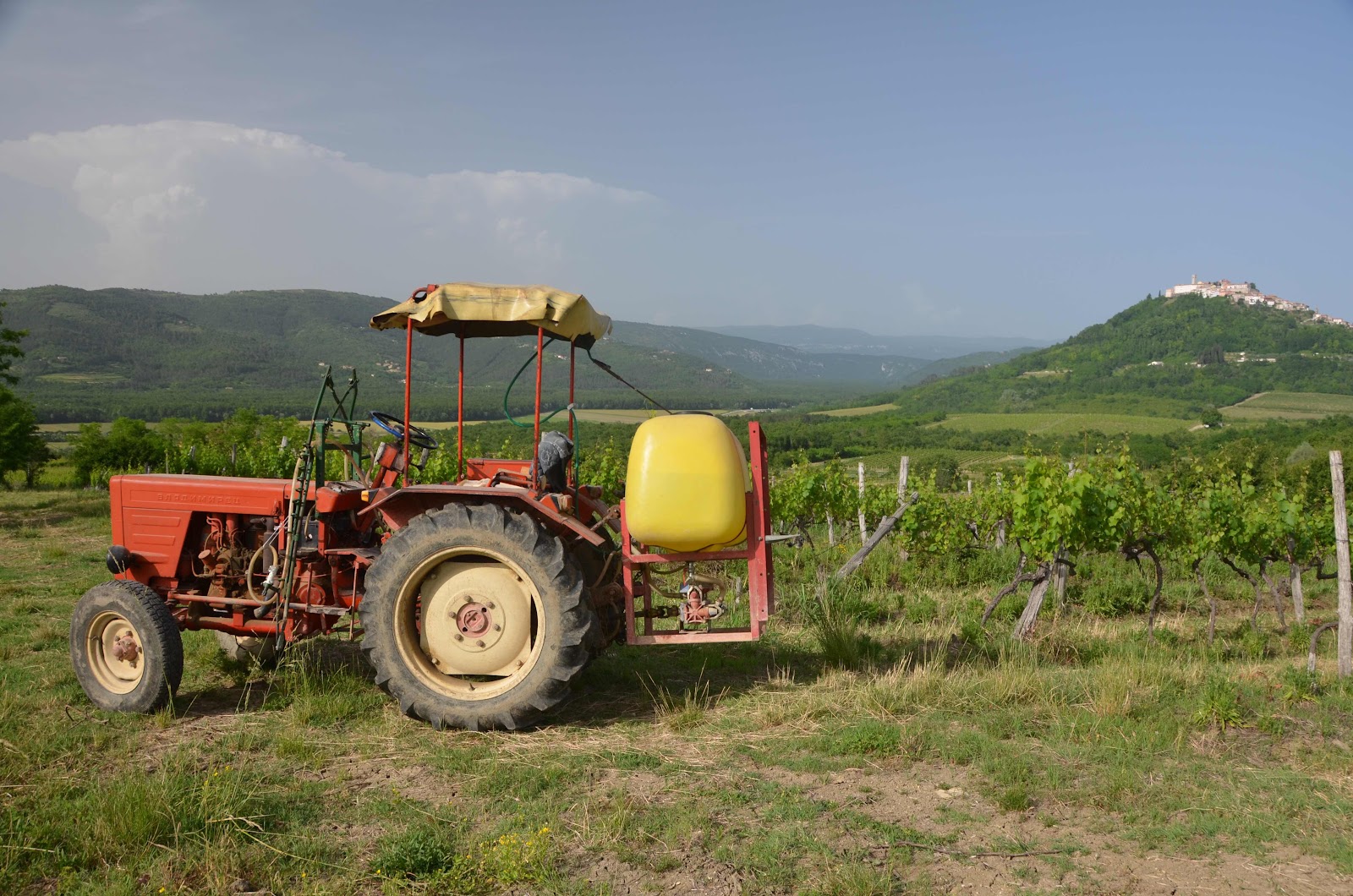


I debated on making our home base for the area in either Rovinj or Motovun.  Rovinj is an adorable sea town, almost a tiny Dubrovnik with a touch more of Venice, while Motovun is a hill town in the interior.  Partly due to proper accommodations, and partly due to the fact that we had already spent time along the coast, I chose Motovun, and I am in no way upset about that choice.  (But I would not have been disappointed in choosing Rovinj either!)

Motovun has one true claim to fame: it is the birth place of Mario Andretti.  Many of you know exactly who he is, where myself knew more about him because of lyrics to an Alan Jackson song.  Mario is one of the most successful race car drivers the United States has seen.  If you know your history well, you may be questioning me, saying, "I thought he was Italian?"  Well, here is the interesting part.... he was born in Italy.  "But, Rebecca, you said he was born in Motovun."  Yes, both are true.  At one point, not all too long ago, for a short period of time, Istria was part of Italy.  Signs in this part of the country are in both Italian and Croatian.  The most common greeting I have hard here is "Ciao."  Despite the fact that relations between the locals and the Italians who occupied the area at the time were very difficult, the county has retained the Italian influence, and we tourists benefit from that.


The food has been simply divine: rich, local, fresh and flavorful.  The area we are in is especially known for their truffles, which means they flavor absolutely everything you can think of.  Mushrooms are not a delicacy that I enjoy.  I've eaten some, and am certainly not offended by them as their flavor is not strong, but I avoid them when I can.  This is mostly due to the texture, and perhaps just the thought that they are a fungus.  But, let me say, I am now madly in love with truffles.  Whenever possible, I had truffles while in Istria, and that meant at practically every meal.  There was always a plethora of available pastas with truffles, which I enjoyed several times as well as scrambled eggs with truffles, olive oil with truffles, truffle potato chips, truffle cheeses, salads with truffles, soups with truffles, pizza with truffles, (do I sound like Forrest yet?), and even various desserts with truffles.  Truly astounding flavors, and I'm only worried that I will now cost myself a fortune when I go home seeking out truffle ingredients.


What is a truffle exactly and why do they grow here?  Well, we wanted to learn more, too, so we spent an hour in the woods with a local truffle hunter.  Don't worry, you don't have to carry a gun to do this sort of hunting.  When I first read about this activity, I couldn't imagine anything more idyllic than wandering through the Croatian forest with a man and his dogs while learning about truffles.  Well, it was ninety degrees out and the mosquitos in the woods were more plentiful than fleas on a stray dog.  So, not quite as idyllic, but nevertheless entertaining.  Truffles grow under the ground in an old forest with a mixture of trees.  They give no sign above ground of where they are such as leaves or vines on the surface.  There are white truffles and black truffles in the world, and only recently have some places in the world seemingly learned how to cultivate black truffles, but there is still little understanding of truffles.  Nikola has seven well-trained dogs that sniff out and dig for truffles.  Dogs, with their keen sense of smell are the only way that truffles can be found in the wild.  Truffles, when ready to be harvested, release a certain scent that dogs are able to detect.  Some are the size of the end of your pinky and some take two hands to hold.  Despite much attention to it, Nikola said people really can't figure out predictors for truffles.  People thought particular weather conditions predicted the success of a truffle season, but that has been proven untrue.  To train the dogs, Nikola said you have to start young and train the dogs that the smell of truffles is something they desire.  If raising a litter, they even put truffle oil on the nipples of the mothers, otherwise, they just start with their food bowls.


Nikola has been truffle hunting for years.  He said that he used to be a civil engineer, but got stressed working long hours with little profit.  Now, he spends time wandering the woods with his dogs and couldn't be happier.  It is not prime truffle season right now, and as he said, there is not always a guarantee of finding truffles, and since the mosquitos were rampant the moment you stepped into the shade, we decided, instead of wandering through the woods, to put the dogs to the test.  We left Nikola and the three dogs he had brought with him by the car and the three of us walked down an old road with weeds and wildflowers growing several yards in both directions.  We buried two truffles in different locations and then called to Nikola.  The dogs had about a half acre to search while the four of us carried on our conversation about truffles.  In only a matter of minutes, the puppy in the group began digging right where we had buried the truffle. He was so proud of himself and wanted to continue the game.  Each dog got a bit of a treat when the truffle was found, teaching them all that it is a team sport and not to eat the treasure.  In just another minute, the puppy once again started digging, but it was in a "fake hole" dad had dug.  This brought the attention of the other dogs who were then able to find the nearby real truffle.  Amazing four legged friends!

Now I've gone and gotten ahead of myself and let myself get distracted by truffles before even telling you about Motovun.  It is a true hilltop town surrounded by lush valleys, rolling hills and fertile fields filled with "wine trees".  It is at least a thousand years old, and has incredible charm.  Population is somewhere in the triple digits, and those residents must have incredible calves, because where ever you go is up or down.  There are six restaurants in town, and we can attest that every single one of them is delicious, including the smoothie bar.  The wine bar closes at 6pm and the only market in town closes at noon somedays and 2pm on other days.  By the end of our four night stay, there were multiple people in town we could smile and greet as familiar faces.  Life was slower paced, and it was lovely.


The town of Motovun began about two thirds of the way up the mountain and wound up slowly.  There is a wall of protection around the inner and most upper part of the town, but I must admit that my keen sense of direction was knocked off its balance several times as the roads, well, mainly the one, went in a circular pattern and was never really flat, always up or down, and as the inner circle connected to the outer, but only in one direction, it was often tricky.  We do not pack lightly at all, but were told by our Air B and B that we would be allowed to take the car to the house to unload before returning partway down the hill to park the car.  Dad did an incredible job of manuevering through a steep cobble stone road with buildings on either side barely wide enough for the car, and tourists walking pass, and cars trying to go in both directions.  Directions on how to reach the home were just about as adorable and trusting as the town was: go up the hill and if someone is not there to open the gate for you, just wait for someone to go through as it closes slowly and you'll have plenty of time.  Then, turn left at the restaurant with the teal shutters and drive until the playground, then you're just a few steps away and the key is in this very obvious place for you.  And, it was just as he said it would be.  Our home backed up to the inner wall of the upper and more central location.  This made finding our orange home on postcards and viewpoints very easy!

As for things to do in Motovun, there was not a long list of must dos, which in a way brings its own charm.  Walking around and viewing the town and its views are the most valuable things to do in Motovun.  We also enjoyed the small museum highlighting history of the area as well as walking around the upper walls.  There were a handful of shops selling local and Croatian artwork, well worth the visit, that we all enjoyed.  Then, there were the plethora of shops selling wines, truffles, cheeses, truffle oils, olive oils, truffle pastes, brandies, truffles chips, honey, and any other truffle thing you could think of.  Many shops offered free samples of their many products, and so, I tasted my way along the main street.


Motovun was also full of cats, like the other Croatian cities we had visited, and so of course I enjoyed myself.  The cats here seemed a bit healthier and friendlier than in Split and Dubrovnik, possibly because of the slower pace, fewer crowds and incredibly few vehicles.  Some of the especially clever ones ingeniously found ways of weaving in and out of tables and perching themselves on the ledge while watching tourists eat, you know, just in case you wanted to share your food.


We traveled about an hour to the coast one day to visit the stunning miniature town of Rovinj (rohh-VEEN).  This tiny town, once an island separated only by a narrow spit of the Adriatic Sea, has been around for centuries, but it thrived in the 16th and 17th centuries.  Venice ruled over the area for centuries.  It is said that on a clear day, from the top of the bell tower, you can see Italy, so the two areas are geographically similar as well.  The sprawling coastal town now houses about 15,000 residents, but at least ninety percent of those people live on "the main land."  In its hey-day, the tiny island itself with roads too narrow for the three of us to walk side by side on, once housed 10,000 people.  The only way to expand was up, which explains why so many of the homes are several stories tall and many of the roads even form tunnels from the second story additions that connected one home to another.  Once a fishing and trading town, the houses back up to the edge of the water, so much so that children could use their own bedrooms as diving boards into the sea.


Like Motovun, there is not necessarily a lot on a must see list here in the tiny town, but that was just fine.  The narrow wandering lanes, cluttered with gift shops and art work was fun to meander down.  The stunning church at the top of the hill included an altar to St. Euphemia.  She had lived in an area of now Istanbul in the fourth century.  As a young girl, she gave away much of her family's wealth to help the poor, and the Romans chose to punish her because of the anti-Christian movement of the time.  Tortured cruelly, she was then tossed to the lions who miraculously chose not to attack her.  Eight hundred years later, sailors in the area found her marble tomb floating near Rovinj, but they struggled tremendously to move it.  A young boy arrived with two oxen, saying he had had a dream that St. Euphemia had told him to go and help.  Somehow, the young boy and his two oxen were able to drag the sarcophagus up to the top of the hill where she is now buried in the church.

I can only imagine the number of weddings that happen in this stunning setting, and the church was obviously getting set up and decorated for just such a special event.  (We later saw the wedding party walking up the narrow cobble-stoned lanes to the church.)  While we were exploring the church, a young woman practiced the songs, I assume she'll be singing for the wedding, including "To Make You Feel My Love," by Garth Brooks.

Dad and I decided to climb the bell tower, because if there is a tower, well, I must climb it.  It was about two hundred steps to the top, but the steps were a bit closer to a glorified ladder with worn wooden steps that you could see through straight clear to the bottom.  But the view is always worth it and gave us a bit of a better picture of the surrounding town.


We walked along the harbor and marveled at the rows upon rows of boats, inquiring just how people got to and from their boat and how they maneuvered it in and out of the plethora in the harbor.  We sat for lunch (which of course included some truffles) in the harbor and watched as tiny fish made ripples reflect on the bows of boats.  Rovinj was a lovely outing, and I believe would be a lovely, albeit small, destination.  We also sat on the edge of the water, overlooking the crystal blue waters, in a perfectly unique little spot that reminded us of the Buza bar in Dubrovnik.

For the past two nights, at sunset, in the distance, just at the top of the tallest ridge we could see the sun set incredibly close to the steeple of a church.  It added to the already astounding beauty of the sunset in the area.  Had we gone off to try to find such church, I'm quite confident we would not have found it, but as luck would have it, the other village that I had read about that I wanted to visit ended up being said village!  Groznjan is a tiny hill town, a fraction of the size of Motovun, that has become a hub for local artists.  We walked around the teeny-tiny town and enjoyed shopping locally and talking with artists in the community.  The adorable town also had one more appeal for us: you could see Motovun!


Dad did a beautiful job of manuevering us around the Istrian countryside, and thankfully GPS seems to work on phones even when abroad.  So, we had fun getting a bit lost and stopping in a winery.  Views of Motovun, our little hill town, were visible from all over the valley and surrounding hilltops.  This area, so Tuscan like and yet, so undeveloped, felt like stepping back in time.  Life was simpler in Istria.  There was time to taste wine, olive oil and truffles.  There was time for lengthy meals with views of the sunset.  There was time to linger on steep roads to give yourself a break.  Mostly, there was time for the three of us, and that was probably the most incredible part about Istria. 


Monday, June 10, 2019

Driving North

I struggled a bit when planning the trip on how to get from point A to point B.  We knew that there were some places where we would definitely want a car, but I also knew that taking a car and dropping it off in another country added a hefty fine.  We looked into some versions of public transportation, but considering it was for three people and we'd still have to take taxis to get to those points, it wasn't always the most economical.  We looked at highering drivers for a few hours to help us get across borders so that we wouldn't worry about the stress of crossing an international border, but all of those options added up to a large amount as well, so we took the easy route and rented a car for pretty much the entire trip, well, since leaving Dubrovnik where cars are not allowed.

Dubrovnik sits on a small, narrow strip of land in the south of the country.  To get to the north of the country, you have to pass through about seven miles of Bosnia and Herzegovina, where this country has its small but important claim to the sea.  I had read blogs about it that made me a bit anxious, and we've crossed borders before where there were men with large automatic weapons standing around, and so I felt that we had the background knowledge of reasons to be anxious.  It could not have been easier.  People had said that sometimes you had to wait for hours.  I believe we waited about three minutes, if that.  Our passports were barely even glanced at and we were able to enjoy the rest of Croatia without a moment's pause.  As we speak, though, Croatia is working an a bridge that will connect the north and the south through one of its long peninsulas, so that this will in no way be an issue in the future.

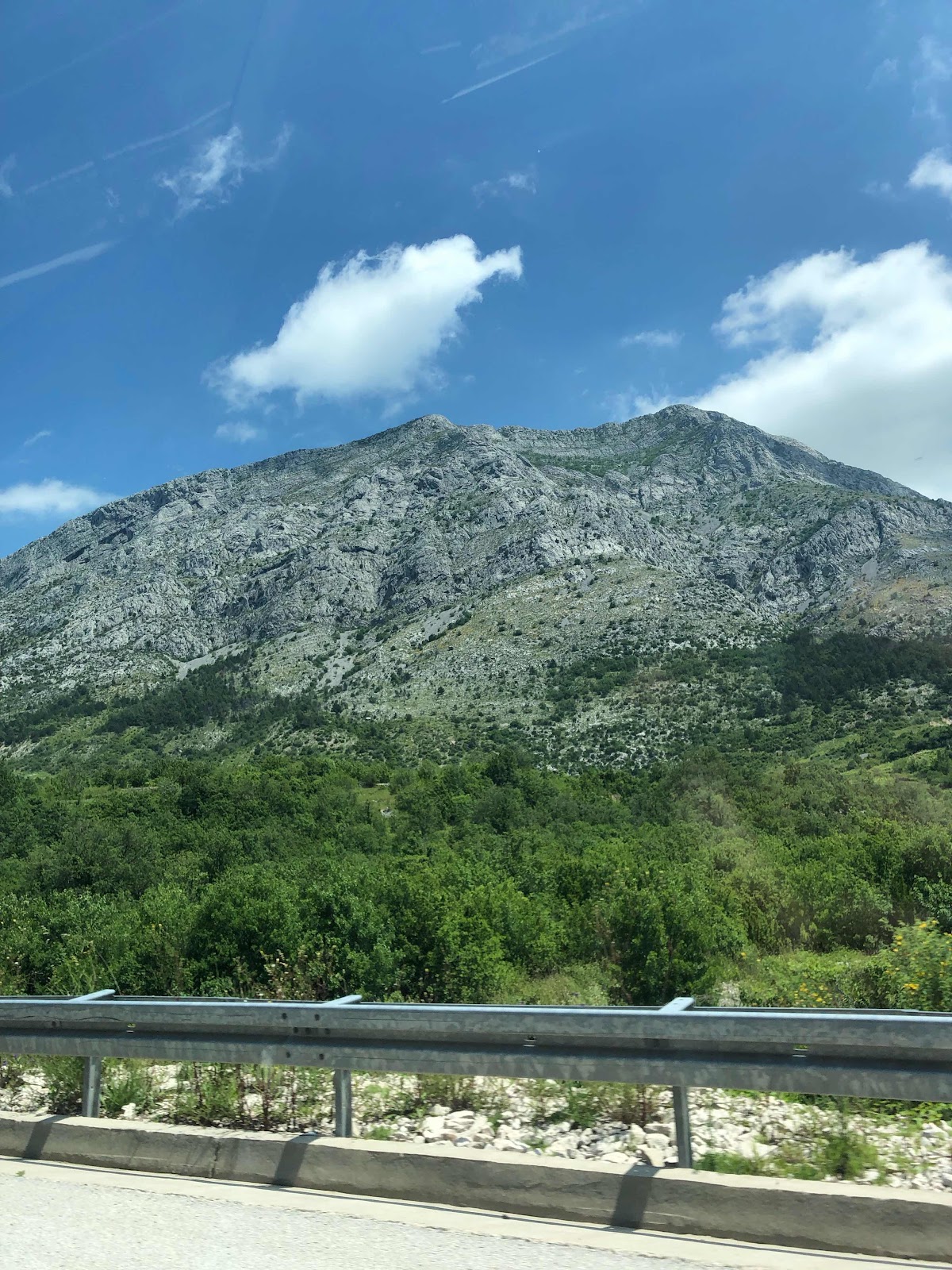
The drive along the coastline north was stunning.  Dramatic coastlines with rock cliffs landing into azure waters.  Islands sprinkled along the coast were of varying sizes and shapes.  Yellow and purple flowers grew sporadicly along the roadway.  Inland, the land was often desolate, appearing desert-like with only shrubs growing on the rocky embankments of rolling hills.


Then, we took one turn inland soon after crossing over the Bosnian border and found a valley, miles wide and perfectly flat.  It was a vibrant green and every square inch of it was planted with a variety of crops.  Since the land around was obviously not suitable for growing, this land was not to be wasted.  Family plots seemed to be marked and squared off, showing different items growing in different locations.  Along the road, roadside stand after roadside stand was full of fruits, vegetables, jars and bottles all made, I'm quite certain from only footsteps away in this abundantly fertile valley.

It was after this that we got on the motorway, a seemingly new addition similar to our interstates.  The road was wide open, and the substantial toll helped to keep the amount of drivers on the road limited.  There were new, clean stops along the way for fuel, restrooms, snacks and even views of the surrounding countryside.  What we got the biggest kick out of were how many of these stops also had bars.  Yes, how many of the roadside gas station/rest stops were in fact establishments serving alcohol, even though there were signs along the motorway that said "Don't drink and drive."


The farther north that we drove, the more tunnels we went through, seemingly the easiest way to navigate the mountains.  Some tunnels were miles long and often, when we got to the other side, we were shocked at how vastly different the scenery was.  Air temperature sometimes changed drastically, as did the winds.  Soil changed from rocky and sparse to closer to our Alabama red clay.  We saw more and more land that looked suitable for farming, which meant not every inch of cultivatable land was not taken.  Cows and goats began to be occasionally seen, where as before they were nonexistent.  The landscape grew greener and trees grew where before only stubby shrubs.  Olive trees and "wine trees" filled hillsides.

Navigation both to Split and then on to Istria, where we are currently, were both fairly straightforward and usually simple.   As at home, the long stretches in between is usually the easy part.  It is once you get close to your destination that roadways are more cluttered and turns are more frequent.  They just typically aren't two-ways on stony paths, barely the width of a car in between two tall buildings....  I'm so thankful Dad was brave enough to take on the adventure of driving here!


Sunday, June 9, 2019

Split

When researching Croatia for this trip, I knew that I wanted to visit Dubrovnik, and after learning more about the northern part of the country, the most Tuscan part, I decided we needed to go there.  The drive from one to the other was more than seven hours which seemed like too much to do in a day where we may stop and site-see along the way and where we had to cross over international borders (yes, even though we stayed in the same country).  I talked with some friends, and read some Rick Steves and decided that we could spend some time in Split to break up the journey.

Many people choose Split as a destination, and I completely see why, but for us, the afternoon, evening and morning we spent was just perfect.  Split, especially after tiny Dubrovnik, was a sprawling metropolis, and we typically enjoy life on a bit slower pace.  I must brag on my father though who drove us through the busy streets, even reversing out of some difficult parking situations calmly and without adding a scratch to the rental car.

The town of Split began around the year 300 when Diocletian was about to retire as emperor of Rome, he wanted a palace built for himself by the sea near where he was born.  His palace, nearly two thousand years later is still the main attraction in the city.  Think of the word palace.  What comes to mind?  Gold?  Ornate details?  Fancy furniture?  Well, you're not all wrong, but what about a palace that now houses troves of shops, restaurants, and even homes?  His palace was so large (2,000 slaves died in the building process) that what remains of it is the town center.  Years after he was gone, and mountain communities were escaping war, they came to the palace and started their own town.  The outside wall of the palace is only a remnant of what it once was and now is filled with beachy restaurants, bars and souvenir shops.

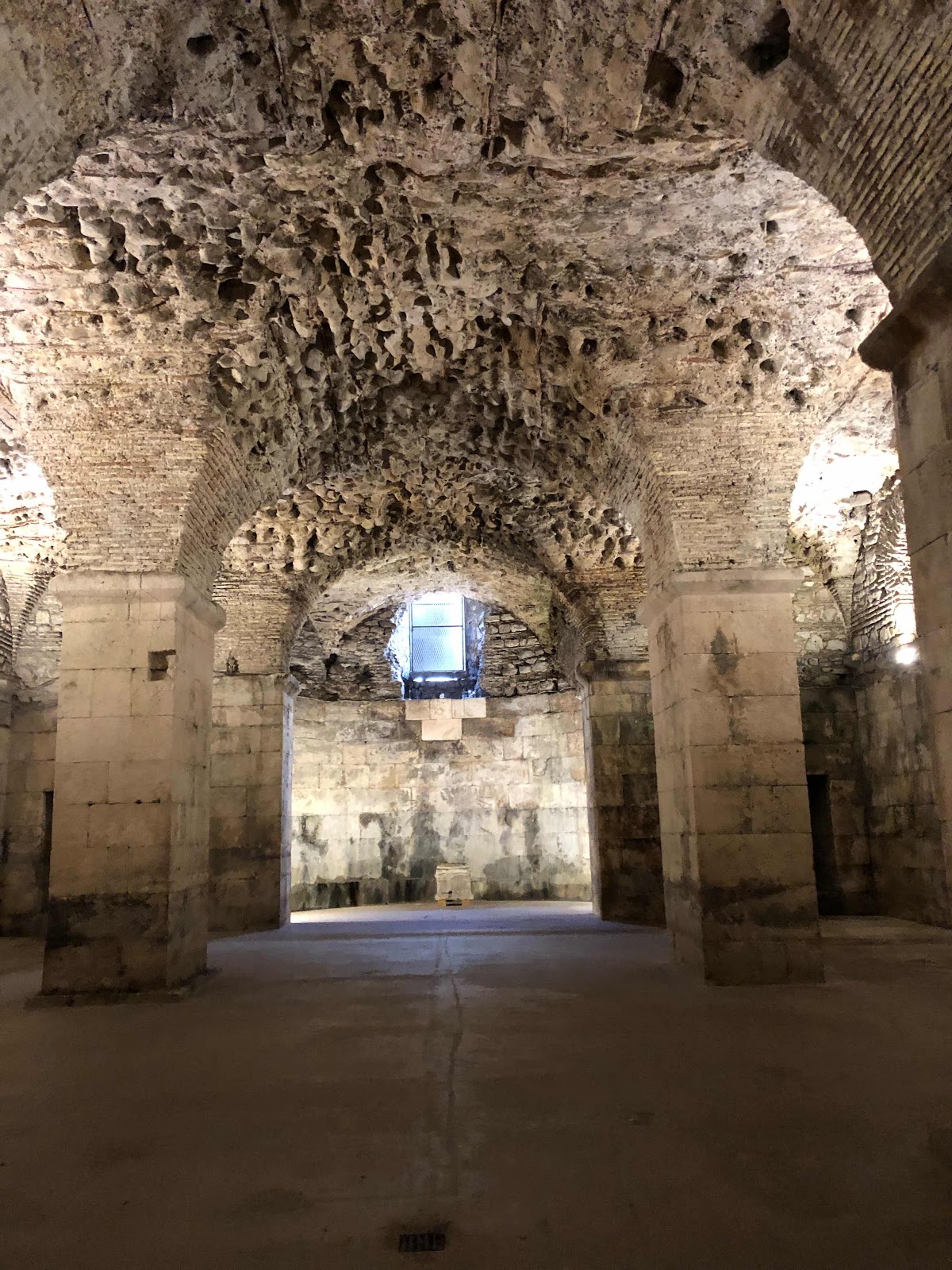
Once inside the wall, the part of the palace the most intact from its original creation is the basement.  The basement was created to help level out the ground for the palace.  It housed water that crept in from multiple sources, and years later, when whole communities called it home, they dug holes in the floor above and used the basement as a sewer.  It wasn't even discovered until the last century.  The basements are a true feat in architectural achievement, keeping a city above them and staying remarkably in tact for centuries upon centuries.  They are truly stunning chambers, as well.  It is a bit ironic that the spot that once housed the bile of the nobles now houses fashion shows, flower shows and even Daenreys' dragons.


Diocletian's personal chambers are now, well, the personal chambers of many city resident's who's homes have been built atop what remains.  But, the entry way remains largely in tact with a large dome shape in a rounded room.  Although the top of the dome is now missing, seeing how the rounded surfaces were created by bricks and mortar was remarkable.  Inside, we were greeted with four talented Croatian men singing acapella and harmonizing perfectly in the beautiful acoustics of the ancient room.

There are a few churches within the palace walls, but as Diocletian executed Christians, during his time either the buildings did not exist when he was emperor, or some were built to honor him.  Ironic how they were converted, eh?


Narrow streets went out from the main square in front of the cathedral lined with banks, restaurants and elegant shops.  It is hard to picture that this entire area once was home to one man, and what it must have been like in those days.

There is a large, overpowering statue just outside the city walls honoring Bishop Gregory of Nin.  About one thousand years ago, he petitioned the Pope to allow religious services to be spoken in native languages, as opposed to Latin.  It is said that if you rub his toe and make a wish, as long as it is not materialistic, your wish will be granted.  The statue, dark black, has one very shiny bronze foot.  A statue in Dubrovnik of a famous local poet has a shiny noes.  Many tourists see this and believe it must be something similar, that it is a good luck measure in some sense of the word.  Turns out, that the poet had a very sizable nose, and local children found that entertaining.  So much so, that they rubbed it frequently and shined his bronze nose.


Our walk through the narrow, winding streets of the old town of Split continued.  It is very obvious where the old palace ends due to the width in the streets.  I had commented on how few cats I had seen here as opposed to Dubrovnik where they were nearly as common as the pigeons.  Then, we happened upon on elderly gentleman, who obviously made it an afternoon ritual to feed the cats.  There were cats lined up in all directions around him.  I believe we counted upwards fifteen.  They were not argumentative nor pushy.  It seemed they all knew the routine, and so just being present in the general vicinity was all it took to ensure a good meal would soon be had.


Our dinner, in an active town square was tasty, and complete with people watching.  I might also add that there was a fair amount of dog watching in this seemingly small Old Town area.  Many dogs went without leashes, but nevertheless were by their owners' sides, or eagerly chasing the ball that had just been thrown for them.

After dinner, we walked back by the large open square in front of the cathedral.  This is one of the largest bars in Europe because the small bar on the square spreads cushions out all over the steps on the sides of the square, greatly expanding its serving capabilities.  Once again, entertaining music grabbed our attention, and we joined the throngs of people who gathered to hear "Proud Mary."  Sung in this acoustical haven, in front of a church centuries old would make even the great Tina Turner proud.

Split is situated right on the Adriatic Sea, so it is a destination for cruise ships and yachts of all shapes and sizes.  It also feels reminiscent of a beach resort town with a long promenade lined with souvenir shops and comfy bars selling beverages with fruit decorations, only missing the small umbrella on top.  As Rick Steves has described it, Split has sometimes struggled with its identity, knowing that it could not be the magical Dubrovnik, but also not wanting to be just the standard beach town.  That struggle is almost evident.  There is true beauty in the city, enthrallment of the harbor and promenade and even the pungent fish market where locals purchase their fresh catches for the day.  A pull between old world charm and modern tourism can be seen, even with the quickest of glances into Split.


I am incredibly thankful that we made a stop in Split, for I would have always been curious about what majesties it offered.  But, I also believe that our short stay was just enough for us who may prefer life on the quieter side.


Saturday, June 8, 2019

Magical City

Rick Steves says, "Dubrovnik is a living fairy tale that shouldn't be missed."  I just about take his word as gospel as he has yet to mislead me, but this statement may be one of his truest.  There is something magical about being inside of a small, medieval town, with walls still in tact, the absence of cars and the enchanting narrow streets.  You, very quickly, feel safe in a city where you cannot get very lost.  There is one main street that runs through the middle, and walls all the way around.  The freedom of being able to take a turn and go where it leads you is liberating.

For our last day in Dubrovnik, I decided I wanted to go for an early (well, not my usual early) morning wander.  I stayed within the city walls and chose my turns based on ones I had not yet traveled or ones where I did not see another soul, which were plentiful.  Watching a city come to life in the morning is a favorite for me in my travels.  I relish watching delivery trucks and locals rushing to work, just to see the bits and pieces that make a city real and operational.


I found many quiet streets with bright geraniums in their window boxes.  Laundry was drying in the early sunshine as dogs took their owners for short morning strolls.  I walked down the Jesuit Stairs (similar to the Spanish Steps in Rome) without a soul on them.  I perused the green market, picking up shiny cherries and beautifully small strawberries for breakfast, then stopped by the bakery for a sausage roll, a croissant and a hazelnut danish.  A perfect way to start our last day in this fairy tale land.


Dad and I climbed the 208 steps to the Fort of St. Lawrence, another stunning piece of architecture.  The large stone fort atop a rocky cliff overlooks the city and added a level of protection.  It was first built in the eleventh century, and has been added onto and reconstructed multiple times.  There is little information there about the history, but the views from there of the city are well worth the inexpensive ticket price.  (But, learn from our mistakes, and keep your ticket to the city wall to get in the fort for free!)  The enjoyable part of the fort was how empty it was.  Not necessarily of crowds, but of items that clutter it.  Spaces were large, open, expansive and beautiful.  It's no wonder Game of Thrones shot many scenes here, or that you can rent it out for your wedding for the modest cost of 4,000 euros.


For the afternoon, the three of us wandered in shops such as the oldest pharmacy in the world that is still working as a pharmacy, and of course tourist shops where we picked up a couple of trinkets.  Church doors were open, so we joined fellow tourists to marvel at the unique structures built hundreds of years ago.  Then, we ended our week, much like we had started with drinks at Buza II, a small hole in the wall bar with patios complete with outdoor furniture that overlook the teal-blue waters of the Adriatic.


For dinner, we picked up two pizzas (remember that this area was once controlled by Italy, so the Italian influence is strong) and watched the sunset from our rooftop terrace while discussing our favorite parts of Dubrovnik and what adventure awaited us next.


We went back out for some caramel gelato and roamed the city streets for a bit longer, not ready to say our goodbyes to Dubrovnik.  We made a stop by the Serbian Orthodox Church, as we did multiple times each day.  Not because of the ornate interior, or even the exquisite exterior, but because of what it housed.  The church sits just a few steps up from street level and has an iron fence all around the church and the small courtyard in the front.  Cats find this a prime spot seemingly because they are away from the heavy foot traffic, can stay easily out of reach, or when they choose to, are at the right height for visitors to stretch out their hands and scratch their backs.  I lovingly called it "the cat church," and can't think of a time that I didn't see at least a handful of cats there.


The sound of jazz music had caught our attention several nights, and we went once again to stand by Onofrio's Fountain, listen to the talented musicians, and watch as happy tourists sing and dance along.  They played "When the Saints Go Marching In," "Besame Mucho," "New York, New York," and the guitar player even strained his voice to complete a well done Louis Armstrong impression of "What a Wonderful World."

I'm not sure if I'll be back to Dubrovnik, and that thought leaves me wistful.  Returning would not be a regret, but the world is full of magical places to discover, and I'm just not sure if I'll make it back here.  But, YOU should, and so, I'll leave you with a few tips.

First off, know that the rest of the world is also discovering how wonderful Dubrovnik is, so there are throngs of tourists.  If you can come a time besides July or August, do so.

The main street, the Stradun, overflows with masses of people.  Stones along the road have been worn slippery smooth because of the foot traffic which has traveled over them for centuries.  The hoards of people can be a bit daunting, but it doesn't take away from the majesty of this road.  Only steps away, up narrow streets and just a few flights of stairs, one can find solace.  There were many spots in the city that seemed perfectly silent, and you would have doubted that thousands of tourists were only yards from you.

I believe that you need at least two full days in Dubrovnik to do it the justice it deserves, plus there are so many restaurants, you need at least that much time to sample a few.  With three to five days, you could add on a few side trips that are well worth it.

Staying in the Old Town meant that the fairy tale continued into the night.  It is not as convenient, but if you can make it work, I recommend it.  Know, going in, though, that there are a lot of stairs.  The city is sort of a V shape with the Stradun being the point of the V, and steep climbs up both sides.  If you are staying inside the walls, keep something in mind: cars are not allowed.  This, as I said, adds to its magic.  But, if you are like us, and you do not carry light, that means you may be carrying your luggage up flights of stairs, not knowing exactly where you are going.  There are two main gates: the Pile Gate and the Buza Gate.  It might be important for you to ensure that your accommodations are close to one of these and/or not far off the flat Stradun.

Walking the walls is an absolute must.  It also shouldn't be rushed.  There are places to stop and have a drink along the way, and well, why not take the time to enjoy the views from these ancient city walls.  Sure, you could walk the walls in the less than an hour, but take your time and soak in the views!  Then, save your ticket and go over to the fort where you will see breathtaking views and can marvel at the engineering features of a wall built on a cliff hundreds of years ago.


Spending a few hours on a walking food tour with Dubrovnik Food Story would easily be in my top five list.  It was the perfect amount of history mixed in with delicious food and wonderful company.  We learned about traditional food and wines of the region, and got to taste a multitude of delicious food.  I would recommend doing this early on in your trip!  If you have more time in Dubrovnik, I recommend you do the cooking class in the countryside with them!

Make sure to go to one of the Buza bars (not to be confused with the gate at the high side of the city) that can be found outside of the city walls, through a small hole in the wall overlooking the Adriatic Sea.  The views they offer are lovely, and it is the perfect atmosphere.

The Island of Lokrum is an easy 15 minute ferry ride, and feels like a reprieve.  It is a lovely half-day excursion if you have the time and are seeking time away from fellow tourists.

With more time, outings such as a boat trip to the surrounding islands, sea kayaking or highering a driver to go to Montenegro or Mostar would be well worth it.

As far as food, I did not have a bad meal.  But, I did have some truly exceptional meals.  One, was on the food tour.  We ate at a tiny family-owned restaurant called Moskar, and a dish called "Dalmatian Pasticada" was simply divine.  The beef was mouth-wateringly tender and soaked in a goulash type gravy.  Another favorite meal was at Stara Loza, where, if you reserve early enough, you can even get a table on the rooftop terrace and enjoy a view while you eat.

My biggest recommendation, however, is just to go.  Enjoy the magical city of Dubrovnik and allow yourself to be swept into the fairy tale for just a few short days.

Swallows

I grew up out in the country, and every spring, we could almost mark it on the calendar in mid-March the barn swallows showed up.  They came, we believe from Central America and returned to our house each year, raising one or two hatchings before leaving in July.  We imagined they were the same ones that returned to us each year, but of course we have no way to know for sure.  Did they seek out where they were born?  Where did they go when the left us?  I only wish I could speak to them.

We relished the days that arrived, excited of the possibilities they brought.  They built mud nests on just about every corner of our front porch they could find.  Of course, it made a mess, and their digested droppings on the floor were not attractive, but because they raised their young so close to our windows, we watched their amazing progress from the first glance of a fuzzy head sticking up, to the babies waiting eagerly with mouths open for the parents to return a tasty meal and then, as they cautiously took their first flight out of the nest.  The day we looked out and saw empty nests and didn't hear their familiar chatter was always a sad one, knowing that our friends had left us until the next season.

Then, several years ago, they didn't come.  We're not sure why, and we've questioned if we did something that offended them.  But alas, we have not seen their familiar flapping or heard that familiar chirping at the farm in years.  The underside of a bridge at Lake Martin we frequently drive under is cluttered with mud nest after mud nest, and I always gaze up in appreciation and wonder at how these little creatures managed to create such an extensive colony.

Dubrovnik was absolutely full of swallows.  It was one of the first things we noticed from atop our rooftop terrace.  Each morning and each evening, the sky would be full of the swarms of birds, seemingly as numerous as the stars that filled the night sky.  Sure, we heard some travelers say they felt like The Birds, but for the three of us, it felt like a welcome we had been missing out on for years.


It turns out that Dubrovnik actually has a bit of a history with the swallows.  Years ago, when they were building the city, they left small holes to put logs for a sort of scaffolding.  They had intended to come back and fill them in, but the people noticed that the birds were using them as homes.  At first, they felt there were a nuisance and did their best to scare away the birds.  But, the residents also noticed that when the birds were around, the bugs were fewer, and I must admit that I did not see a single mosquito in Dubrovnik, so I feel they were doing something right.

Yes, there were plenty of pigeons and seagulls in this coastal city, and even a few squawking blackbirds.  It was these creatures, who one morning when they were being terribly obnoxious, we noticed one of our neighbors open his window, and instead of clap and yell at the birds, he flapped a stuffed tiger at it.  That's all it took to turn the unpleasant noise back into the gentle chirping of the swallows.

The swallows are here, in Motovun, too, but I'm afraid they have a bit more work to do as the mosquitoes are prolific.  But the joy they bring to all three of us, and the inkling of home is such a nice treat.  And it seems, that even though the people do not speak the same languages in different countries, the swallows continue their gentle chirping.

Wednesday, June 5, 2019

Escaping the Hustle and Bustle

The Main Street of Dubrovnik is packed with people, pretty much all day long. You don’t have to wander too far down narrow streets, though, to find quiet, streets with laundry drying and picturesque window boxes.

But, the main thoroughfare can feel like walking through Times Square, and this isn’t even the busy season just yet. But you know how Central Park can feel like a retreat for New Yorkers? Lokrum Island is that for Dubrovnik. So, we took the ten minute ferry ride out to the island that overlooks this magical city. 

The island was once home to an Abbey and a Monastery that helped to keep an eye out for the city over 1,000 years ago. It is said that Richard the Lionhearted landed on the island on his way back from the Crusades. Then, in the middle of the 19th century, a Habsburg bought the island and had his summer residence built there.  He also imported peacocks to the island, which now teems with them.  Peacocks were just about in every direction you could look and provided for a lot of entertainment and incredibly beautiful photo opportunities with ancient ruins surrounding them.  We even spotted a mother peahen with her six chicks and watched as she gathered them up under her.


Also on the island in abundance were large rabbits.  Everywhere.  Why?  I have no clue and my short internet searching has provided me with very few answers as well.  They were not necessarily friendly, but they also did not shy away from the adoring fans that surrounded them.  My favorite was watching the rabbits and the peacocks interact with one another, seemingly without much fuss on an island where there were absolutely no predators to bring them fear.


The island has plenty of space to roam - all around the outside of the island, up to the highest peak with views of the city, through the botanical gardens and amongst the ruins of the old monastery and palace.  Rocks jet out from the land all around the forested island providing swimmers who so choose the opportunity to dip in the chilly water and sunbath on the warm rocks.  The island even has its own small "Dead Sea," filled by an underwater canal from the sea.  Because of this, the swimming hole is saltier than most areas.


I would not necessarily say that the island had a long list of attractions, unless you add watching the peacocks and the rabbits as a major attraction (which perhaps you should because we got an incredible amount of joy from it!), but a few hours out to the little island was a truly perfect escape from the hustle and bustle of this busy, port city.