Friday, June 17, 2022

Witch’s Market

When researching about La Paz, one of the number one tourist attractions is the Witch’s Market. I was excited to see it, but knew incredibly little else.

The Bolivian people are very superstitious. They also have a strong faith in Pachamama (Mama Earth). They believe that she is the one who grants all blessings. She loves sugar, flowers and alcohol (what woman doesn’t?). When taking a sip of their drinks, they often spill a little on the ground below or dip their fingers in and sprinkle just a bit to share with her.

When they are looking for something specific, or some sort of guidance, they go to a sort of shaman or spiritual guide. This person will tell them exactly what to go purchase from the Witch’s Market. It is usually certain herbs, flowers, specific alcohol and combinations of sugar concoctions. Then, the shaman helps you to burn these items as an offering to Pachamama.


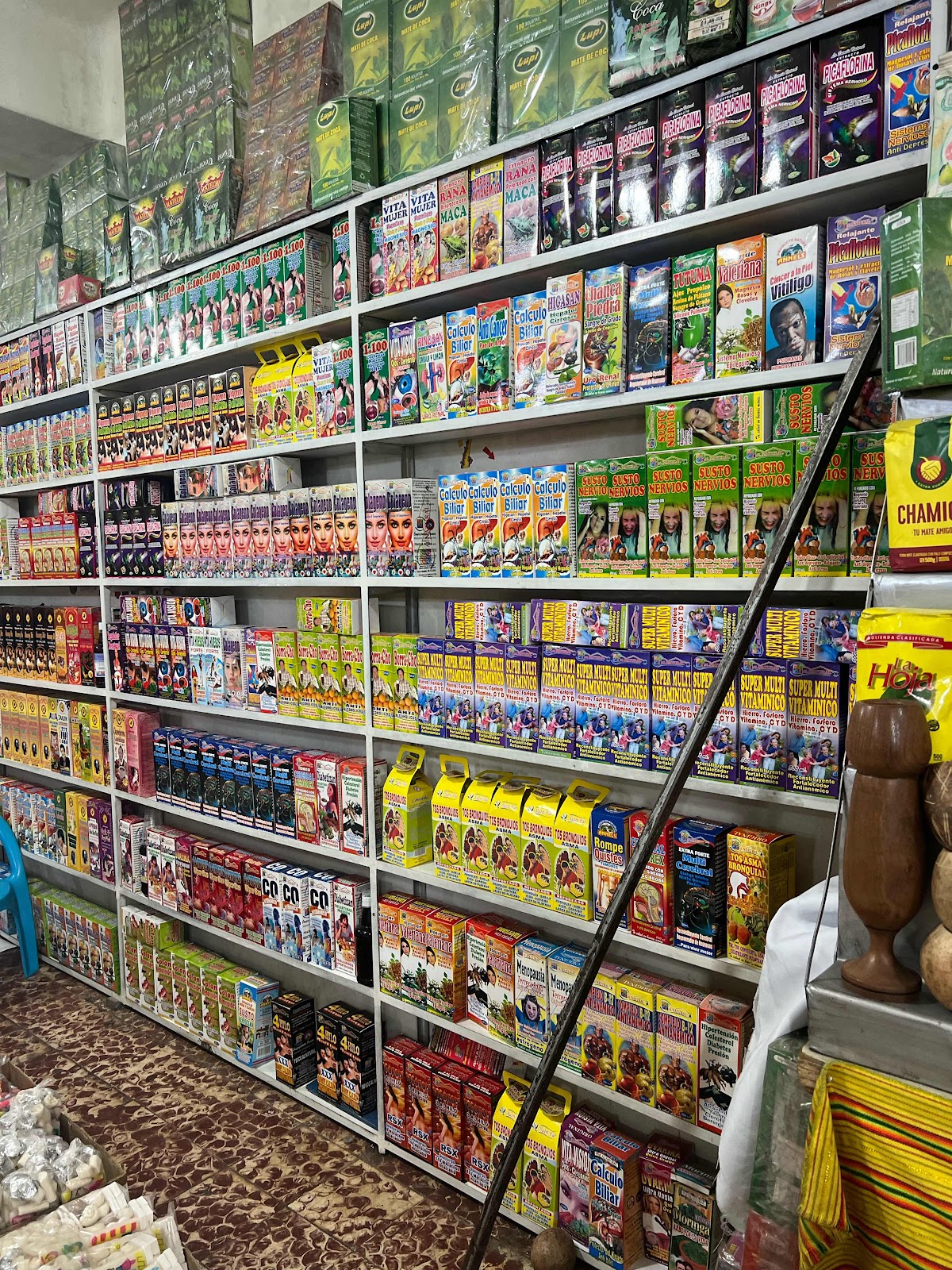
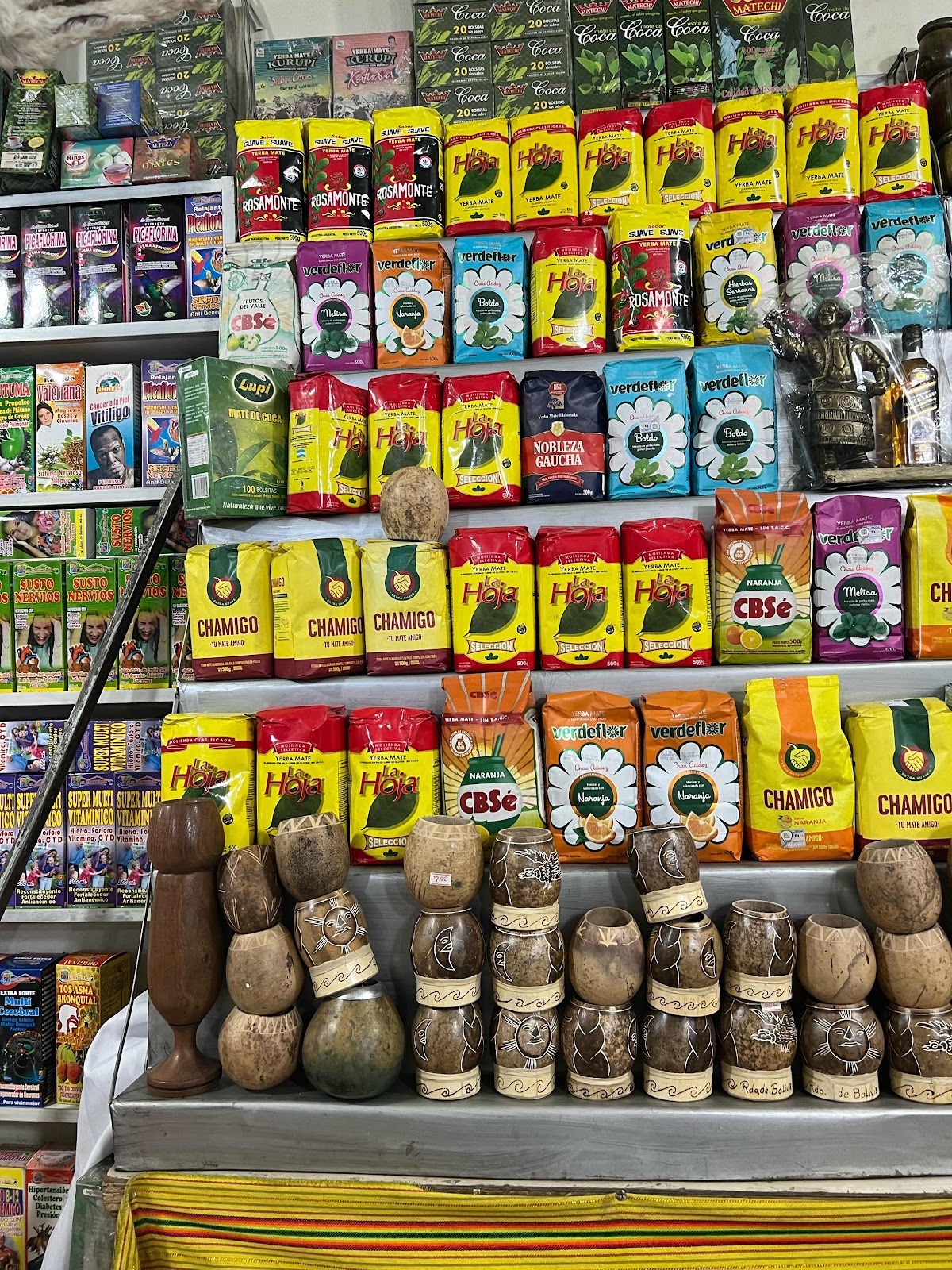
When entering one of the small stores (come on, you know I was going to), it is almost reminiscent of a candy shop, although not one like I’ve ever seen. There are bright colored labels, plastic bags of sugar creations for exactly what you want, incense burning, bottles of different colored liquids, candles and boxes with very descriptive images. These images describe exactly what the potion inside is for, everything from curing cancer to losing weight to finding love to wealth to making love last longer… whatever you might need! 


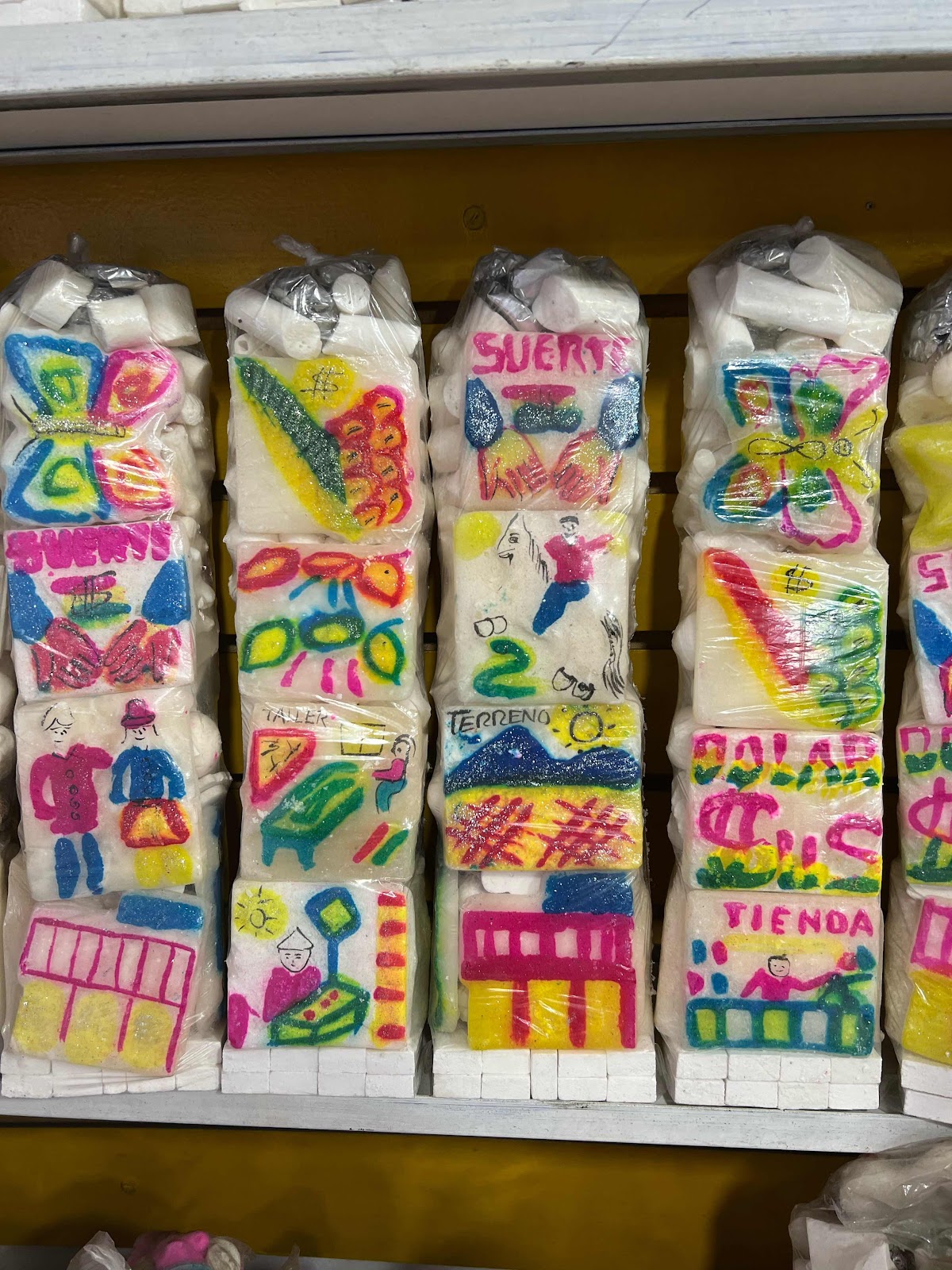
The collection of sugar items also have small images that help describe what they may be for. We were warned not to eat them because they also have a lot of glue in them. Personally, I also don’t want to take what is intended for Pachamama.


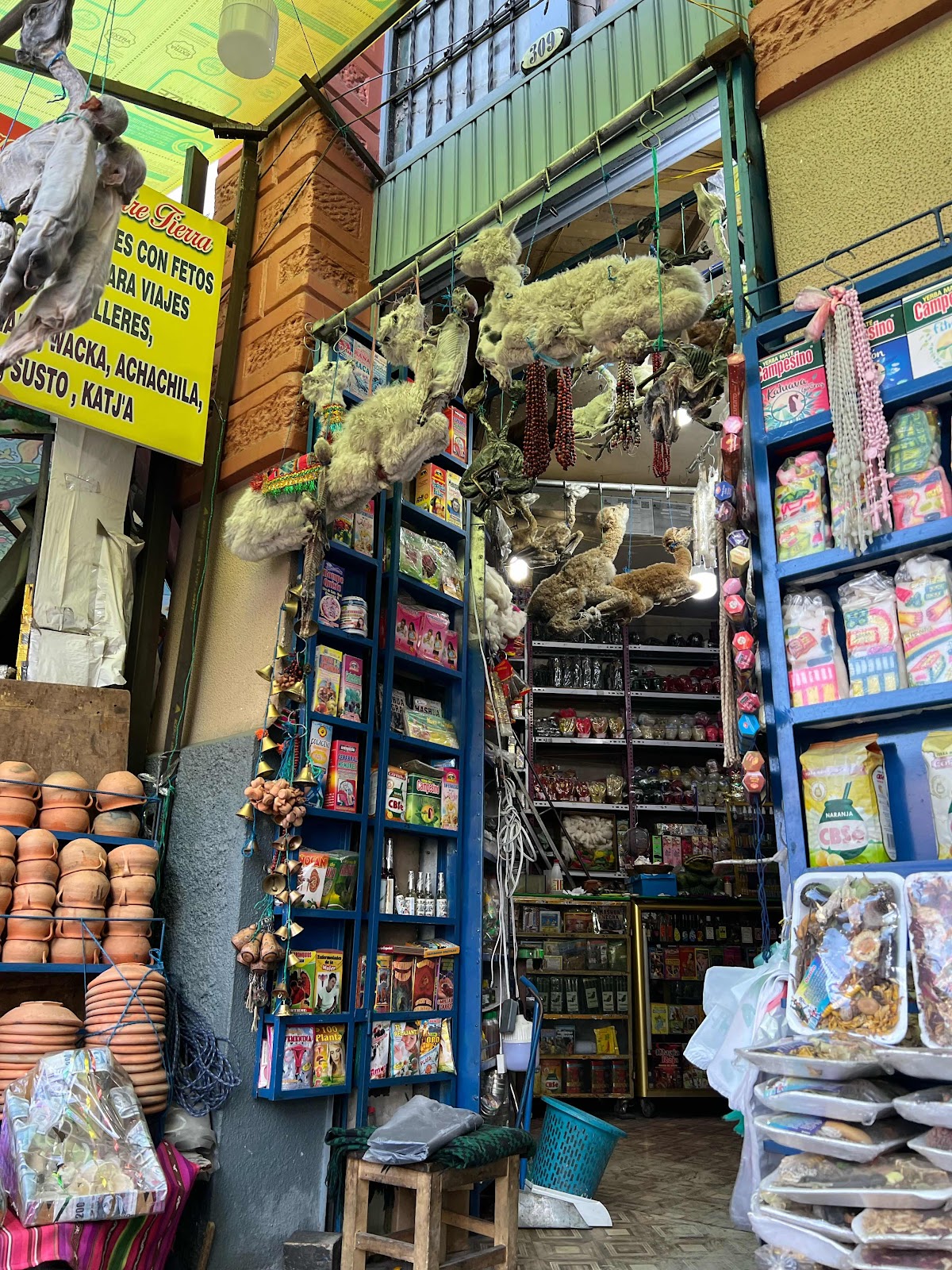
The most disturbing thing found inside the market are the llama fetuses. Bare with me for a moment (and feel free to skip the picture below). First off, know that these fetuses were not killed, but passed naturally. They honor animals here. These fetuses are buried underneath new construction as an offering to Mother Earth to bless the building. The larger the building, the larger the fetus should be. There are even dark stories (that haven’t been proven) about sky scrappers having the body of a person underneath them.


But the Bolivians are also Catholic. They’ve made the religion their own and sort of combined the two. When the Spaniards first built a cathedral here, they wanted to convert the locals, so they had the locals help with the design and construction. So on the Basílica de San Francisco, amongst the ornate depictions outside of the church, there is also the face of a witch doctor with coca leaves in his mouth. Right next to a sculpture of San Francisco is an image of Pachamama giving birth to a flower.

As the story goes, the Spaniards wanted to bring religion to the people here but couldn’t find a way to get them to church, so they sort of tricked them. They noticed that when the locals had a big scare like almost falling down something or almost getting run over by an animal, they thought their soul briefly left them. So, they got the locals to come to church and put up mirrors everywhere. At this point, the indigenous people living here had not seen mirrors and they were baffled. The Spanish told them the mirrors were their souls and that they were trapped in the church. In order to save their souls from going to hell (they described that torture in detail), they had to return and visit the church.

No one should ever be tricked into believing something, but I love how the two beliefs of these overwhelmingly kind people have melded into one.

Late Night Travel Adventures

La Paz, Bolivia was our next destination after Lima. Puzzle piecing our trip together, over mountain ranges, was tricky. Places didn’t look that far apart on the map but where somehow seemingly impossible to get to from one another. 


La Paz was one of those. It’s only a two-hour direct flight. Perfect, no big deal, right? Well, the only direct flights I could find left at 1am, three days a week. Which means you have to leave for the airport by 10, which means you just stay up. That’s doable.

Then remember the two hour flight. That makes you arrive at 3am. But wait, just like those infomercials, there’s more. During the flight, we switched from central to eastern time zones, so we arrive at 4am.

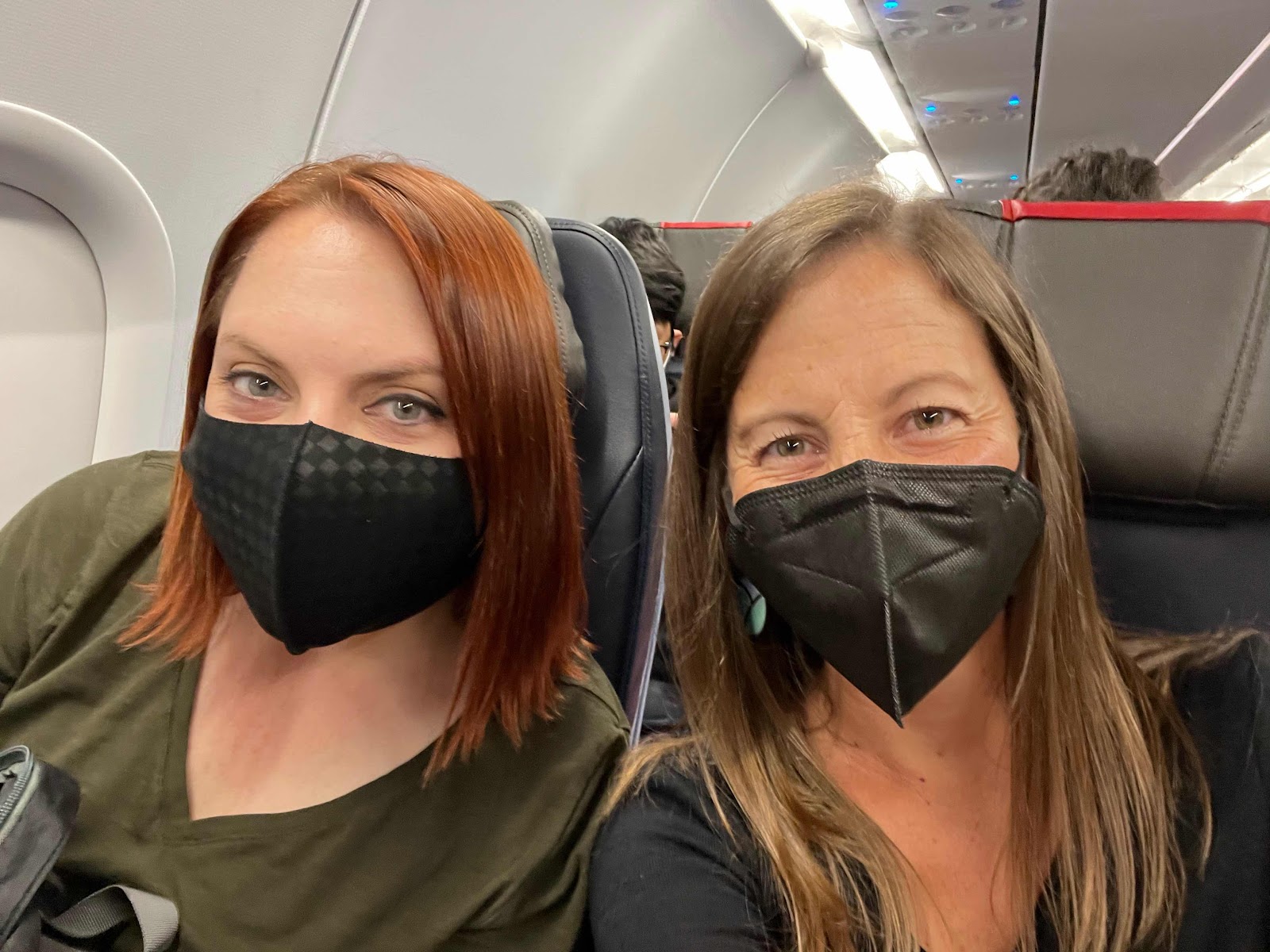
The flight was seemingly smooth, although I felt quite sick and spent more time in an airplane bathroom than anyone ever should. (Did you read the food tour blog? Yeah, that was just a couple hours before…) Anyway, it passed and all is well, and I even slept through a few minutes of my audiobook after that.

We arrived in La Paz and had to go through immigration. Lima was quick, swift and simple. La Paz was not. Even though every booth had someone working in it (impressive for 4am!), the process took a long time. Somehow we ended up at the back of the longest line (probably due to our citizenship not being of a country near by). We finally made it to the front. I handed over my passport, and the adorable young man behind the counter asked me a question. I’ve learned to say, “Lo siento, no habla espanol,” making sure to apologize for my ignorance. He went to the computer, obviously to translate something, then came back to me and said, “Yo have visa?” 

Now, I had read on the embassy’s website that you needed a visa. If it was for a relatively short time, it was easiest just to pay some money at the airport. I tried to find more information, but kept getting stuck in a loophole, so decided, we would figure it out when we got there.

At this point, there are only about eight of us left from the flight in the immigration area, and not so shockingly, no other planes were arriving at this ridiculous hour. So, we were escorted to another line. Here, a very friendly man asked us of our plans. He took photos of our passports, our hotel confirmation and our flight out of Lima next month. He returned a while later with printed copies of these that we would need for our visa. In another line, we paid $160 to purchase a shiny visa for our brand new passports.

We left this area, leaving only one fellow traveler behind us. At the next stop, where they scan your suitcase, we had to turn in a piece of documentation we had filled out on the plane. A couple questions we were unsure of, so we had left blank. The nice x-ray technician pointed to the questions. We apologized and made questioning gestures. He reached to the stack of papers from other travelers and just let us copy their answers. Hope they passed the test, because otherwise, we all failed!

Finally, a few minutes before 6, we made it to the airport lobby. Before we could leave, we had to get Bolivian currency. Do know that we had tried at our local banks in the states as well as at the airport in Lima, but had been unsuccessful. So, before we caught a cab, we needed money to pay him with.

We found the ATM, or perhaps I should say ATM room as it looked more like a game room with lots of tall shiny machines. We tried several, but for whatever reason were unsuccessful. It was almost like gambling machines, as we hoped to find one that would spit out money! On the sixth try, I was able to get 1400 Bolivianos (about $220) in my hand, and we were finally ready to leave!

After our last attempt for a cab at an airport, we were reluctant and didn’t want to get cheated. So, we found free internet and called an Uber. Our driver was lovely and we paid him $12 to drive us the twenty miles downhill from the El Alto airport into the city of La Paz. 

We had booked the previous night at our hotel so that we could check in upon arrival, and warned them of our late/early arrival. When our driver dropped us off, the street was dark and abandoned and the door to our hotel was locked. I rang the bell, and a small window on the large wooden door soon opened. A half-asleep man looked at us and with a beautiful accent said, “Rebecca”? I couldn’t have been more grateful at that moment. He quickly checked us in to a perfect little room and at 6:30 am, after a day with over 32,000 steps, we took sleeping pills and climbed into bed.

Now, I must say, that through all of the traveling difficulties, every Bolivian we met was gracious, kind and overwhelmingly welcoming. So, after a few hours sleep, we were excited to explore a brand new country!

Thursday, June 16, 2022

Food in Lima

Jess and I only had about 48 hours in Lima. There was not a ton on our list of things that we had to do (aside from the cat park of course). So, today, when we were debating how to get to the other side of the city to see the last couple things on our list, we opted for the journey by foot so that we could sight see along the way. It was well worth the ache that our feet later felt!

We walked from our district of Miraflores to the historic city center. It is truly amazing how well they use every inch of space in this city. Buildings, or at least the fences and outer border of homes, are on the sidewalk with no room to spare. Parking is an absolute premium, and apartment buildings have made efficient use of space where cars squeeze into tight spots creatively configured on the ground floor. 


But the city, despite being a desert has made incredible efforts to provide the people with lovely parks scattered about. Our five mile trek took us through varying neighborhoods where wealth was obvious or lacking, but everywhere we went, I was incredibly impressed with the cleanliness of the city. Despite being a large, crowded metropolis, you’d be hard pressed to find a piece of trash on the ground or even evidence of the many four-legged residents. It is obvious that the people of Lima love their city and want it to remain clean. We also learned later that during COVID, the government hired a lot of street sweepers. Unfortunately, they have not been paid in months. However, they are still working. Why? Well, there is apparently a sort of loophole in their contract that states if they quit working, they do not have to be paid. So, they alternate between protesting and working.

We also noticed many long lines of people along the way. Like any line we see, we wondered…”What are they waiting for? Should we join them?” But most were at banks and as we assumed they were not giving out free money, we decided not to join them. We later learned that this is still really an affect of COVID. Not as many people are allowed in the bank at one time and not as many tellers are working at any given time. Also, there was a recent change in how the elderly received their retirement, so that contributed to the long wait.

Along our journey, we also spent much of our time trying to decipher a new language. No, it was not the language with the lovely rolling Rs we heard around us, but the communication between cars. Honking is an absolute constant in Lima. Although, much of it does not appear to be out of anger and frustration, but more “I’m turning here” or “hey” or “I’m over here.” It is still a foreign language to me, but the cars (or perhaps their drivers) seem to understand perfectly.

Our destination for the long trek was the main square of Lima, Plaza de Armas. When we neared the plaza from one road, there was a small, peaceful protest, so we turned and tried other roads leading into the plaza. But at each one, there were metal gates and police officers. Yet, inside, there seemed to be people walking about as if all was normal. We were utterly confused, but desperately wanted to be in the inner circle. I mustered my courage and let my touristness shine and asked a police officer if we could enter. He let us in without hesitation. Most of the people mulling about were not dazed by the helicopters nor the large police presence. We learned later that this is an everyday occurrence. The presidential palace (like the White House) is on this square, and well, not everyone likes the current president, so they monitor who can get close. Since I seem to scream “tourist” even when I try my best to fit in, they didn’t question letting us in.


We wandered in colorful shops and tasted different chocolate treats before going into the Cathedral. The Cathedral, apparently was the first in South America, and it was truly stunning. The size of it was overwhelming, and ornately decorated altars lined the sides. In some places, the layer below the floor was exposed, showing discovered tombs. In the back of the church, a crypt was open. We ducked under the exposed bricks to find open tombs, some with skeletons still in them. At the back of crypt, we ducked under another brick overhang and were on a small platform in a tight room that looked over a circular pit about thirty feet deep. It wasn’t until we saw something move that we realized dozens of bats were clinging to the ceiling all around us. Suffice it to say, we did not stay terribly long in the tiny room.


For our final evening in Lima, we had signed up for a street food tour. These have been one of our favorite things to do in foreign countries. You get to interact with a local, learn about the culture, try foods you may not have eaten on your own, and meet fellow travelers. Johana was an amazing guide who went above and beyond to make us feel welcomed and keep us informed. We were joined by three women from Tennessee and a couple from Ohio. It was the perfect sized group with the right about of energy and enthusiasm. 

Our first stop was coffee. If you know me, this is not my cup of tea😉, but I did try it. Coffee has been here for a long time, but most people had paid attention to the berries, not the beans that were to be roasted. So, drinking coffee is still a fairly new idea in Peru.  While organic coffee is one of their largest exports, Peruvians are still learning about how to drink coffee, so most don’t add cream and sugar, but love the Starbucks you find on every corner.

Our food tour did not disappoint! The Humitas, a cornbread, similar to what you find in tamales, was delightful, especially with the added bits of cheese. The chicharron was delicious and reminiscent of a classic BBQ sandwich. Pork belly with slices of roasted sweet potatoes? Southerners, why haven’t we thought of this yet? And a churro that was heavenly. Not only was it warm, but it was filled with rich caramel. Plus a second desert, looking more like a donut but tasting more like a funnel cake made with naturally sweet fruits and root vegetables then deep fried and drizzled with fig syrup.


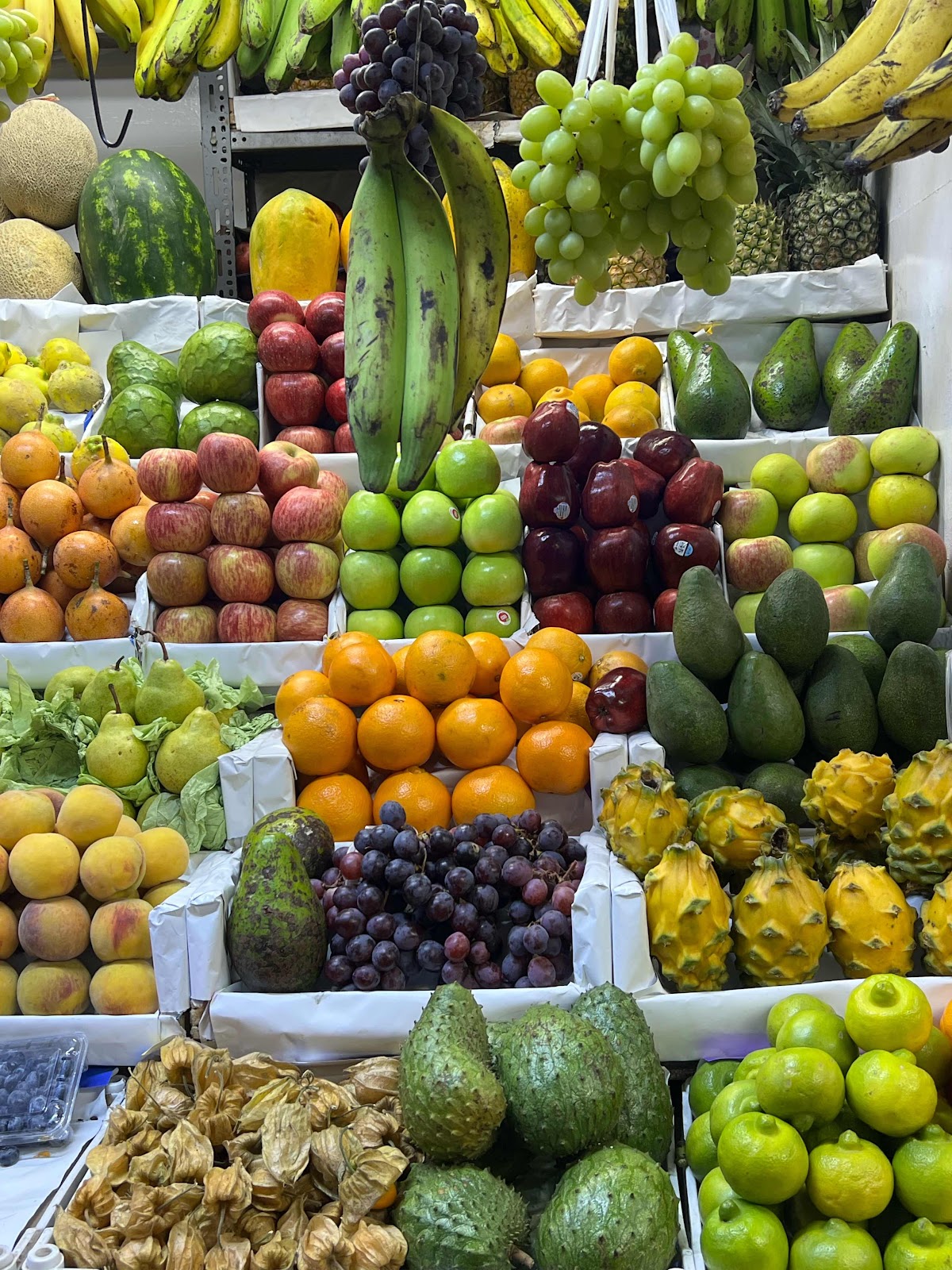
Johana took us to the market where you could get anything your heart desires. There was fruit of every taste and variety (we tried dragon fruit, passion fruit and lucuma which oddly was reminiscent of pumpkin). There were fish, whole and cut up. There were drink stands where we enjoyed ponche de maca, similar to a frothy milkshake. Maca is a root that we should apparently all be eating as it is a natural energy enhancer, plus reduces blood pressure and improves mood, not to mention helps reduces the effects of menopause. 


There are a lot of “Chifa” restaurants in town, a favorite of Peruvians. African slavery was outlawed in the early 1800s. The farmers were so accustomed to the way of life of having workers that they brought over indentured servants from China. These men, and their descendants became an important aspect of Lima. So, China town was a natural stop on our tour where we enjoyed delightful dumplings. 

Johana told us about our next stop, and said we certainly did not have to try it, but we all joined in. Former slaves and many living in poverty in Peru had grown up eating whatever they could find. This of course meant the cuts of meat that not everyone else wanted. It is now more common to eat a variety of organs, and so we joined in on the adventure and tried beef heart. It was a little chewier than steak, but the flavor was phenomenal, a grilled perfection.

Potatoes are a staple here. One dish we had was causa. Made with yellow potatoes until they are a consistency near mashed potatoes, just a bit more “moldable”. Then, the potatoes are used almost like the bread of a sandwich to put things inside. Ours had some sort of vegetable salad in the middle!


The food tour was an absolute joy! After which, bellies stuffed to capacity, we made our way to the airport for a late night adventure to Bolivia! More on that to come!

Tuesday, June 14, 2022

Lima

Lima is the capital city of Peru and home to 11 million people. You wouldn’t know it from all of the beautiful flowers and green parks, but Lima is a desert, getting only nine millimeters of rain a year. (That’s about the width of your index finger!)

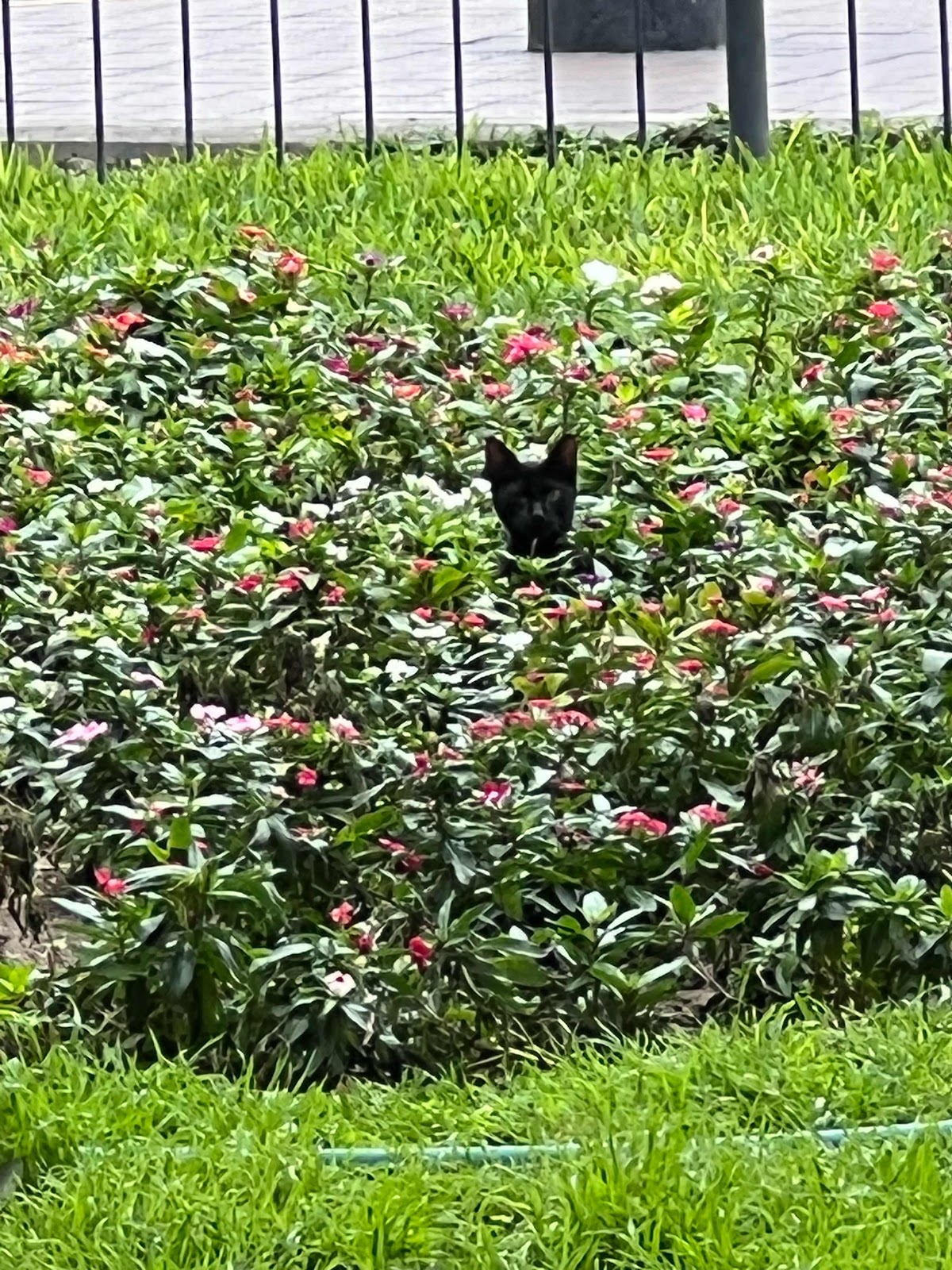
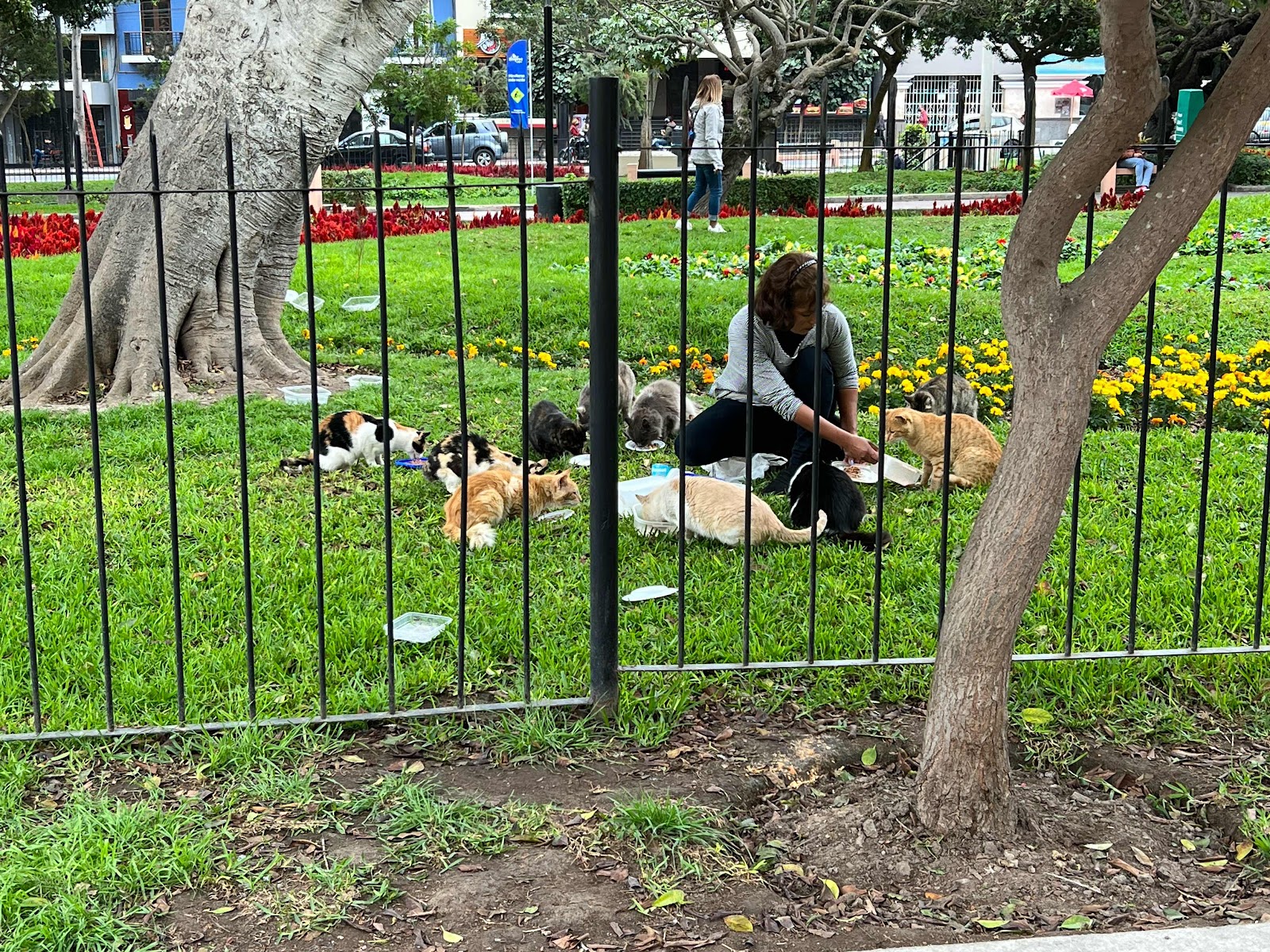
Our time in Lima is short, so we made the most of our day and let our feet show us around. Where was our first destination? Well, if you know either of us well, you’d easily be able to guess. Kennedy Park is a lovely park in central Miraflores (one of the distracts of Lima). Flowers are in full bloom despite it being autumn. But it wasn’t the blossoms that brought us here. It was the cats. No one seems to know why, but the park has become a haven for homeless cats. They are fed, healthy and cared for in their little kingdom, and these cat lovers loved spotting them amongst the flowers.


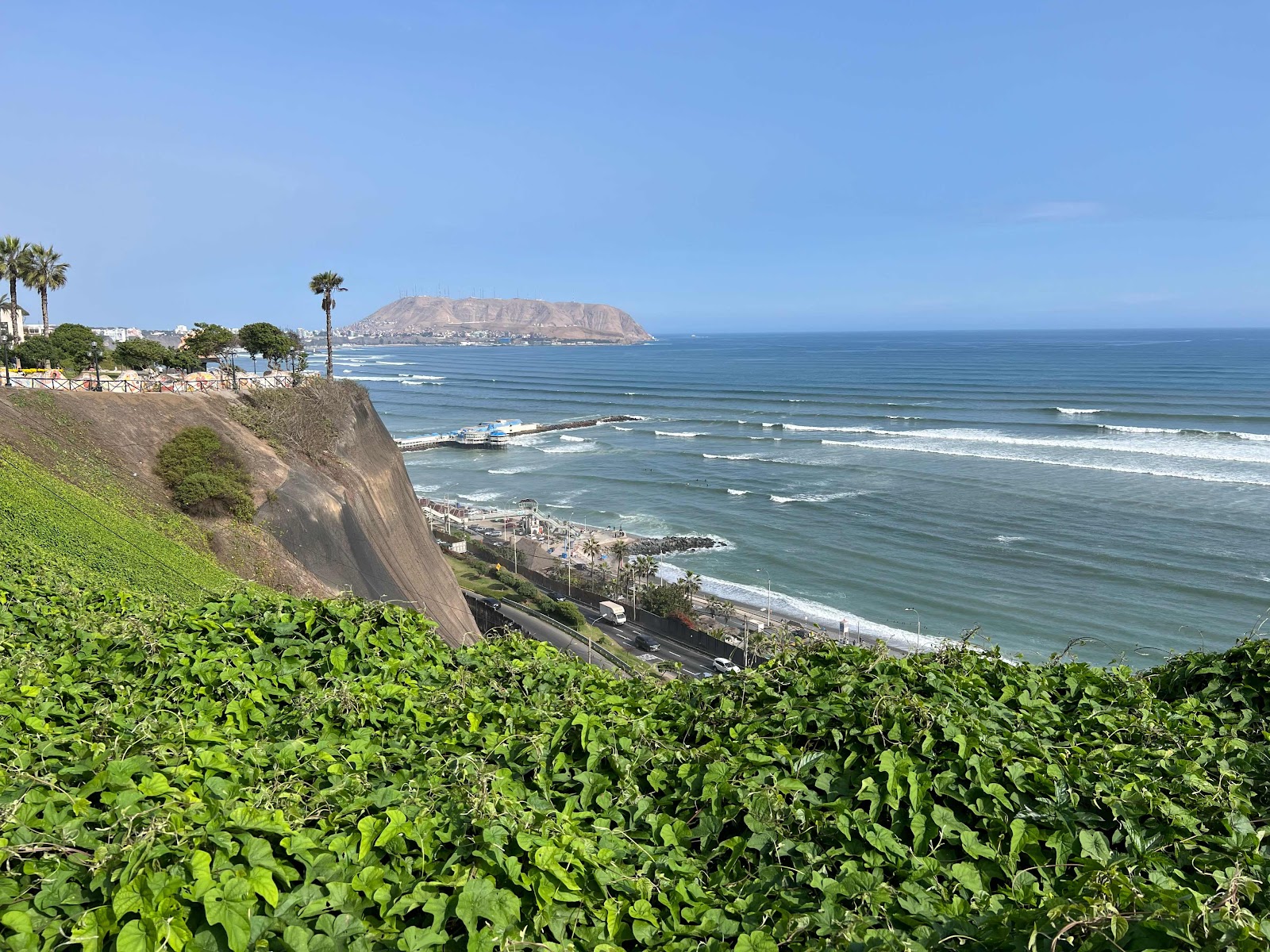
Our wandering took us to the Pacific Ocean and the walkway at the top of the cliff that overlooks the high waves below. The city has done a great job of embracing the beauty of the view with a mall, parks and sidewalks along the way, including the Park of Love, which supposedly started after a local writer mentioned how many statues there were for war, while there are none for love.


A local artist made this statue, “The Kiss.” It is designed after himself and his true love (his fourth wife).

We ate lunch at a fishmonger, ordering the dish we’ve heard as the must while we are here, ceviche, and well, it did not disappoint.


In the afternoon, we took a tour around several districts including Miraflores, San Isidro, and Barranco. As usual, I enjoyed learning the history and interesting facts along the way, but my favorite thing about talking to strangers is hearing the ins and outs of living in a different place. Lucas told us about the upcoming mayoral elections. He said voting here is mandatory, and you are fined if you do not participate. He also said that there are eighteen different political parties, but there is so much corruption, that few people truly trust the government. 

As teachers, we asked about the schools. Most elementary kids go to school in the morning, and then the school transforms to a secondary school in the afternoons. There are public schools and private ones at a variety of costs. The teacher’s union of public schools is strong, and so public schools are often closed for protests. School runs from March to December. This March was the first time they opened in person schools since the start of the pandemic.

Lucas also told us a lot about the ocean, as it is a central provider for livelihood and food in the area. While the summers are hot here, the water never warms because a strong current moves along the continent and helps to irrigate the ocean. The cold temperatures mean there is more oxygen in the water which means there is more growing in the water which feeds the small fish, which in turn feeds the big fish.

Our tour took us by a huge pyramid around two thousand years old, that for years was just believed to be a hill in the city. They are excavating it and are amazed at the construction they are finding which has withstood centuries of earthquakes.

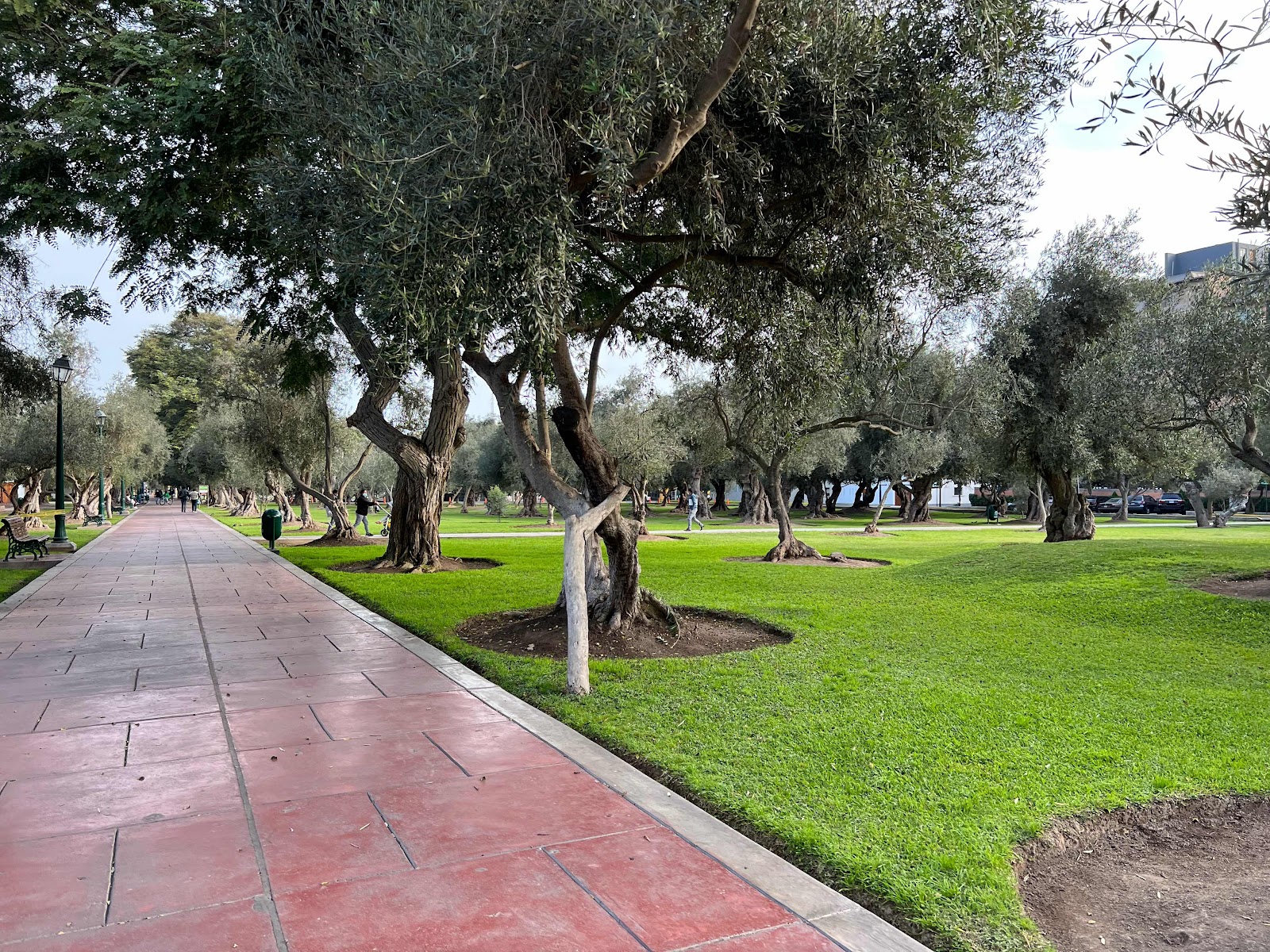
San Isidro is a lovely part of town with a huge park full of olive trees. In 1625, two hundred olive trees were shipped from Europe, but only three survived. From those three, over sixteen hundred olive trees now flourish in this area. They are harvested in May and June. Last year’s harvest produced over five tons of olives! After being processed, local residents receive small bottles of olive oil and pickled olives from the collection.


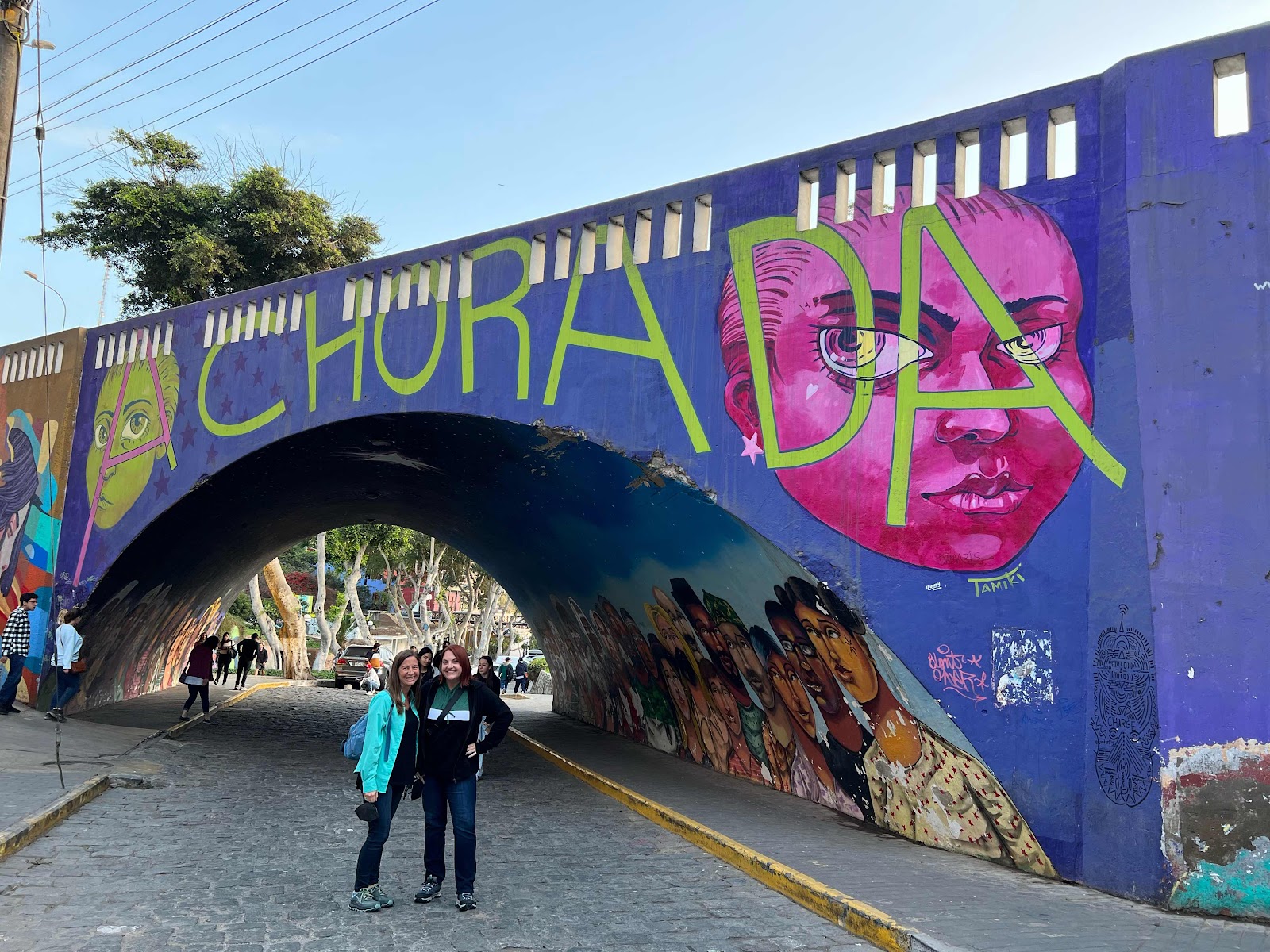
Our last stop was the artsy district of Barranco. It felt more Bohemian, full of romance, talent and appreciation of art. Murals filled open walls and the historic church, which failed two rebuildings, is now overrun with vultures. (I realize this is more spooky than romantic, but somehow it, too, was fitting.)


Look for the lines of vultures across the top!


She is made of cardboard!

Delicious food, stunning views of the Pacific Ocean, cats and tours of a new city? Who could ask for a better first day?

Tuesday, June 7, 2022

Travels

I’ve heard nightmares about travel lately, whether on the news or through friends who are getting back out there and traveling again. As most things in the world, air travel has changed since COVID and hasn’t fully recovered. I hadn’t been on a plane since the fall of 2019. While I wasn’t nervous about the flight itself, I was certainly anxious about all the flights working out.

The Birmingham airport is a dream. It’s so small, and yet typically operates so smoothly. There were practically no lines anywhere (except Chik-Fil-A which has a line no matter what time of day). But my flight was delayed by 50 minutes. This meant that I would be landing in Dallas about the time that our flight to Lima (Jess and I met in Dallas) was supposed to start boarding.

My nerves grew as the time ticked closer to our departure time and yet no plane was at our gate. At fourteen minutes to our new departure time, a plane finally arrived. I was no where near the only passenger anxious about making a connecting flight. Our pilot took off about 20 minutes after our delayed scheduled time, but it was smooth sailing and we made it to Dallas a little faster than scheduled. But of course, a gate was not yet ready for us, so I was eagerly texting with Jess going through our plan of how she was to delay the plane. Should she lay down in hysterics at the gate? Make an anonymous call that there was something wrong with the plane?

Finally, our plane arrived at a gate, and the handy American Airlines app gave me walking directions to get to the next gate. With a combination of speed walking and running, I was able to reunite with Jess just minutes before the plane started boarding. At this point, we were both relieved and decided that was going to be as stressful as our travel would get on this trip (stay tuned with your fingers crossed).


We arrived at the Lima airport at 12:30am and were greeted by kind, helpful airport staff and immigration officers. Outside, our scheduled taxi was no where to be found, but we found a friendly driver who quoted us a similar price and so we got into his car and were quickly introduced to the driving customs of a new country. (Note to self: ask what currency the quote is as we ended up paying an enormous amount, but we were delivered safely, nonetheless).

We were able to get a few hours of good sleep and are now waking up to the morning sounds of a brand new city. 

I read an article in the New York Times on Sunday that  reminded of one of the reasons we travel. It was about talking to strangers.  “Far from random human inconveniences, strangers are actually one of the richest and most important resources we have. They connect us to the community, teach us empathy, build civility and are full of surprise and potentially wonder.” I must admit that every one of my interactions yesterday, even the stressful ones were positive. From the friendly x-ray machine operator at TSA; to the plane full of people that stayed seated and let those of us with connecting flights run off; to the friendly couple I ran with who bragged about seeing their grandson playing in the new USFL league in Birmingham; to the friendly taxi driver (who yes, cheated us foreigners a bit), and the eager bell hop who welcomed us to a new city. I can’t wait to get out and meet more strangers!

Monday, June 6, 2022

Getting Out

Like the rest of the world, I've felt a bit confined over the past two years.  Yes, I was fortunate to get out and explore some of my own country that I had not yet seen, but I have been itching for a reason to use my passport.  I am not oblivious to the fact that COVID still exists, but as I'm vaccinated, and boosted, I feel it is now something I must just come to terms with as a part of life.  And so, I am eager to get out and explore the world once again.

So, where to?  My travel partner, Jessica (whom I'm beyond grateful for), and I discussed some possibilities in the late fall as we began to think about the summer.  We could throw a dart at the globe and be excited about that destination, so, we decided to choose two very different places in the world, research them, and then, come spring, look at the state of the world and choose which place would be best.  We chose to research Scandinavia and South America (a broad spectrum, I realize).  

I purchased two travel books and began planning.  Rick Steves is an idol of mine.  If you've not yet had the pleasure of reading a Rick Steves travel book from cover to cover, you are missing out.  His writing is full of whit, history, humor and delectable details.  Since he only writes about Europe, naturally, I started with his book.  I feel in love with tiny islands in Denmark where bikes are the only transportation.  There were cliffs that needed climbing in Norway, a squatterville in Copenhagen, fjords to cruise down, and lovely fishing villages in Sweden.  I was set, and my mind was made up that this was to be our next adventure.

Then, I picked up the book on South America.  The book, although it is full of information, is no where near as lyrical nor enjoyable to read as Rick Steves, but the wonder of the places quickly overwhelmed me.  Although I have a great desire to get to Chile and Argentina, our summer is a less than ideal time to visit.  Brazil was high on our list, but the vast expanse of the country meant having to narrow down exactly what we wanted to see.  Plus, travel from place to place, as we learned was not easy.  So, we began putting more and more research into Peru and Bolivia.  I read about the Salt Flats where flamingos prance about, Lake Titicaca where the Incan believe the sun was born, the jungles of southern Peru where jaguars live and colorful birds fill the trees, and climbing the Incan Trail to Machu Picchu.

So, I called Jess and told her I was leaning toward South America.  She knew that was coming, she had heard it in my voice as I had told her about new things I had learned.  I told her that I had no idea where life would take us in the next few years.  It seemed equally likely that either of us could be raising a young one or dealing with a broken hip, so we might as well take the more adventurous trip while we could.  Thankfully, Jess is always up for an adventure!

So, next Monday, we leave for Peru and Bolivia, the countries that will hopefully become #42 and #43 on my quest to 50 countries by the time I'm 50.  This also is a whole new continent for us both, and we couldn't be more thrilled to experience something so new and different (and add some more color to our scratch off maps).

As with anything new and different, there is always a sense of excitement mixed with anxious uncertainty.  But, having pushed the limits of my comfort levels before, I know that these often turn into the most rewarding experiences.  If nothing else, they turn into fantastic stories.

Thank you for reading along.  I hope I can share some of these great stories with you in the coming weeks.  And also, if you need any travel tips for Scandinavia, I've got a great list for you! :)

Friday, June 3, 2022

Packing

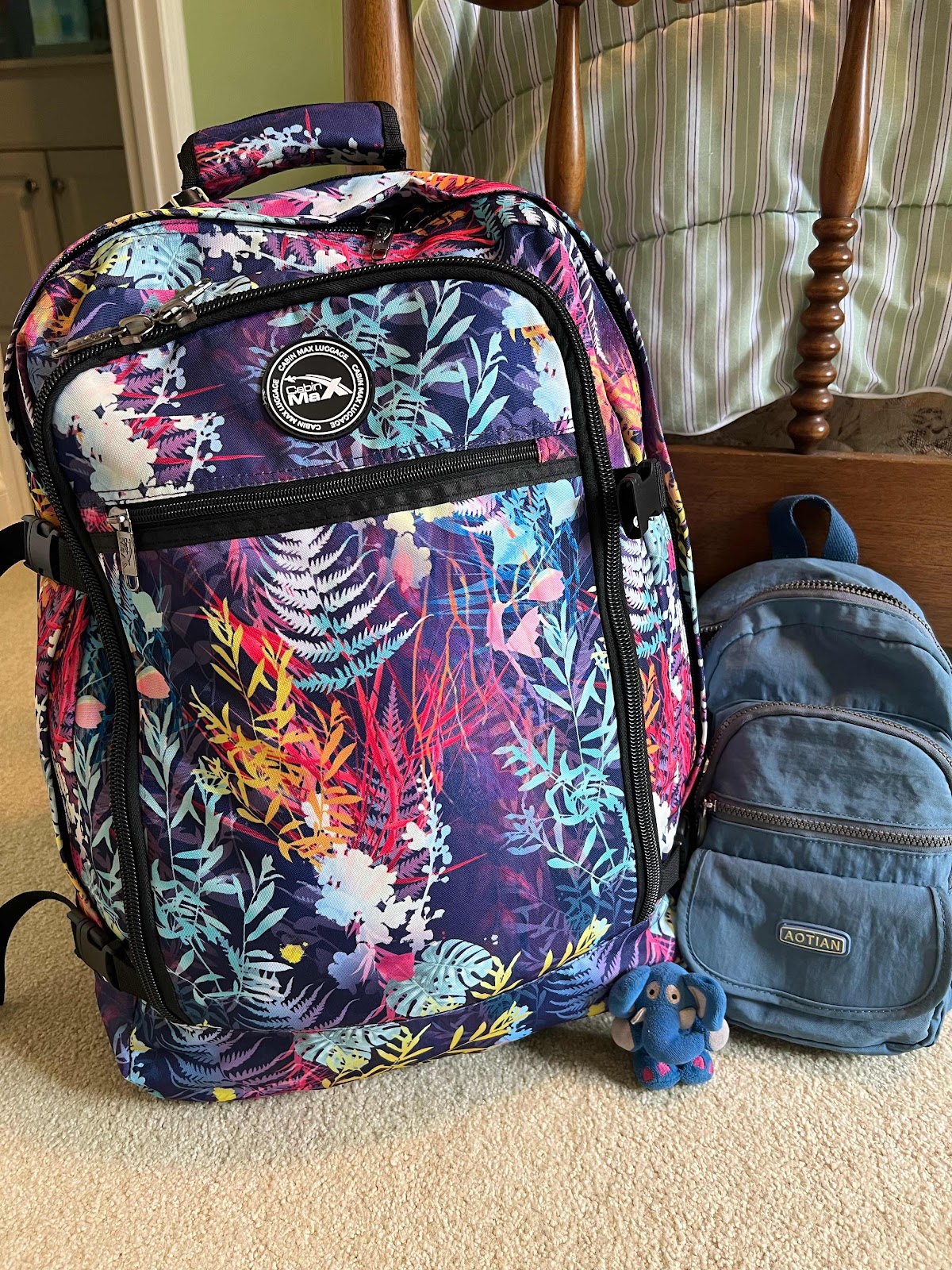
I am NOT a light packer. For evidence, check last summer’s blog where I filled a minivan to road trip around the country. So this summer’s goal to squeeze everything into a backpack was a daunting task.

Why not just pack in a rolling bag? Well, there’s the trek through the jungle, the multi-day tour across the salt flats in an SUV, and the Island of the Sun where, if we are lucky, a donkey may help us carry our belongings up the mountain to our hotel.

The challenge is compounded by weather. It is winter there, so clothes I’ll wear are thicker. Most days look like they’ll be in the high 50s and low 60s with night time temperatures in the high 30s. There are our days in the jungle where it will feel closer to the Alabama summers I’m accustomed to and nights on the salt flats that could dip below 0.

It is amazing how packing concerns have changed as I have aged. Sure, clothes have always been essential. As a child, Polly Pockets took up the rest of the room. CDs took up most of my extra space as a teenager. In my 20s, I feel it was things to entertain me like games and detailed coloring books. Now, my main concern beyond clothes is medications and chargers. I know, this not only shows my age but also how much fun I am!

There was lots of organizing, carefully planned layers, trips around town looking for the tiniest serving of the item I needed and lots of squishing, but it worked. Now, should I find lots of treasures along the way, I’m not opposed to shipping a box home, and I go knowing that this is a very real possibility.


So, with all of that being said, when all of my photos have me in the same outfit, don’t judge me. And be thankful you can’t smell photos!