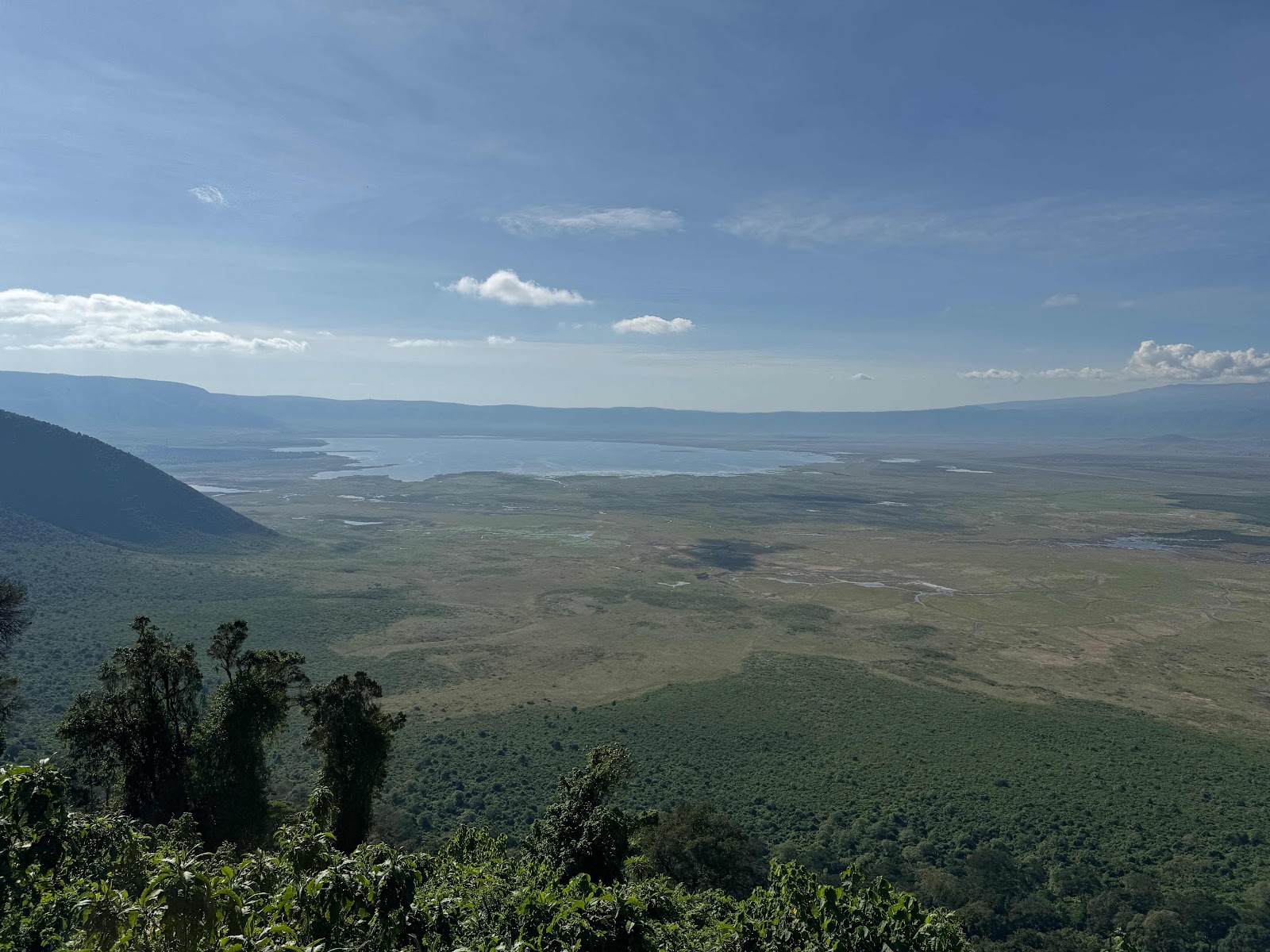
Serengeti means endless plains. I’ve never heard a more apt name for a place as the Serengeti. It stretches on, seemingly endlessly. (I hope my post doesn’t seem as endless!) Much of it is flat, but there are rolling hills and scattered trees and large piles of rock. As Lou tells us, this place once was a lake, then when a volcano erupted, it covered the land in lava. This is why, now, very little can grow here. It’s not desert, just short grasses. Apparently, if it rains, it all turns green for a day. But then, it goes back to dry as what is just under the soil is like concrete, the hardened lava.
The roads here are dirt or gravel and very bumpy. Like an ant trail in a cow pasture, they are fairly easy to find, but how you would know where one goes or how to describe to someone how to get to a specific one seems nearly impossible. Yet, Lou astounded us by turning on road after road and chasing the calls from the radio about sightings. There were times that we wouldn’t see another car for a solid half-hour or more but when a rare animal had been spotted, sometimes a dozen cars would appear out of nowhere.
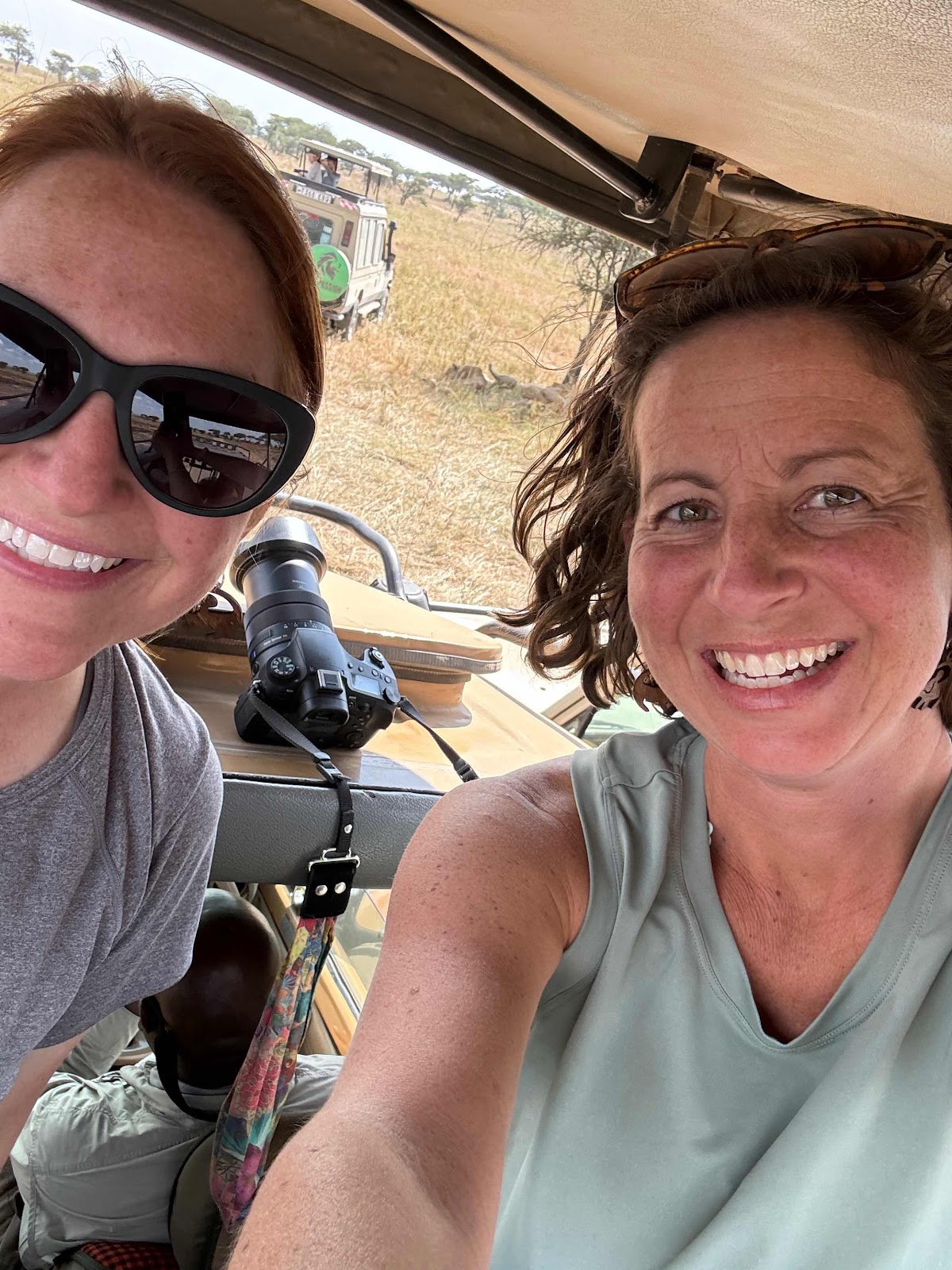
Jessica and I both suffer from some motion-sickness, but we’ve done amazingly well in the back of Lou’s Toyota Land Cruiser. When inside parks, we’ve actually learned to stand up. As unsafe and bizarre as that may sound, it’s an incredible way to see this vastness. The top of the truck pops up, sort of like a sunroof, but as the roof stays in place, just higher, we are protected from the sun. Standing up inside means that we have fresh air and perfect views of the world around. Like learning to stand in the middle of a moving subway car, it took some getting used to, but there’s enough space for us both to stand in the middle and hold on to each side. Plus, we’re in the park, so we’re not going all that fast. However, there’s so much jostling that our watches register that we’re walking miles upon miles while we’ve barely taken a step. And at the end of the day, it sort of feels like we’ve been riding a horse. Oh, and not only is it incredibly dusty here, but during our stay, they’ve been experiencing stronger than normal winds. My hair may never be the same again. You know how Bridget Jones’ hair looked after driving through the countryside in a convertible with her boyfriend? Picture that, only with dust as well. But it’s all worth it! I think I’ve discovered why we were supposed to wear khaki! It’s because we will all turn that color because of the dust, so might as well be ready to match it! What comes out of our noses and ears at the end of the day is not the color that it is supposed to be!
Speaking of clothing, we were told not to wear blue or black as it would attract the tsetse fly. They are biting flies that carry the sleeping disease. We did encounter a few when we were stopped looking at animals, but Lou reassured us that you needed lots of bites over the years to ever contract the disease. Throughout the pristine natural environment of the park, we did notice, hanging from trees, large blue and black pieces of fabric resembling a flag. These are apparently treated with a chemical so that when the tsetse fly touches these colors it is attracted to, it becomes sterile.
If you get to come to the Serengeti, please do your absolute best not to come in a bus. We saw very few buses, but they did not at all provide the freedom to view or move about as easily as our 4x4 did. Although, if you get the opportunity to come in a school bus like we observed, well, I guess a field trip to the Serengeti is more than acceptable! Also, don’t come in a pick up truck. We were told that even as recent as ten years ago, the elephants were hunted for their tusks in this park. The poachers often drove pick-up trucks and well, elephants still remember that, so these gentle giants often become aggressive with pick-up trucks.
We were lucky enough to have three days in the Serengeti. Our first day included a lot of driving to get into the expansive park, but then we had two more complete days to explore all the nooks of the over eleven thousand square miles.
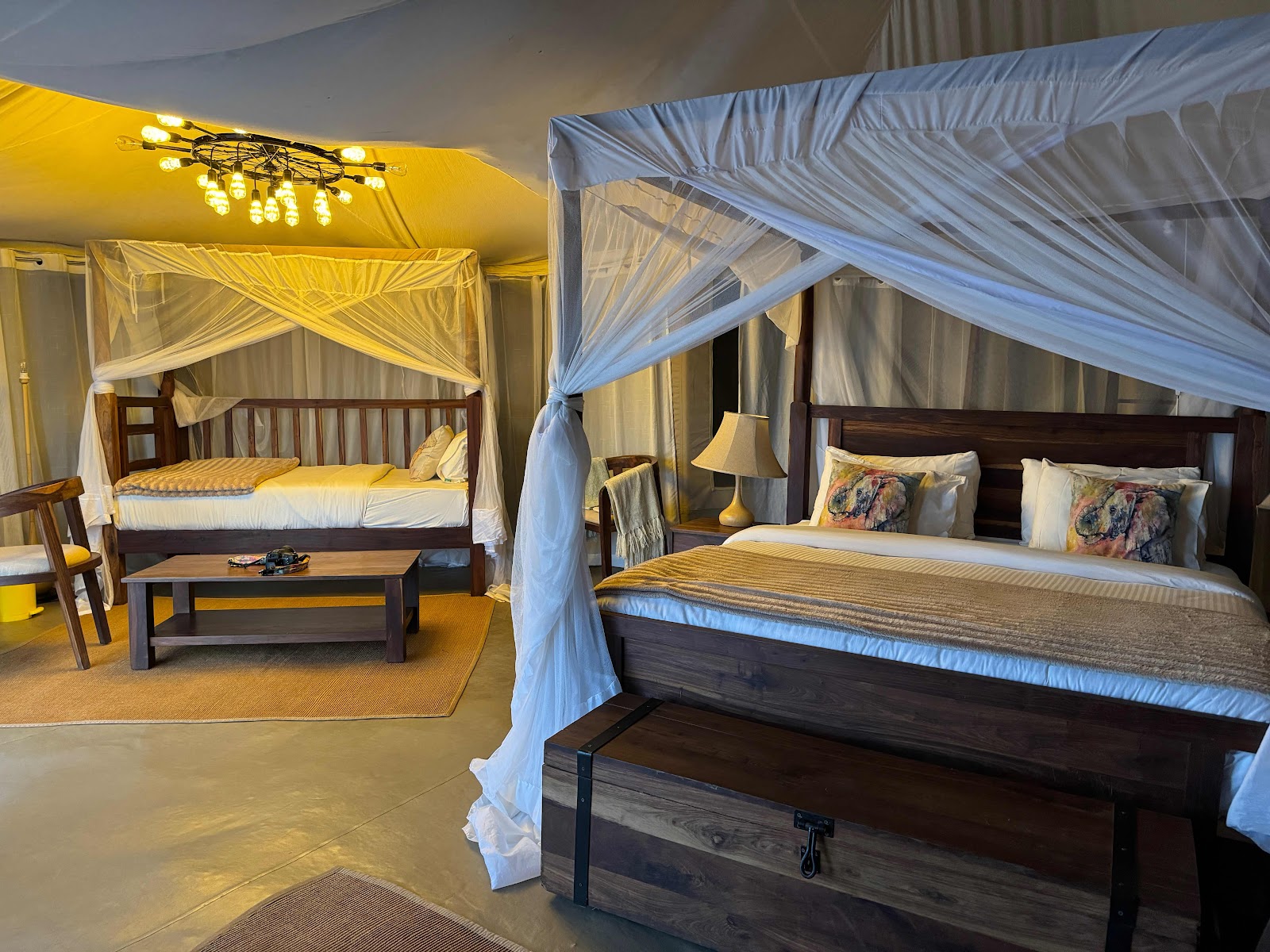
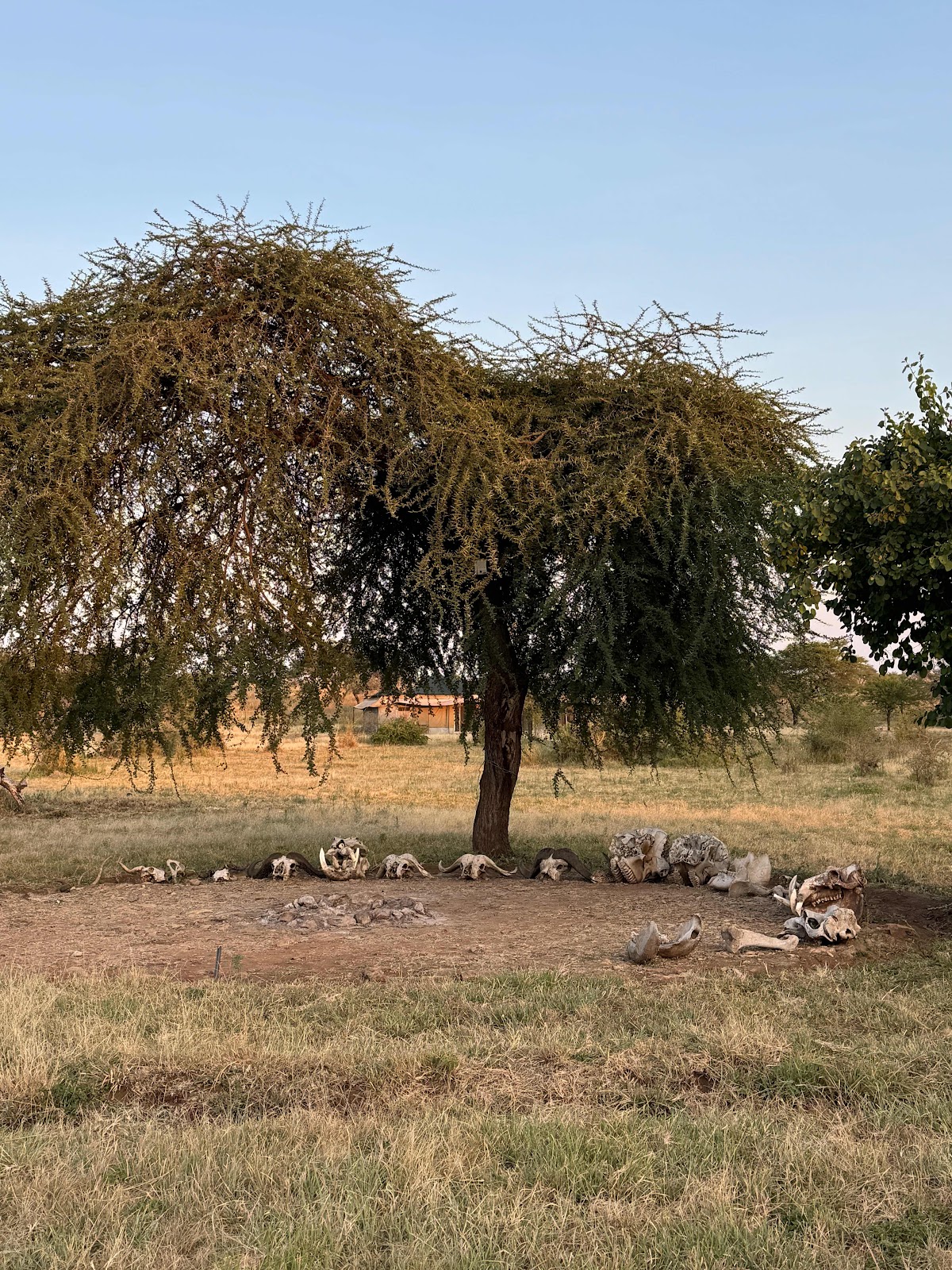
There are multiple places to stay within the park which is a huge gift! That way, you get to experience night within the park and not have the long distances to cover to get back into the heart of the park. We stayed in tents in the middle of the Serengeti. But don’t worry, not that kind of a tent. Our tent had a four poster bed, a full length mirror, a desk and a seating area, plus a full bathroom with flushing toilet and hot water in the shower. So, no, not your typical campsite by any means. Throughout the night, we heard animal sounds. One night, I swore I heard hyenas laughing. If we needed to leave our tent while it was still dark, we used the walkie-talkie and someone would come, armed with only a flashlight to escort us. There was a large dining tent with buffet meals and a lounge area as well. Each night, a bat made an appearance within the tent, cleverly checking the well-lit area for any unsuspecting bugs that had flown in. There was a large fire-pit surrounded by skulls of animals that had died at the campsite. They are pretty fascinating to look at and try to imagine which animal they once belonged to!

One major highlight was a hot air balloon ride over the Serengeti. This meant that we woke up about four and were driven about an hour and a half into another part of the park. On the way, we saw a hyena. She was in the middle of the road and her stare in the headlights is truly something that will haunt my nightmares for years to come. We also saw the moon set over the Serengeti and as our balloon inflated, we watched the sunrise bringing with it a stunning array of colors. It was close to a full moon, which Carlos, our Spanish balloon pilot said increased the winds. (Who knew? It wreaks havoc on balloon flights, not just classrooms!) I’ve been fortunate to take two balloon flights before, but none of which were loaded like this one. You just climb in, start the fire and up you go, right? Well, no. We were loaded while the basket was turned sideways. So, we were loaded basically on the ground and for a solid ten minutes, the fans blew the balloon up and dust and gravel all over us. Then, Carlos decided it was too windy, and it wasn’t safe. But don’t worry, as we had another day in the Serengeti, this just meant another early morning with a beautiful moon setting and sun rising, and yes, another hyena.
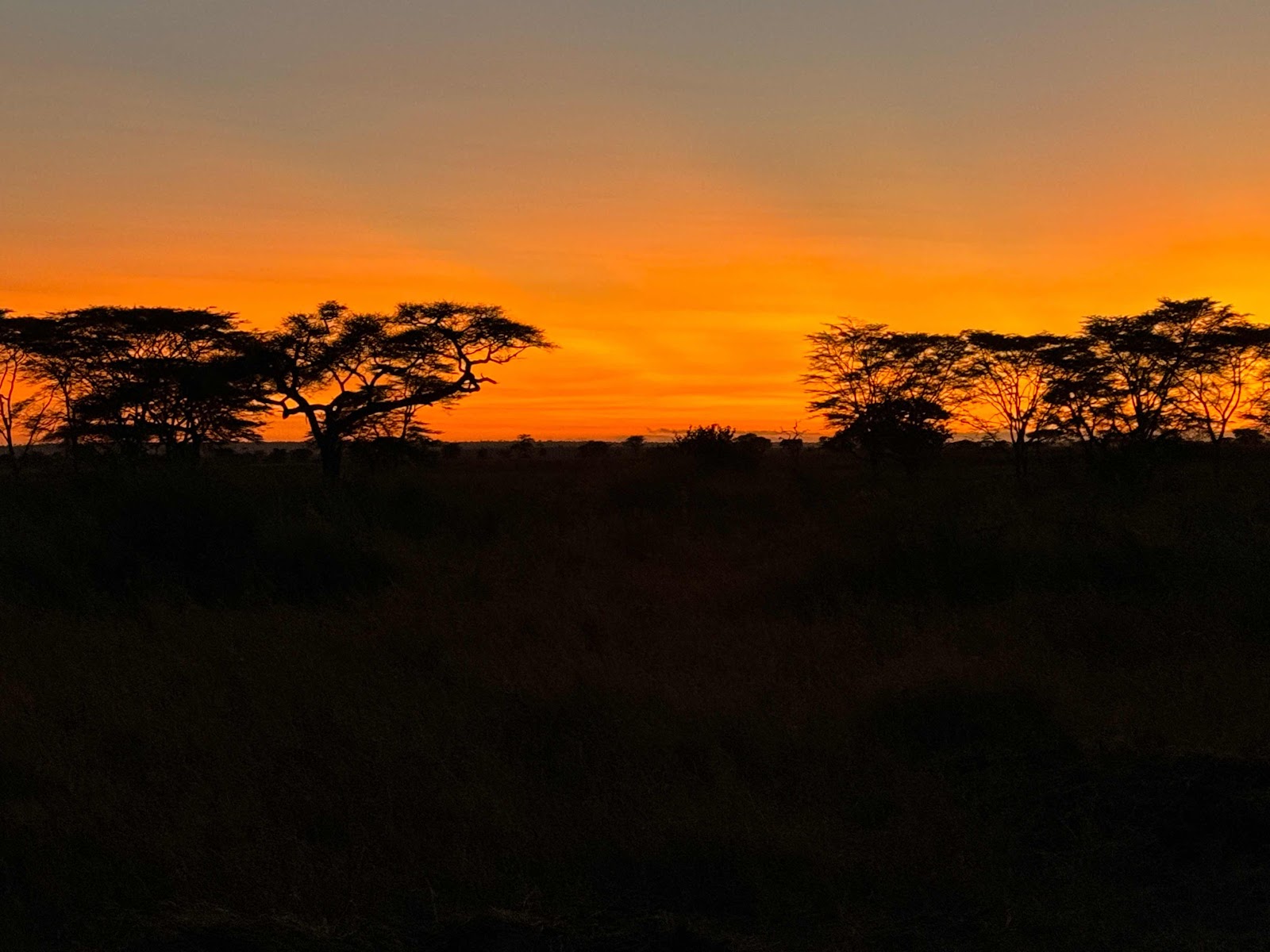
The second day was a bit windy, but nothing like the first. After a few minutes in our awkward position, we were lifted into the air gracefully. Traveling by balloon is truly a peaceful way to see the world. We watched the sun rise over the Serengeti and watched as color slowly appeared in all the corners of the endless plain. We spotted zebras, giraffes, antelopes, wildebeests and even a hyena from up above. Floating just above the tree tops was a perfect height so that we were still able to see the animals below.

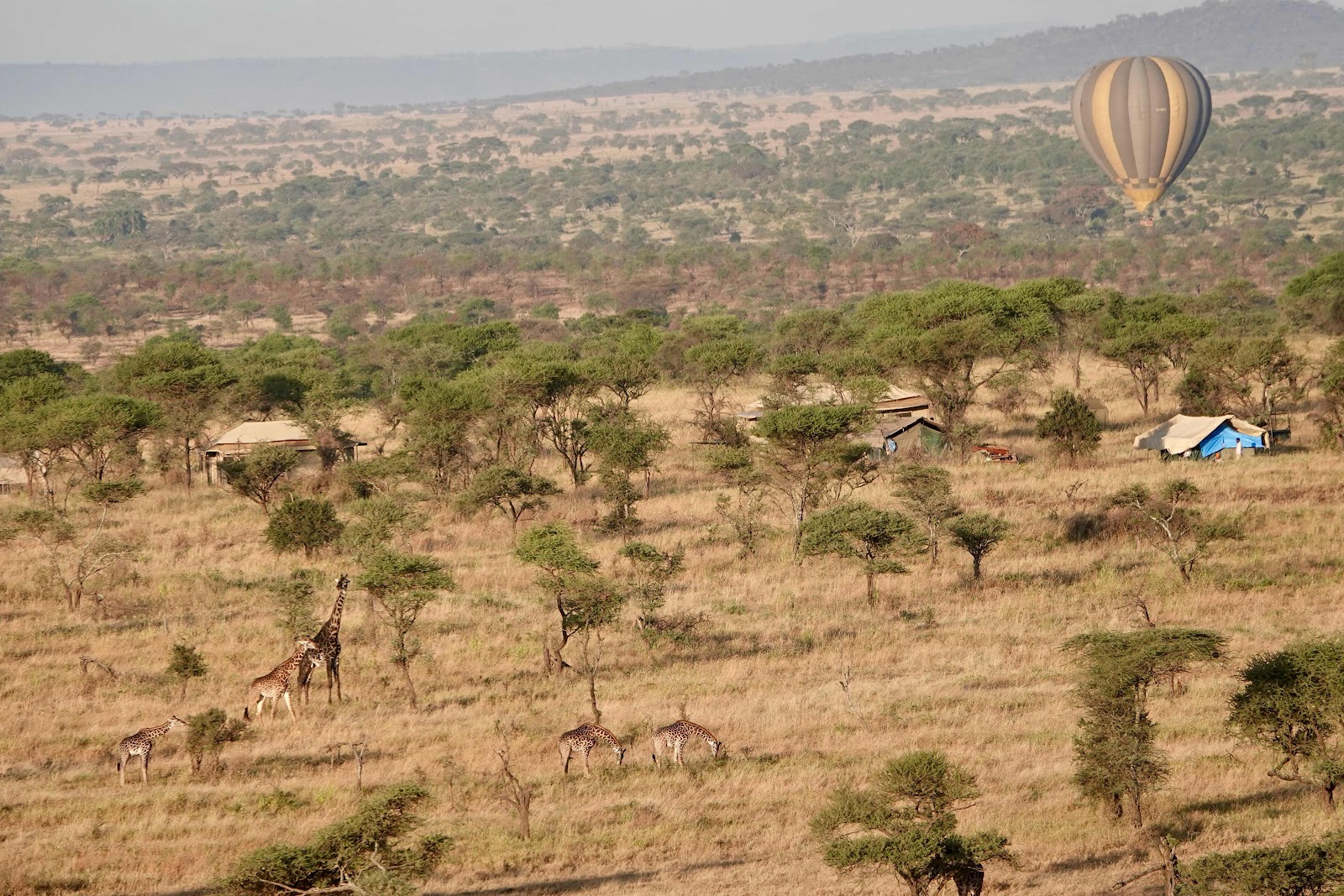
Landing was fairly smooth, although we did land sideways and had to awkwardly climb out. We toasted with champagne and were then driven to a “bush breakfast.” If you’re picturing a banana and a piece of bread as I was you couldn’t be more off track. There were long tables set up with placemats and silverware along with a buffet line complete with an omelette station. It is truly amazing what they have learned to accomplish in this vast open land!

Aside from our two trips to hot air balloon rides, our time in the Serengeti was spent driving around looking for animals, then parking beside them and watching them with fascination. One day we had lunch in the car under a tree while zebra and wildebeests wandered by curiously staring at us. Another, we ate at a picnic spot on a hill where the mice and birds thrived on crumbs left from picnickers over the years.

We got to see hippos! These adorable chubby creatures were so much fun to watch! They were not honestly animals that I assumed were a guarantee, so I was thrilled to find them. They were, however, abundant in the park and easy to find (permanent signs even pointed to them like a zoo!). Since they sunburn easily, they spend their days wallowing in the shallow water leaving just the tops of their faces and their backs above water. Upon first glance, you may just think there are lots of rounded smooth rocks in the water, but look closely! Their ears twitch to get rid of bugs, and the ones on the land have birds perched aside them nibbling the ticks off of them. Often, bubbles arose, but they were never attached to the face ends of what was sticking out of the water! Did you know their poo smells like sulfur? And while they were going (or perhaps it was while passing gas), their little tails would flutter back and forth to keep their backsides clean. Did you know these adorable blubbery creatures are some of the most dangerous animals in the world? These herbivores have jaws that can slice you in two! But if it is any consolation, they won’t eat you after!


Iggy, a young man who worked at our lodge, had trained to be a ranger. He had lots of stories that he told around the campfire. I haven’t fact checked these, so I can’t say if they are true or if like many campfire stories, there is a touch of legend in them. He said the parks in the south of Tanzania are much more rugged. He said the parks are less settled and the animals are not as accustomed to people. It may take two or three days of driving to get their on difficult roads, but he said it was well worth it because the animals are even larger in size there. He also had his own hippo story. Once, he and a friend were called to a village because a hippo was chasing children. They successfully diverted the hippo’s attention, but then had to run. Iggy got far away then realized he heard no other footsteps, hippo nor human. He turned around to see his friend in the hippo’s mouth. He was poking the hippo in the nose with a stick. Thankfully, the hippo got frustrated and thrust him aside, shattering his ribs and multiple bones throughout his arms and legs. At that point, the hippo launched at Iggy. He had a gun with him, one meant for a zebra, but with several shots, he brought the charging creature down. However, the hippo slid into Iggy knocking him to the ground and breaking several of his bones. When he woke up in the hospital a couple days later, the villagers presented him with a gift of some of the hippo meat. After being boiled for twenty-four hours (!!!), he said it was quite delicious!

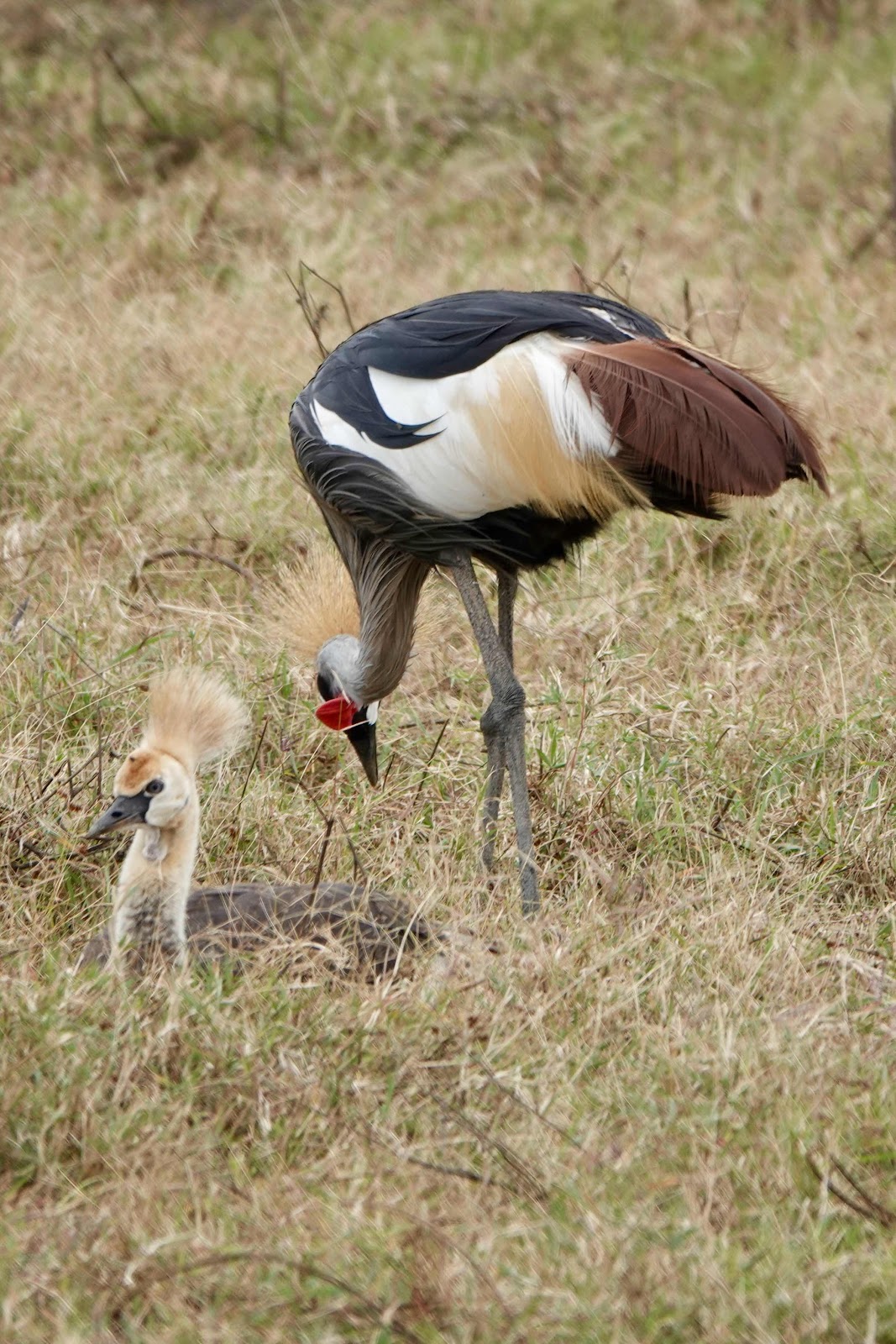
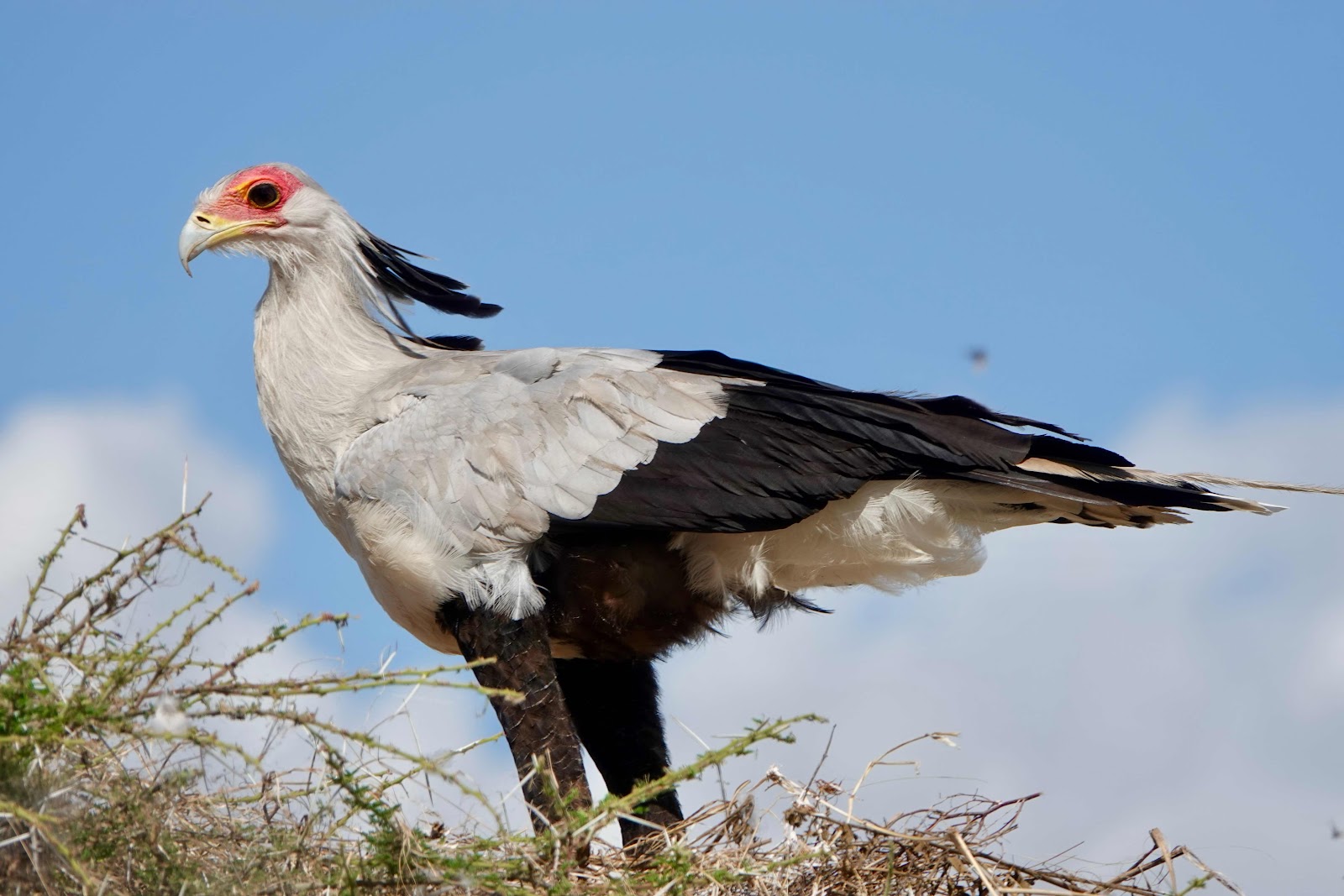
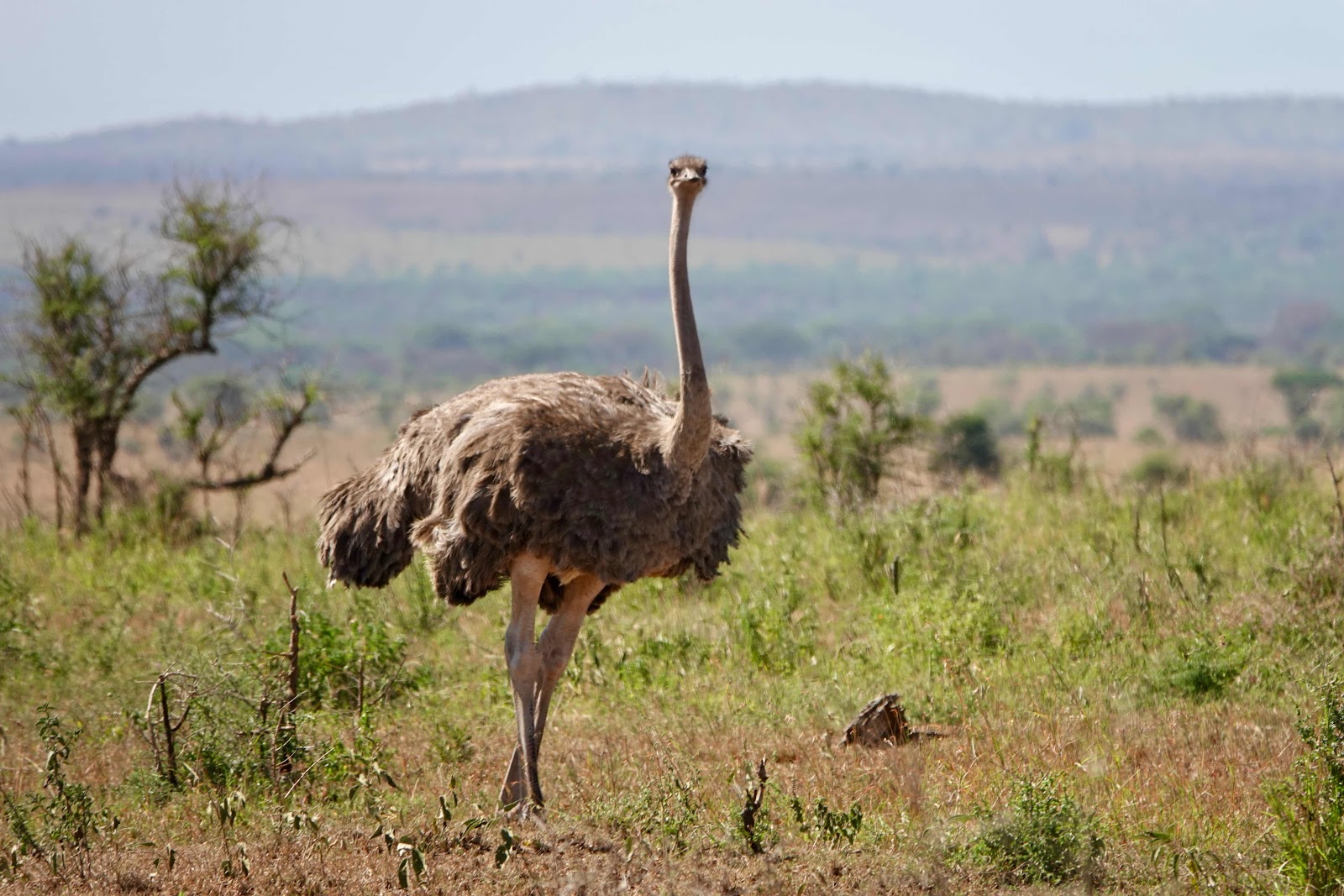
We saw lots of birds on our journey of all different sorts and sizes. There were storks and buzzards hanging around a carcass. There were giant ostriches who somehow resembled cancan dancers wearing long tights. A secretary bird was a fun find, especially as he stood atop a tree appearing as a superhero in his mask. There were birds I recognized like herons and cattle egret, who had other friends besides cows. There were guinea fowl who scurried about and often gathered in the road. A plethora of smaller birds from crow size down to the LBBs (this is a technical term I learned from a birder years ago that means little bitty bird) flittered about in colors of bright blue and even iridescent.
The great migration was something I had heard of, but didn’t know a lot about. The wildebeests migrate from the southern part of the Serengeti into Kenya during the dry season. So, we got to see the wildebeests, seemingly all together, in the northern part of the park, already beginning their journey. The crowds of them were substantial, and that in itself was fascinating to see. Before this time, I wasn’t sure I could even describe a wildebeest nor would I have known one if I met it. I enjoyed seeing these creatures up close, although I must admit, they do not have the most intelligent features. They move, gather and stare curiously like cows, but they run like bison who struggle to get their entire front ends into the air. Only the males really make sounds, and they sound like frogs. All of this to say, it was reassuring that it was not they who conspired to murder Mufasa. Their behavior made it even more evident that it was all Scar’s fault.


The antelopes were frequently spotted in our travels and always made us smile. They varied in sizes from tiny dik diks only slightly larger than the rabbits in the park to the impalas who were slightly smaller than our white-tailed dear. The males of the impalas had beautiful curved horns. But a favorite were the Thomson gazelles: slender and about the height of a medium dog. Their tiny tails were constantly swishing back and forth. Sure, it was to keep the flies away, but we lovingly called them the “swishy-swishies.”

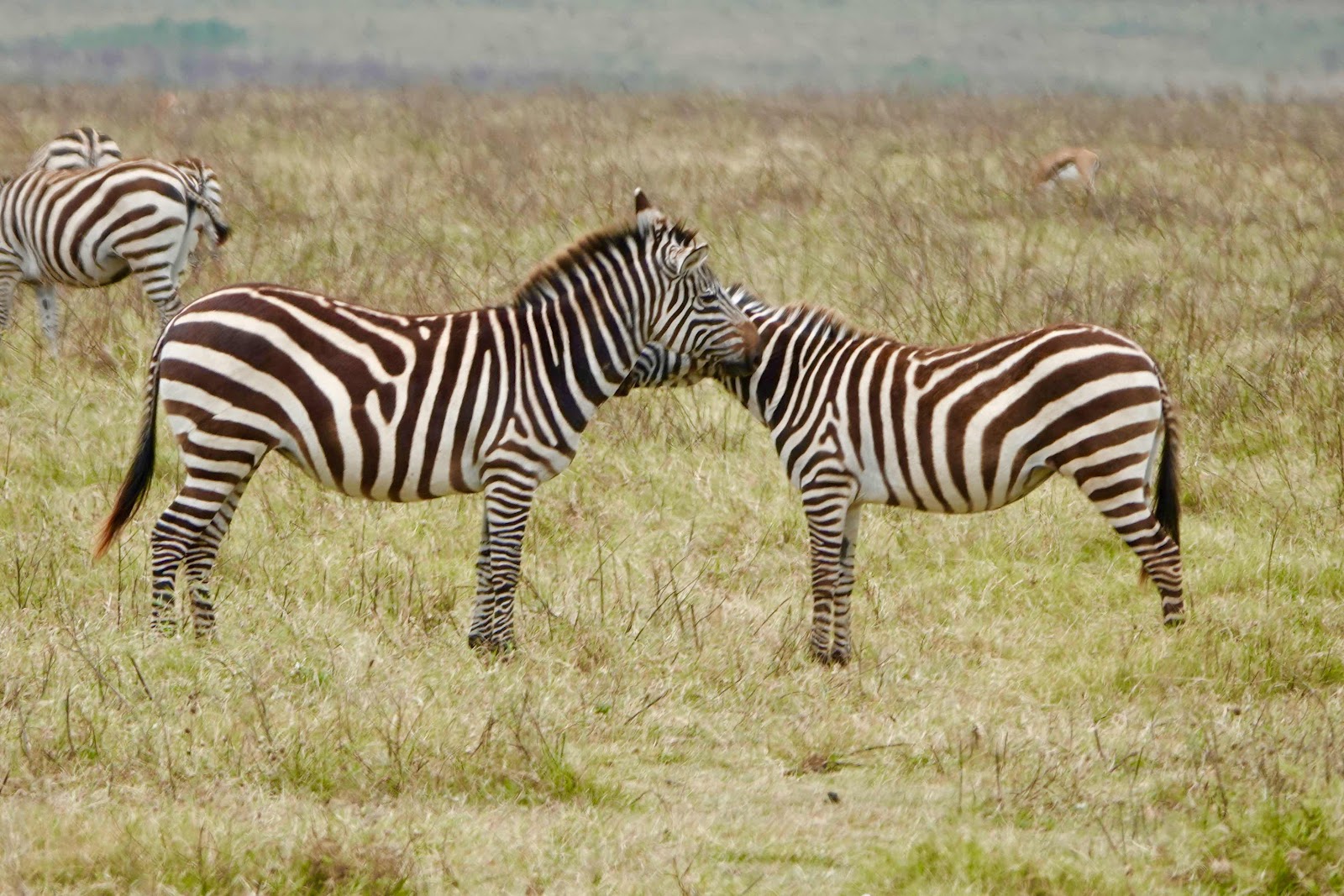
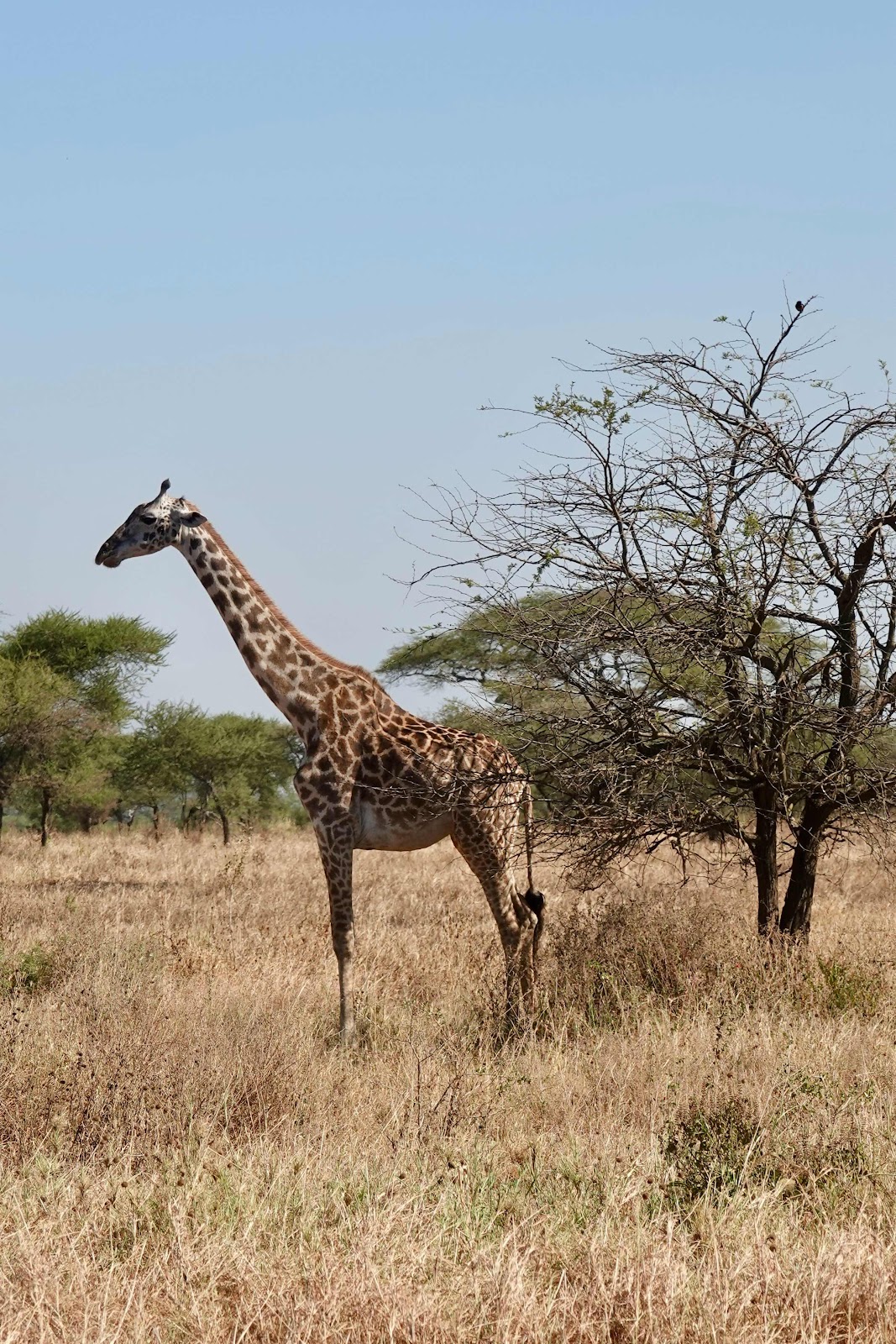
I know the big five are called such because of hunting, but to me, I think I’d say that the essential African three are the zebra, elephant and giraffe. These stunning, peaceful creatures were ever-present in the park and always a pleasure to see. We saw multiple elephant families peacefully meandering around slowly eating their weight in greenery. The giraffes are majestic and beautifully blended in with the trees. Sometimes, I think they thought they were perfectly camouflaged as they’d stand still next to a tree as we drove by. Zebra in Swahili translates to donkey with stripes. It is said that people once tried to domesticate zebras because of their similarity to donkeys. Apparently, their backs are too weak to carry much, certainly not a person. When they were led to do work, the zebras refused, showing they belonged to no one. Is it me or does this make them even more likable? Also, should the phrase really be as stubborn as a mule or should it be zebra? Before this trip, I did not think zebras would be camouflaged. I was amazed at how from a distance, these creatures, despite their stark black and white colors somehow blended in beautifully with their surroundings.


Seeing any and all of these animals was a true delight, but of course, it was the cats I was most excited to see! We were lucky (and had a phenomenal guide!) and so we got a glimpse of several big kitties! A cheetah was spotted under a tree, but no one could see her. One truck drove off the trail, close to the tree and up she got, looking quite perturbed. She ran off, just far enough out of reach and laid down again, giving us quite recognizable cat glares. Near the end of our last day in the Serengeti, Lou took us to a tree where the people in a half dozen cars stared. With incredible zoom and some creative thinking, we were able to see some spots. Although, that was about it. After about ten minutes of staring, the generous leopard stretched and moved down to a lower branch in perfect view (although at quite the distance) from us. She stretched, yawned and for about twenty minutes napped in several positions on the branch. Then, after she felt she had done her duty to her loyal subjects, she ascended back up into the cover of the higher branches. So, in thanks to her, we had now seen the fourth of the big five!


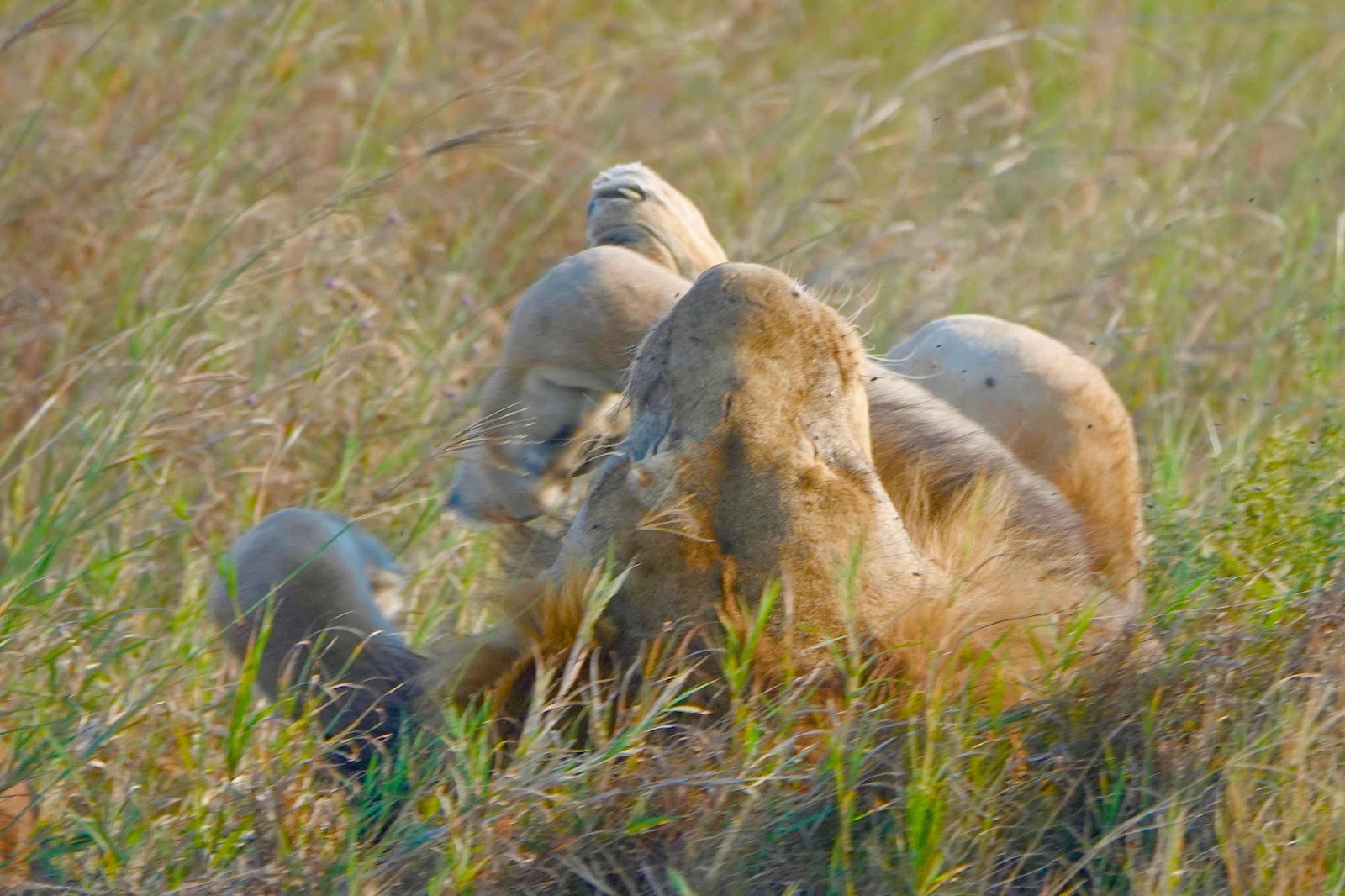
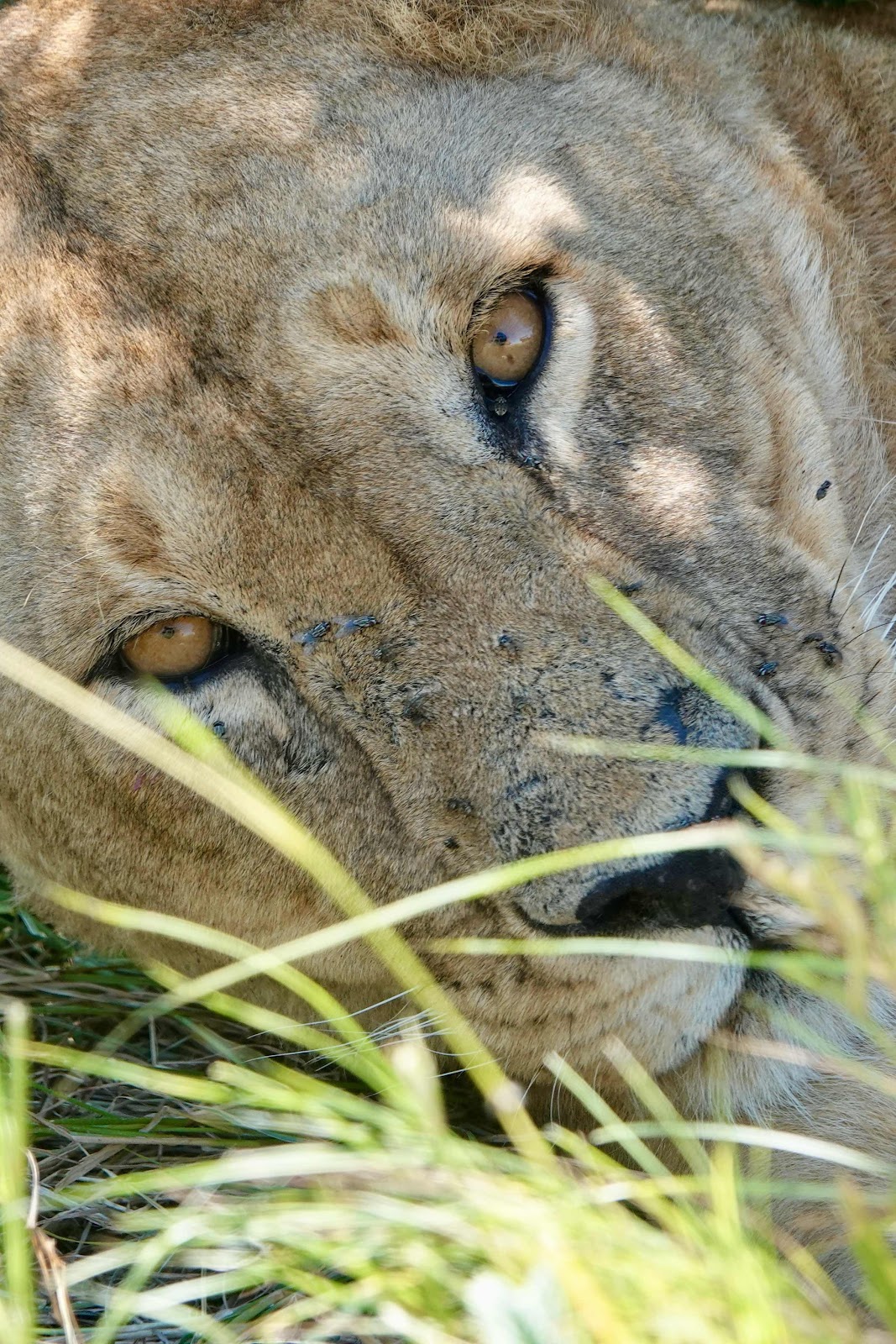
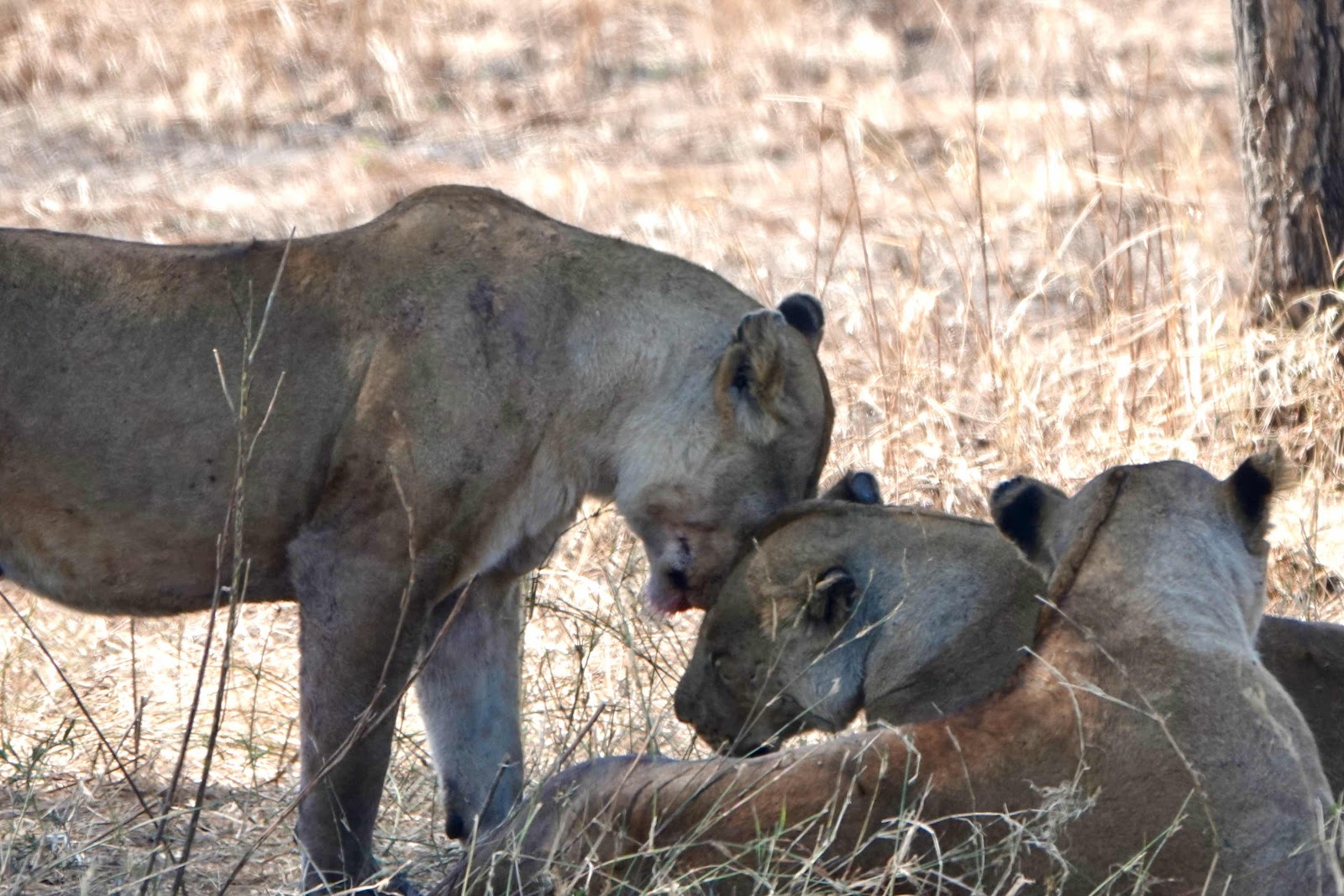
When we entered the Serengeti, I have to admit that I was getting nervous that I would not even see a single lion after no sightings in visits to three other parks. This fear was unnecessary. Lions are plentiful in the Serengeti; it is their kingdom. The guides frequently communicate over the radio to let one another know if there are rare animals spotted. They speak Swahili to one another, but they know that we all know the word for lion, Simba. So, they actually use the Swahili word for whiskers so we clients don’t get too excited. My first lion spotting had been in Manyara National Park, but the lion was asleep and upside down, so I only saw the back legs. The first lions we saw in the Serengeti were asleep and mostly hidden by the grass. It was at this point that we assumed that’s all we would see were sleeping cats. Over the next three days, while in the Serengeti, we saw several dozen lions. Most were sleeping, or close to it. Some were right next to the road, so close that if we had opened the window and outstretched our hands, we could have “booped” them on the noses, while others were perched high on a rock in the distance. Some were wandering through the tall grasses, trying to get away from their observers, while others just yawned and went right back to sleep. We saw a pride of fifteen soon after they had slaughtered a buffalo. All the girls were exhausted, lounging about with bloody faces. Lou told us that the kill would have taken a lot of energy, so they were likely recovering from that before they went back to devouring the creature. We went back several hours later and got to watch in amazement and disgust as the girls took turns pulling out organs and nibbling away. While there was a little grumbling at the feast, they were generally good about sharing and not taking too much. Then, just like our house cats, after a few bites, they’d wander back to the shade, bathe, and nap some more. I must admit that I loved watching their affection for each other. These girls are a pride, a family. Although they were all grown (some were certainly a little larger than others), they nuzzled with one another, bathed each other, and laid atop one another. Cats of all sizes are truly cats.


My time in the Serengeti was truly sensational!