Tuesday, July 2, 2019

Pest

First off, make sure to read that as Pesht, not as the little thing that drives you crazy.

We drove from Lake Bled across the border into Hungary without even the slightest indication of a border crossing besides a small road sign with a new flag on it. The drive, about 5 hours, was fairly direct and easy on the motorway and peppered with fertile flat valleys full of neatly organized rows of corn, golden fields of wheat and grape vines running up and down hillsides. 

Since the drive was a good distance, I did a bit of research on places we may want to stop along the way. The first was Lake Balaton, the largest lake in Hungary, almost 50 miles long. We got some glimpses of the beauty of the lake, but our plans did not exactly pan out. It was pouring rain, a recent accident had cars diverting on other routes, and many places along the way were closed, small towns seemed practically dead. As it is a lake, a getaway place for many, and summer hasn’t really started yet (schools aren’t out here quite yet), all the vacation rentals were still locked up and the many businesses that must thrive on those summer tourist dollars were closed.

We did, with a tad bit of difficulty, find the most adorable castle to stop at as our first official stop in Hungary. It was in a city about 45 minutes west of Budapest. I didn’t know any of the history when it came up in my searching, but it looked pretty, and well, who doesn’t love exploring a castle? Turns out, it’s about the most precious castle you can imagine, and it’s not that old, and it was hand built by the owner himself! Bory Castle was built by Jenö Bory. He was an architect, building engineer and sculptor while his wife was an artist. It took him 41 years to build it, and just about every inch of it is filled with artwork by he and his wife. It is in the middle of a neighborhood, not up on a hill watching which way enemies may arrive from because well, this professor didn’t have any such enemies. In the early 20th century, not many people were building castles any more, and while it is no where near the size of some castles I’ve seen, it was almost more intricate. The turrets, sculpture garden, courtyard, rose gardens and spiral staircases were all unique and made for a picturesque place to live. 


We arrived in Budapest at the exact wrong time and got caught in quite the gridlock of rush hour traffic, but Dad, as he has done the whole trip, handled it with great tact, skill and patience! Our Air B&B in Budapest was in an older building with a stunning facade, but the interior common space, including a large tiled “courtyard” was in need of repair. Always a bit anxious arriving to something you agreed to online, I opened the door to our apartment and stepped into what felt like our own palace. The bedrooms were modest, bathrooms very decent for European standards, but the living room, with twelve foot ceilings was large enough to host a ball in. Oh, if only I had known enough people in Budapest.


Our apartment was just a block from a long pedestrian street lined with restaurants that spilled onto the street, brand name stores and cheesy tourist shops. We wandered along here our first night and struggled to find what looked like “Hungarian food,” but found some Italian that seemed to combine things a bit. 

Thursday was the only day my parents were to be in Budapest, so I wanted to make sure they got a good taste of the city before they left. I consulted Rick Steve’s and we set out on a walking tour throughout Pest. Buda, on one side of the river and Pest on the other side, still have a bit of their own identity, but for most purposes, they have combined into one, Budapest. Most of the tourist attractions are in Pest, and that’s where we are staying. We walked along the river toward the Parliament building. The river was crowded with river boats, a popular destination for river cruises along the Danube.

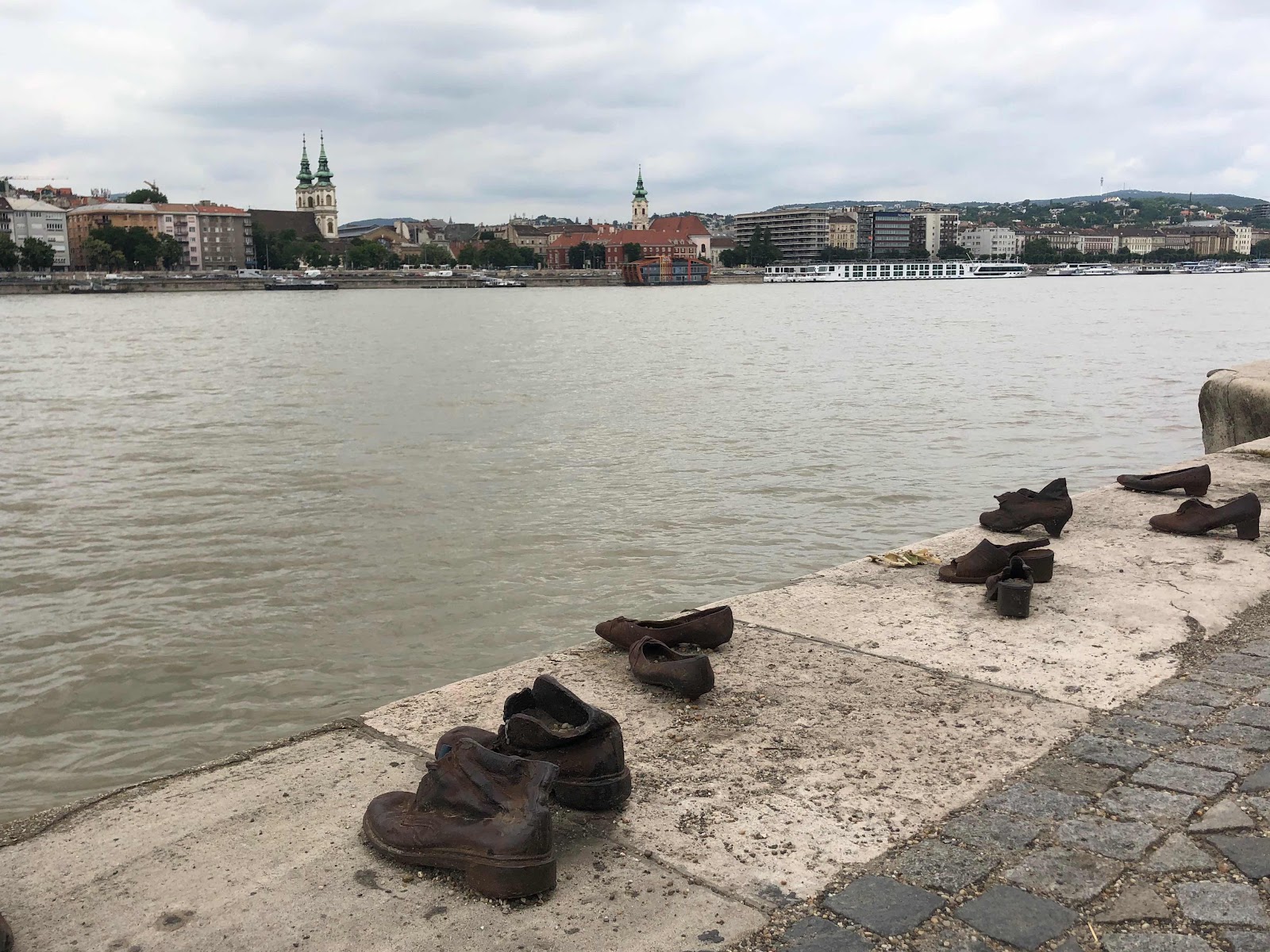
Along the riverside, a memorial of bronze shoes lined the bank. It is dedicated to the thousands of Jews who were lined up along this bank, ordered to remove their shoes, and then shot by Hungarian soldiers, their bodies falling into the river below. A chilling reminder that the Holocaust happened all over Europe.


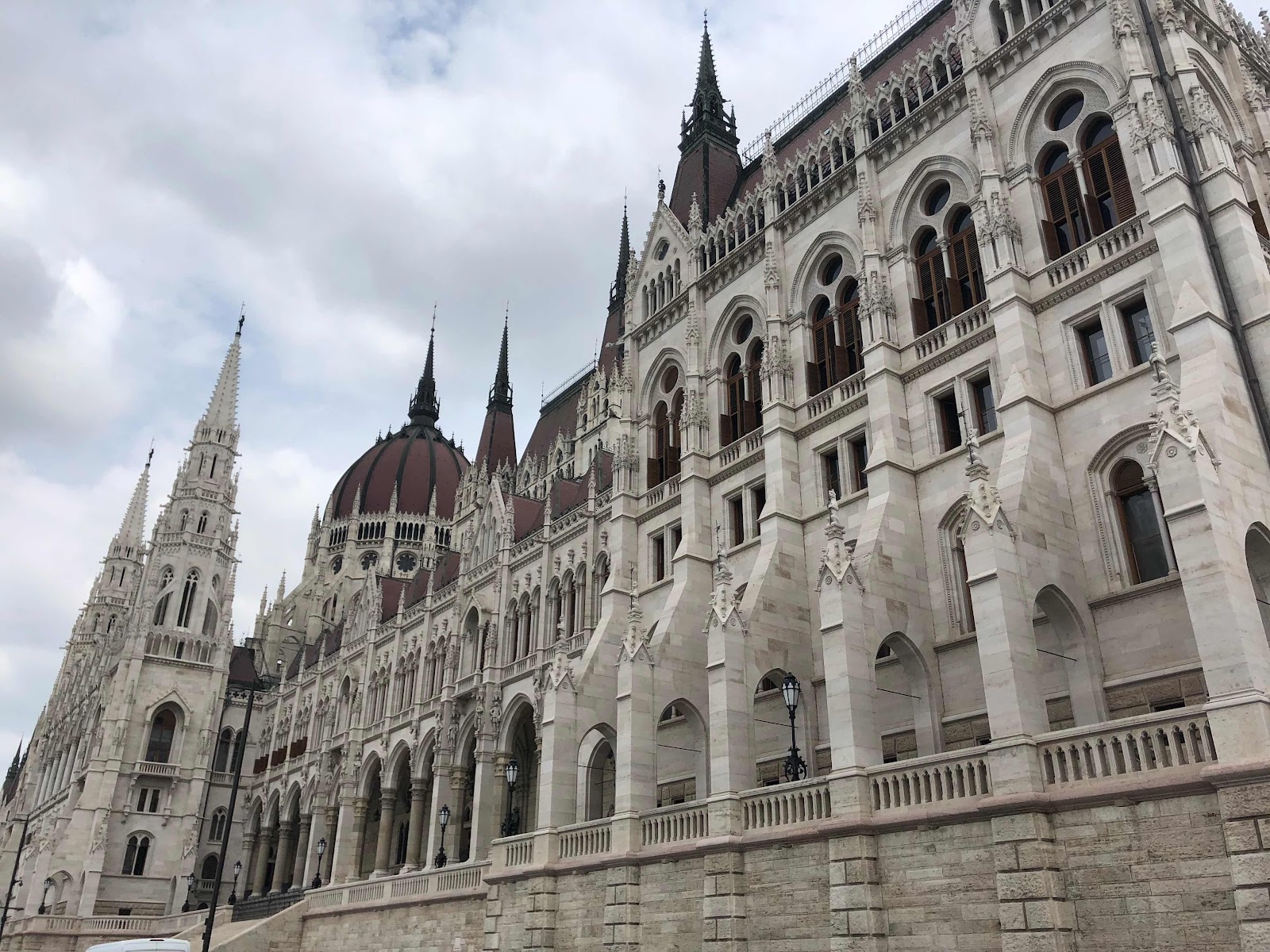
Our walk around town took us by the exquisite Parliament building, by monuments and through parks, in front of cathedrals and synogauges, just enough for a great taste of the city. And for the afternoon, we had a real taste of the city planned!


I had booked a small group walking food tour, but it turned out just to be the four of us! Rebeka, our guide, was energetic, enthusiastic, and had a wealth of knowledge of not only the city, but also of the Hungarian food. We lucked out and even had a second “guide” for the day as Rita, from the office, was joining us to photograph along the way. We truly felt like we were getting the royal treatment. 

In 896, Mygars, immigrating from Central Asia decided to call this place home. They brought with them skills and customs unlike any other in the area. They were known for drying out their meat, and even carrying it long distances under their saddles, making it more tender. The cows that they brought with them, are like the Hungarians themselves, tough and hearty. These cows were even immune to the mad cow disease that swept over Europe in recent history, making them very valuable.

Hungary loves their food, in fact, it’s the most obese country in Europe. (A bit ironic based on the name of the country, right?) And as it turns out, the reason we struggled to find “Hungarian restaurants” the night before was because after being so controlled by the communists, Hungarians love having choices. While traditional food is often still cooked at home, when dining out, they much prefer a variety represented by different countries.

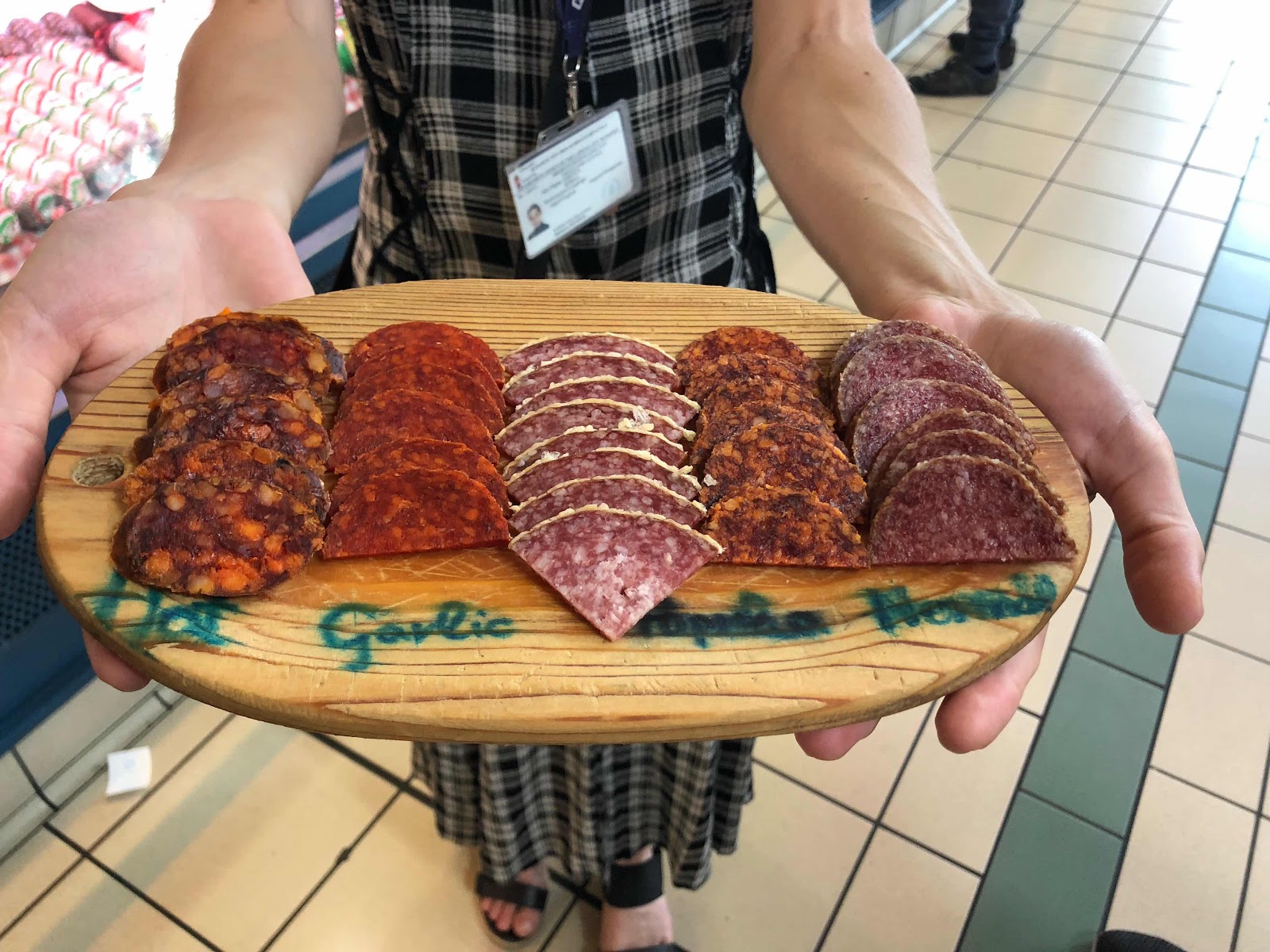
It’s a country focused on meat, and so we started with sampling a variety of sausages made from uniquely Hungarian pigs. The Hungarians, still having a bit of Asian influence, love their spices, in particular paprika. The sausages reflected that heat as well, and man they were delicious.

Knowing that vegetables were important, but not really liking them, the Hungarians most typically eat their vegetables pickled, claiming that it helps with digestion. The most common way of pickling doesn’t include any sort of vinegar, but rather a thick slice of sour dough bread at the top of a jar filled with vegetables, water, and garlic. We had two different types of pickles, one a bit sweeter, but both very similar to our pickles. There was also some saurerkraut and a tiny pickled watermelon! All flavorfully delicious.


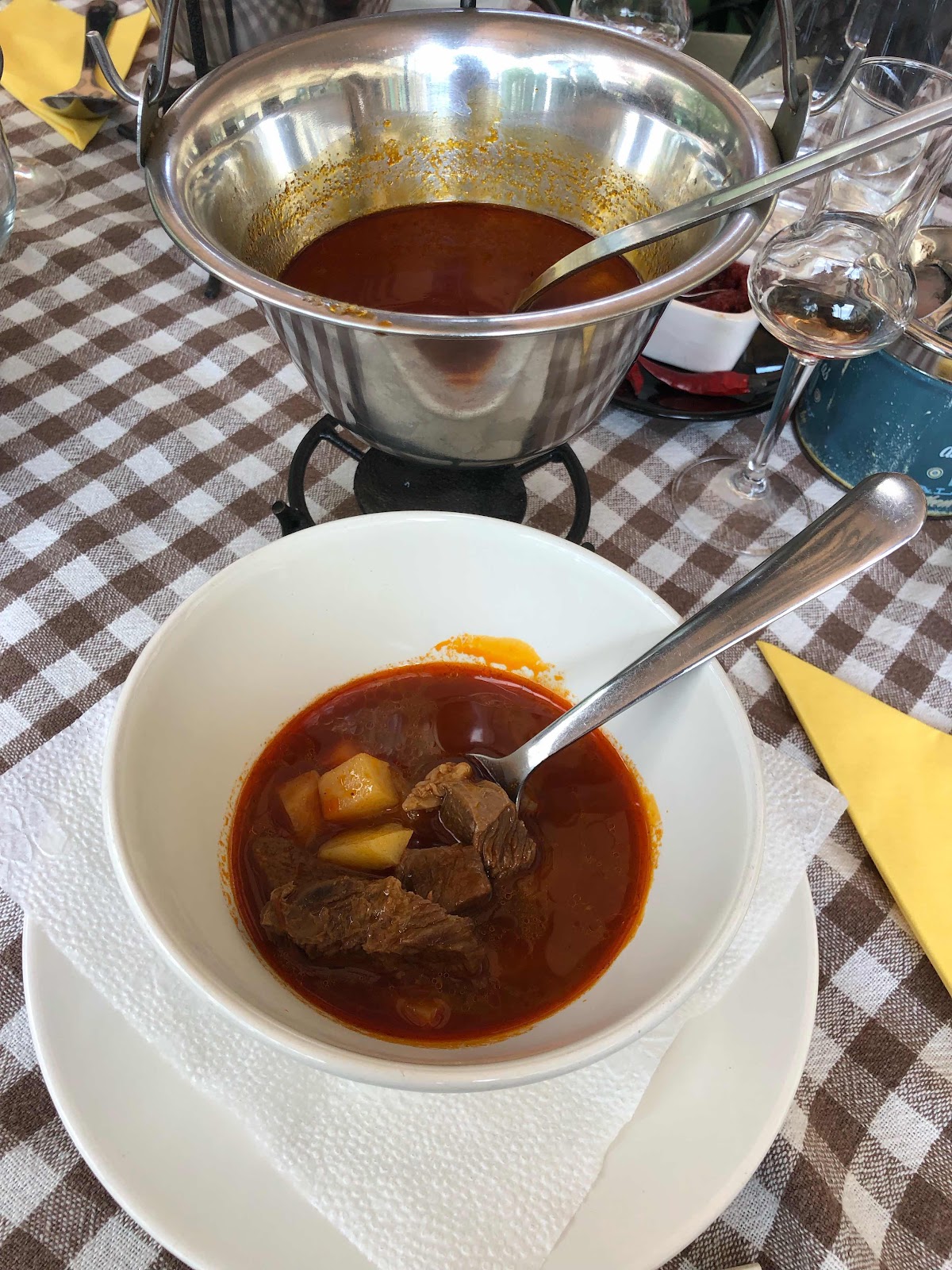
Our next dish was the Hungarian national dish of goulash. I’ve had goulash before, but the Hungarian version is different. I’m more accustomed to a gravy/stew like consistency, but the Hungarian one is a thin beef soup. It’s delicious, and very flavorful with paprika as a key ingredient. We also enjoyed the Hungarian drink of choice here, palenka. A strong, vodka like drink that is often flavored at home with a variety of fruits and herbs. Palenka is said to cure all ails, whether you rub it on your chest for congestion, on a sore muscle or drink away a heartache. Rebeka said, “we drink to cure the world.”


We devoured a small flodni cake in the Jewish quarter for dessert. While not terribly sweet, it was a concoction of a wide variety of flavors smashed in between a few layers of thin pastry. There were apples, poppyseed, plum jam, and walnut, all holding their own layers proudly.


We couldn’t have a Hungarian food tour without sampling Hungarian wine. Different regions, including by the lake we had tried to visit, have very different specialties. All were smooth and delicious, but what I enjoyed most about this, our last setting of the tour, was the conversations we had with our guides. Discussing openly our personal opinions of our own country’s politics, health care, education, immigration and even maternity care. I loved the openness, curiosity and support each of us felt for the other, the true desire to learn from one another, not judge, and the realization that neither of our country’s have it all figured out just yet.


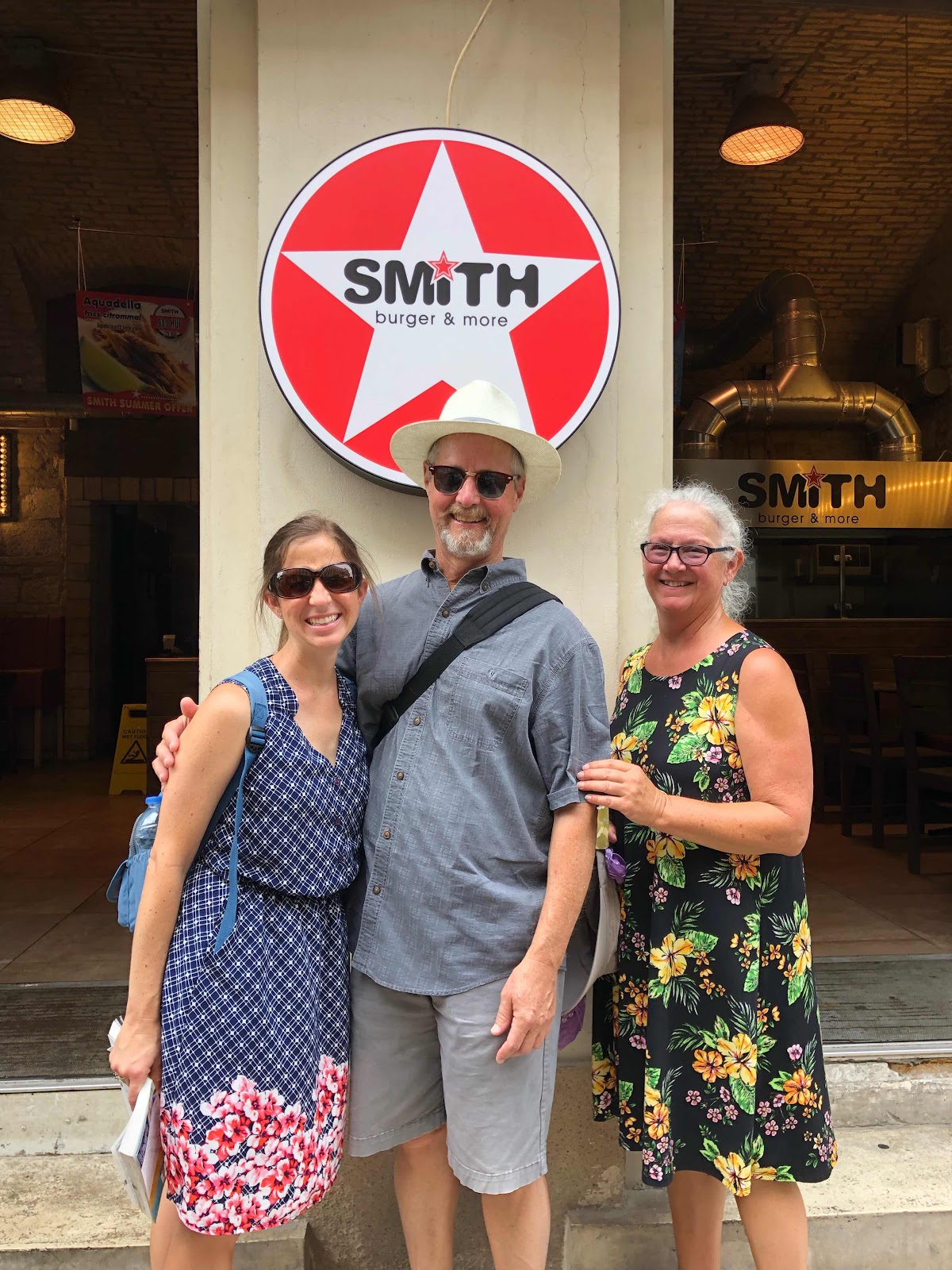
After we left our darling hosts, shockingly, we were just a tad bit hungry, as it was dinner time and we had been discussing over wine for some time, so we decided to find a place and split a few appetizers. Rebeka had shown us a brand new hotel that had just reopened after being refurbished, so we decided to try it out. Truly stunning inside, in the late 19th century, this building had been a mall, an elegant shopping venue for the wealthy. The ceiling was stained glass with intricate details and archways. Food was perfectly lovely both in taste and presentation. Being reopened for just two weeks after a long renovation process, we asked our waiter to tell us more about the history of the place. He was not confident in his English, so asked me to translate. Apparently, my pronunciation of the one Hungarian phrase I knew, “thank you,” was so good that he mistook me for a local! Always a compliment, especially when I feel incredibly ignorant for only speaking one language. He was able to muster up the confidence though and tell us more about the building, including that his grandmother had once worked there and how proud she was of him to be working there now.


It was a perfect last day with my parents for our family vacation. I put them in the cab headed to the airport the next morning, and they have since made it home safe and sound. I believe the best indication of our time together being so perfect was that I was sad to see them pull away, sad that this trip, such a rarity for the three of us, was over. But now, Jessica and I will continue the adventure in this part of the world.

Saturday, June 29, 2019

Auschwitz

You don’t have to read this one. Trust me, I know it’s not an easy for topic for any of us, but know this from the start, that I’m not going to hold back. It’s a story that needs to be told. It needs to be heard. We need to do everything in our being to ensure these hellacious crimes are never again repeated in any form or fashion.
Coming to this part of the world, it was important to me to see Auschwitz. Getting tickets was more difficult than I imagined. If you ever get the chance, go ahead and book your tickets the day after booking your plane ticket to ensure entry. During summer months, you must book ahead, and according to the website, you must sign up as part of a tour. But there were a variety of choices multiple times each hour throughout the day. I would choose one (a random selection), then about three days later, receive an email that that option was not available. That was it, nothing about what was available. After several tries, I became panicked and called in a favor to a friend who works at the Holocaust museum in DC. Thankfully, he came through for us, and I’m eternally grateful. Tickets are free. It was important to the Polish government that the museum be an education center and wanted it to be accessible to all. We were not part of a tour, of which I was actually grateful. Jessica and I spent a full five hours at Auschwitz-Birkenau, and had they not been going through a heat wave, I believe we easily could have stayed longer. Rick Steve’s has very helpful notes. Information plaques were written in Polish, English and Hebrew. I’m confident that we missed out on some unique tidbits of information, but I was very glad we could move at our own pace.

I woke up this morning, anxious. Yes, part of it was certainly our unairconditioned room, but I believe just as much was anticipation for the day. Excited certainly wasn’t the right word, nor thrilled, nor eager. All of these words include a touch of cheer, and that is not a word you can use to describe Auschwitz. I was anxious about how I’d feel throughout the day, interested to learn more and emotional.

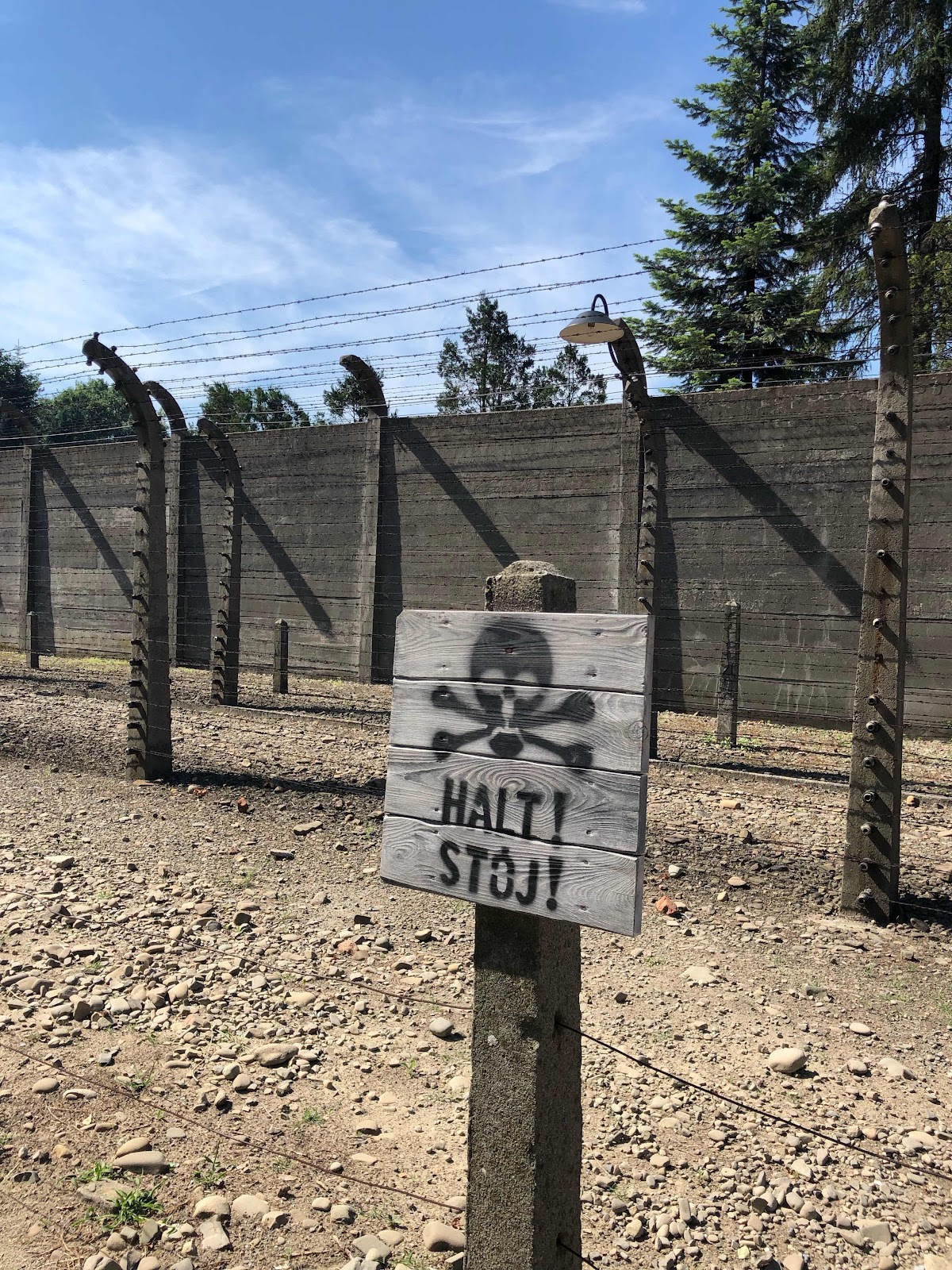
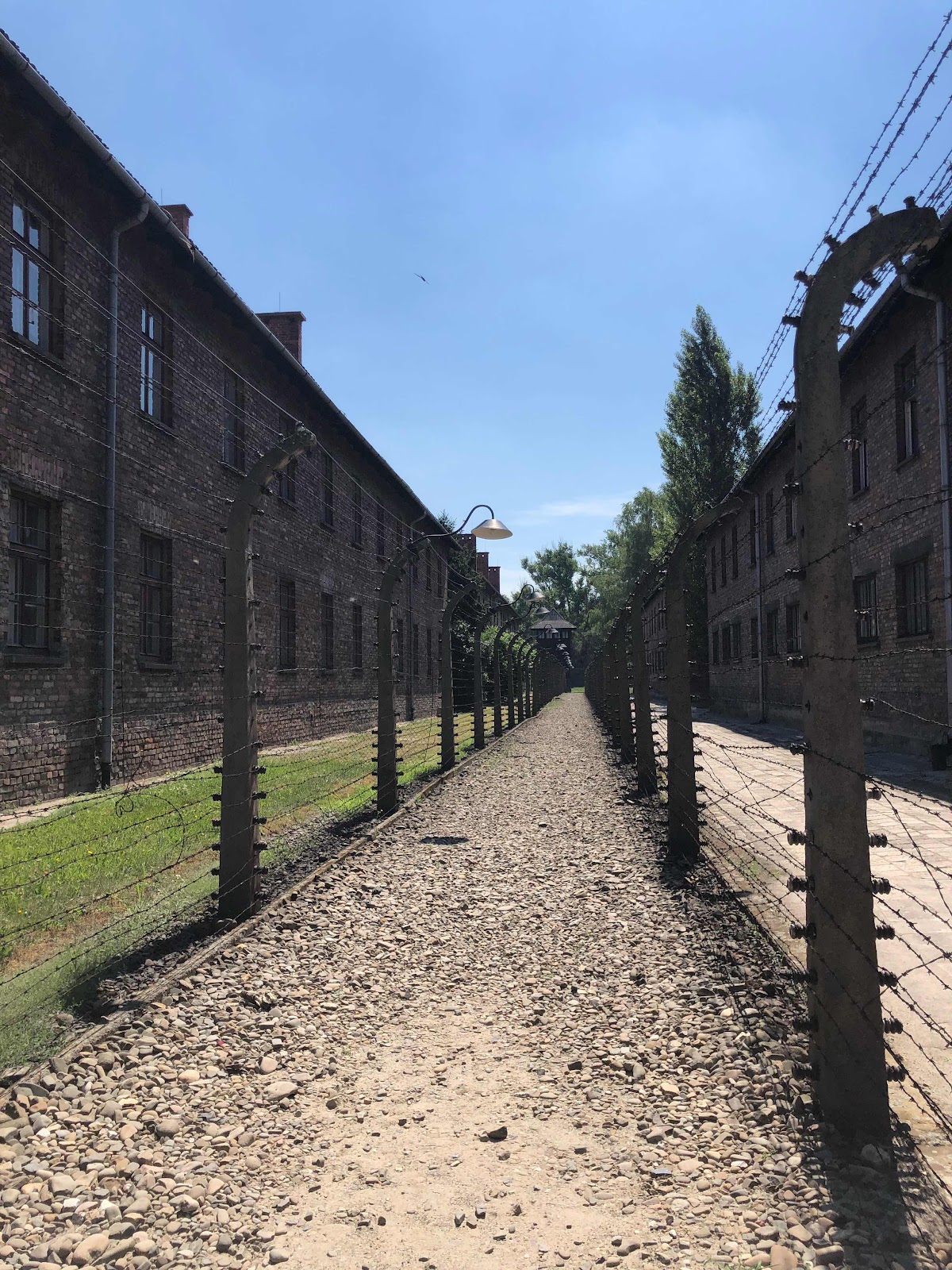
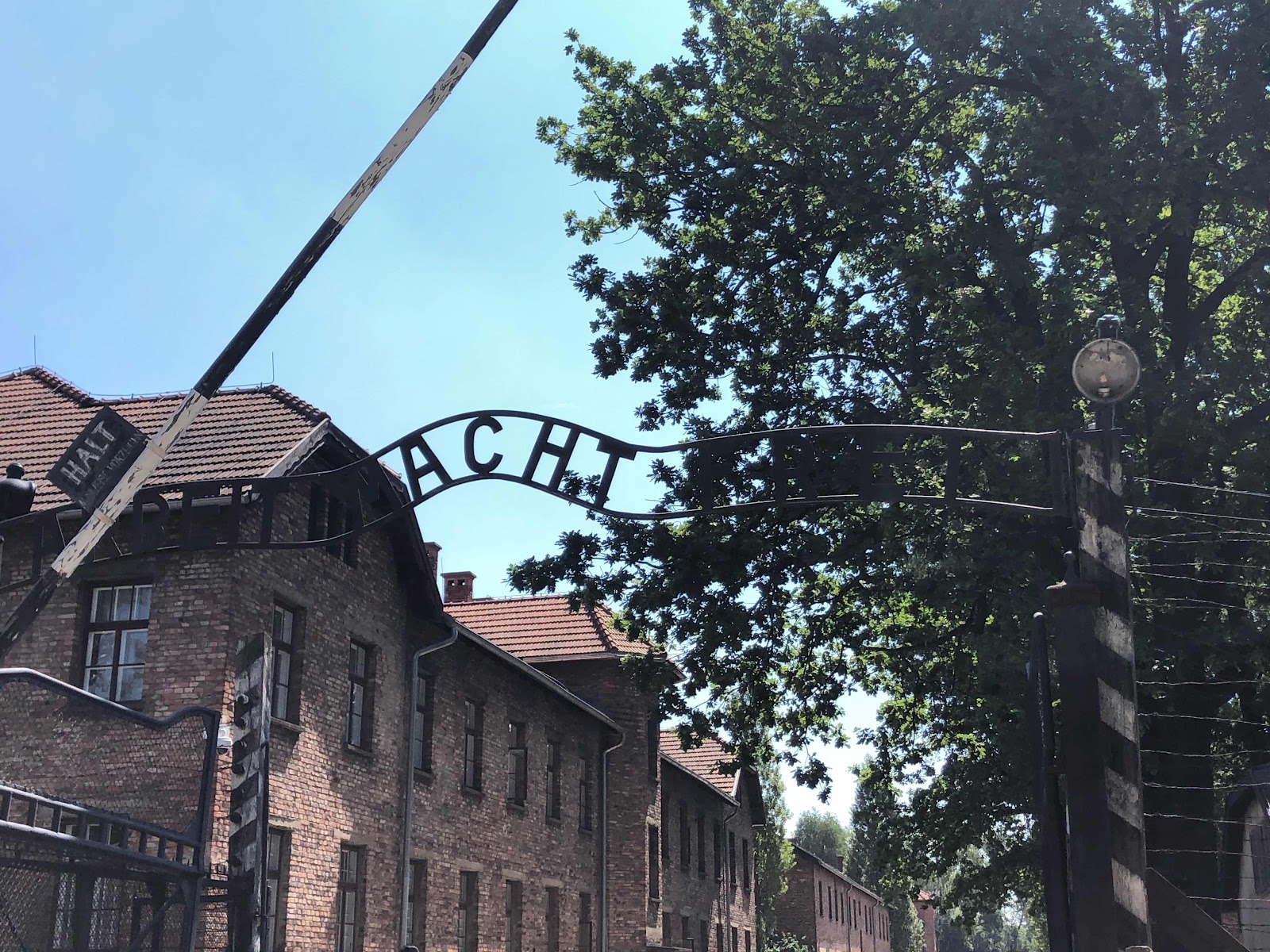
Upon entering, you walk through the same gate that thousands of others walked through bearing the German translation of “work will set you free,” a complete and utter lie. Although today with healthy trees, clean brick buildings, soft grass and wide walkways, the compound could make you feel like you’ve arrived at some sort of retreat center. It masks the hell that once was. This was never meant to be a work camp. It was intended as a death camp. 


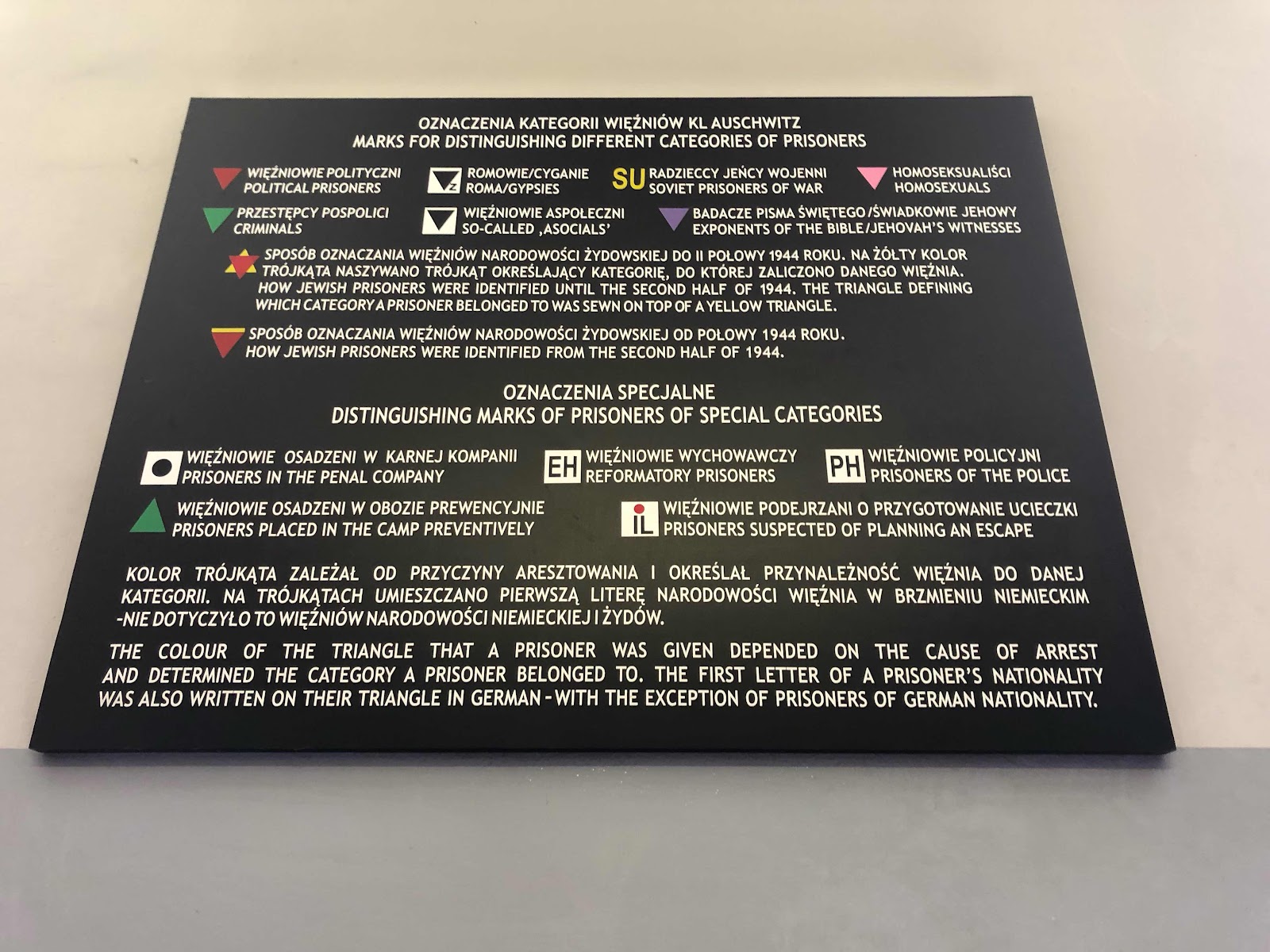
In 1940, the Germans opened Auschwitz because the local prisons were overflowing with Polish prisoners. Poland held the largest Jewish population in Europe. Keep in mind that Hitler’s pure hatred of the Jews was central to his plans, but there were many more “crimes,” that would get you placed into concentration camps as indicated by the symbol sewn onto the prisoners’ uniforms. There was also the room with piles of crutches and prosthetics, a reminder that Hitler’s first victims were the disabled.


The camp is set up in an orderly way with three rows of barracks evenly spaced. Each barrack had a different purpose. Many were for housing inmates on crowded floors or three bunks high with multiple people sharing a bunk. One was the hospital (where no one came back out of). And one was the death block. Inside many of these buildings today are well described and vividly pictured memorials of the unimaginable crimes that happened here. There were incredibly few photos taken inside the camp during its operation, as the Germans did not want anyone to see what was going on inside. Most displays are photos of people boarding the train to Auschwitz, a few of the survivors after being liberated, many drawings done by those few who survived, and a few photographs taken by arrogant SS officers proud of their deeds.


One block displayed many of the confiscated items that the prisoners had brought with them. Prisoners had been encouraged to bring things with them. Those that were put into gas chambers were told to leave their clothes on a numbered hook and remember what number they were for “when they returned”. All vindictive measures made to make people at first feel more comfortable. There was a room full of suitcases with names scrawled on the side identifying just some of the over one million people slaughtered here. There were mounds of shoes, peppered with shoes the size of a young toddler. Glasses, family photographs, combs, pots and pans, were all on display in great numbers. When the camp was in operation, these items would be sent off to large warehouses called the Canadas, because the prisoners doing the sorting pictured that to be a faraway country with lots of wealth.

When Auschwitz first opened, each arriving prisoner, after being showered, shaved, tattooed with a number and given a uniform, was photographed. One building was lined with photographs of people who had died in the camp. Most, who weren’t murdered immediately, only survived the malnutrition and unimaginable conditions for a couple months. I must admit that I was shocked by the organization of the Nazis. If the true intention was just to slaughter in large masses, they kept a lot of records. They knew when specific prisoners (numbers of course, no longer a name) died, and kept logs. Roll calls were frequent, due to ensuring no runaways, and so constant keep of the lists of live prisoners was crucial.


One exhibit focused on the starvation of the prisoners. Given only the meagerest of rations each day and forced to work at often break-necking jobs, prisoners often died of starvation. Photographs showed women, whom after four months of intense treatment after liberation still weighed half of what they had before arrival at Auschwitz.

Dr. Josef Mengele, a sadistic man, used many prisoners for gruesome experiments. He especially enjoyed tormenting twins, hoping to find ways to increase fertility for German women. As such, his experiments also included reproductive organs of men and women. Not seeing the people before him as people, but only research subjects, he gave no thought to their well being.


The death block was a horrific example of the terrors imposed on prisoners. Some “criminals” were “tried” very quickly and with no opportunity for speaking for themselves. No one went into the death block and returned. Some cells were for starvation where prisoners were locked away for two weeks at a time. Some were forced to stand in tiny cells with other prisoners for days. There was a dark cell where only a tiny shaft of light appeared. If it was snowy outside, the shaft closed and the prisoners were left with no air. If prisoners didn’t die in these hells, they were taken outside to the courtyard just outside, the execution courtyard where they were shot.

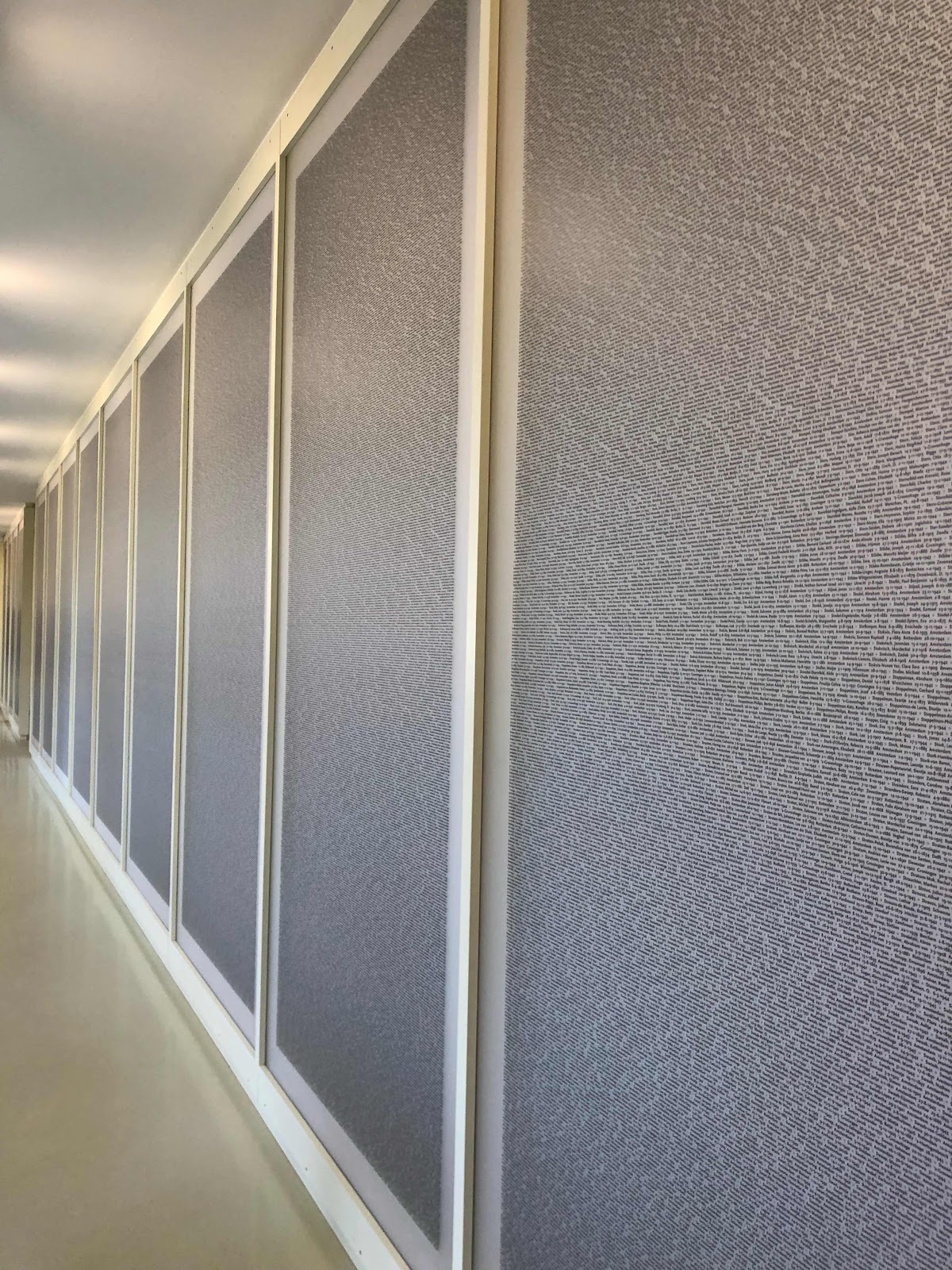
Some of the barracks were created and maintained by individual countries that had lost citizens at Auschwitz. We chose two to go into: the Netherlands and one just for the Jewish victims. For the Dutch Jews, I had a hard time understanding as the first few walls were about how welcoming the Netherlands had been to the Jews, and then something happened, and they were segregated, shunned and treated as second class citizens. How can this happen in a place? How can people allow this to happen? Is it just fear, in this case of Nazi Germany, that can cause people to look at others as if they aren’t people at all? In the end, over seventy five percent of the Jews living in the Netherlands had been murdered by the end of the Holocaust. This wall shows the name of the 57,000 of them that were killed at Auschwitz. 


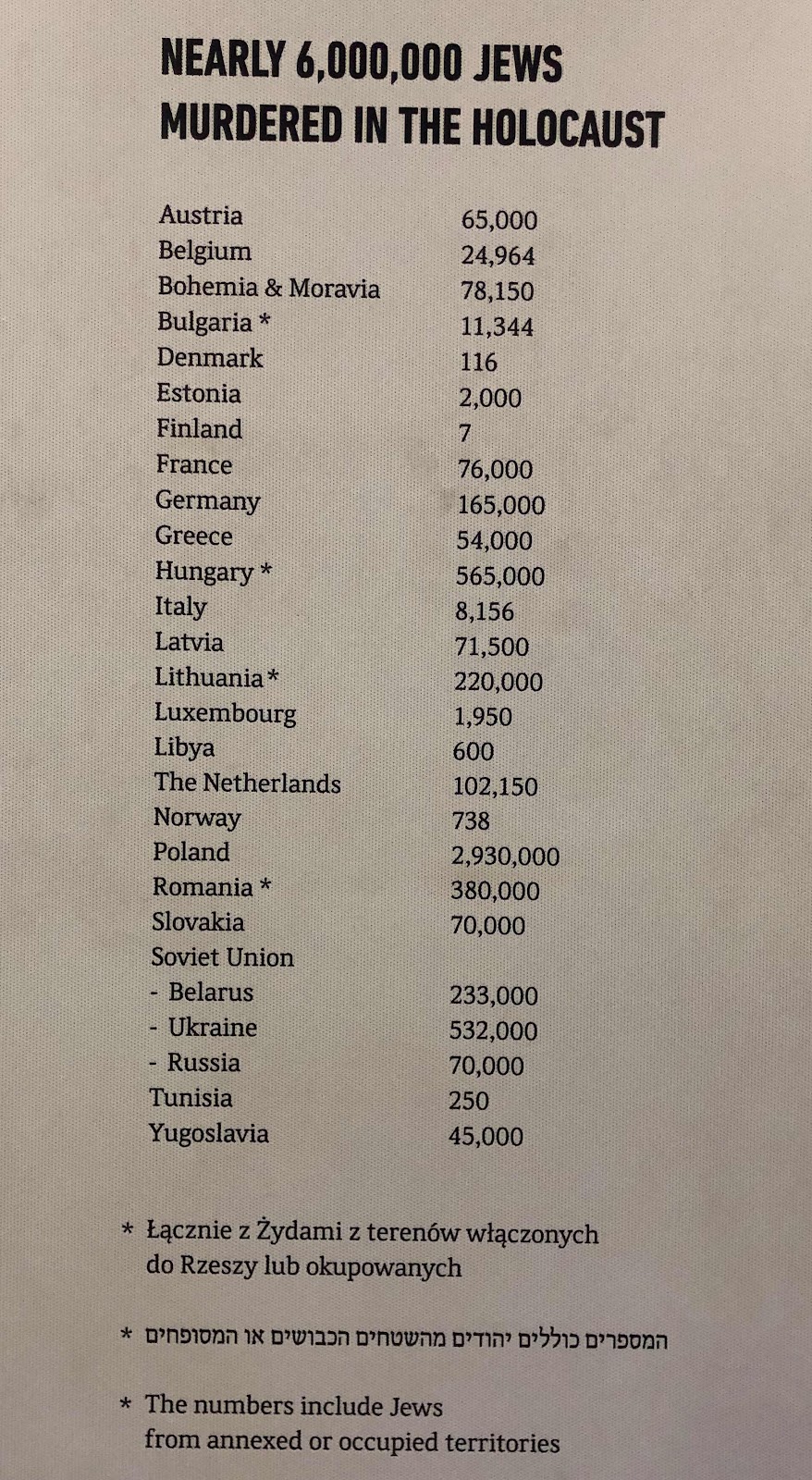
The National Memoral to Jewish victims was haunting and poignant. Upon entering, a somber prayer was being sung in Hebrew, setting the mood. A dark room showed video clips of Jews from across Europe in the 1930s enjoying life and living a seemingly normal life. Another room gave maps and statistics of the Jews killed in the Holocaust, 6,000,000, nearly two thirds of the Jews that had been living in Europe.


Don’t let Denmark’s low number miss your attention. Denmark is known to have worked together, as a country, to hide and deport the 8,000 Jews living there, in just a few short days. The stories from that country are truly inspiring.

Another room showed video clips, translated into several languages of Hitler’s hateful speeches, government officials and officers proudly making horrifying, bold statements with crowds cheering. How truly terrfiying the see that crowd mentality. It is not acceptable for us to cheer at leaders who are uttering words of hate. Ever.

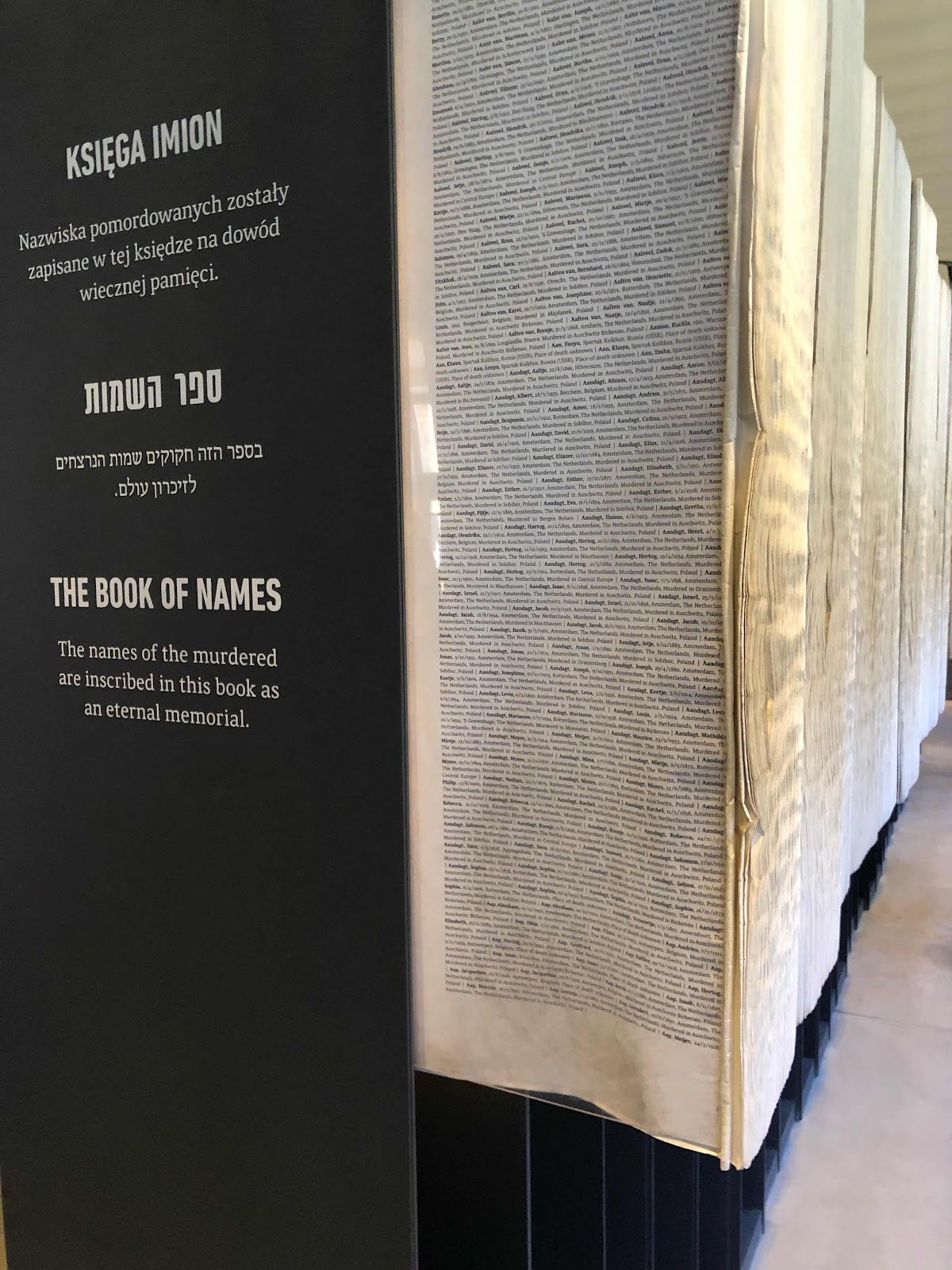
The last room was a giant book with page after page filled with names of Jews lost in the Holocaust, still being added to as descendants put pieces together.


The creamatorium, the real hell amongst hells is still in tact. We walked inside, although, I couldn’t stay long. The heartbreak that this building caused is tangible as if the weight of the souls remains. The first room is where people were told to undress. The next chamber is the “shower room,” where seven hundred people’s lives could be sucked away from them in one short moment. Just next door, furnaces were ready to cremate the bodies. It was here the prisoners were also forced to work, often coming across bodies of their loved ones as they were supposed to toss them into the fire.

Just outside, the gallows remain in tact. Not ones where prisoners had been killed, those have long since been destroyed, but where the camp commander was hanged. Soon after the war, he was tried and convicted. Survivors asked for him to be executed at Auschwitz, a small inkling of justice.


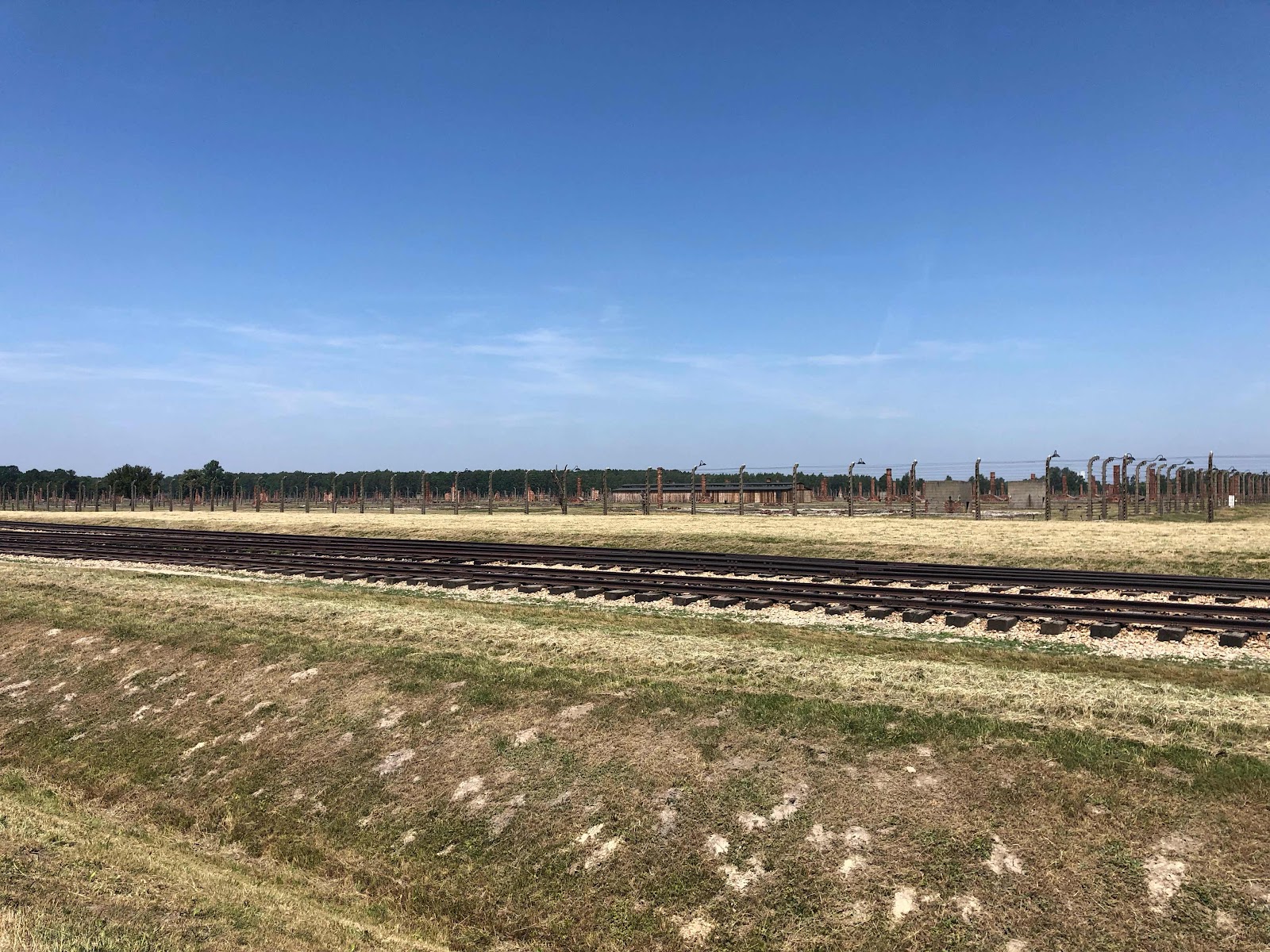
Unfortunately, that isn’t even half the story. The Germans wanted to be able to house more prisoners than the crowded barracks at Auschwitz would hold, so they constructed a second death camp about two miles away, Birkenau. Birkenau, much of which was wooden, and since destroyed is a huge expanse. Despite the fact that very little remains, the enormity of the space, and the chimney stacks that dot the terrain, is truly haunting. It was built to hold 200,000 people, and four crematoriums here could each slaughter over 4,000 lives a day.


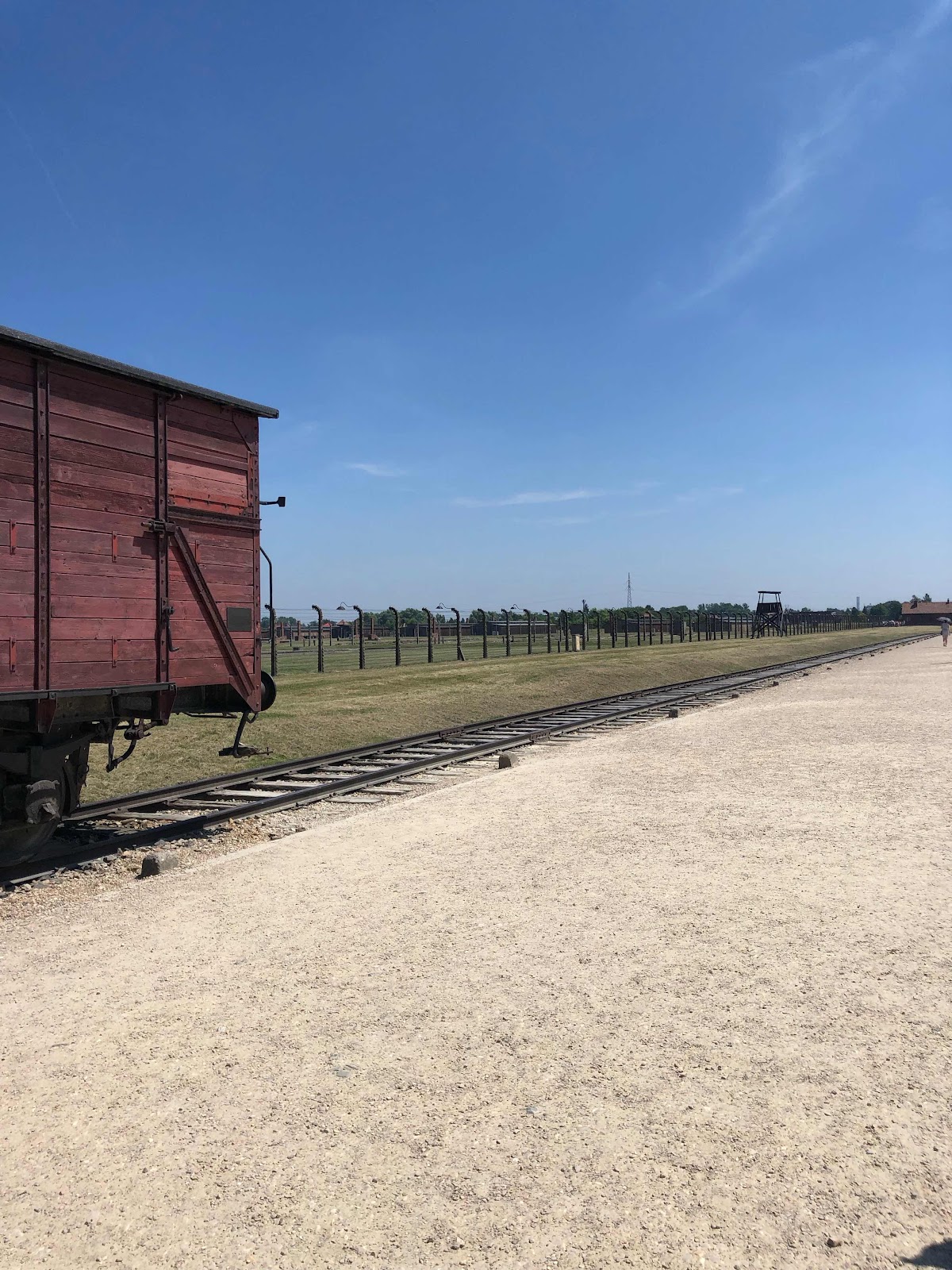
A lone train car stands on the tracks that run through the camp as a reminder of the selection process where families were divided. Here, prisoners were stripped of their names and given only a number. A Nazi doctor, with little consideration, and a simple flick of the wrist to the right or left chose if arriving prisoners were sent immediately to the gas chamber or were allowed to live in hell for just a little bit longer.


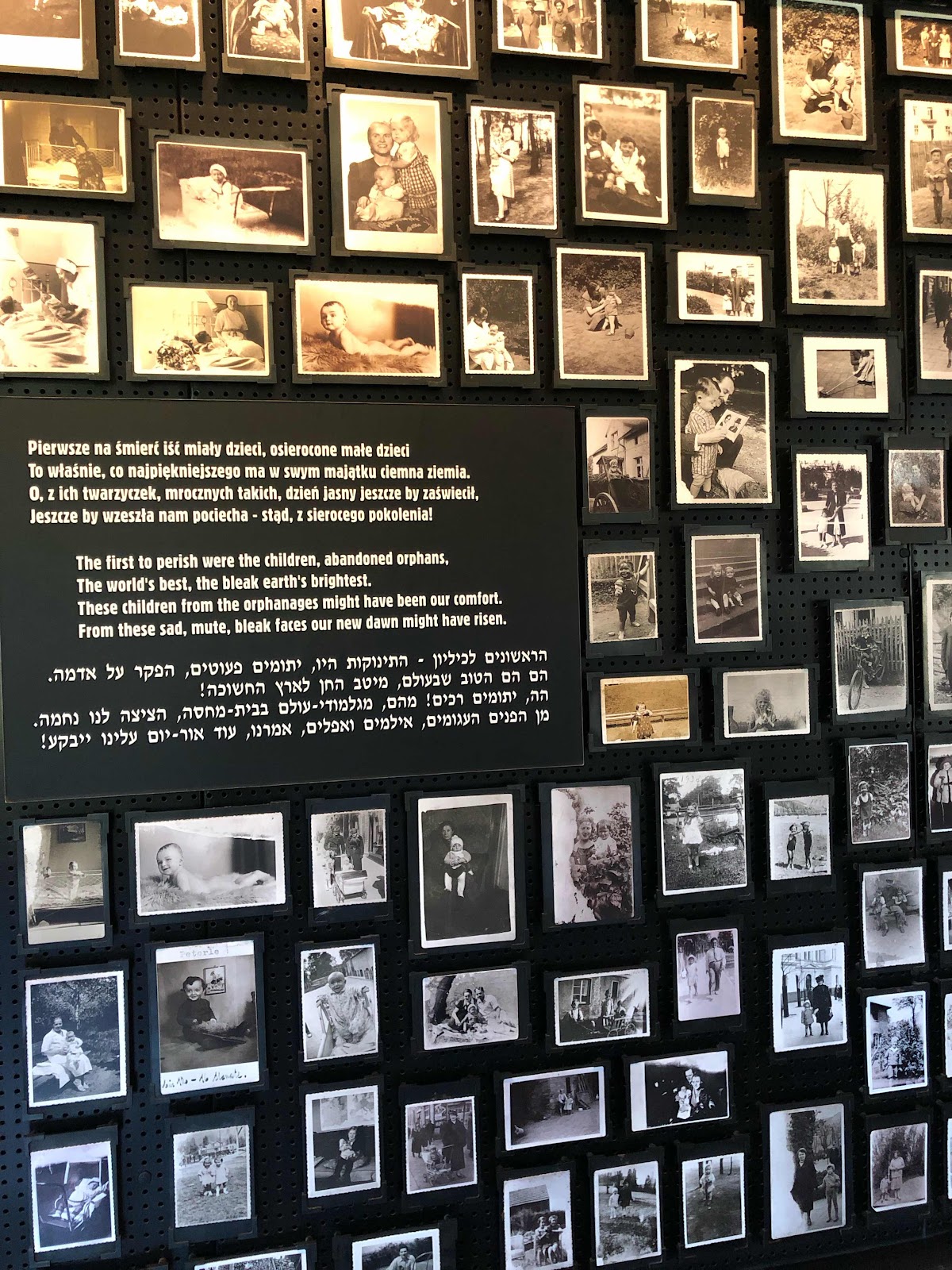
One building housed photographs sent in by family members after the war. It helped to humanize the victims and remind us all that they were human beings just as you and I, but they were denied the right to live. Photographs of family outings, vacations, clubs, proud moments, and every thing else that seems to make our lives brighter lined the wall. One wall was even divided into family sections where large expanses of extended families were represented. The plaque describing what professions the family members held, who married whom, and the children they had, often ended with “and only one family member survived.”


It was a heart wrenching day, one where it was difficult to find hope. But even in times so dark, it would seem you couldn’t see right in front of you, there were glimmers of hope. Love letters had been found on the walls in the “Death Block,” telling family members to go on, to have strength and to pass on the victim’s love to his/her children. There were many stories of the solidarity that prisoners showed. In a time when everyone could have been selfish simply for the chance to live and tried to savor every crumb of extra or contrabanded ration, they did all that they could to share, keeping their fellow prisoners alive for a little bit longer. The soldiers did what they could to divide the prisoners such as punishing groups for the action of one. If one ran away, ten were tortured, and yet the stories that came out weren’t of bitterness, but instead pride and hope for their fellow man. One such story was about a priest. When one of his bunk mates ran away, ten from the barrack were forced into the starvation cell. He was not in the ten chosen, but volunteered to take the place of a man with small children. Two weeks later, when the starvation cell was opened again, the priest remained alive. Inspiration spread through the camp, but of course that was squashed by the SS who soon slaughtered the priest.

I believe that one of my biggest take aways was how, with such enormity this operation continued for so long without anyone doing anything. There was even evidence in the museum of Polish officials (in hiding in other countries) sending letters to officials in other countries asking for help. One such letter had a response from the British that seemed to point mostly toward economic relations with the Germans as a reason not to act. My hope is that most countries did not know the extent, or could not fathom it, how could anyone truly imagine these horrific acts. But still. How did such massive slaughterings occur with so many countries turning a blind eye? 


With this being one of my biggest take aways, I realized we must all do something. When we see wrong, even if we can’t “fix” it, we can’t turn a blind eye. We have to speak up. We have to do what we can to make sure that our fellow human beings are treated as human beings. Learn from our past, make our future better, and ensure that hells, like the one that encompassed this part of Europe less than a century ago never happens again.

“Monsters exist, but they are too few in number to be truly dangerous. More dangerous are the common men, the functionaries ready to believe and to act without asking questions." - Primo Levi, survivor of Auschwitz 

Thursday, June 20, 2019

Magical Days on Bled

After Jessica arrived, we only had two full days to ensure that we completed as much as possible on our Slovenia Bucket List, and ensured that she got to see some of the country we had been enjoying for the past several days.  We had saved several of the local highlights for her arrival, and it couldn't have worked out more perfectly.

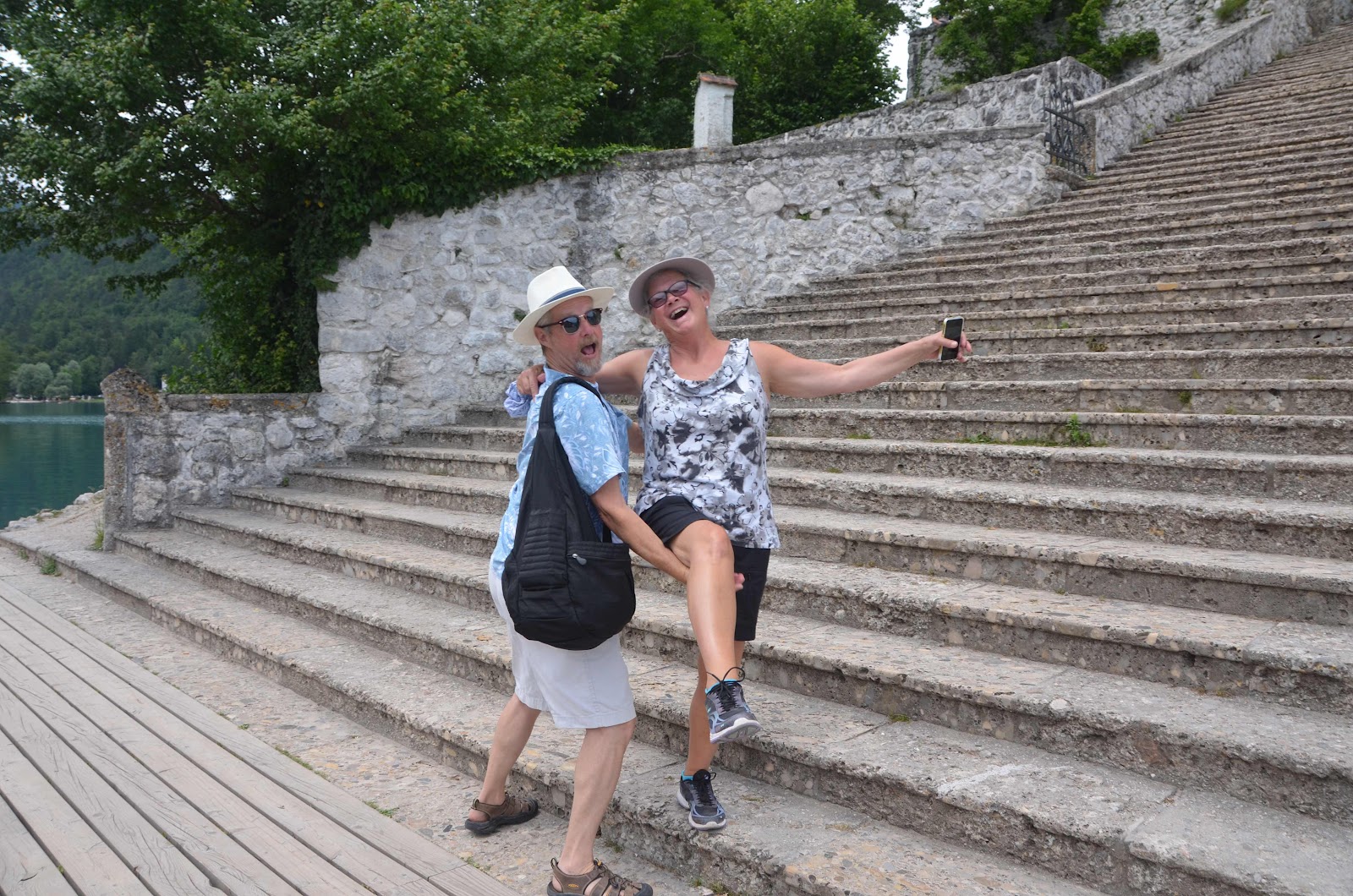
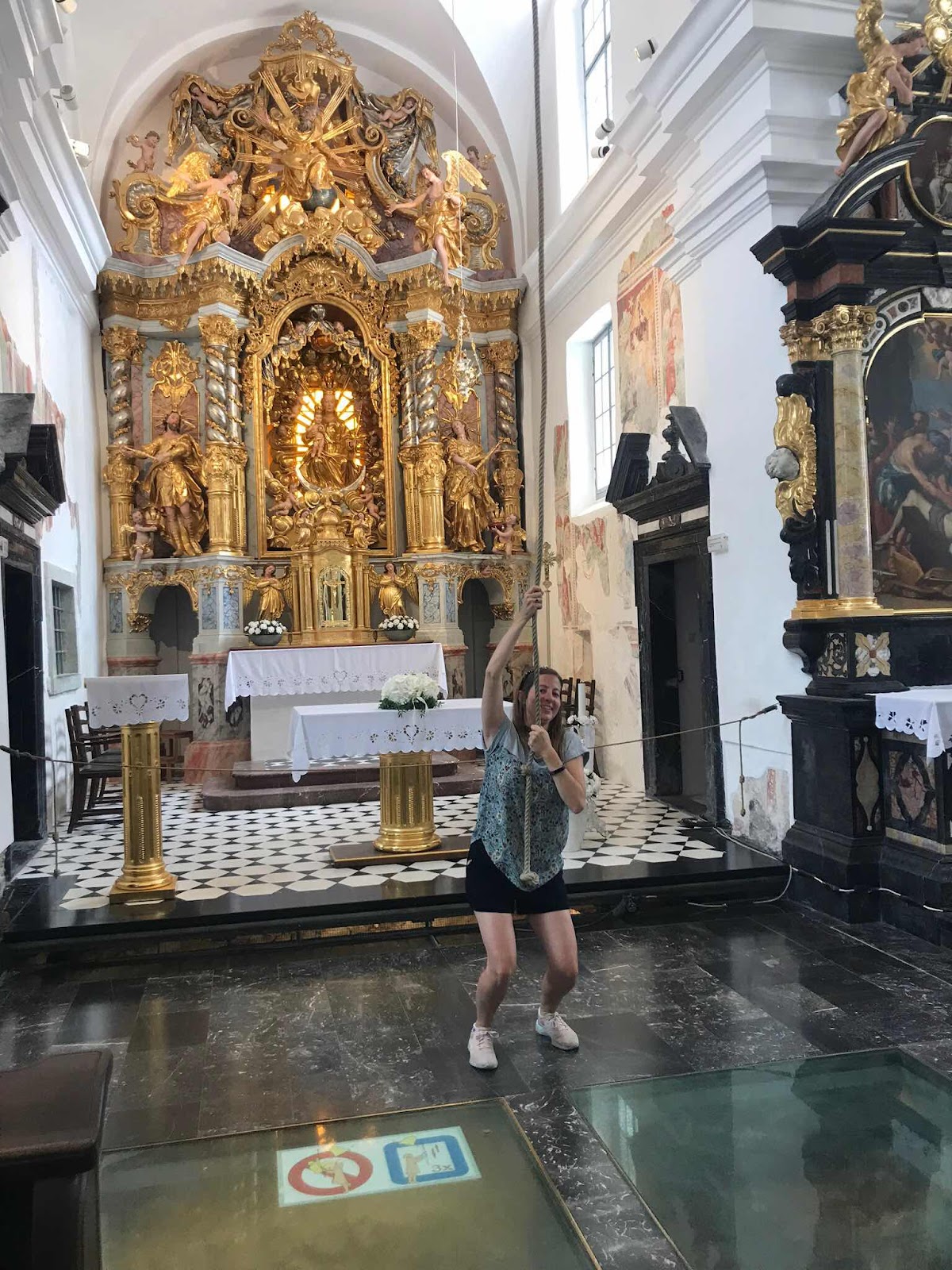
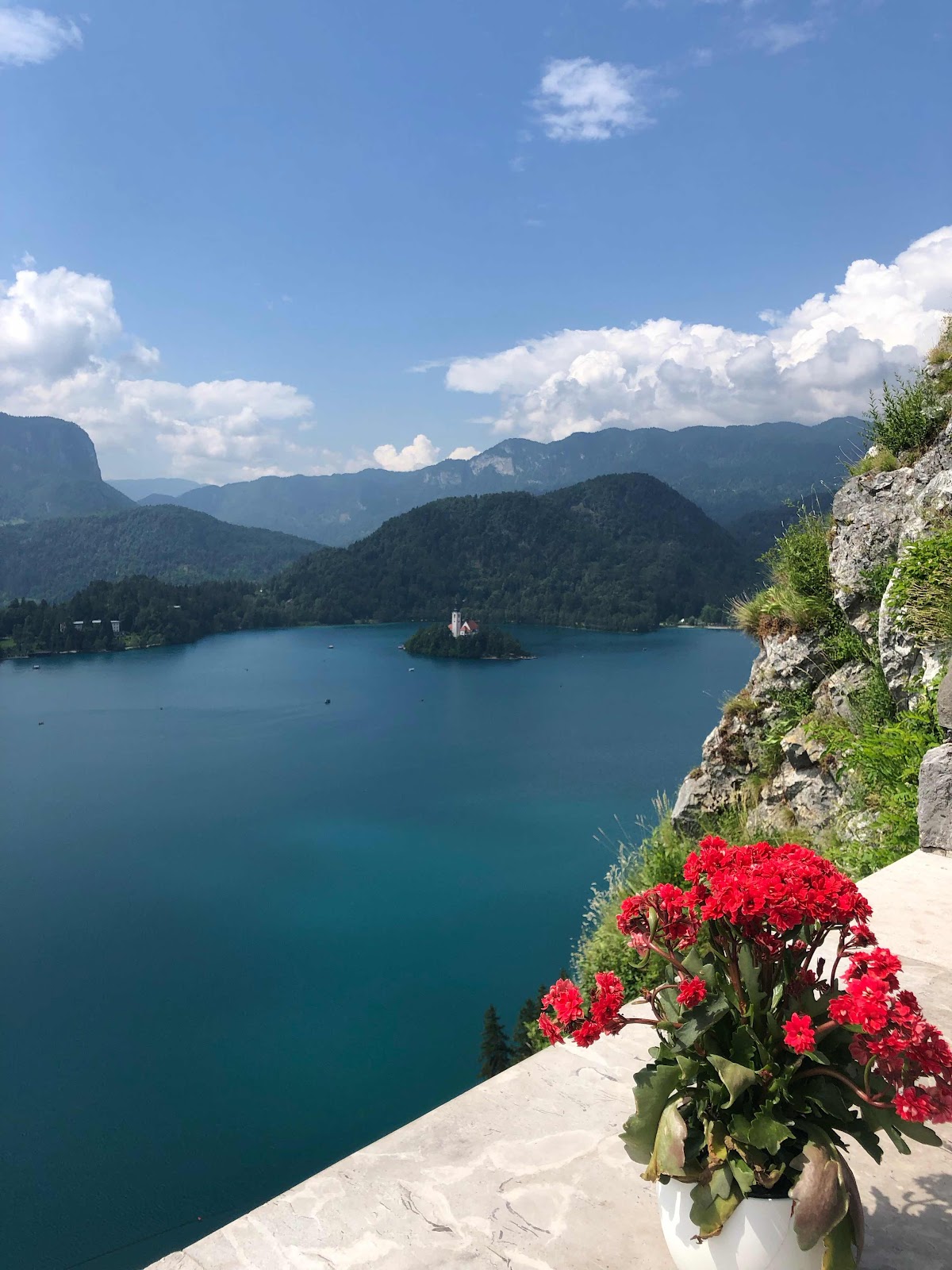
Lake Bled is a large, turquoise lake with a small island in the middle.  It makes for beautiful photographs from afar, but it is also well worth the visit to the island.  Over a thousand years ago, the island was used as a worship center for the goddess of love.  When the area was converted to Christianity, the island was then adorned with a small chapel.  I guess it is no wonder why brides and grooms choose this picturesque spot to say their vows.  There is one small glitch though.  Local legend says that in order to have a successful marriage, the groom must carry the bride up the 99 steps from the boat dock to the church.  It is said that 80% succeed, which, seeing those stairs, impresses me!  Although, another guide told us that it is often the bride's fault because in order to be successful, the bride must also remain silent.  Another legend says that if you can ring the bell in the church three times with one fell swoop, your dreams will come true.  The bell rang all day.  Truly continuously throughout the day, and you could hear it from around the lake.  And yet, somehow, when I rang the bell, it stopped ringing.  I would take that as a bad sign, but when you're in such a beautiful spot, well, I'm not totally certain your luck is bad.


The pletna boat, a boat only seen on Lake Bled took us back to shore.  The pletna boats have a sort of monopoly here as, years ago, when land was divided up, the boat captains were not given any land, but were given the honor of driving boats and told they could take payment for that without having to pay any taxes.  Sort of like a huge gondola, but with a two oars for the rower, besides the row boats you can rent, they are just about the only thing on the lake - motors are not allowed.

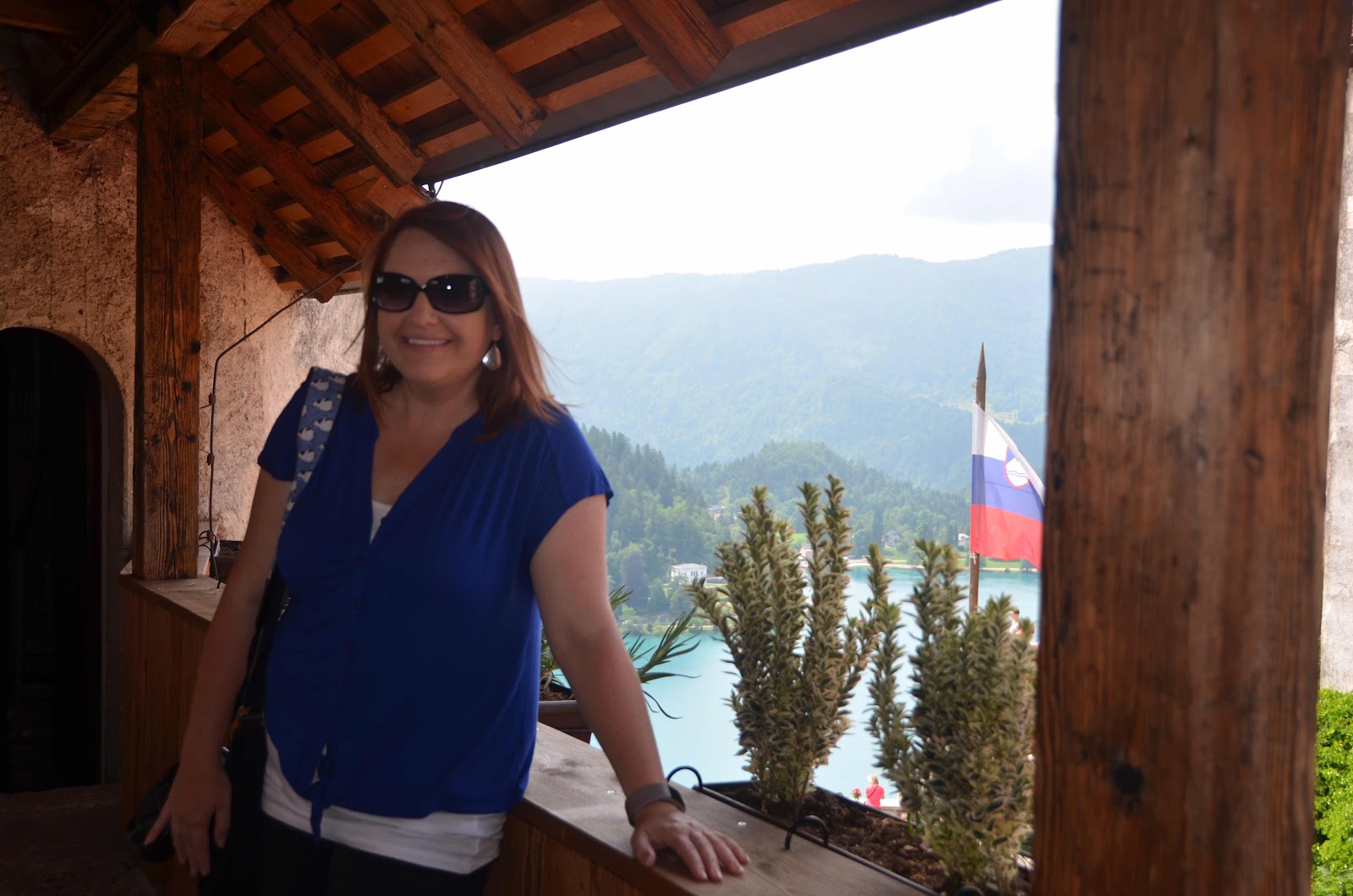
Before rain set in, I decided to take Jessica back to the viewpoint at the far end of the lake. It truly is the best place to get views of the lake, castle, and island all at the same time. The steep climb soon had us sweating, but once again, it was well worth it, and I was very thankful we went back for the stunning views of the marvelous vast scenery. Once again, though, while on top, the thunder started and so we rushed back down, making it back to the flat track around the lake just in time for a drizzle.


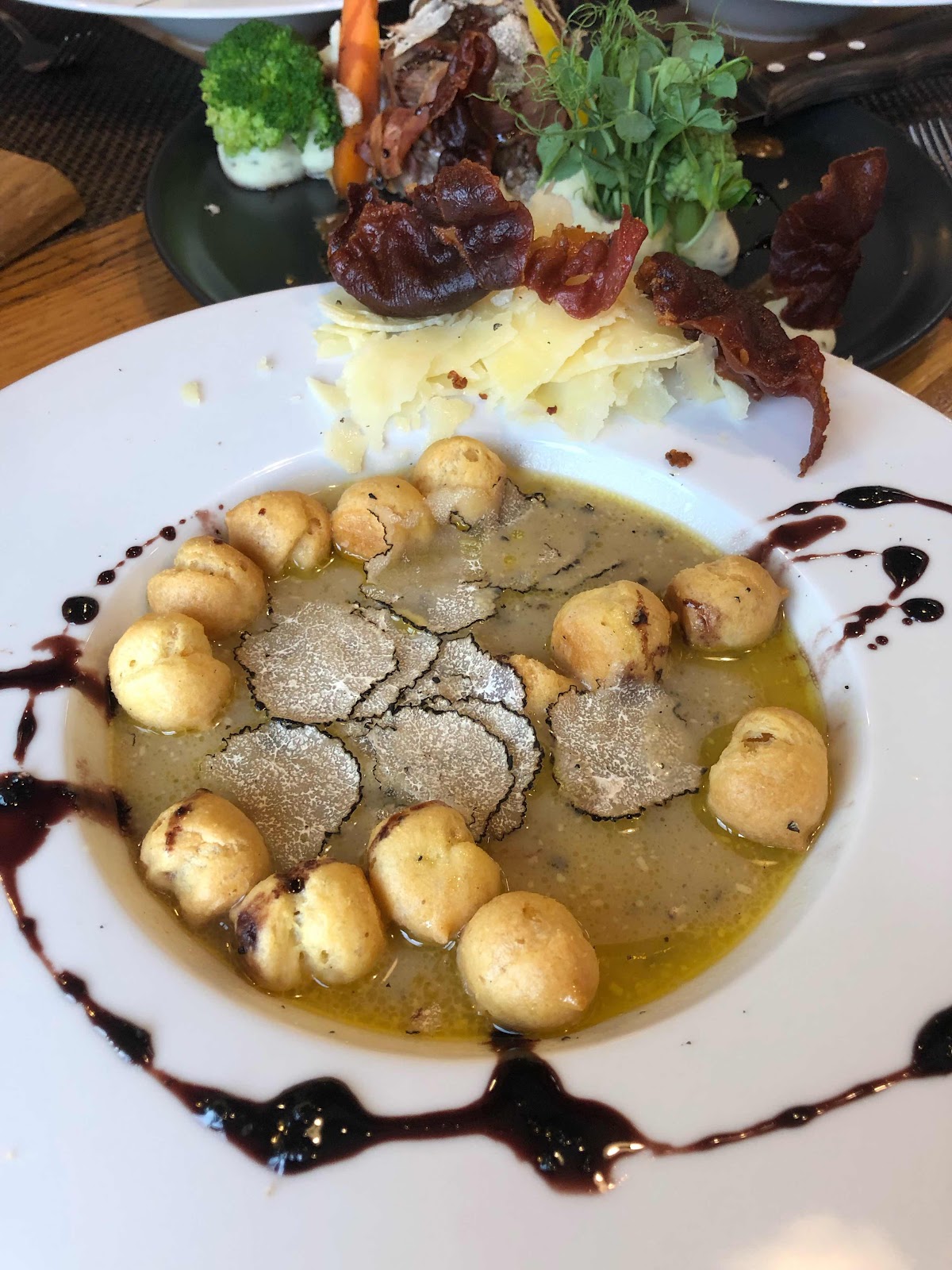
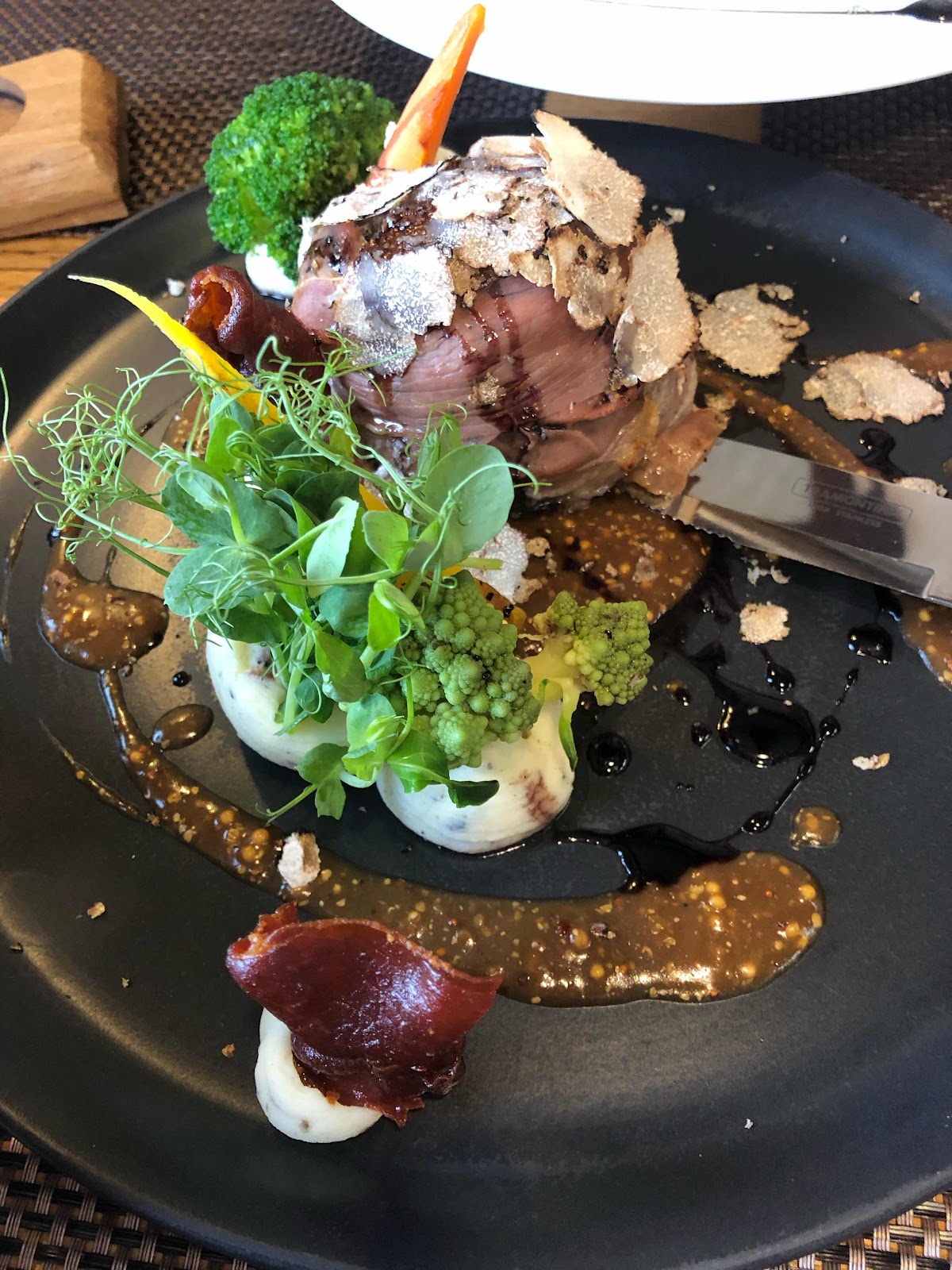
One of the best restaurants in town, Sova, was nearer to the other end of the lake, a walkable distance for sure, but perhaps not one that we wanted to walk to and from for dinner, and as parking in the area was very limited, we decided to make a late afternoon feast out of it, and man, it was delicious! The creamy truffle soup and the Sova steak were not only delectable, but works of art as well.


We walked home in the light drizzle of afternoon rain, had a quiet evening and then walked to the nice hotel in town where cream cake, the local speciality was invented. It has several layers on it, but is most similarly compared to a layer of custard, a layer of whipped cream and a crisp pastry to top it off. Quite delicious, and we knew we had to have one before leaving the area, or it would have been like we weren’t ever really there.


Our early night, and extremely early morning were completely worth the adventure that came next. Jessica had had hot air ballooning on her bucket list for sometime. I had only done it once, years ago in Aspen, but was eager to do it again. Months ago, we saw that there was a possibility and we jumped at it. It was actually, supposed to have happened Monday morning, but the weather delayed us, and thankfully we were able to take a beautiful ride Tuesday morning. 

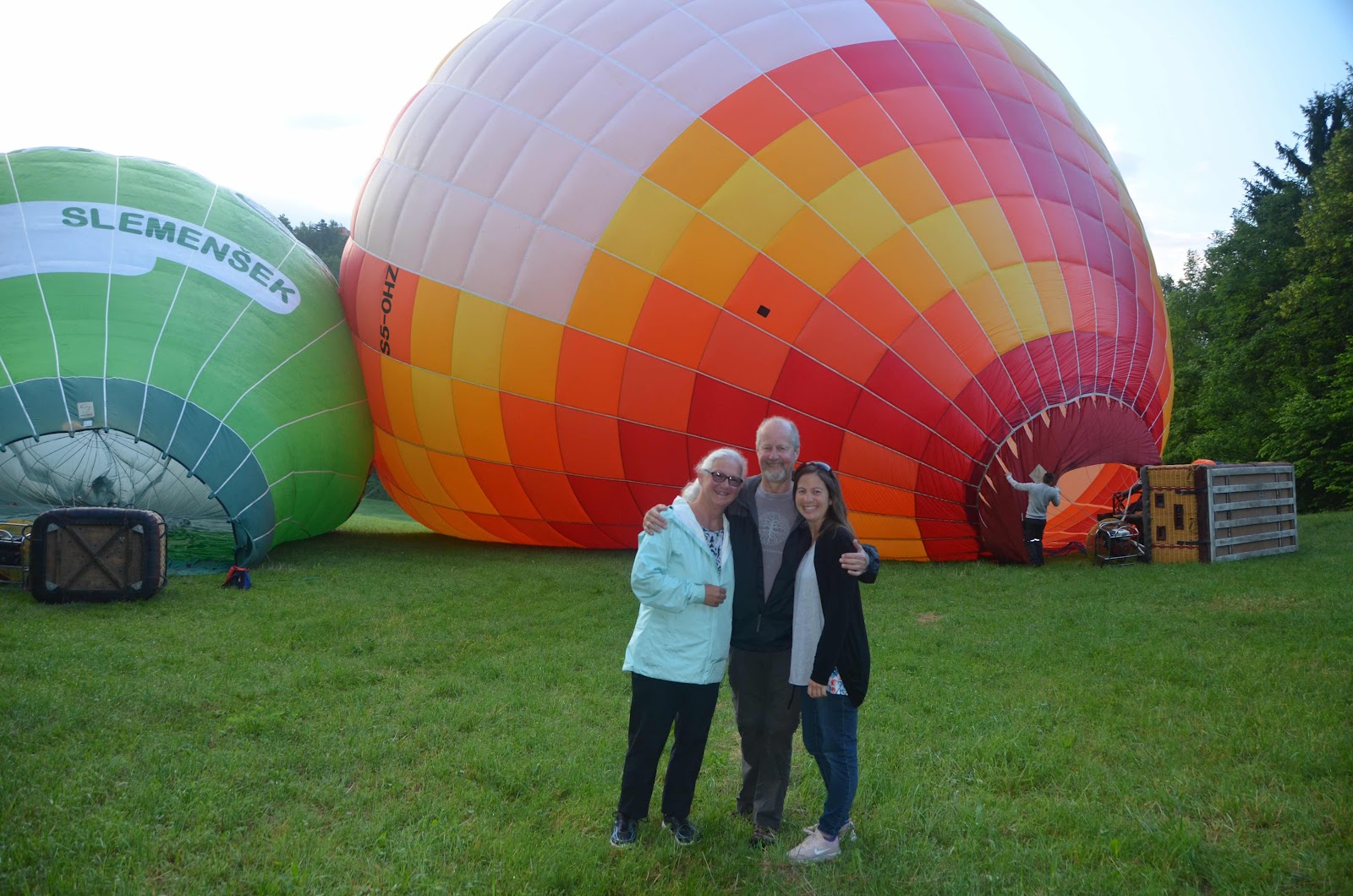
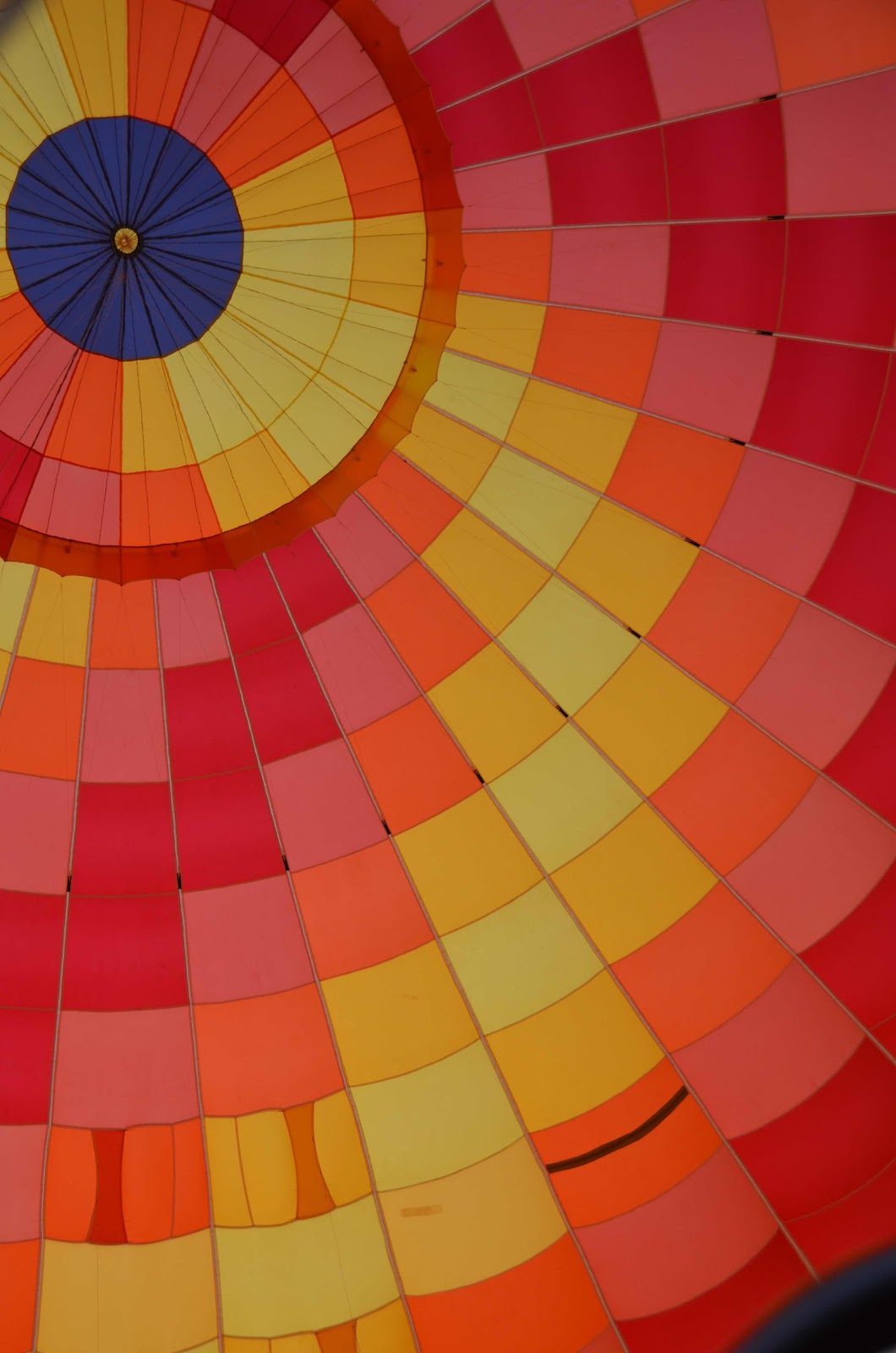
We met our guides at 5:30am with a small group of fellow travelers. We were taken to a field where we watched in wonder as the balloons slowly filled up, showing their enormity. Paying careful attention, watching for just the right time that our guides had instructed us to jump in to the small pockets of the basket, we did our best to help hold it down as it stood up, almost ready for flight. I’m not scared of heights, although, I’d be lying if I said that my stomach doesn’t sometimes get a little queasy when I look down from high heights. Those feelings never came over me during our trip. It was incredibly smooth and did not waver back and forth. Lifted high into the air currents with ease and speed, we were immediately able to overlook the stunning castle, lake, island and surrounding countryside. Truly breathtaking, and a perfect place to take this ride.


Seeing trees from above gives a whole new perspective to their shapes and formations. Flying above herons sailing around searching for a morning morsel was a new sensation. Our guide, a soft spoken man probably in his sixties, who shared small chuckles and warm smiles, would often lean over the side and spit. Not very attractive on something so seemingly romantic, eh? But, when he explained that he was doing that to see which ways the winds were blowing and catch the right air currents, well, that made perfect sense! A meteorologist by day, he sort of accidentally got into ballooning years ago when he was able to give more precise measurements of winds to balloonists. Now, he’s been doing it for 25 years. There is no steering wheel, but instead he adds heat to rise and can turn the balloon by opening up a flap in the top through a series of ropes. We landed a few miles away at the local airport. Having been taught the “landing position,” we assumed it was a just in case sort of thing, like knowing where the lifevests on an airplane are. Nope, it seems that landing the balloon is most often done, or at least during times of a little wind, by the bucket falling on its side. Perfectly safe, we found ourselves in odd piles in small compartments with our new found friends, and in some very contortionists sort of ways had to maneuver our ways out of the basket.


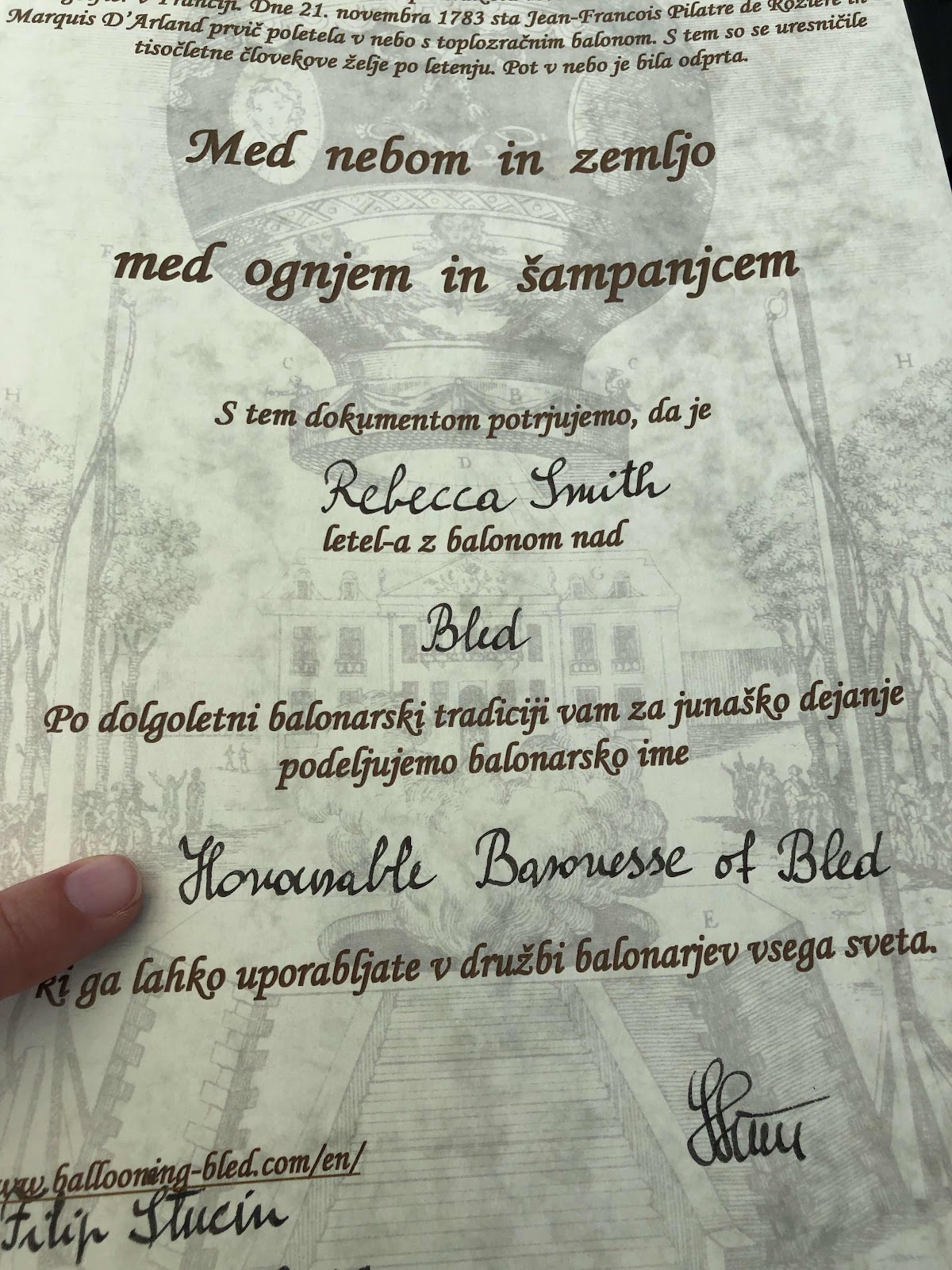
After, the pilots and the ground crew performed a ceremony for us where we knelt on carpet, in the middle of the airfield and repeated after our guide. I wish I could remember the words, but I know it started with “I was nothing,” and then went on to describe how we had bravely gone into the air. Dousing us with a little soil to remind us where we came from and then champagne for the celebration, we were named Barons and Baronesses because years ago, the king had offered these titles to people brave enough to go up into the air. Don’t think I won’t have my students start calling me Baronesse Smith next year - I even have a certificate to prove it!


As if that hadn’t all been enough, we were escorted to the rooftop bar in the nice hotel to enjoy some coffee and cream cake. Views were not as marvelous as they had been just moments before in the balloons, but they were still stunning. Our guides told us more about their craft, and their country that they were so proud of. One thing that stood out most to me was hearing about how recycling in the country works. Inka, our food tour guide had told us that bins at your house had scanners on them and were weighed so you paid for recycling and waste that you threw away. Our guides continued that and said that even the mixed garbage is sorted and only 5% of things thrown away in Slovenia end up in a landfill. We’ve got some real catching up to do!

What an absolute treat the whole morning was! And if I had known that all I had to do to get an official title was ride a balloon in Slovenia, it would have happened a lot sooner!


After a quick refresh, we drove up to the castle overlooking the lake. Quick tip courtesy of Rick Steve’s: if you make reservations for a meal at the castle restaurant (ahead of time!), you get free entry to the castle for your whole party which makes the exquisite meal with the excellent view incredibly reasonable! The castle itself, in my opinion, would have been a bit of a disappointment, minus the view that’s well worth the trip. Each piece of the castle now holds some sort of piece of history or showcase of Slovenia, often with purchasing possibilities and people dressed in period clothing. The castle is not all too large, but nevertheless is has a drawbridge, walls and turrets. Lunch was beautifully presented, once again a piece of art, and also delectable.


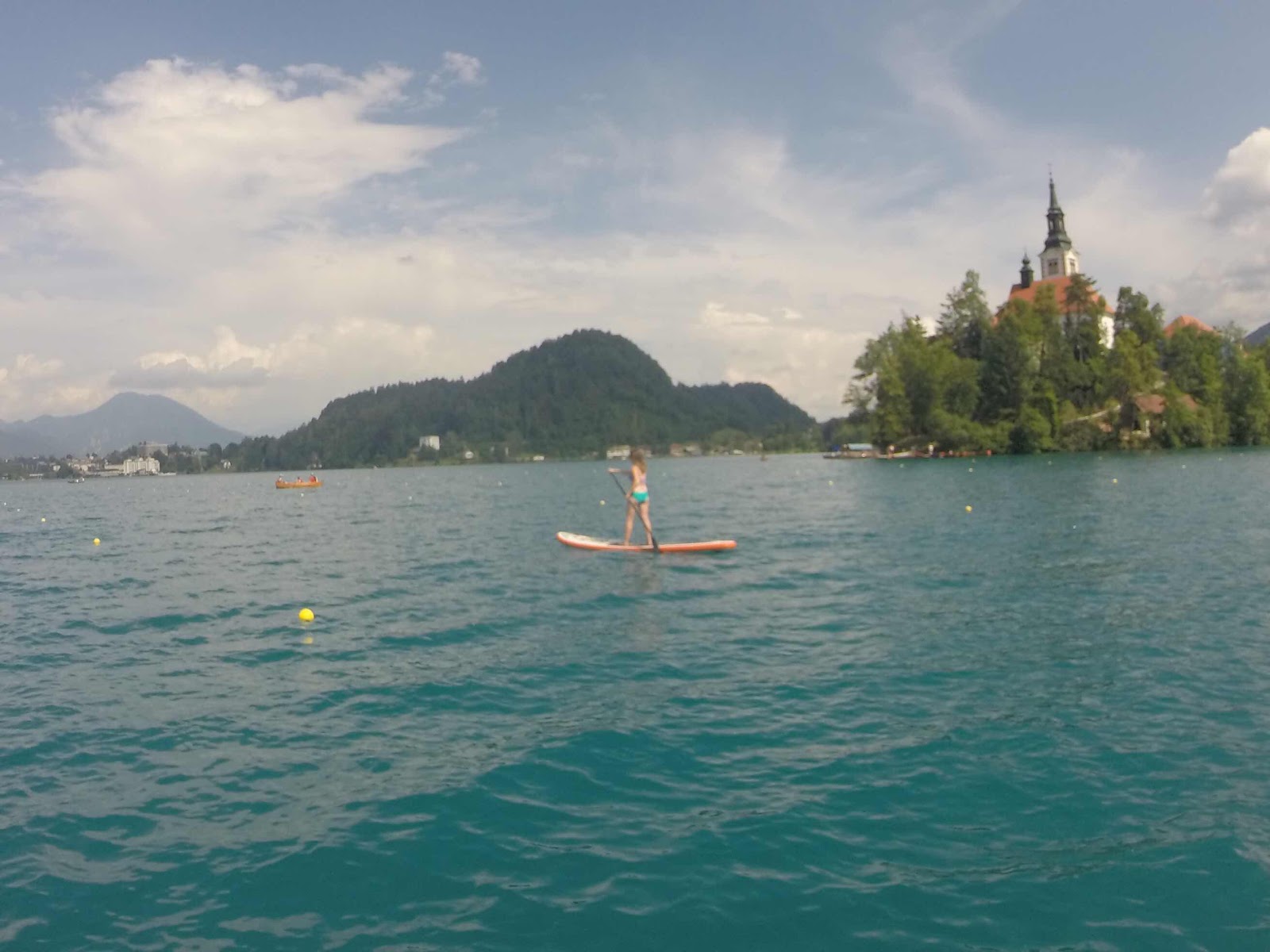
The non-motorized vehicle lake below had been dotted with row boats and paddle boards, and as the sun was shining and bringing with it, some heat, we decided to join in on the fun. At the far end of the lake is a beach with a campground (what a cool place to camp!). It had been fairly full of people and activity all week. There were people partaking in water activities, small children running around in the nude while parents chased after them with sunscreen, adults soaking in rays on some comfortable lounge chairs and a man, walking his pet ostrich. Yep. We didn’t understand it, nor were we really able to capture it on film, but a grown man walked, with his arm casually draped around the ostrich through the crowd of people, down the sidewalk along the beach, then back again around the lake. No sign asking for donations, no offering of rides for children, but simply looking like a man out for a stroll with his four legged best friend, but only this man brought out his rather large two legged best friend.

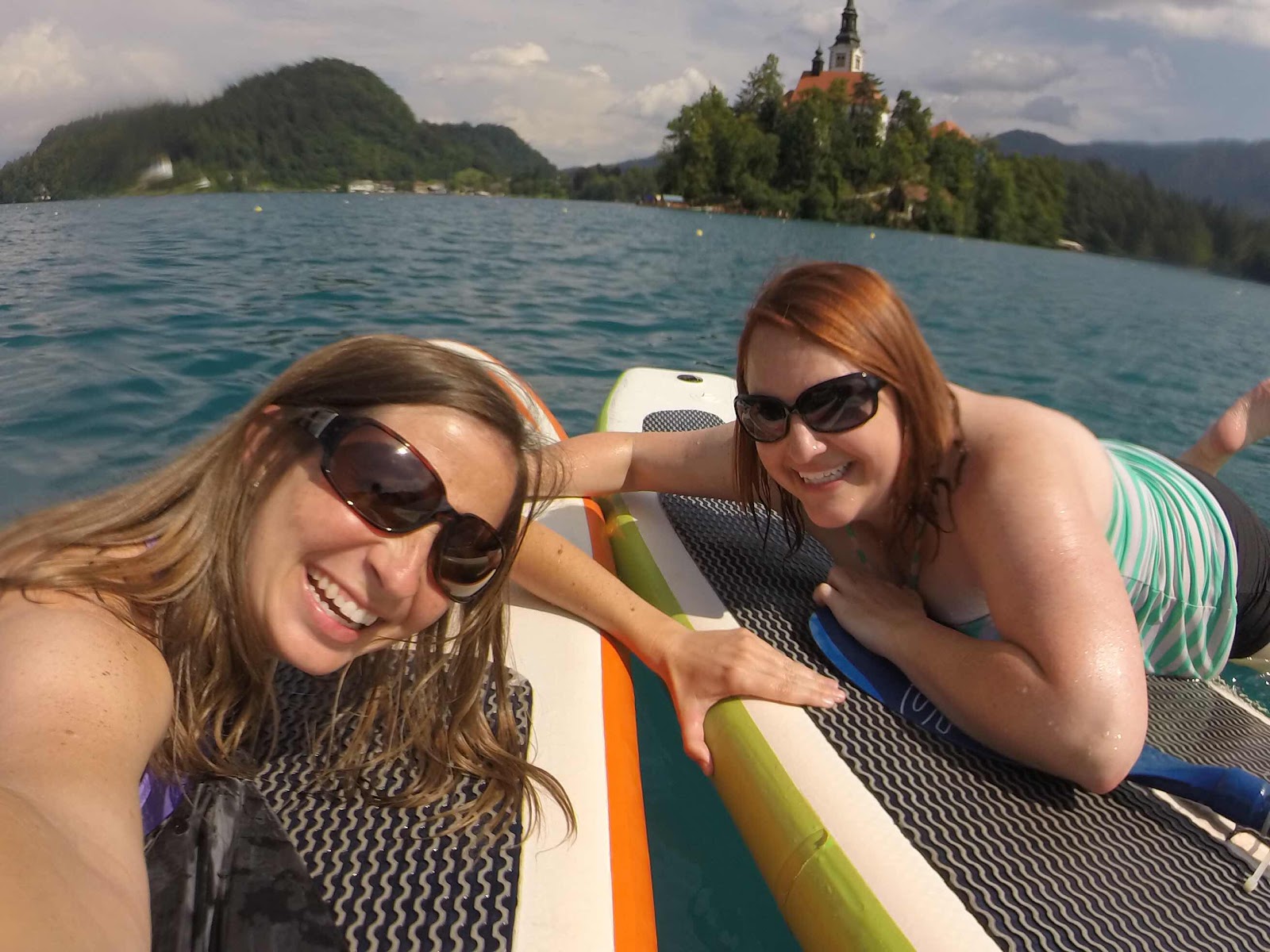
Jessica and I, amid all the activity, rented paddleboards for the hour and headed toward the middle of the lake. It was so beautiful, so peaceful just a short distance away from the crowd. Clear, turquoise water surrounded us and our setting between the island and the castle almost seemed surreal. The water (we chose to get in, we didn’t actually fall in!) was refreshing, but not frigid. A perfect last activity on such a magical time in Bled!


If you ever get the chance to visit Slovenia, you’ll be welcomed by warm, proud, hardy and delightful people. You’ll be surrounded by stunning scenery and fill yourself with tasty food. Go ahead, get there before the rest of the world discovers the perfection that is SLOVEnia!

Lovely Ljubljana

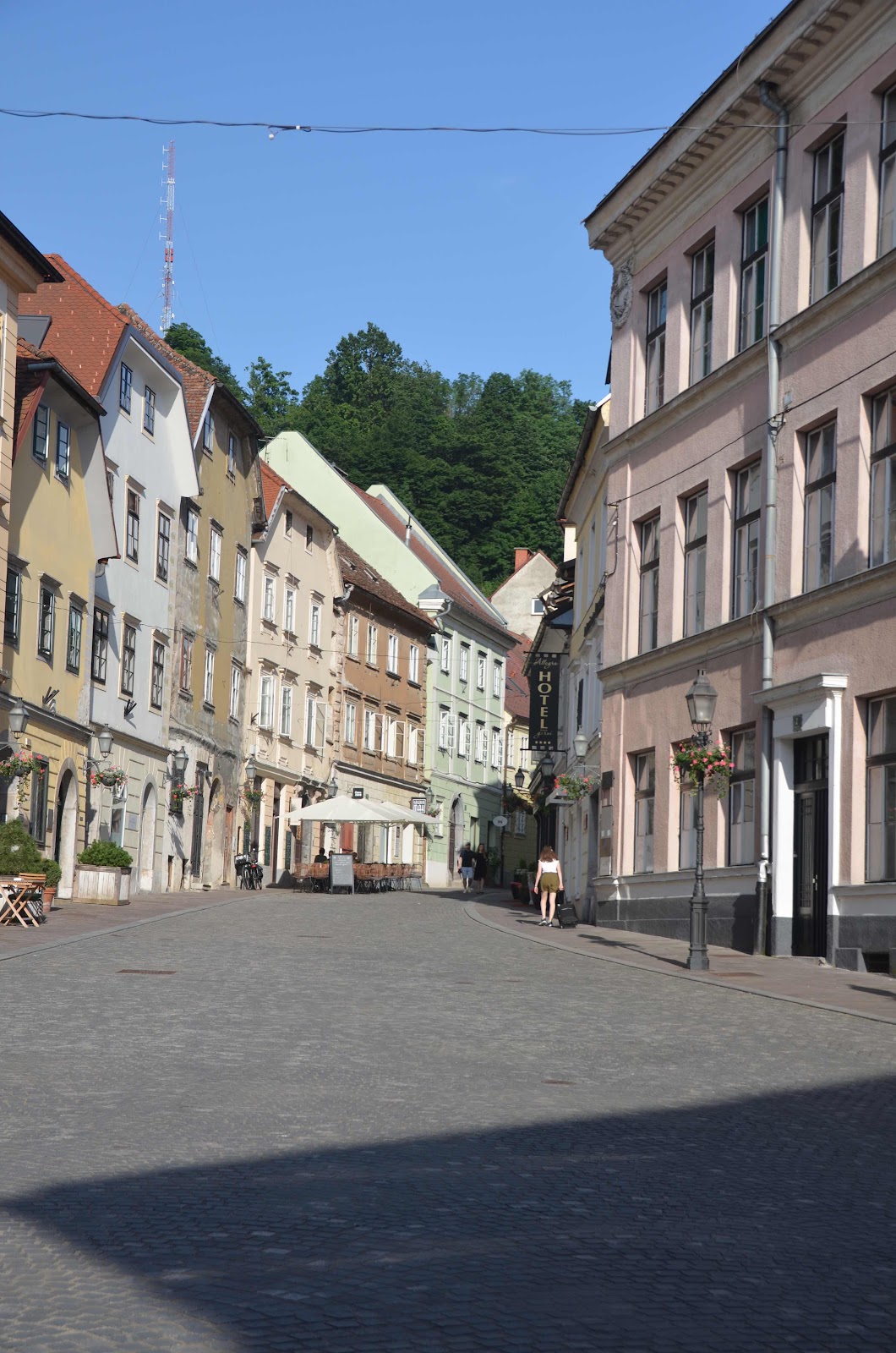
Slovenia, as a country, is younger than I am.  She's a beautiful country, with a lot of pride, independence, identity and a unique culture all her own.  But, as any young soul, she's still trying to find her way in the world and find her balance.  Today, we traveled to the capital city of Ljubljana, about 45 minutes south of Bled.  It is described as the place to be in Slovenia and a terribly underrated city, and I see why.  About twelve years ago, a new mayor was elected that had big ideas and wanted to bring about a lot change.  He closed down streets around the downtown area to make a large portion of the old town a pedestrian city.  Of course there were gripes and complaints, but it sounds like it has made locals enjoy their city even more and it certainly draws in the tourists.  Restaurants spread out tables and chairs into the wide openings, artists line the river with their goods to sell, children ride scooters, and locals walk their dogs.  For us tourists, it made wandering the city to window shop and admire the colorful architecture much easier and very pleasant.


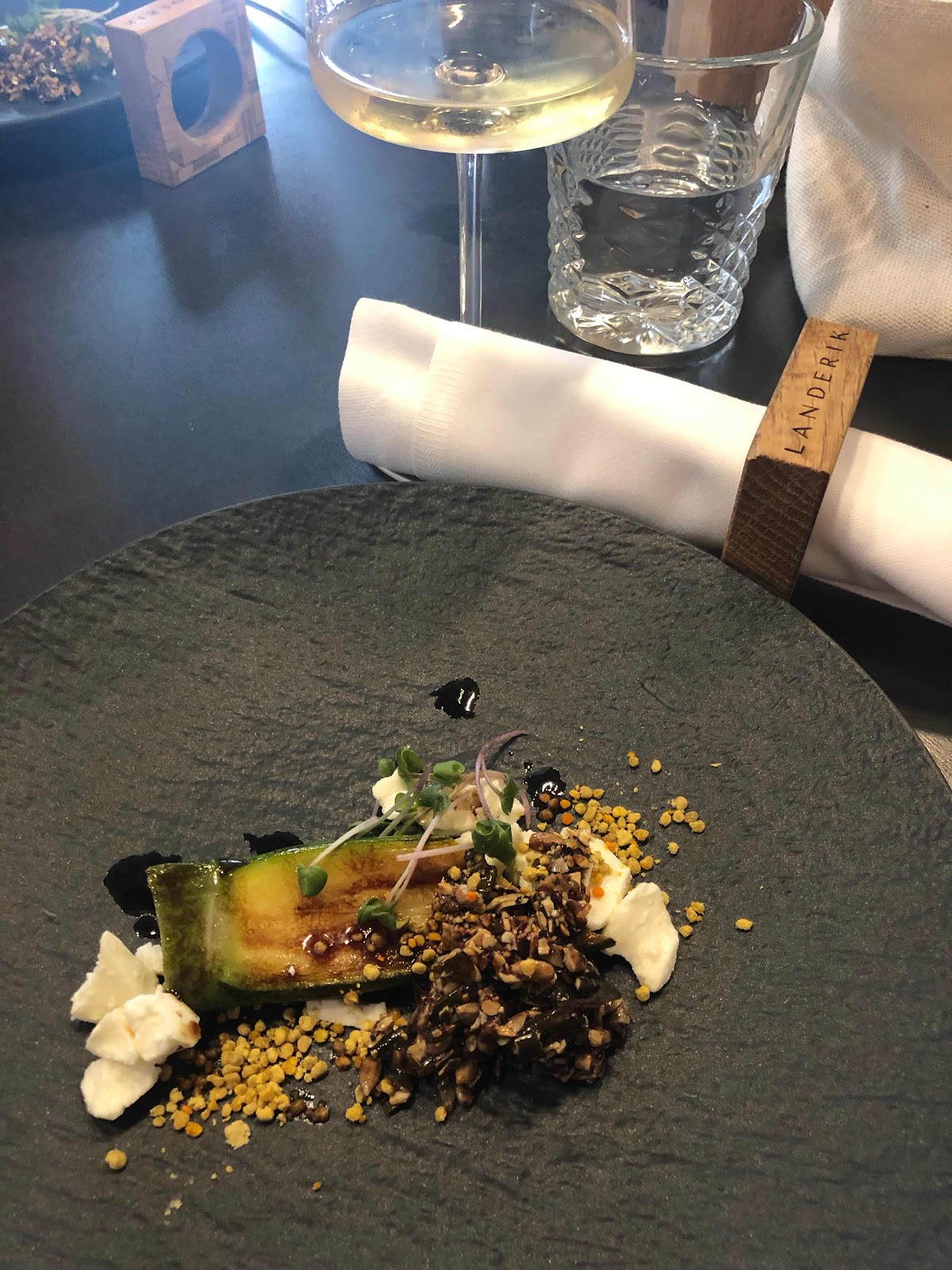
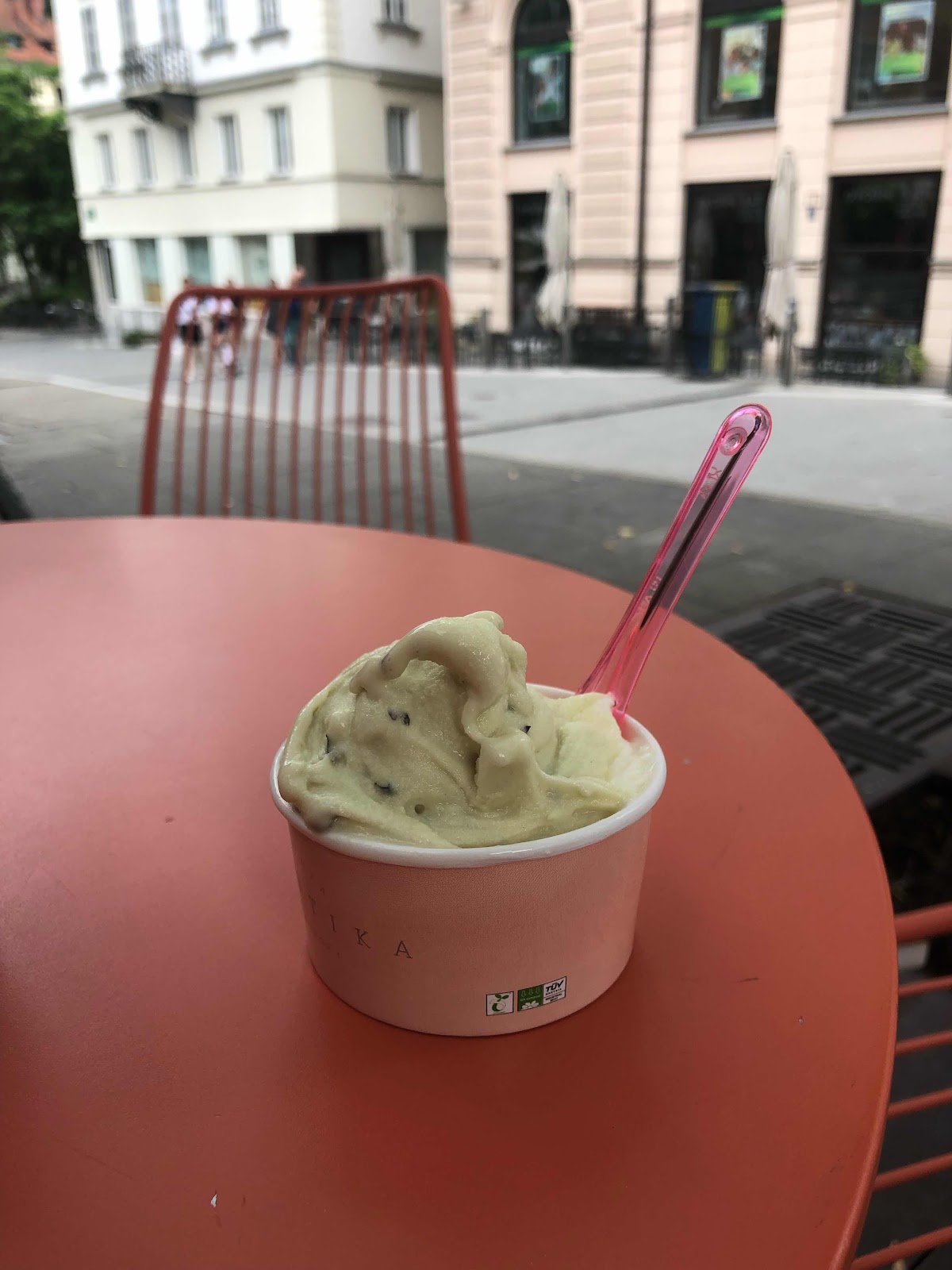
Besides wandering the town, there was not really anything specific that we wanted to do in Ljubliana, so we decided that taking another walking food tour with a local would be a great use of our time, and well, it was.  Inka met us and two Australian girls currently living in London at a local fountain and then took us to four different restaurants followed by coffee at a cafe and then ice cream.  We ate a tuna pate on toast, warm cucumber soup, sausage, grilled zucchini with pumpkin seeds, squid stuffed with cottage cheese, pasta with truffles and the most tender gnocchi I had ever tasted.  The food was truly remarkable, and I loved the wide variety.  To top it off, we went to a gelato bistro with unique, local flavors that were all made in house.  I had parmesan gelato and pumpkin seed oil gelato, and would not have guessed how much I would have enjoyed them both!  Sure, parmesan ice cream sounds odd, but think about it... you like cheese, right?  And you like ice cream, right?  Yep, delicious.


The food was divine, but what I enjoyed even more was the company.  Speaking to the locals to truly learn about a place is one of the perks of traveling, one of the best ways to learn about a place.  Inka had grown up in Slovenia, was proud of her country, and teaches at the high school that teaches about tourism.  She was honest, open and eager to tell us about her country.  Her first explanation of the regions may have been the most helpful.  Slovenia is sort of shaped like a chicken.  Sure, it takes just a tad of imagination to see it, but when you do, it makes sense.  From then on, she was able to explain, "this food comes from the head of the chicken," or "this wine comes from the back foot of the chicken." We learned that each region uses a particular oil for salads, such as pumpkin seed oil, grape seed oil or sunflower seed oil. She described Slovenia as a “spoon” country, saying that they always had to have a soup and/or hearty stew with their meals. It is apparently a social faux pas to serve a Sunday meal, or a wedding feast without hot beef and noodle soup, no matter the temperature outside. Just as a meal would be a disaster if there were no bread, and oh, how delicious the breads have been! Many Slovenian meals are heavy - gravy, meat, potato and breads. The people here, though, are also incredibly hearty - mountain climbers, farmers, etc., and well, a salad just doesn’t give you the energy needed to complete these difficult tasks. 

I loved learning from Inka about the everyday life of Slovenians. The country is very small, about the side of Massachusetts, and as such, locals can be in a whole new country in a very short drive. Because of this, they refuse to commute long distances to work. The argument seems to be that if you can be in another country in an hour, why in heaven’s name would you drive an hour to work? Love it! A common tease about Slovenians is that they learn to ski before they can walk. What did I tell you? Hearty people! About 70% of the holidays they take are by the sea, and the rest are hiking and camping. They love to be outside, and aside from torrential rain or bitter cold, they will frequently join their friends for a coffee outside at a cafe. Inka talked with a bit of sadness about changes in the country, and how she felt that focus over the last few years had turned to productivity rather than family and time for self. For years, she said the twenty four hour day was divided into eight hours of work, eight for sleep and eight for free time, but she said that businesses and companies are beginning to expect more and working hours are now longer than school hours which makes picking up kids from school and family time a true struggle. We talked about healthcare, politics, education and even maternity leave. I’m always fascinated to hear how other countries operate and remind myself that we can all learn from one another.

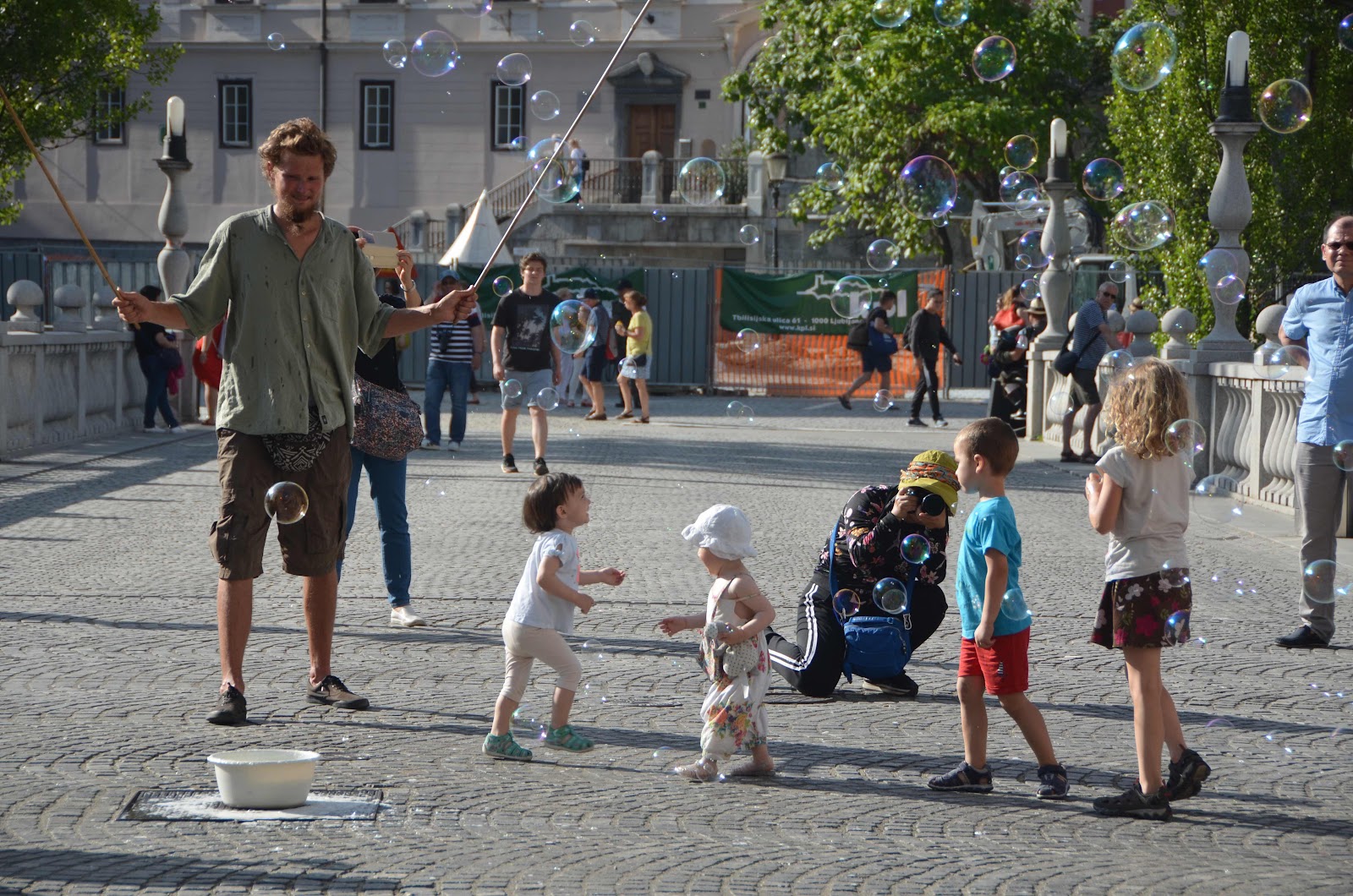
The rest of our time in Ljubljana was spent wandering around the colorful pedestrian part of downtown which straddles the river.  Merchants set up tables of treasures and creations along the river and in open market stalls.  Locals sat sipping coffee and chatting.  Tourists struggled to get the perfect photo with the statue and church at the intersection of the three bridges.  And then, there was the bubble man.  I do not know his story at all, but what I know is he is living life well and spreading joy.  From a block away, we watched bubbles, lots of bubbles, rise up and amongst the buildings.  We love bubbles.  Mom spent a whole lot of time trying to capture bubbles in photographs, and Dad spent a lot of time perfecting his blowing techniques to help her.  We had spent so much time watching bubbles, that we even noticed patterns in the colors they gave off and how that pattern repeated before they burst.  This young man, with a homemade bubble wand and bucket of soap, had a sign that simply said, "money for traveling around Europe."  He had drawn a crowd the way street performers in Central Park do, only his youngest audience members were active participants. Somehow, bubbles break all sorts of barriers, so that young, old, male, female, and from all different continents watched in wonder, amazement and smiles as small children giggled in anticipation of popping a bubble.


We took a funicular to the castle hill and meandered around the castle grounds, overlooking the city and watching as a storm approached the city.  The castle, although charming, was fairly recent, and so missed much of the old world charm that holds such importance in a castle.  We snuck under a tent on the pedestrian mall for some local pizza (how we could fit anything else in our stomachs, I'm still baffled), before going to the airport and picking up my travel partner extraordinaire, Jessica!