Wednesday, July 6, 2022

SkyLodge

I follow a lot of travel sites on Instagram. It is always fun to see incredible, unique, stunning places around the world. Typically, I look at them with wonder, then move on. A couple of months ago, Jess found one and sent it to me. I had the same reaction and then looked closer. Wait, where is that one? When you realize that one of those out-of-this-world opportunities is actually in the realm of possibilities of your travels, you jump at it. Well, when it involves heights, first, you give your trustworthy travel partner who loves adventure and cool opportunities but has a fear of heights the opportunity to think about it. Then when she says yes, you jump at it!

We were picked up by minibus on the afternoon of July 4th and driven back into the Sacred Valley. The scenery is truly awe-inspiring with mountain peaks surrounding valleys of patchwork quilt farm land with sheep, cows and llamas. The valley itself, with the river running through it is quite green, but the surrounding countryside, during this dry season is more tones of yellow and brown.

We stopped on the side of the road at a small office next to the sheer side of a mountain. If you craned your neck back far enough, you could get a sneak peak of our accommodations for the night. 
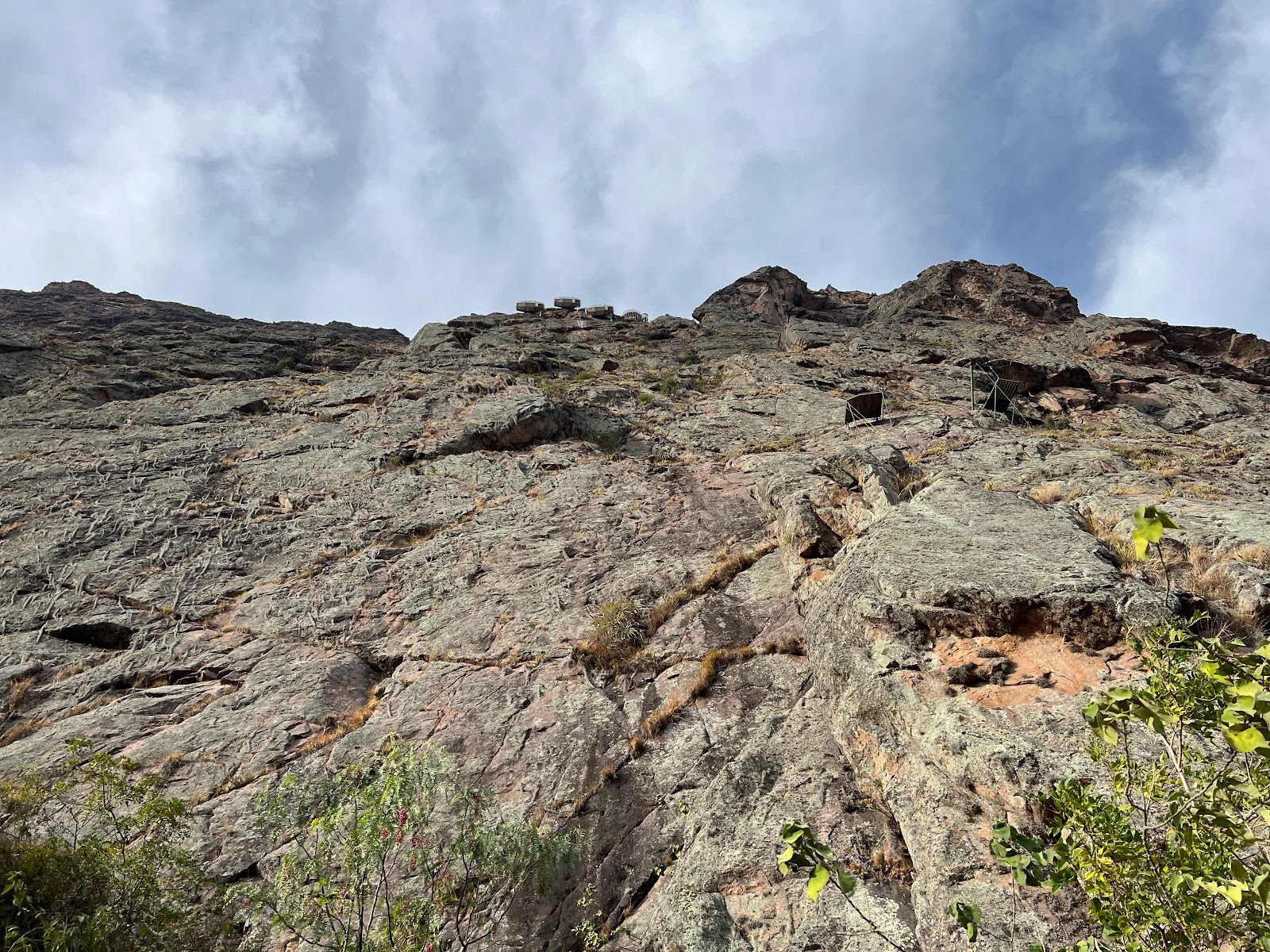


Yep, look closely. See those capsules? That’s where we climbed to and where we slept for the night. They hang 1,000 feet from the valley floor as a true feat of engineering and ingenuity.

How does one get to the pod? Well, there are a couple of different options. You can hike up or you can climb up. Are we mountain climbers? Absolutely not. Did we choose that option? Absolutely!


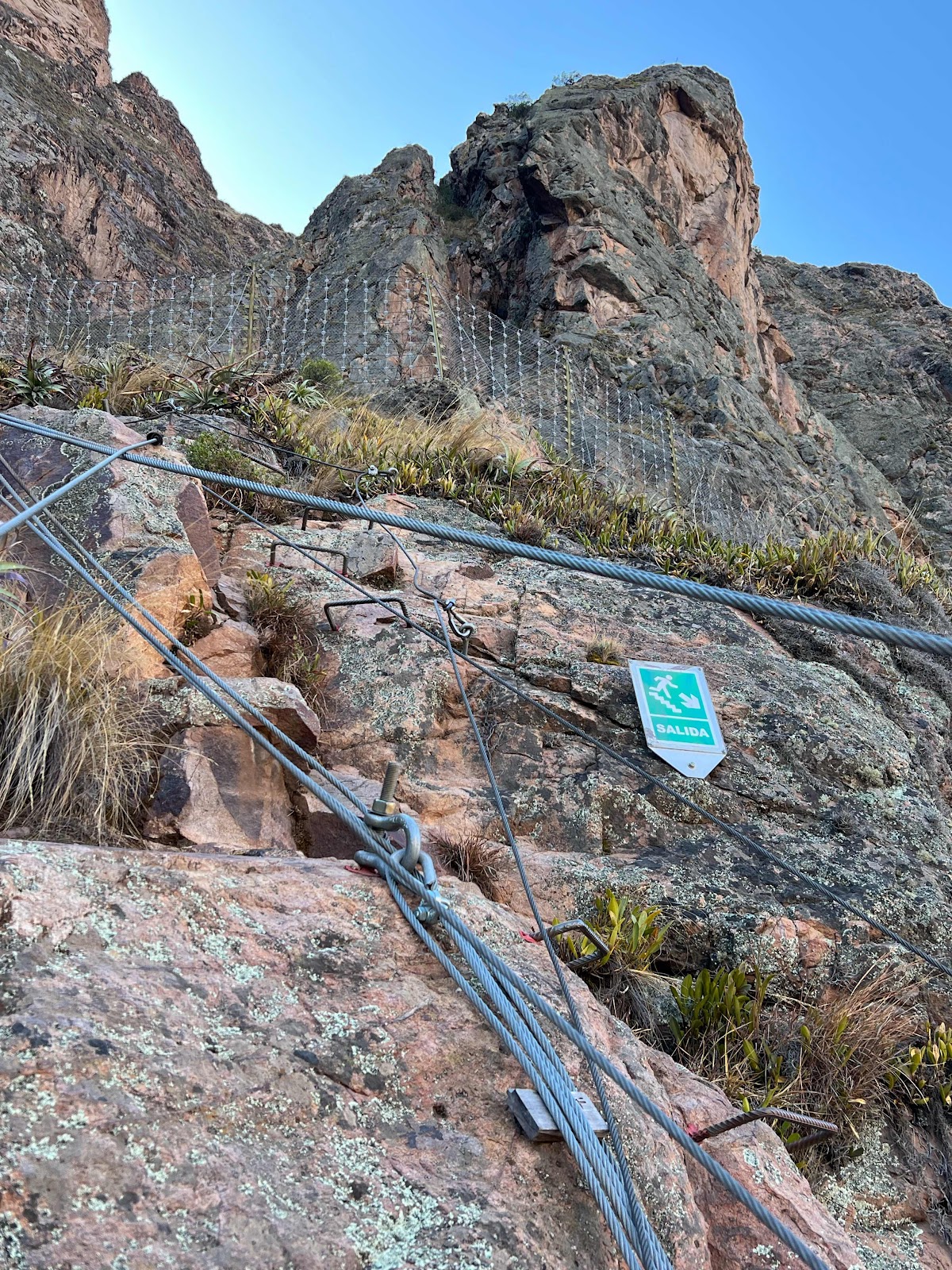
After a brief safety talk and harness and helmet fitting, we were off! Most of the climb was sort of like climbing a ladder that was built into the face of the mountain side. The C-shaped metal rods were drilled and secured into the mountain face and provided places for your hands and feet to climb upward. You were clipped into an accompanying metal cable so if you missed a step (which thankfully neither of us did!), you didn’t fall too far. Every six feet or so, you would change your clips to a new section so that you never had too far to fall.

Some parts were incredibly tricky, because of course a rock face isn’t perfectly flat. So, sometimes, it felt more like straddling a boulder looking for rungs on either side. Or there were the times that the rock hung outward a bit and so you were climbing at a bit of an upside down angle and well, that was quite a struggle. Our knees are currently black and blue from hitting the rungs as we ascended, but it was a small price to pay!
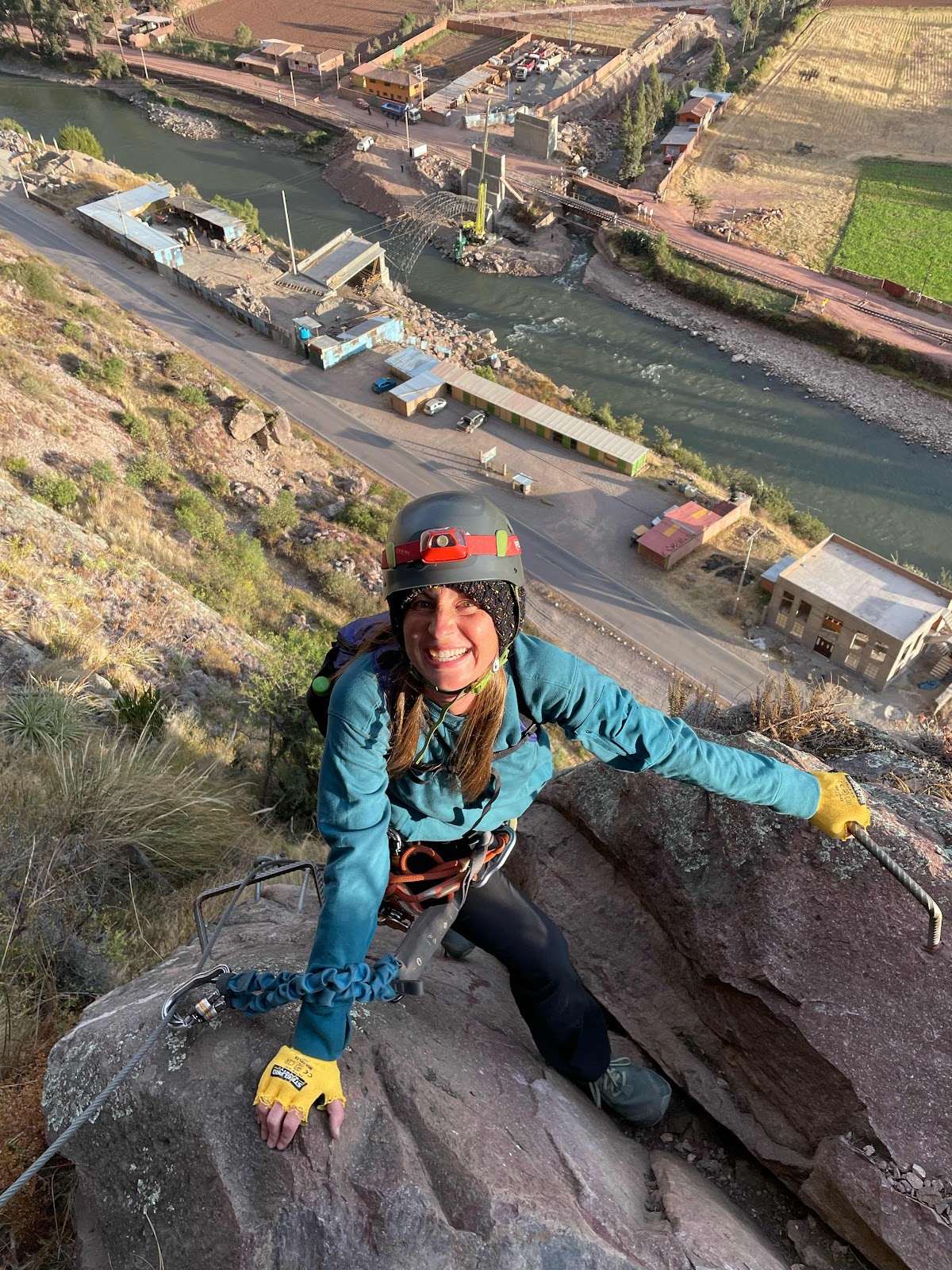


At one point, halfway up, there was a “bridge” to cross. I confess that I felt at an advantage here. Growing up in the country with lots of space to play, I was very fortunate that my parents took time to build me a playground. There were two swings, bars, a balance beam, seesaw and a treehouse. Do you know what gets played with the most, even to this day? It is the two ropes tied to trees across a ditch. On this “river over death” you put your feet on the bottom rope and hold on to the higher rope. This bridge halfway up our journey was incredibly similar! Although, it was five hundred feet up a rock cliff, and I was strapped in for safety. But, it was a lovely feeling of home all the same. 

A bus load of people stopped on the road below us and cheered us on from afar. I asked our guides if they paid people to do that. They just grinned. 

Our climb continued upward for a total of about an hour and a half. As we neared our destination, the clouds at the end of the valley began to brighten into pinks and oranges. We arrived into the dining pod just as the sky lit up and the sun bid us farewell behind the distant peaks.


Our two guides doubled as chefs and prepared us a beautiful, four course meal of pumpkin soup, salad, chicken with mashed potatoes and vegetables, and an apple dessert with melted chocolate and cookie crumble. The more amazing part to me was exactly how they got all of this up there. It was either carried in backpacks earlier in the day or in their backpacks as they hiked with us. Incredible! We toasted to our Independence Day with our five fellow companions, also Americans and decided this was the perfect way to celebrate our freedom.

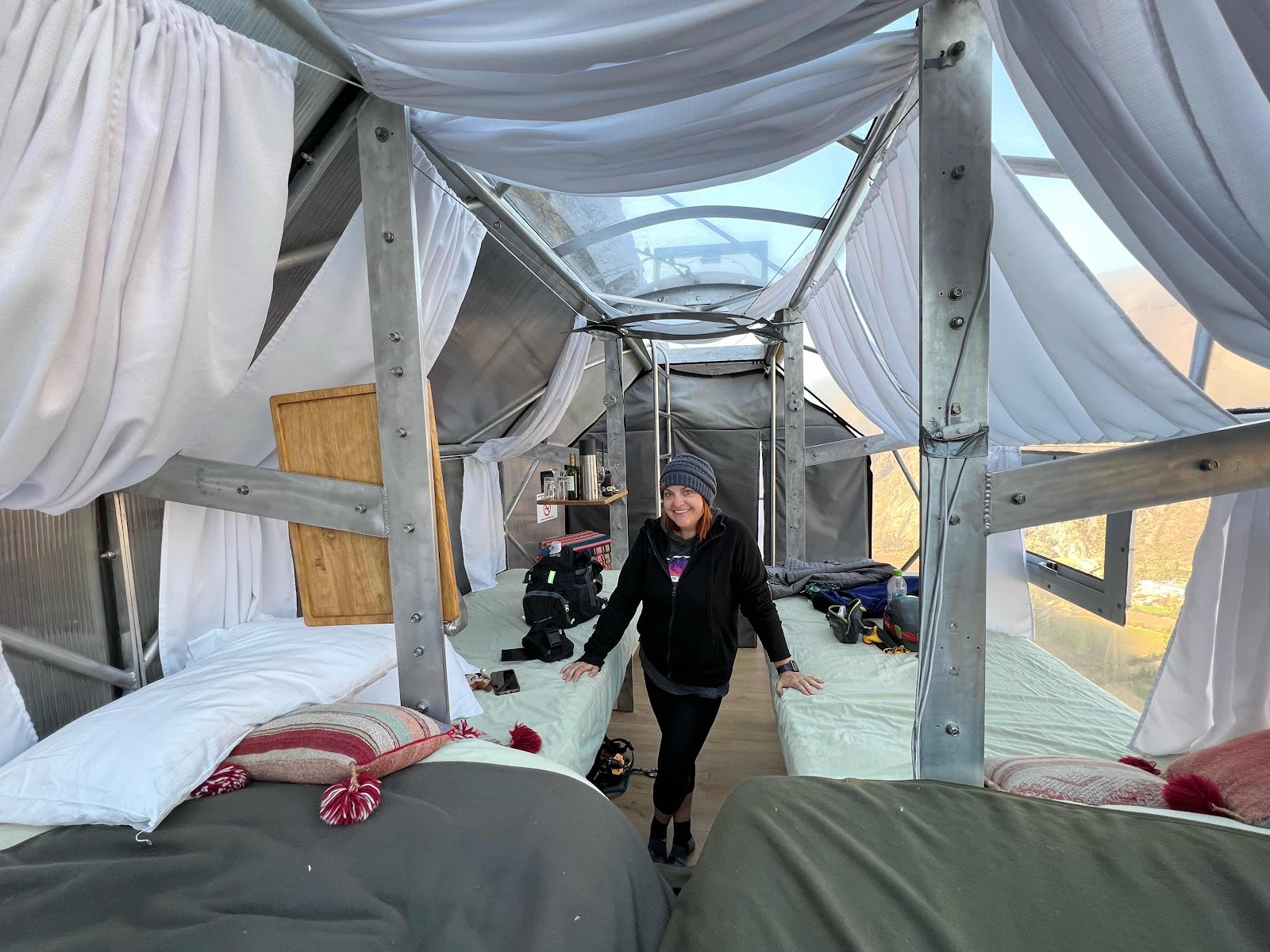
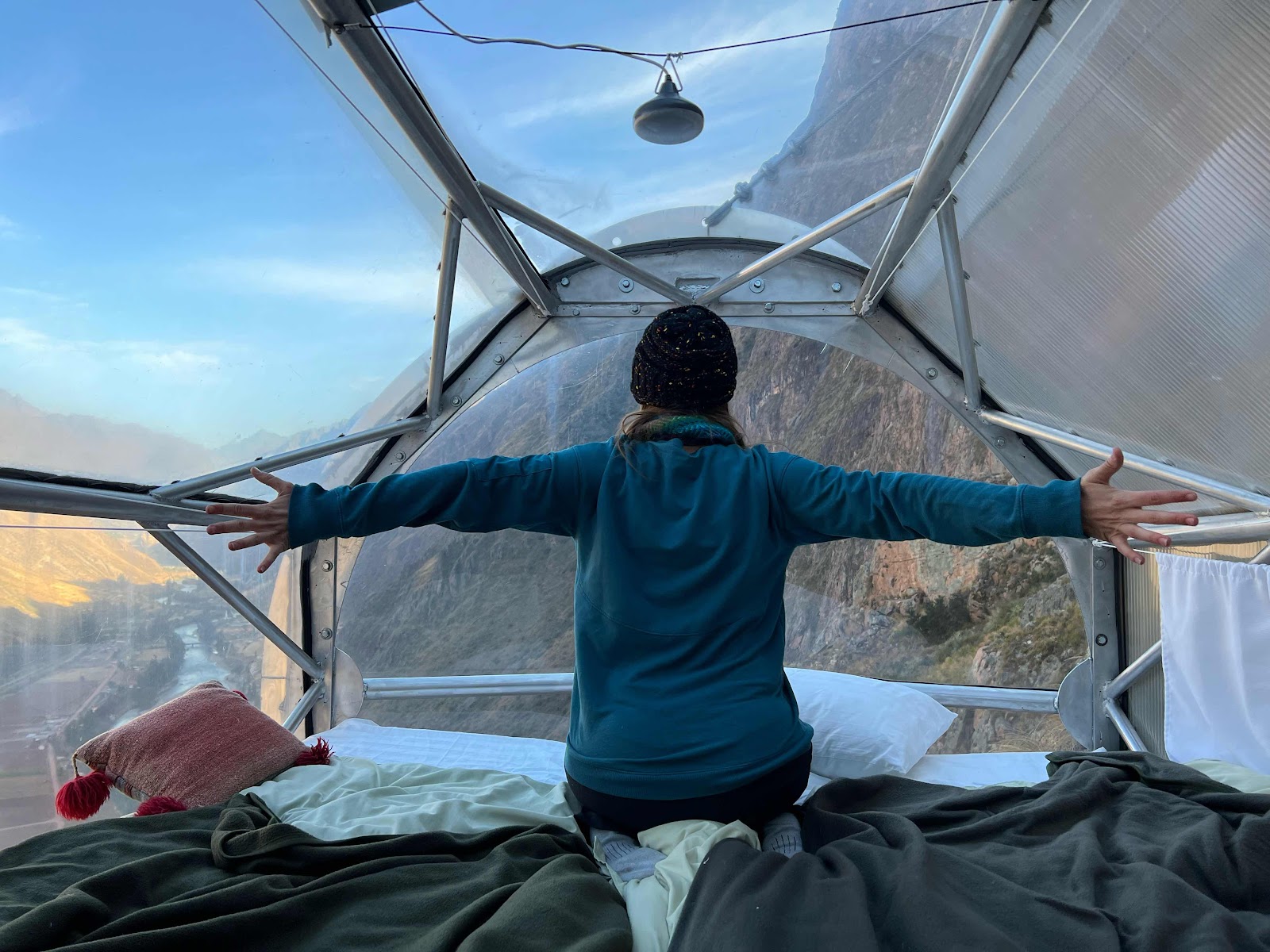
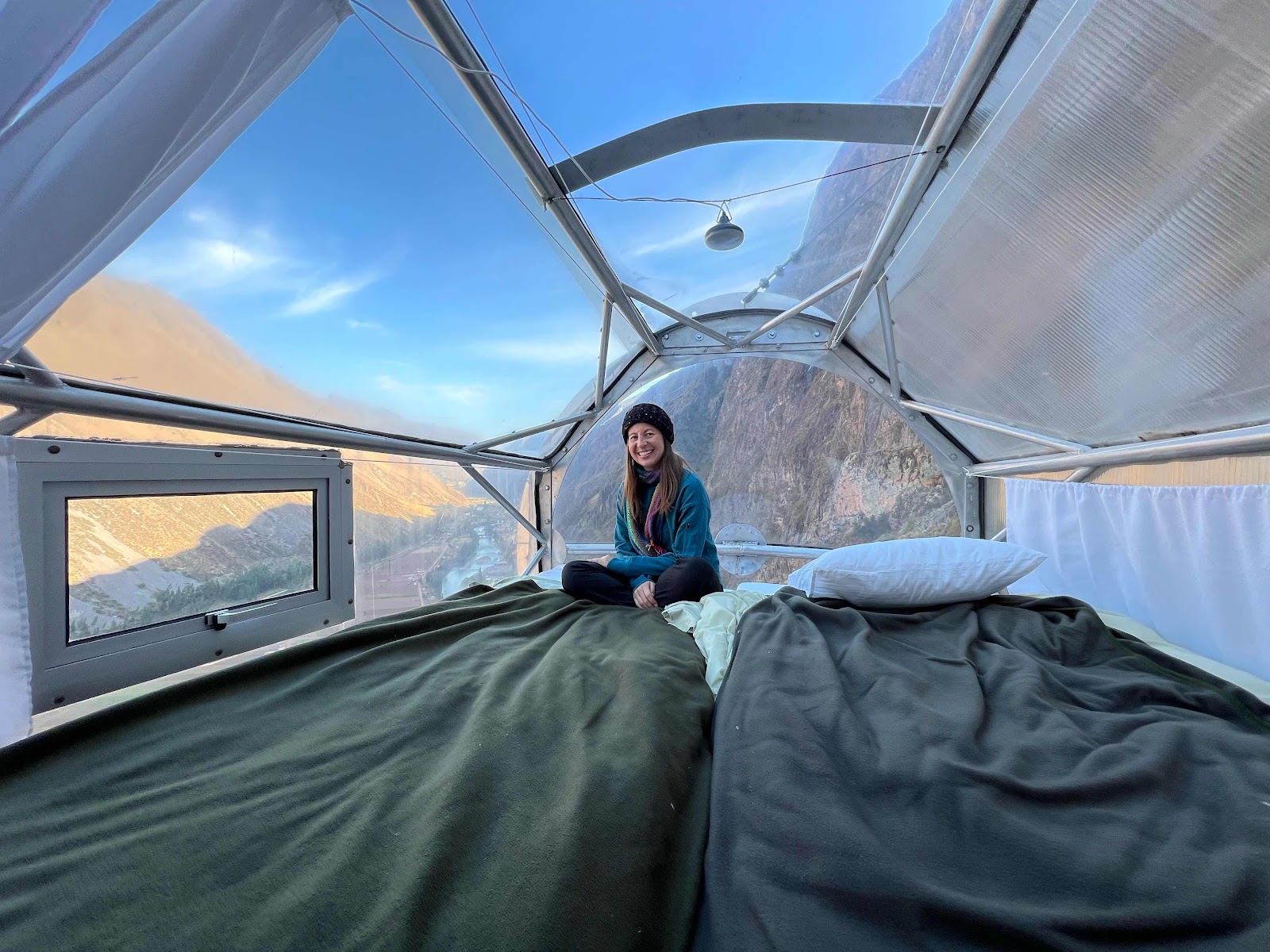
After dark, it was pitch black outside and we needed to make it to our pod. With headlamps on and guidance, we bid our climbing companions goodnight and each headed to our own capsules for the night. It was a bit of a struggle to get there without the sun’s help, but it wasn’t terribly far. Our pod actually had four beds in it and even came with a thermos for tea, wine glasses to finish our bottle from dinner, dominos and a deck of cards. All parts of the pod had curtains which we quickly opened to the sky and out into the valley.

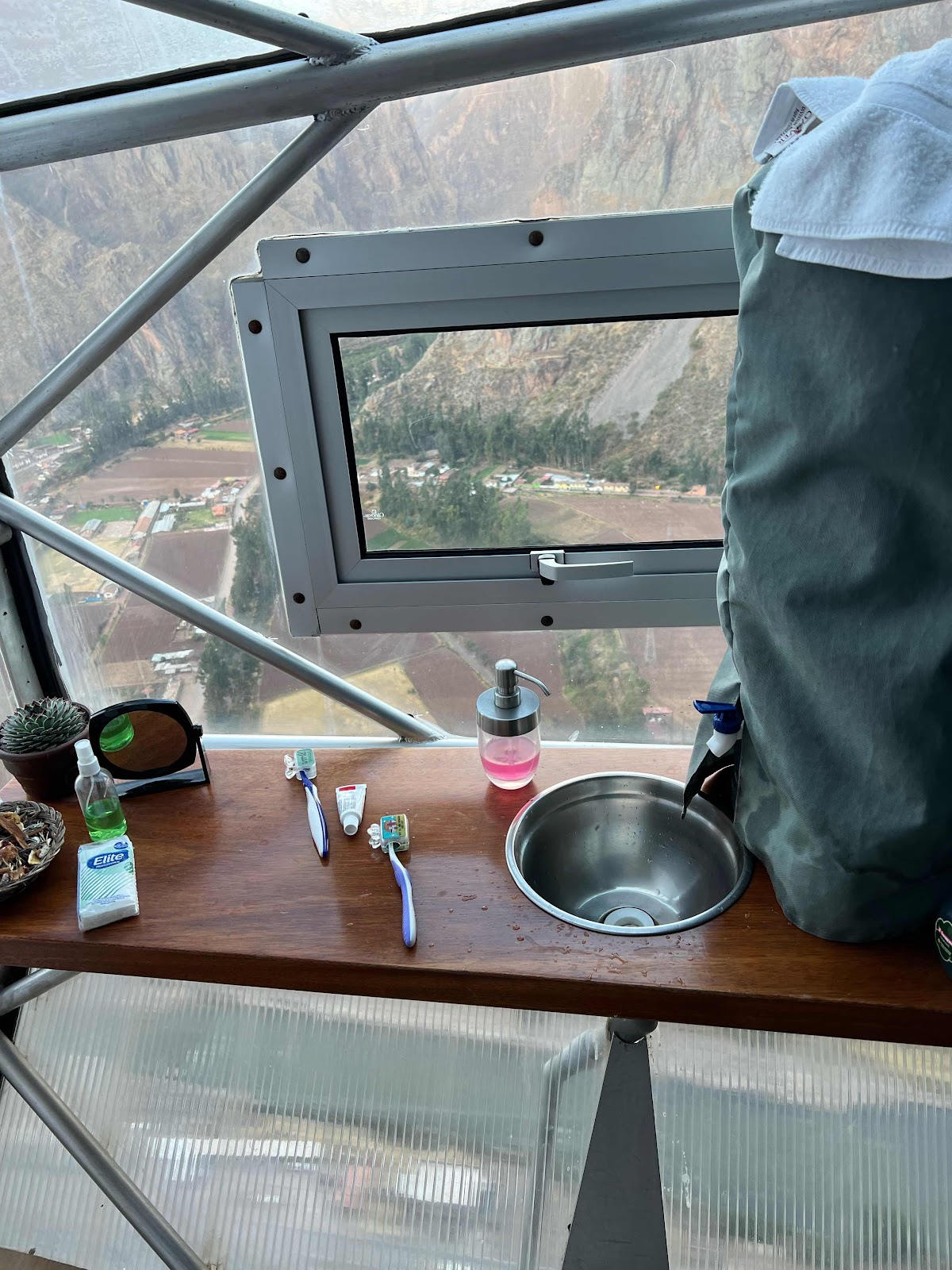
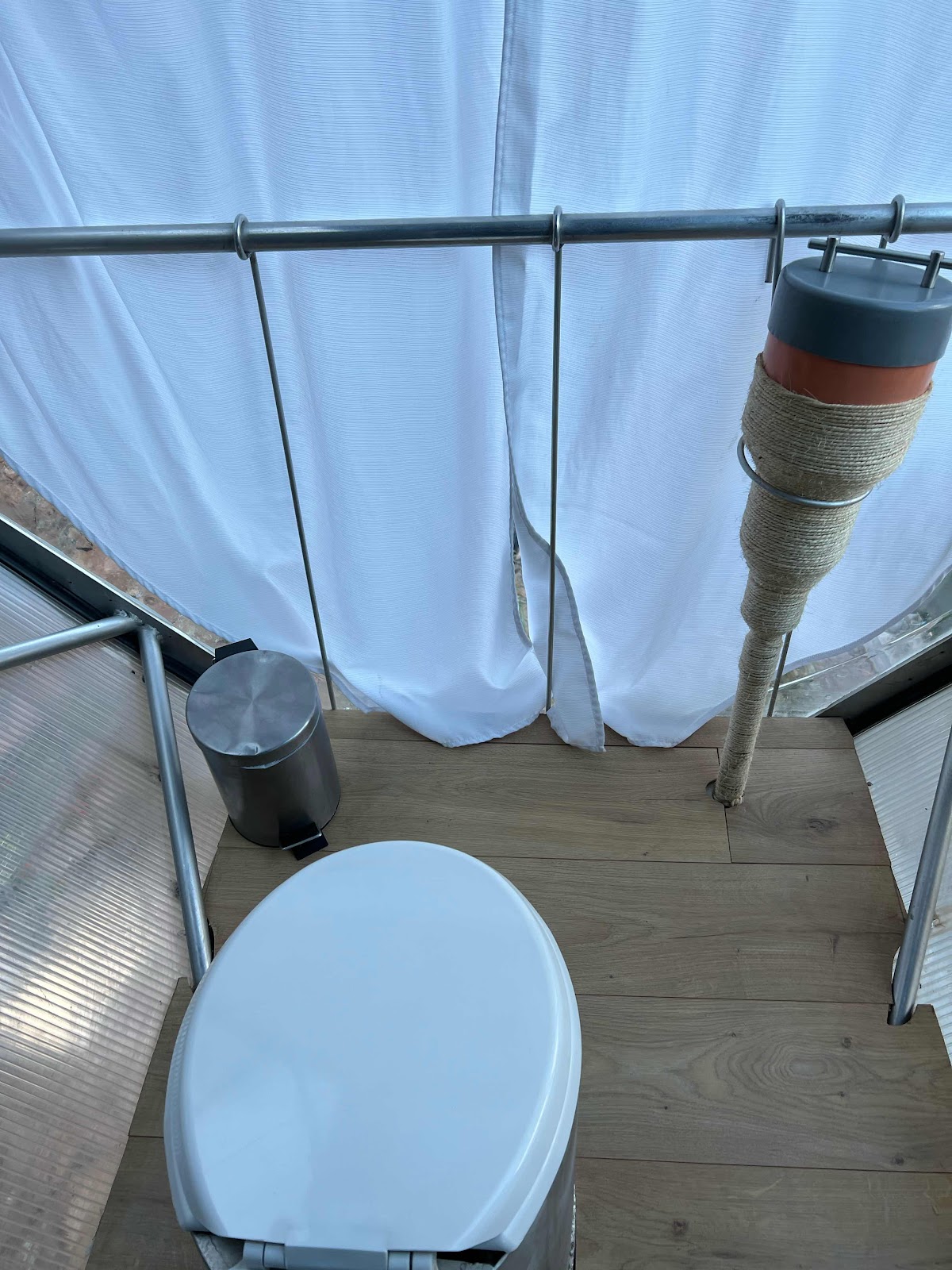
I know what you all want to know about, so I’ll share. What about the bathroom? There is a bathroom! And after some of the questionable places we’ve relieved ourselves along this journey, I must say, this was one was quite nice! A small sink was adjacent to a jug of filtered water, so for the first time on this trip, I was able to brush my teeth with the “sink water”. The toilet had a pot in it. We girls sat on the pot and then dumped it into the sort of urinal in the bathroom, then sprayed everything with disinfectant. For more solid bathroom issues, there were plastic bags that you lined the toilet with, then tied them up and dropped them down the hole in the toilet. Where did these two things go? I don’t really know. It certainly was not all the way down the mountain. There must be some sort of reciprocal just under each pod.


After settling in, we went the the platform just above our pod to watch God’s fireworks. The stars were stunning. While I can’t say the sky was huge like I’ve seen in Utah, because we were inside a valley between two peaks, but the few lights from civilization were far below us and did not deter from our viewing of the stars. We looked for familiar constellations and found none. Research has told us that the northern and southern hemispheres have different stars, but also some overlapping and so depending on seasons, we should be able to spot some of the same constellations, but it may also have to do with the season. Perhaps it was the mountains or the seasons that kept us from finding Orion’s bright belt.
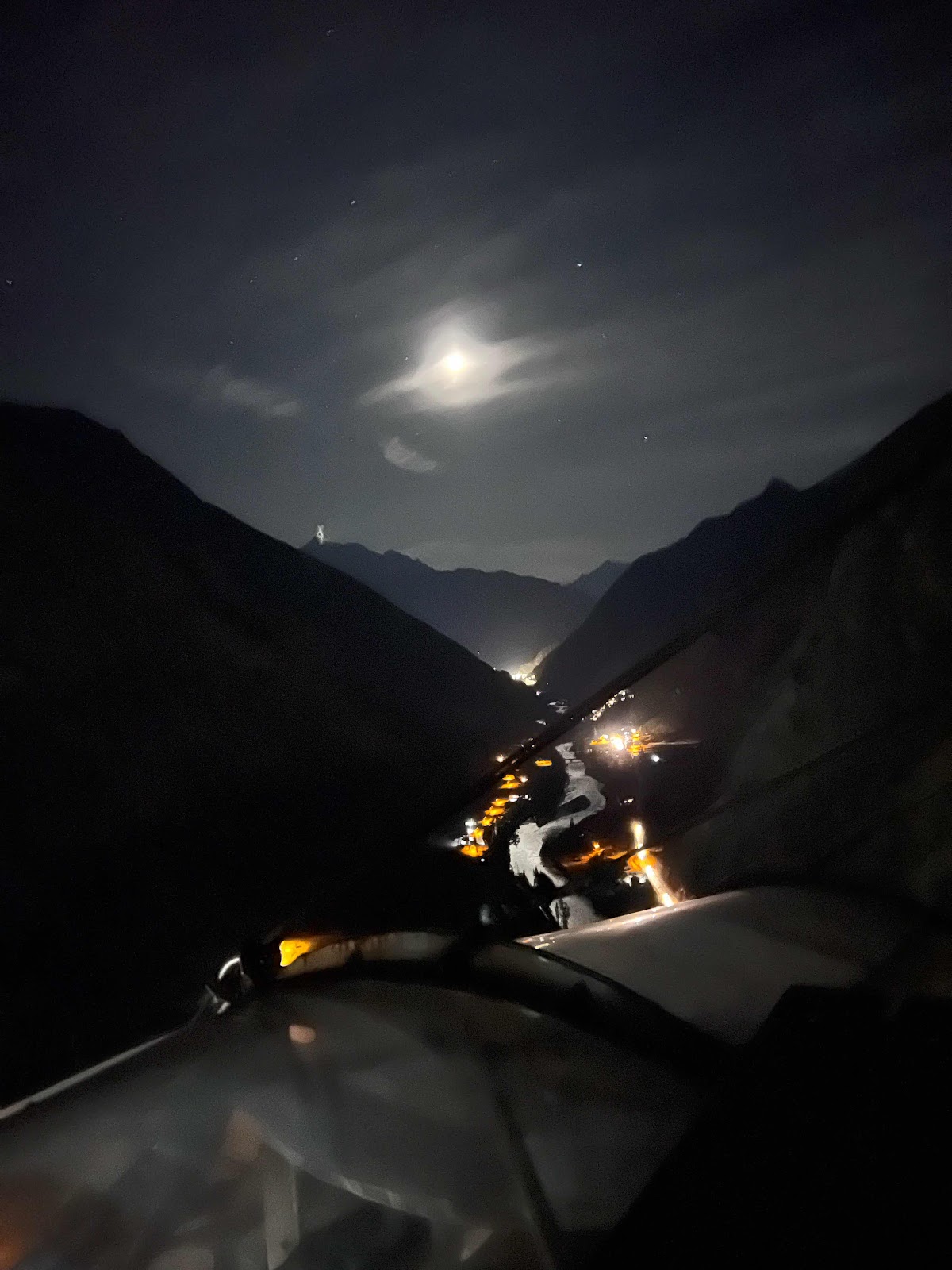


Though we watched carefully through the chilly winds for quite sometime, we never spotted a satellite. (If you have an answer for this, I’d love to hear it!) But we did see a few shooting stars. What is it about shooting stars? Are they just reminiscent of the magic they bring spotting them as a child? Is it a mystical connection with the universe beyond? For me, I am always reminded of the classic story, A Wrinkle in Time, where we learn that in fact, these were stars that were giving up their life fighting evil. In the world we live in, I like imagining those bigger, greater things also fighting our battles alongside us, helping us to make the world better. I do love fireworks, but I must say, this 4th of July light show was one I won’t soon forget.

Our beds were comfortable and warm despite the chilly temperatures. We both slept a bit restlessly, most likely due to our odd location, but thankfully there were no nightmares of falling to our deaths.

We awoke to the light slowly creeping into the valley, with varying colors of sky. We (with some difficulty) made our way back to the dining pod where we were greeted with tea, coffee, orange juice, fruit, eggs, toast, granola and yogurt. Once again, so very impressive, especially in this setting.


We had a little bit of free time before our descent. Jess and I paid the extra money to have their photographer video and photograph us. We haven’t seen the evidence yet, but I believe it was well worth the extra cash! That meant we didn’t have to try to take pictures while climbing and during this free time we had a photo shoot in our pod. Cheesy? Sure. But this opportunity was a once in a lifetime kind of thing so might as well get photographic evidence of it.


The way down was equally as exhilarating as the way up, but so much easier and a lot more fun! After a short climb and a short hike, we made our way to the first of six zip lines that took us down the hill in sort of a switchback set up. The longest was about 600 meters long along the side of the mountain, dangling high above the valley below. The guides were great! They were helpful and encouraging, making it easy and fun. The last zip line ended on a platform on the roof of the small office we had started our journey on.


The SkyLodge was everything I had imagined and more. It was memorable, challenging and truly remarkable. I’m incredibly thankful we came upon this opportunity and that we jumped at it when we could! So, will these two mountain climbers start a new hobby? That’s a major NO. But I’d do the SkyLodge again in a heartbeat!

Sunday, July 3, 2022

Machu Picchu

Sometimes, when you’re anticipating something, it disappoints you. Sometimes, it perfectly meets your expectations. And on those rare occasions, like the last two days, your experience far exceeds your expectations. 

When planning this trip, I will admit that Machu Picchu was sort of an after thought. I know, I know. It had been on my bucket list, but it was more of a fleeting dream rather than a top destination. Instead of a goal, it was more one of those “it would be neat to see” places. In fact, it was more of an after thought even after I had chosen our countries of destination. Now that I’ve been in the presence of the majesty of the holy city of the Incas, let me encourage you to move it up on your own bucket list.

There are lots of options when visiting Machu Picchu, and it also isn’t as straightforward as it may appear. There are a limited number of tickets each day as they work to protect this treasure for future generations. So that it is never too crowded inside the holy city, even tickets are sold to different “circuits” so that visitors actually only see parts at a time and no one actually sees the entire place. (Note to future travelers: ensure your ticket is either circuit 1 or 2 or you will not see the overview of Machu Picchu.) 


We had heard of the Inca Trail and wanted to have the opportunity to be on at least part of it, which also has a limited number of passes each day. There are options for a varying length of time on the trail. Although I’m confident we would have loved it, Jess and I opted for the two day version rather than the four day version which includes sleeping in tents along the way and having porters carry your things. I cannot recommend the two day version enough! You’ll see why as I continue.

Let me start with a little history, which our phenomenal guide, Fredy, gave us along the way and of which, I ashamedly knew incredibly little. Five thousand years ago, there was a great civilization in South America, one that built pyramids. Through disease and natural disasters, this civilization broke apart and the people scattered forming small communities. About a thousand years ago, one such community, the Incas, slowly began to acquire other groups, becoming one larger group. This was done through violence, of course, but in large part through religion. As they went, they adopted religious beliefs of other groups, melded them into one and so it was easier for their newly conquered people to become part of the Incas. They grew in power and their “golden century” is known to be from around 1350-1450. As incredible architects, astronomers and farmers, they grew and created an empire that covered several countries and included, at its peak, millions of people. Cusco was the center of the Empire.

It is believed that soon before this golden century, a king of the Incas awoke from a dream and said the gods wanted him to build a holy city. He had cartographers begin to look for the perfect spot. Machu Picchu (Old Mountain) was on a high, flat area, surrounded by mountain peaks with a source of water, and so the work that took sixty years to create began.

All that is known about the town is hypothesized through theories and archeological evidence. The Incas do not have a known form of written language (although their ingenuity suggests they do, but rather we just do not know how to interpret it). Stories vary as to whether the city was abandoned before the Spanish arrived due to earthquakes (there is a fall line that runs through the middle) or if it was a last rendezvous for the escaping Incas who abandoned it as they escaped from the Spanish.

The Inca Empire was already weakening before the Spanish arrived due to a civil war between royal brothers as well as disease and natural disasters. When the Spanish arrived in the early sixteenth century, their advanced weaponry meant they fairly quickly conquered the Incas. We know that the Spanish never found the holy city. Machu Picchu, in the middle of the jungle, quickly became overgrown and was lost to the world until an American explorer in search of the “Golden City” or the “Lost City of the Incas” found it in the early twentieth century.

Now, back to my pilgrimage to the city. Fredy picked us up at our hotel at 4 am. Yes, 4 am. We drove about an hour and a half out of town where we boarded a train that would take us to our destination. (There is a train that goes from Cusco all the way to the town adjacent to Machu Picchu.  I’m still not totally clear why we drove the first half of the journey, but the company has been organizing travel groups for a long time, so I’ll go with their expertise!)

The train ride took us through the Sacred Valley. It is so called not only because of the history of Machu Picchu, but because the area that receives practically no snow has several glaciers atop the rocky peaks. Also, the life-giving river that flows through the valley creates fertile land where farmers harvest crops, mostly corn, for much of the year. The surrounding mountains protect the valley from weather extremes and the valley stays relatively mild all year long.


Diversion story… an energetic college girl traveling with her family sat next to me on the train. She was from Colorado and so quickly connected with Jess. When I said I was from Alabama, she said her roommate was from Alabama. She couldn’t remember exactly where, but she knew it was near Birmingham. Saying her name, I immediately recognized it as a Shades Cahaba student and could picture the bright smile and talented athlete I knew many years ago. What a small world!

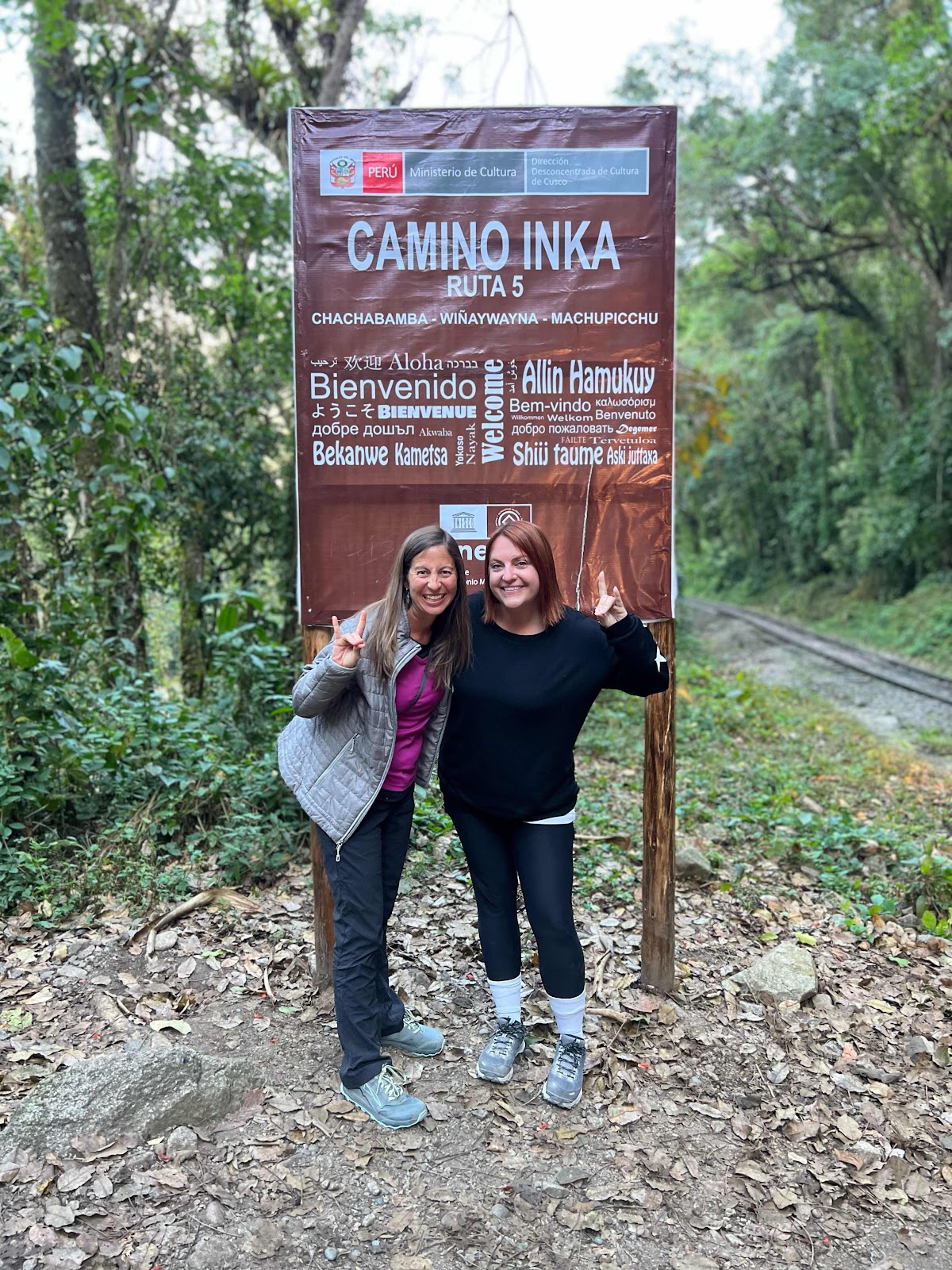
The train stopped a couple times along the way, and I was so thankful Fredy was with us, for we got off the train in the middle of no where. Yes, there was a sign and a bridge that crossed the river, but no buildings of any sort that we could see. This was not the start of the Inca Trail, but rather where we were to start on it. Jess and I felt like quite the celebrities because, while the trip was not inexpensive, we had NOT paid for a private tour. But as no one else had used this company for the same tour on these same dates, we had a private tour with our own guide. The groups are often six-ten people. So, since it was just the three of us, we got to ask all sorts of questions, outside of the historical ones, and set our own pace. What a treat!

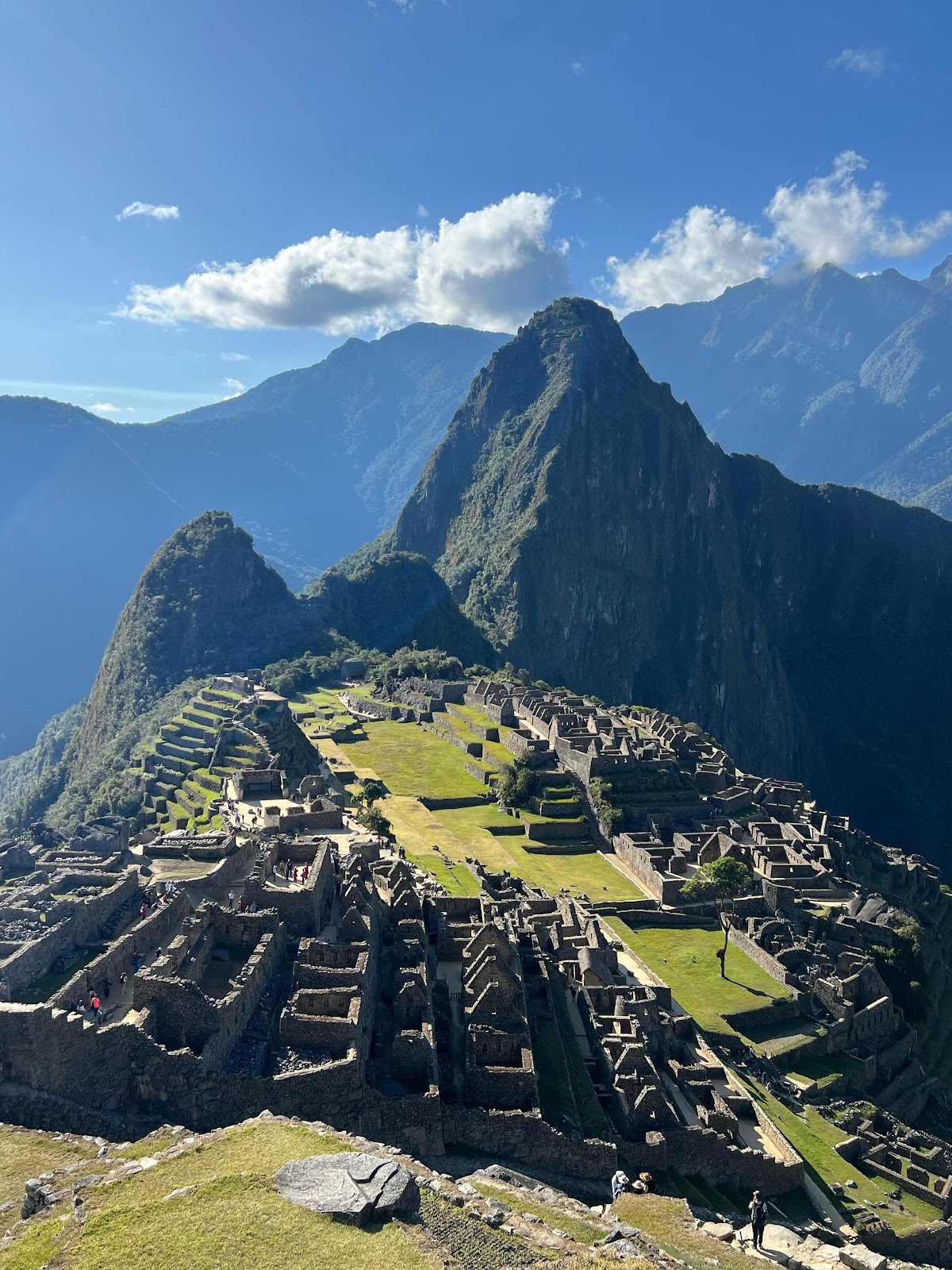
We started at a checkpoint where passports were checked, and everyone who enters the trail must be with a licensed guide. Fredy walked us just out of the checkpoint to a small Inca ruin where we spent about an hour getting some background information. Fredy reminded us that Machu Picchu was built as a holy city. At its peak, it probably supported around five hundred people but they were only the chosen few, the elite, the skilled artisans and religious leaders of the empire. Those who took the trail into the holy city were on a pilgrimage. Legend has it that they took their valuables with them on this pilgrimage. People once thought that meant they took gold and silver, but now they understand that people were taking their family members there to be buried. Again, it was only the chosen ones who could make this journey and who could be buried there. Fredy helped us, even with some essential oils, and moments of meditation to imagine that we, too, were on some sort of a pilgrimage, whether religious or not.

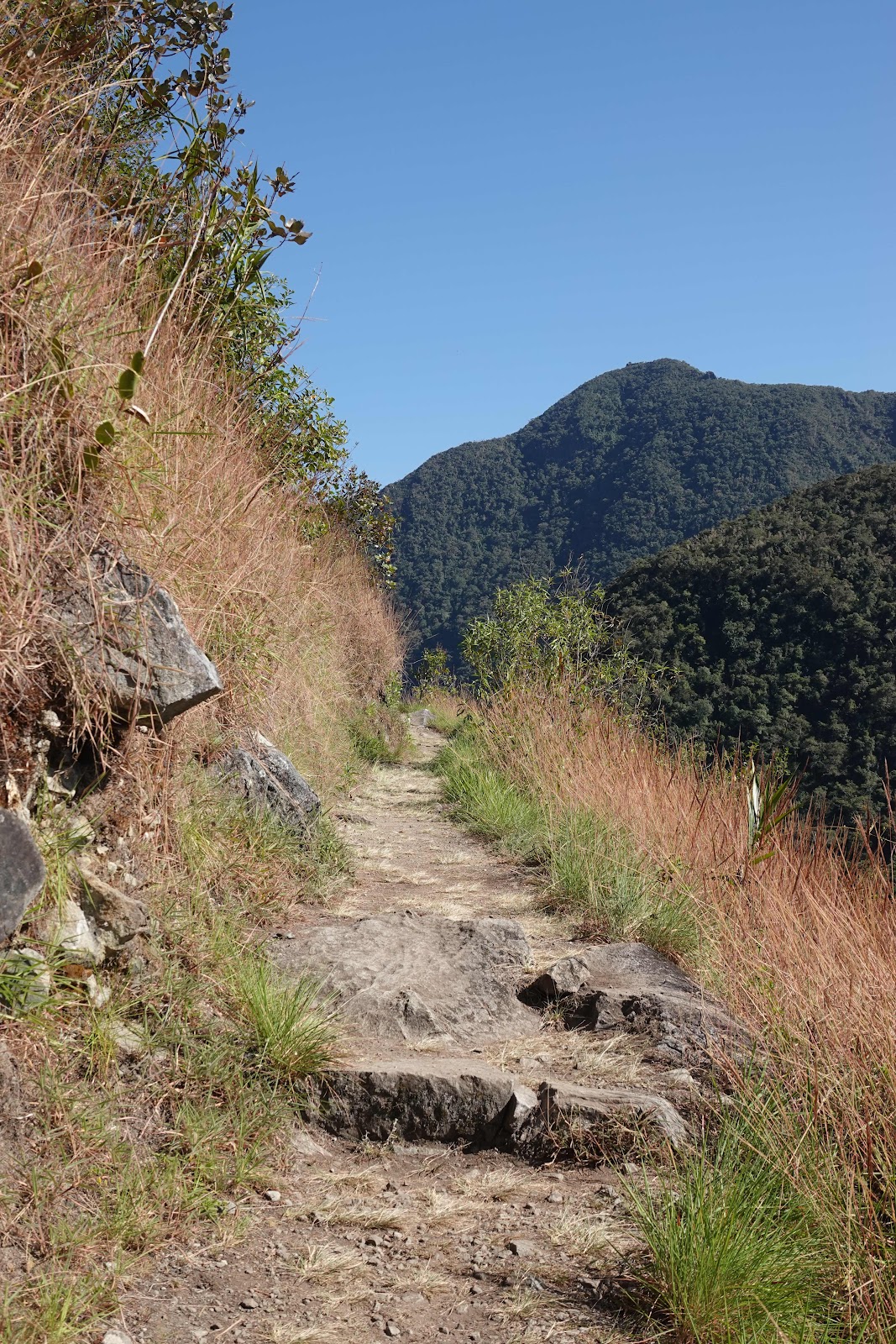
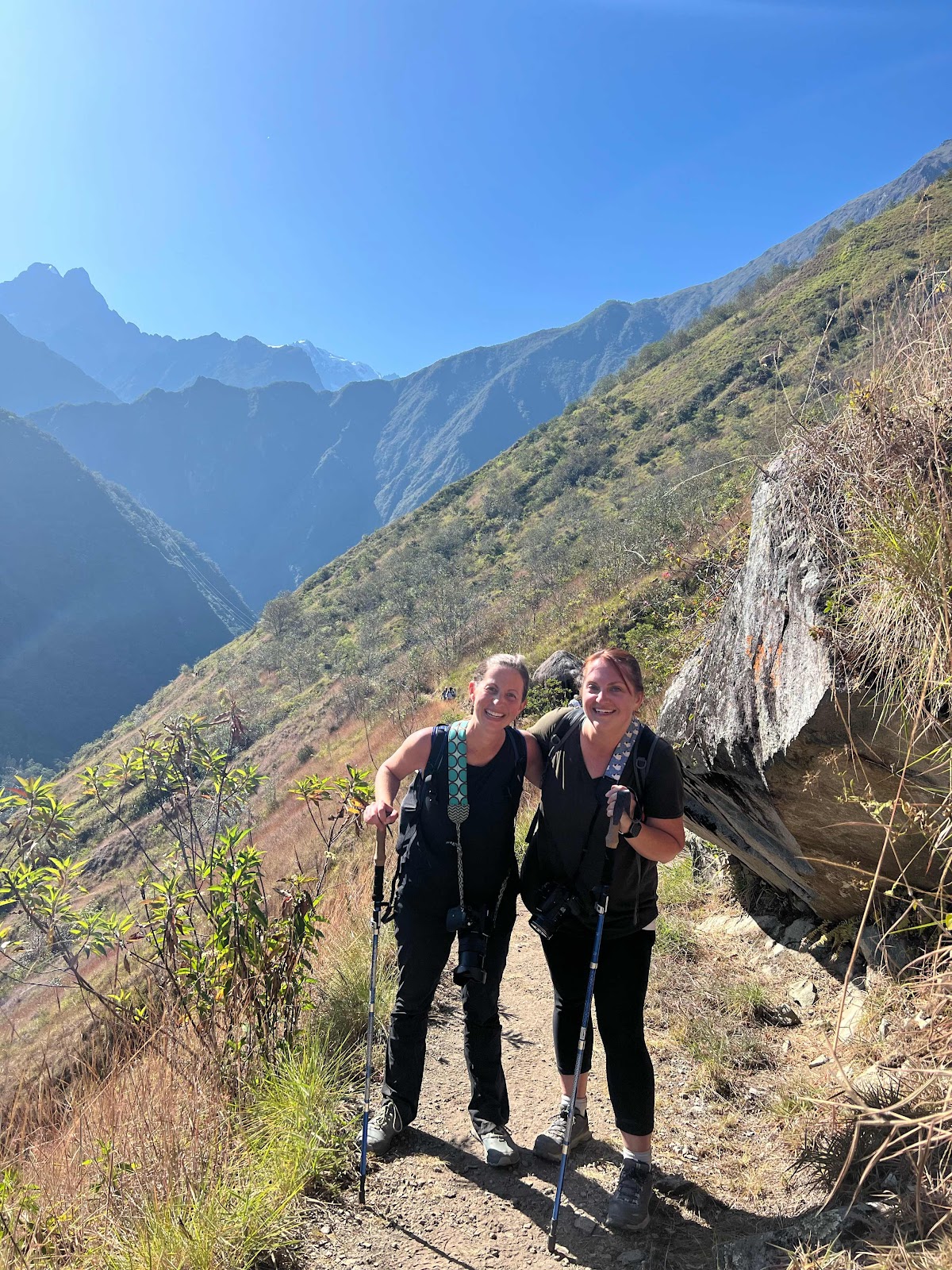
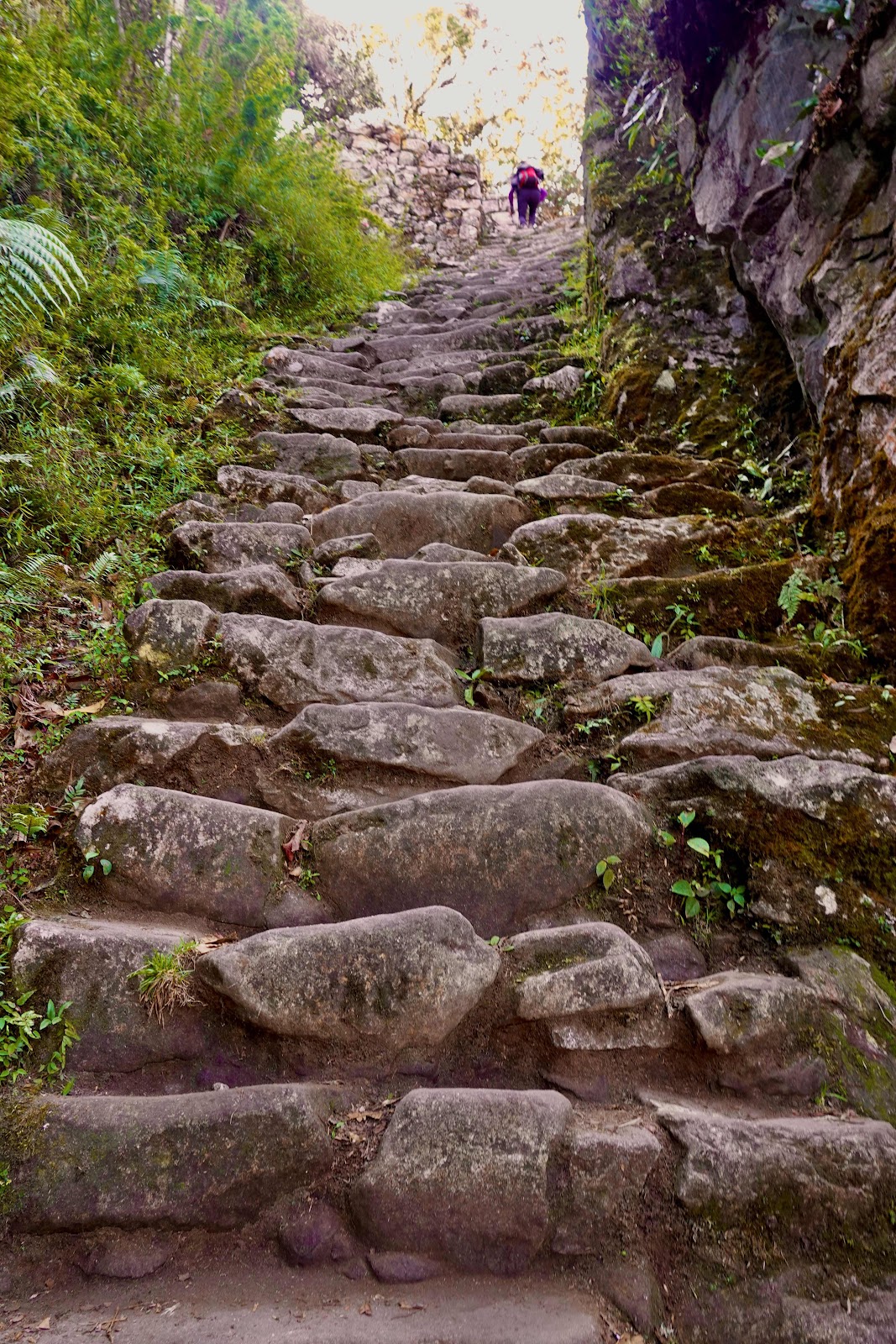
Fredy had warned us that the hike included a lot of up hill, and well, he was not wrong. We started even with the river and hours later the river looked like only a small stream. The path was narrow, on the side of a mountain, but rarely was it terrifying. The steep rock stairways scattered throughout the journey were breath-taking at a high altitude, but with short photo breaks that Fredy indulged us with, it never seemed like too much of a struggle.


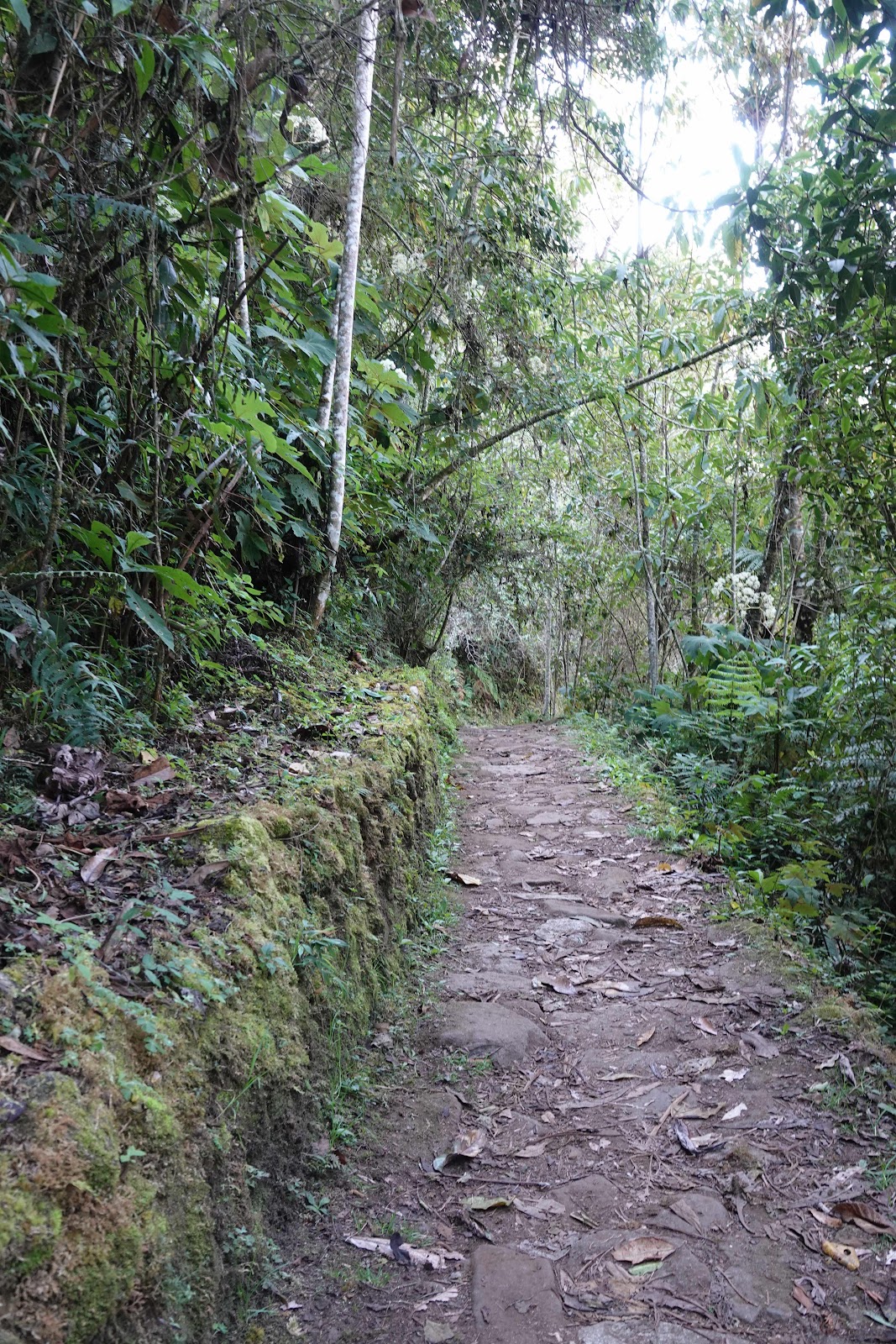
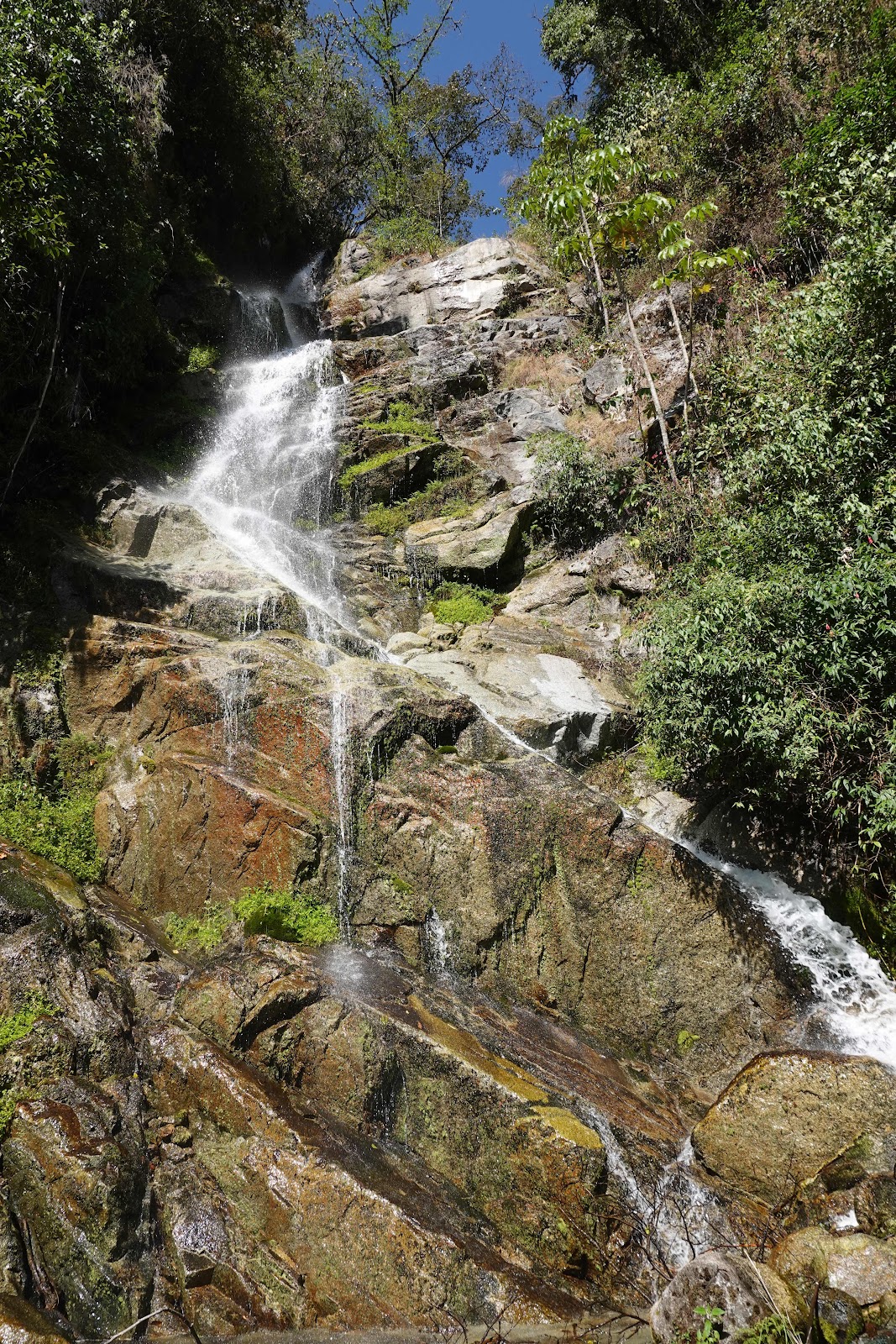
The amazing part was how the greenery changed as we traveled. At first, the landscape was dry, desert like. Cacti were scattered around us and yet also small orchids. Then, after a turn, we moved into greenery much more similar to a rainforest with moss and ferns taller than me, (hold the short jokes please) with damp ground despite the lack of rain. Fredy said it was the geography of the mountains that moved us from a cloud forest to a rain forest. The drastic change in such a short period of time was incredible. Along the route, when the trail was in the direct sun, there were a few spots where small shelters had been built to offer weary travelers a moment of rest. A lovely waterfall, once in the rainforest was also a welcome respite. (I will confess, particularly to my Alabama friends, that this was the first time I’ve felt humidity since leaving home. I know, I’ll get plenty of it upon my return!)


After a particularly steep climb on rocky stairs, Fredy had us stop in what appeared to be a huge arena built into the side of the mountain by the Incas. He told us about their wide depth of knowledge, in particular with rocks, plants and the calendar. The area we were standing in was actually an expansive greenhouse where the Incas would cultivate crops allowing them to grow at different altitudes. The rocks around them, collecting the warmth of the sun acted as our clear roofs today would act. What incredible scientists and engineers they were!


We stopped for lunch at a large campsite that is used for people doing the four day trek and from there the trail was relatively flat until we neared the end of our seven and a half mile journey. The stone steps at one point were closer to a ladder than steps and were affectionately called the “gringo killers.” Thankfully, we are still here to tell the tale.


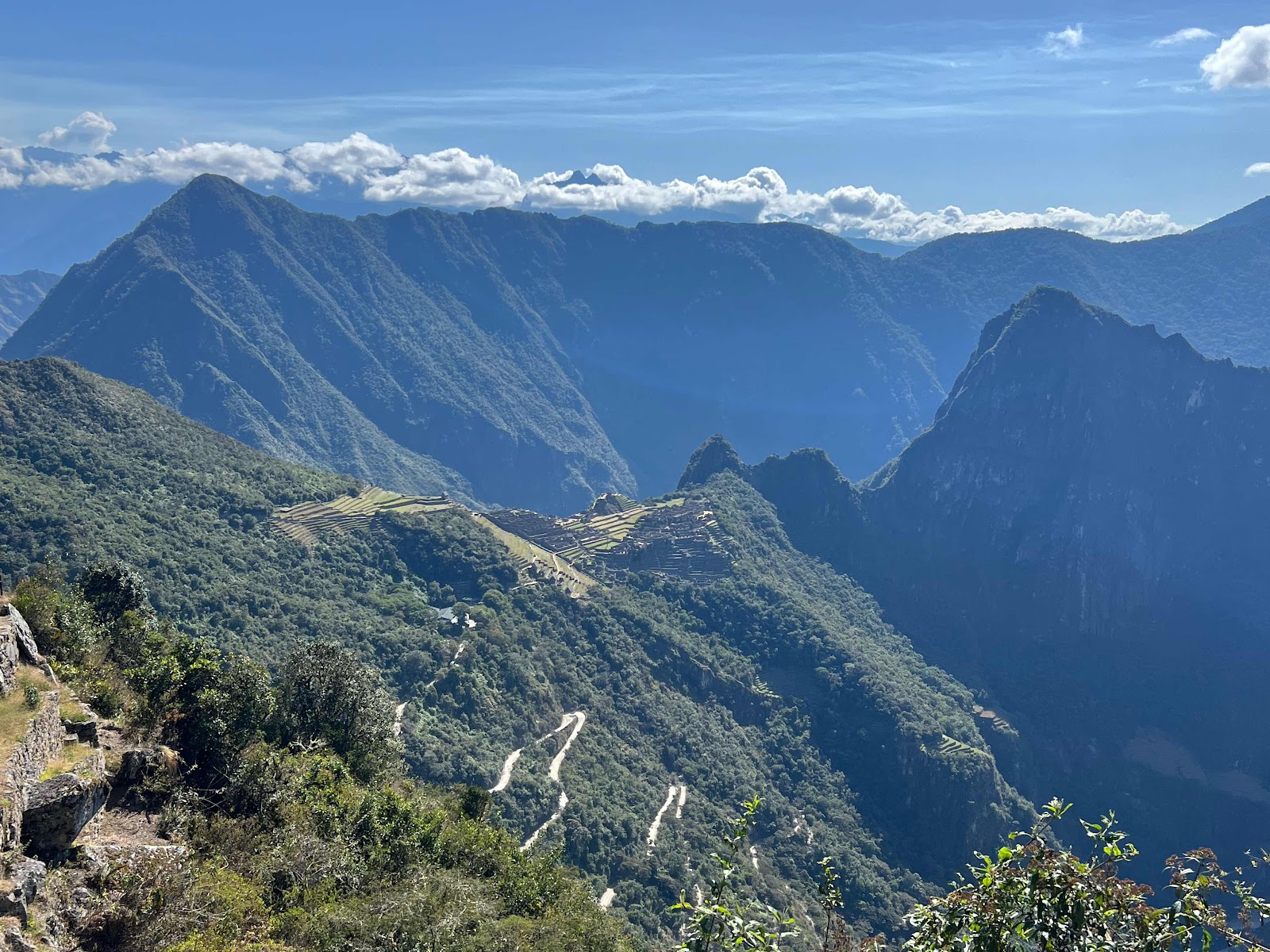
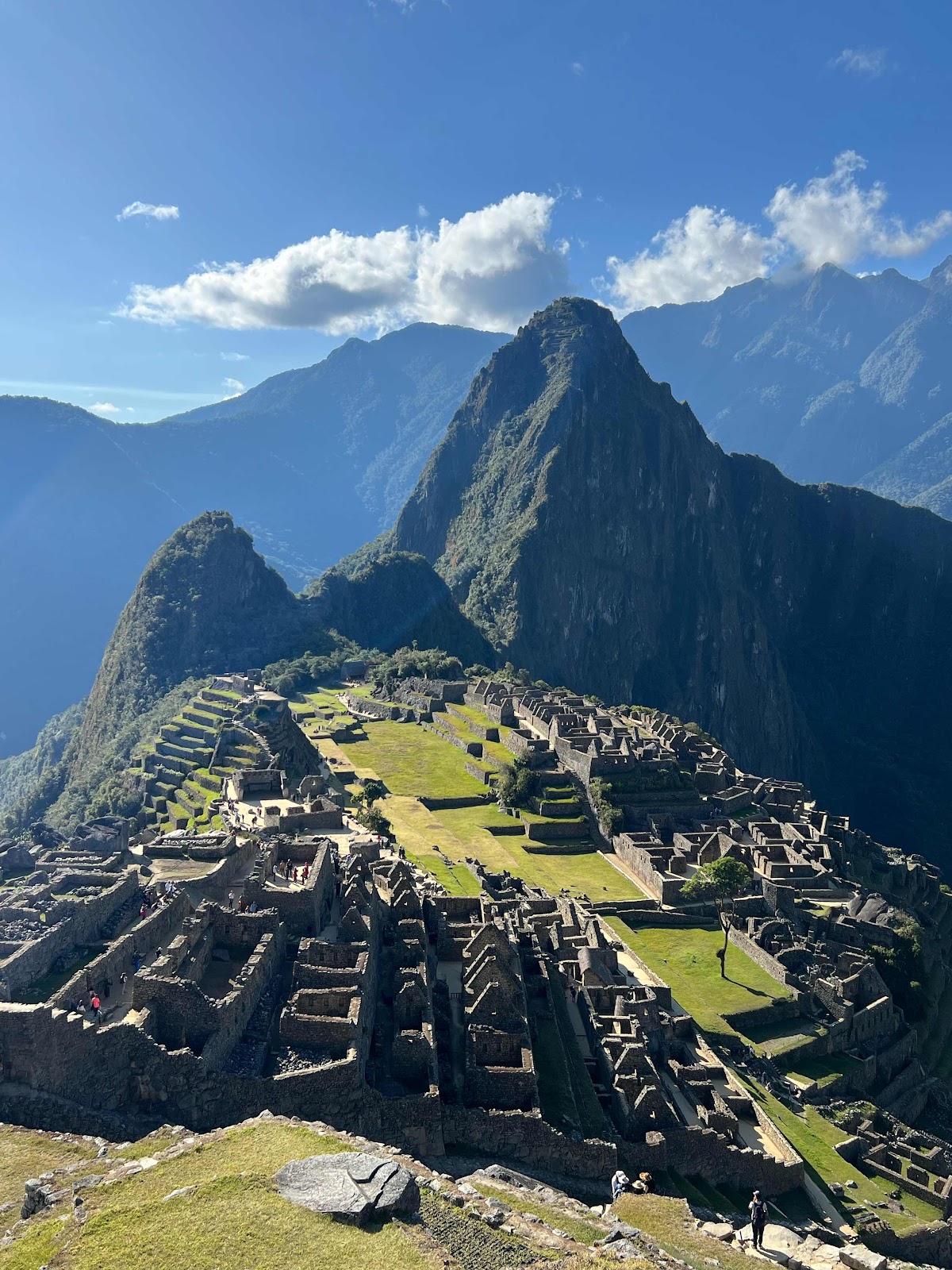
Then, in the distance at the top of a slow incline of stairs, we saw a structure. Fredy’s face lit up, as he watched our faces grow with recognition and understanding. We had reached the Sun Gate, the spot where during the summer solstice, the sun rises through bringing light to Machu Picchu. We had reached the gate that would offer us our first views of Machu Picchu just as the weary travelers would have approached the city hundreds of years ago. 


It was breathtaking, stunning, rewarding and worth every struggle along the way for that moment and that view of the sun shining on the holy city down below. When seen from that distance, its placement makes even more sense.


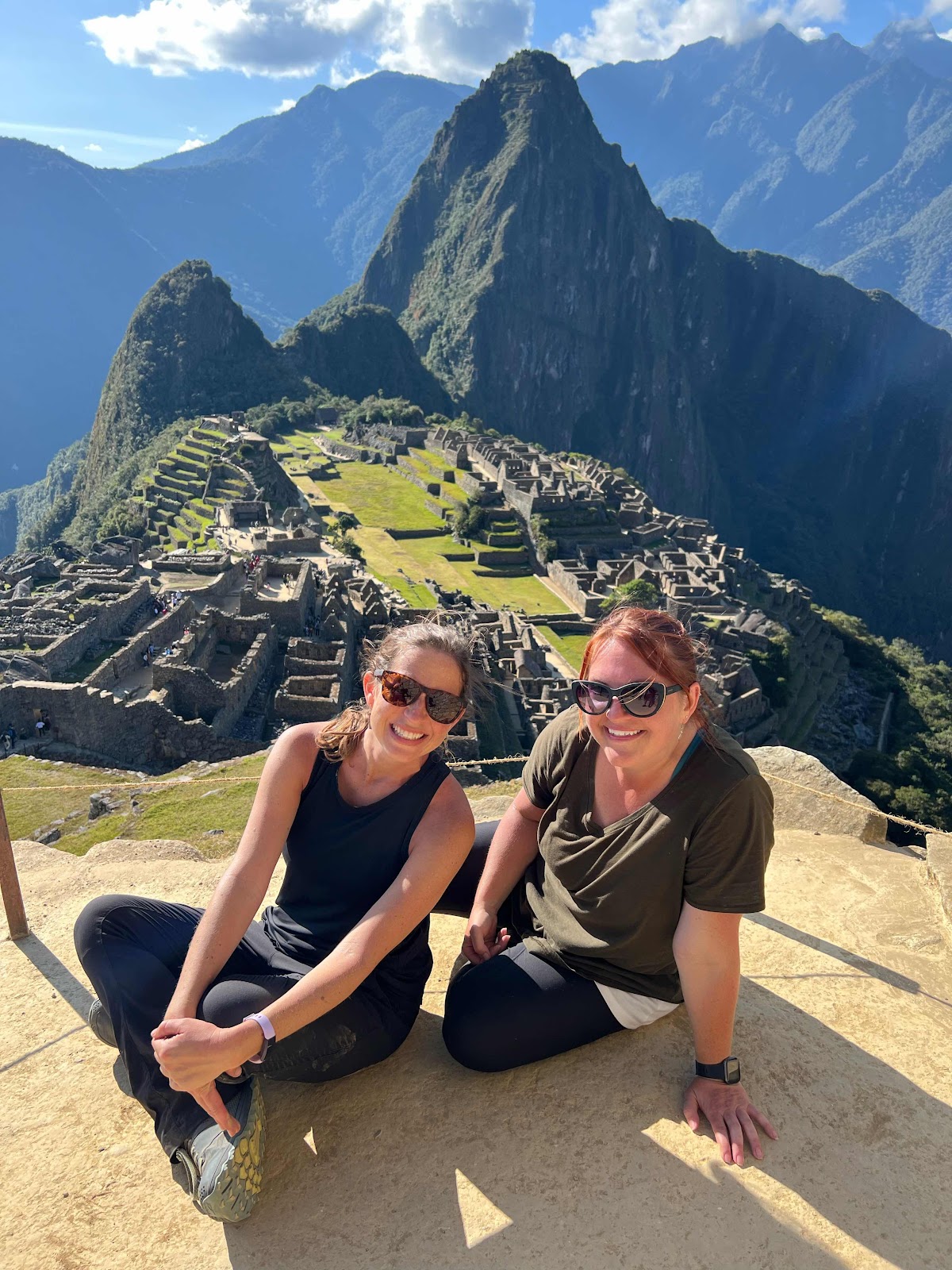
It was still a bit of a hike down to Machu Picchu, but it was down, so it was quite the relief to the up we had done so much of during the day. One of the great benefits of doing the two day trail is not only feeling like you “earned” Machu Picchu, but getting to see Machu Picchu two days in a row. When you enter from the Sun Gate, you enter from up above and don’t really have to show a ticket. So, upon entering the park, after several photo shoots and an unbelievable amount of photos of the same thing (man am I thankful for digital), we just sat atop a stone wall in awe of the city below us. We sat in wonder of the incredible talent of the people who had been here so long ago and of the meaning this city had given to so many. 


A harrowing bus ride of tight switchbacks takes you down the mountainside into the neighboring city of Aguascalientes that grew up because of tourists seeking glimpses of the holy city. It was a cute itty bitty town, but it also has the feel of being a tourist capital, understandably of course. Prices tend to show it and I felt we heard more American accents in this tiny town than in all of our travels so far combined.

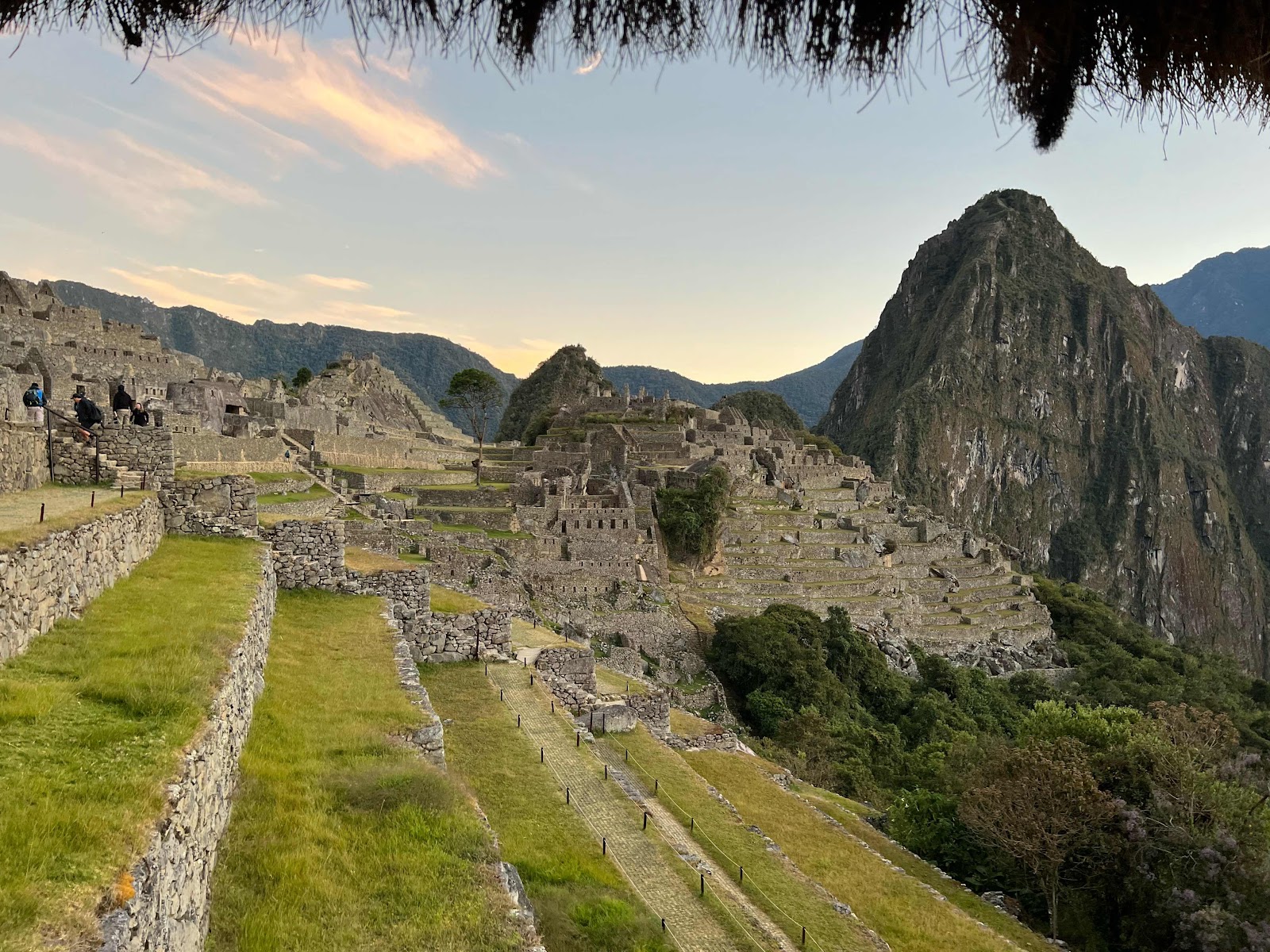
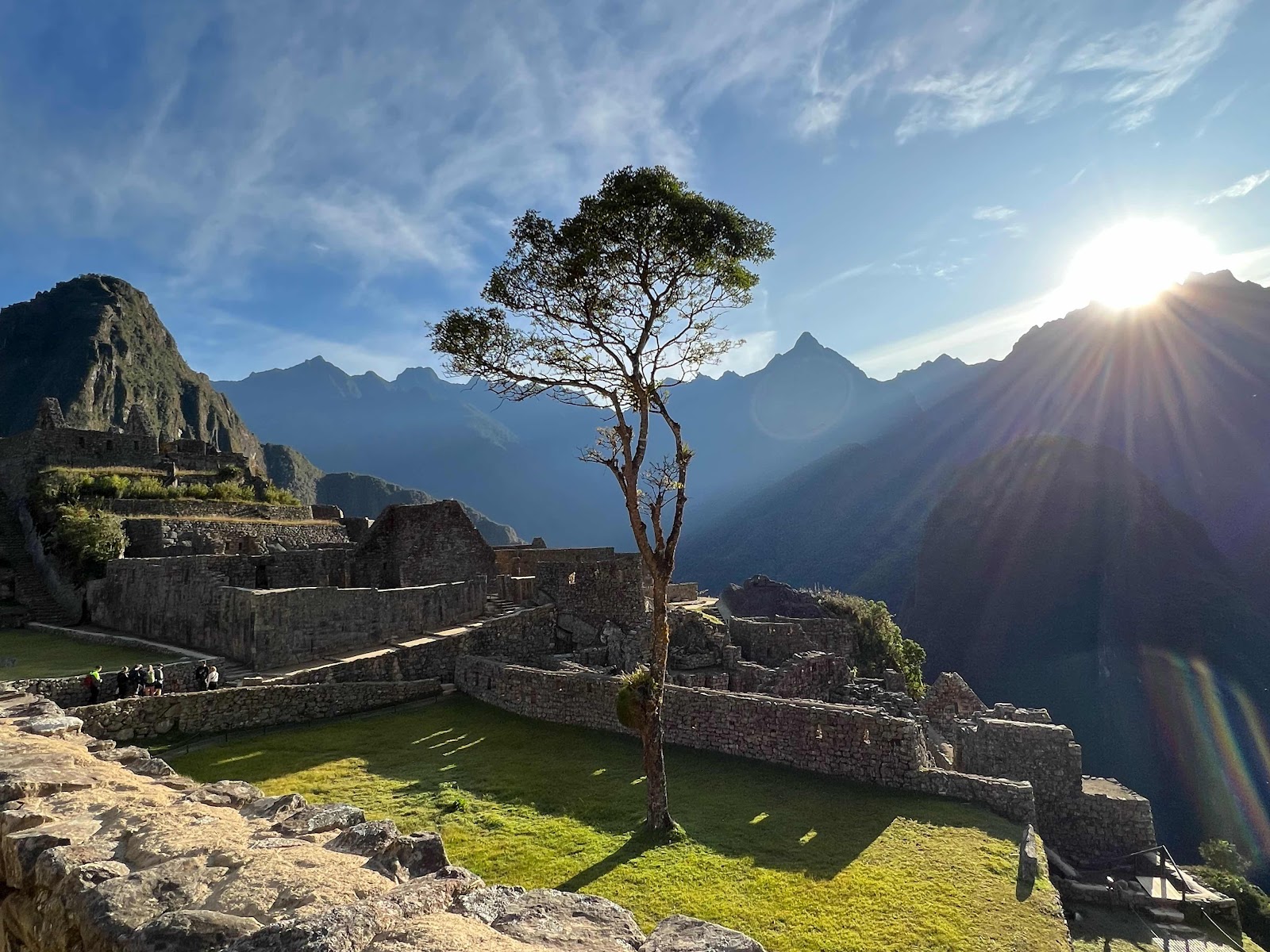
After a delicious dinner and a well-earned shower, we slept hard in a delightful hotel and once again woke up before the sun rose. We were in line for the bus back up the hillside a few minutes after five. Fredy took us through the holy city telling us more history, pointing out building marvels, and letting us pause for infinite more photos. Machu Picchu came alive with birdsong and swallows flitting about. The city was brightly lit soon after our arrival, but it was nearly two hours after our departure from the town that the sun peaked her stunning face over the surrounding mountain peaks illuminating the historical city below.


Inside the city, the stonework itself is a marvel. Some structures were built with stones and mortar. Others, temples no doubt, were built with stones that had been polished down to fit exactly together with no mortar. Through hundreds of years, earthquakes and natural disasters, these structures still stand. It seems we have much to learn from these ingenious architects.


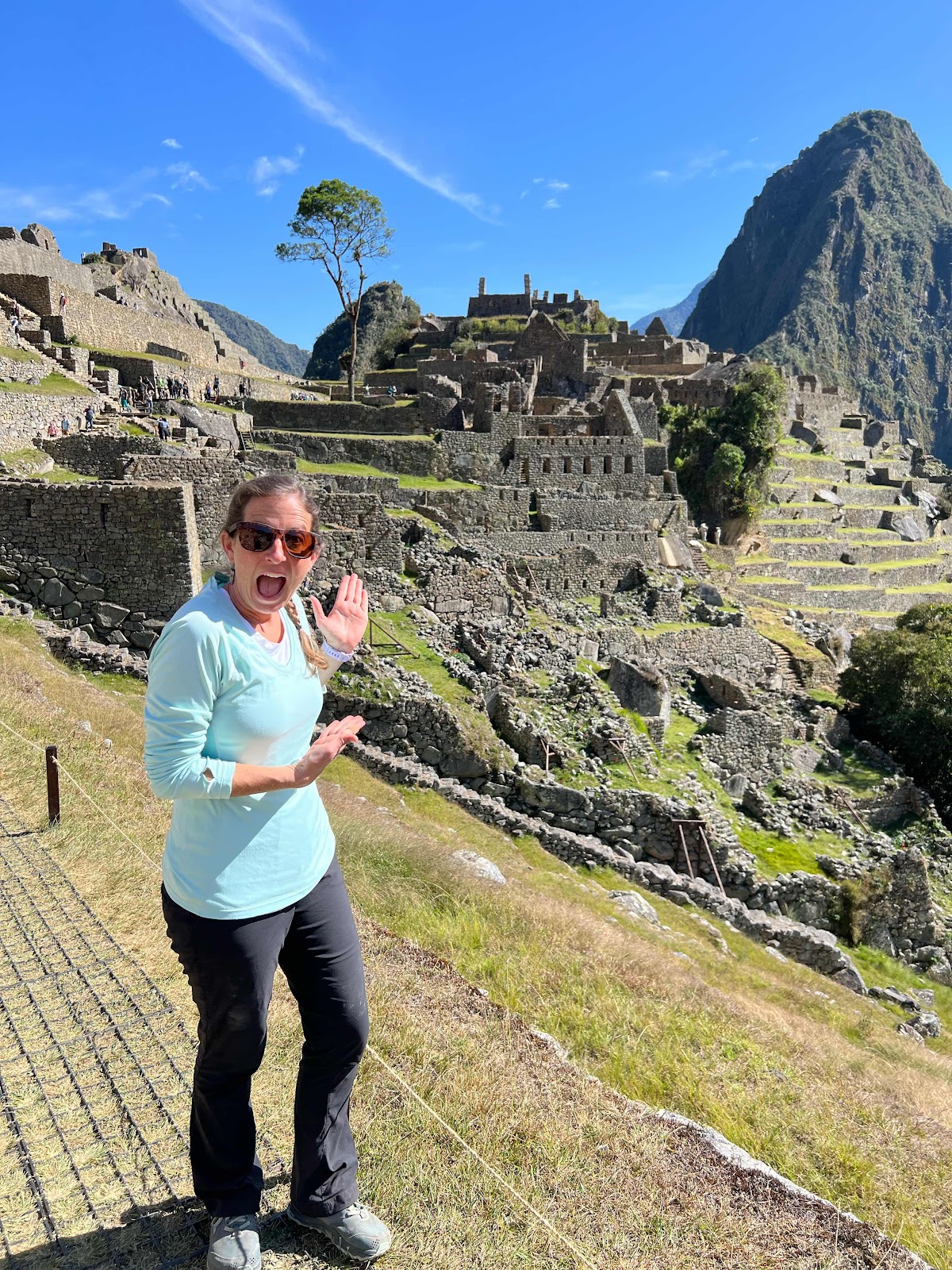
Tickets into Machu Picchu are limited each day, and I must admit that this is helpful to regulate the crowds. You are even limited to the time you are allowed within Machu Picchu, but of course this is hard to regulate. So, those working inside Machu Picchu mostly look out for the tour guides whom they recognize as frequent travelers and when it looks like they’ve been there for a while, they urge the tourists to leave. So, as a gift to us, after a detailed, nearly two hours within the park, Fredy left us to our own devices. Jess and I went as slowly as possible through the remaining part of our designated circuit. We wanted to soak it all in, watch the sun hit different aspects of the holy city, and feel the warmth of the day. Knowing that this was probably our only time to visit this mystical city, we took our sweet time and wandered through ruins and up and down staircases hundreds of years old.


It’s hard for anything to measure up to a morning like that, so the rest of our day was spent at a leisurely lunch of quinoa and alpaca pizza as we watched cats sunbathing on rocks along the riverside, meandering through market stalls and people watching in a small square before catching the train that would bring us back to Cusco.

I didn’t realize before I came how special experiencing Machu Picchu truly was. I’m a bit embarrassed by that, but also incredibly thankful that I made it a priority. It was an experience of a lifetime!


Wednesday, June 29, 2022

Puno

When you begin to research Peru as a place to visit, the wide variety of landscapes provide for many interesting opportunities outside of the famous Machu Picchu. Lake Titicaca is one of them.

Few people visit the Bolivian side of the lake (which I would recommend!), so we knew that we needed to visit the ever popular Peruvian side. As this side is so much more popular, tour companies abound.

When reading about the islands that exist in the Peruvian side of the lake, I knew I wanted to visit Uros and Taquile. This is where most tours go. And so, it was easy to find a full-day tour to take us out amongst the islands. I believe there were ways to make it there on your own by ferries, but after our tour, I must admit that I’m not quite sure I know how that would have worked.

Our tour to the islands was just what it needed to be, but we are not tour group people, and that’s the way we had to visit the islands. I know I’ve talked about our food tours and even the tour across the Bolivian desert, but in each of those, our group numbered about half a dozen which meant interactions between fellow travelers were easy (and even encouraged) and I could ask my plethora of questions to the guide. Yesterday, we were on a floating tour bus. But, I got to see what I wanted to see, and had we done it on our own, I believe we would have been very lost and lacking in so much of the information.

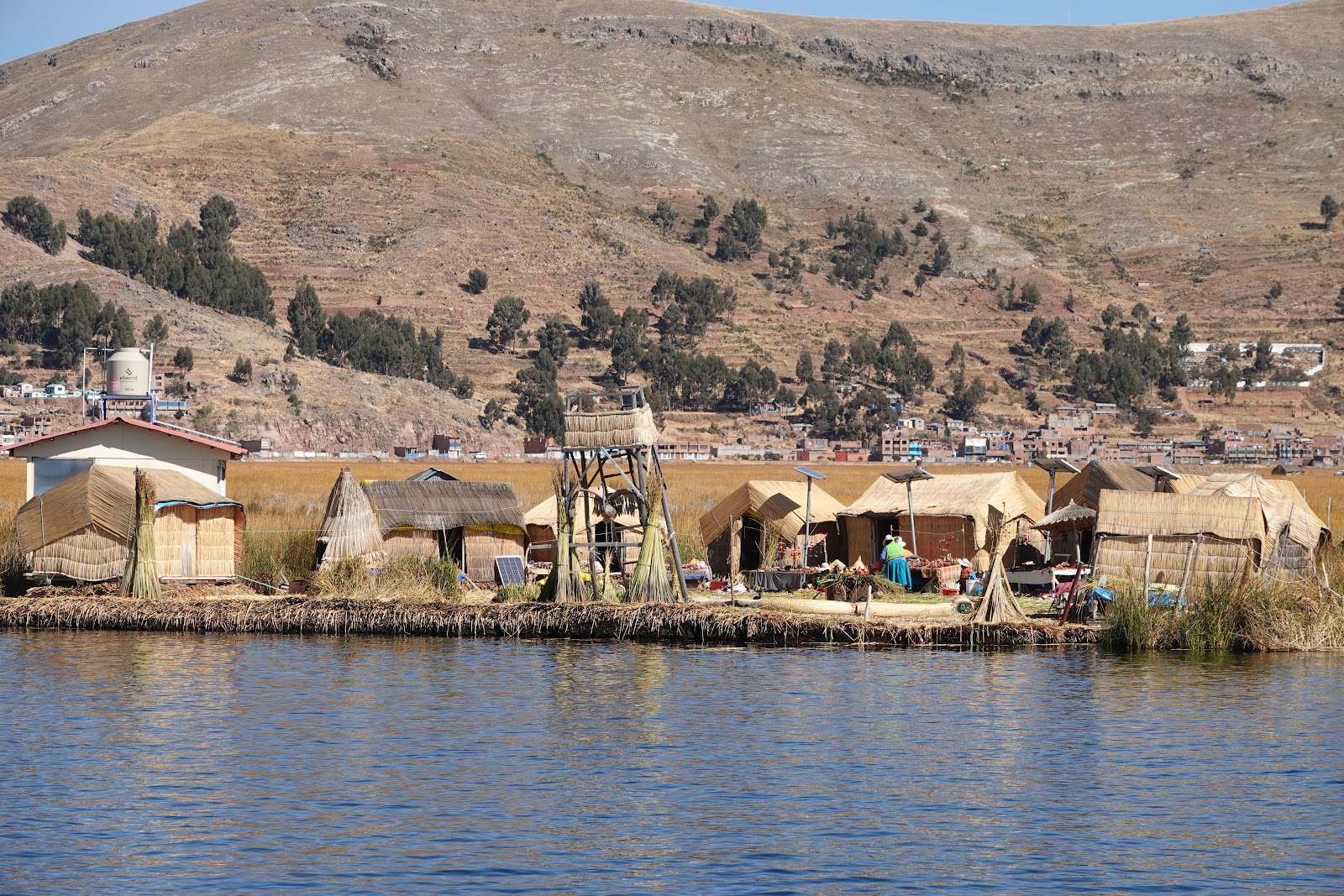
Uros is a community of floating islands just off the Puno Bay. The water is not terribly deep, and it is full of reeds. These ingenious people spend two years creating an island that will house 3-7 families. They start with the blocks of roots of the reeds, tie them together and then begin adding layer upon layer of reeds on top of them. Even after living on the island, they continually add to it as the reeds die down. The islands usually last 30-40 years. There are currently over 100 floating islands.


A few years ago, one of the presidents of Peru spent a night on an island. Since then, he helped put a bathroom with a septic tank on each island. The tiny huts, also made of reeds, have solar panels which support some basic electrical needs. There is a school on one of the islands and a hospital that is supported by doctors from Puno several days a month.

I asked our guide (because yes, even in a crowd, I found ways to ask Hugo questions!) how long people had been living this way and why they continued to. He said that when the Incans first invaded the land, the fishermen of the area knew the reeds so well, that they escaped with their families to live in boats out in the water. They were left alone and so slowly but surely built up their own community. Today, they seem to like the freedom it provides. Sure, they frequently go in to Puno, but they are not held to the strict standards of living and working that society often demands of us all.


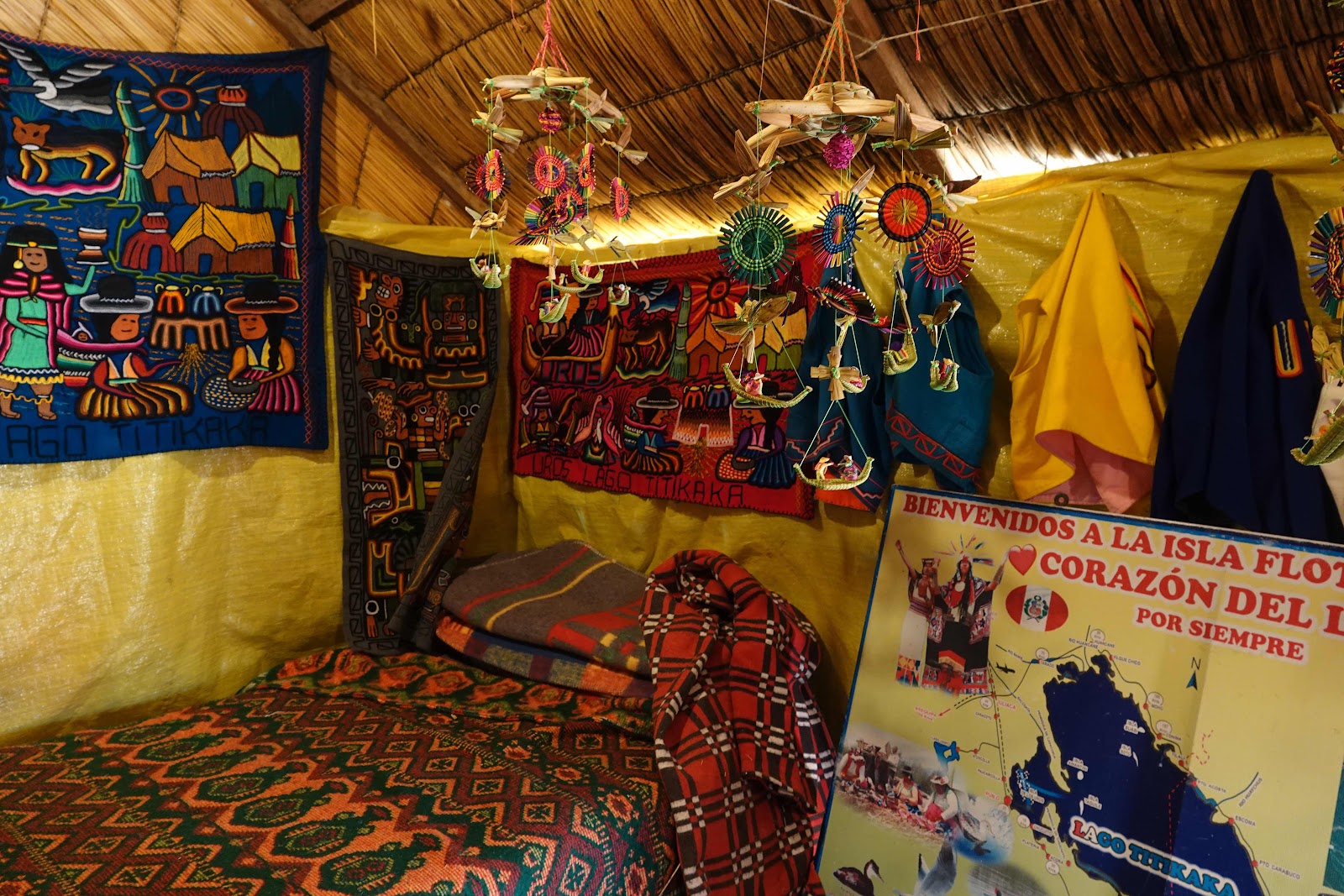
The women on the island we stopped on (we only met women, but I know there were male residents as well) were welcoming and loved explaining their way of life and how they built the island. We were even invited into their home to see how they lived. They were lovely and genuine, but as you can only expect, then came the part where they used tourism to their advantage. They brought out their artistic creations for sale and offered us a boat ride on their special boat (that of course we took) for an extra fee. Of course I’m happy to support people who welcome us into their homes and show us their unique way of living, it just always makes me feel awkward like they’re forced to put on a show for us tourists. That being said, I was incredibly thankful for the opportunity.


An hour and a half later, the boat reached Taquile Island. It’s an island similarly sized to our island (what we are now lovingly calling Island of the Sun) and of similar geography. The terraced land and sparse trees was very similar to our island as was the lack of motorized vehicles, but we noticed no donkeys! And, the main path, rather than ancient stairways was a concrete and rock inclined pathway.

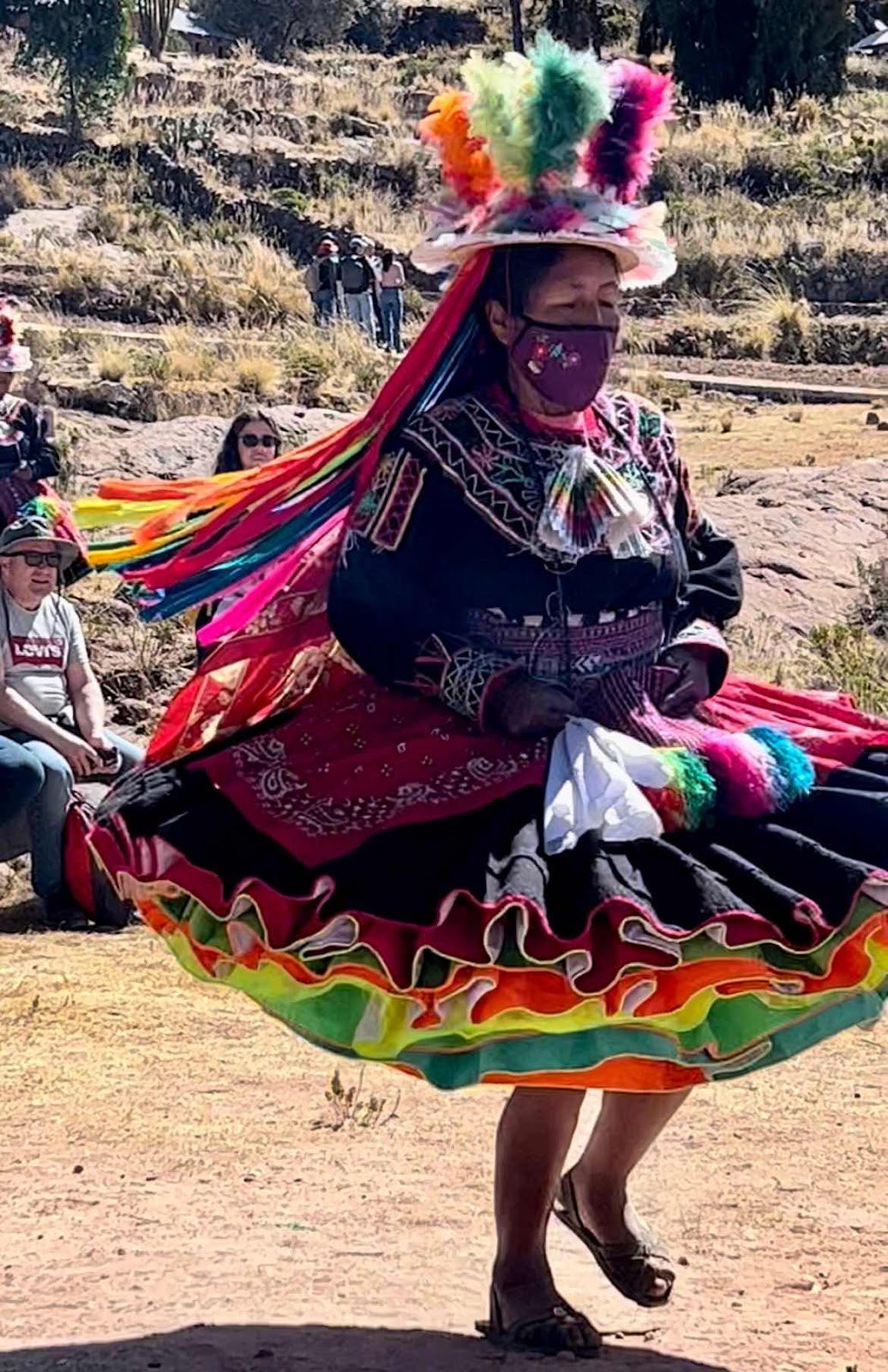
People on this island are known for their textile creations. Even more impressively, the men and women take equal share in these creations. The detail and the tightness in which their works were made was astounding. They have spent generations perfecting the craft and it shows! Once again, the people were incredibly welcoming, put on a dance for us and then began to share their works of art at the market stalls.


We had a delicious meal on the island, which was even more impressive considering that there were forty of us eating at the same time! There was warm quinoa soup, fresh trout from the lake and a hot tea made with local herbs.

After a peaceful ride back to town, we meandered through the city to our lovely hotel. It is right on a main square where a fountain is brightly lit by ever changing colors at night and locals and tourists alike sit and enjoy ice cream on the benches from one of the four ice cream shops on the small square.

We ate dinner at one of the top restaurants in town, also located on the square. I had quinoa salad with fresh vegetables, cubes of cheese and an avocado dressing with a warm squash soup and hot red wine out of a terra cotta mug. It was divine and totaled up to about $12. We are thoroughly enjoying living like queens in regards to food.


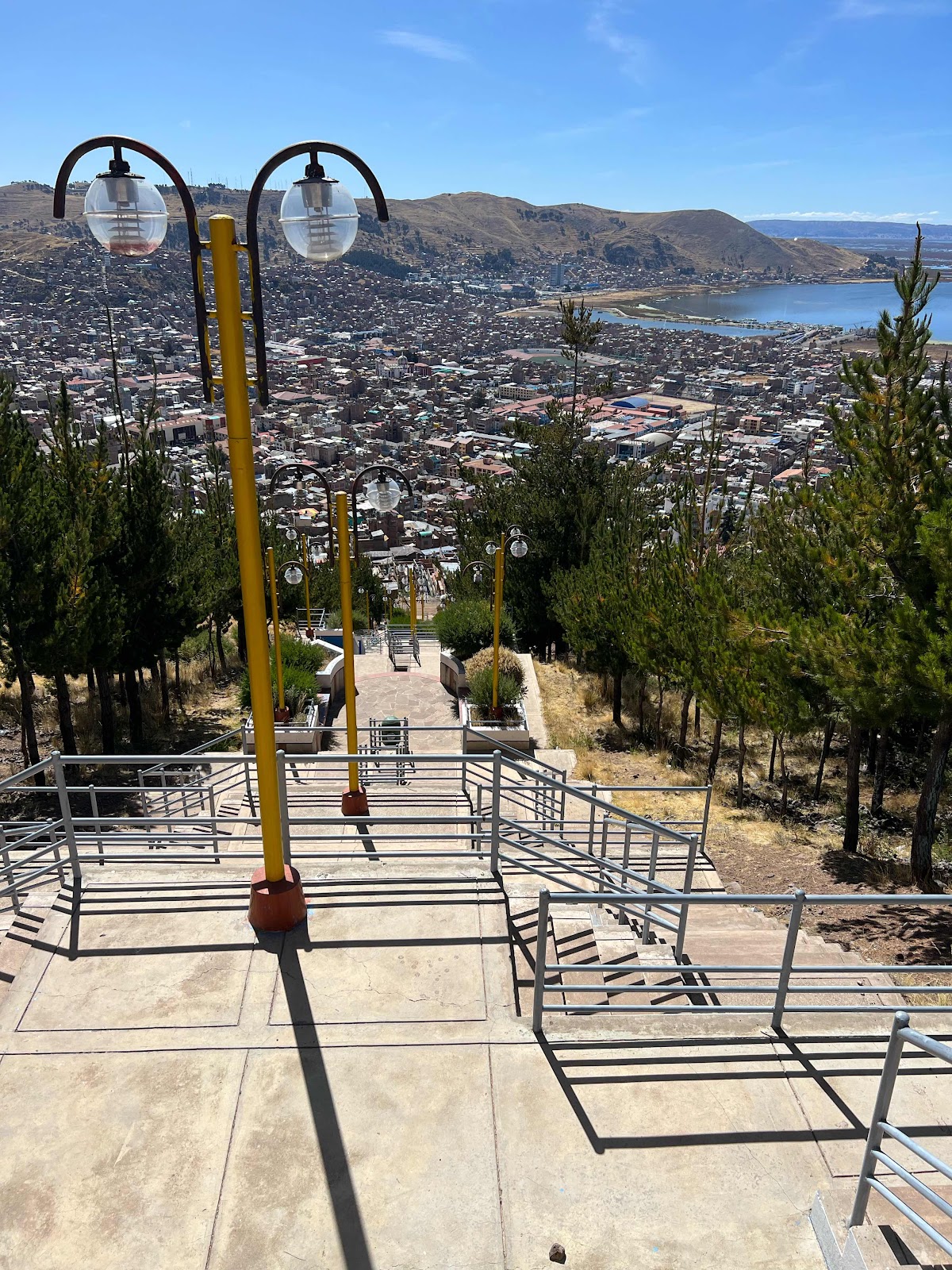
There’s not a whole lot else to do in the city that caters to taking tourists out to the island, so we spend most of our bonus day climbing stairs. In fact, I believe that we climbed more steps than I thought were feasibly possible in any one place, and at an altitude of well over 12,000 feet. 


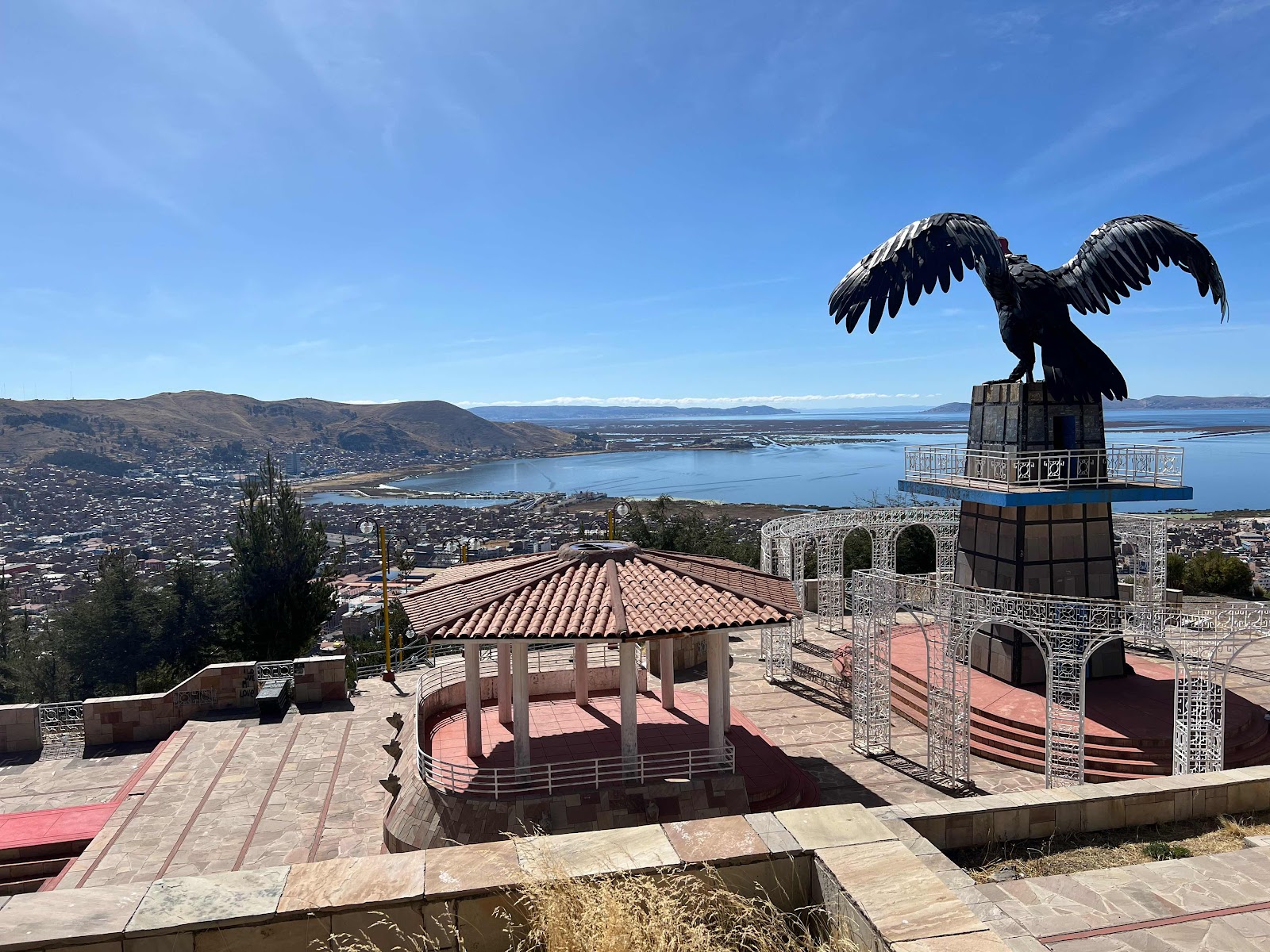
Puno sits even with the lake and slowly but surely edges upward into the surrounding hillsides. So, of course if you climb up, you are rewarded with a wonderful view. And what city wouldn’t take advantage of this by creating venues for viewing? So, on one side of the city, a giant condor overlooks the city and lake below. On another side of the city (yes, we had to walk down and then back up) an oversized puma and two large cobras keep watch over the city.


We meandered down to the water (stairs are so much easier to go down than up) and discovered a small flock of flamingos amongst the ducks and seagulls enjoying the shallows of the lagoon.


I do not regret our time in Puno at all, but we head to Cusco next where many of our exciting adventures happen from, and I must admit that I’m looking very forward to that!

Sunday, June 26, 2022

Island of the Sun

The Salt Flats and the Island of the Sun were top of my list when reading about Bolivia, and once again, it did not disappoint.

When we were on our journeys through the high desert, we talked a lot about where our travels through South America had/were taking us. We mentioned coming to the Island of the Sun and Kiri said, “I went there! There is nothing to do there.” In unison, Jess and I said, “Perfect!”

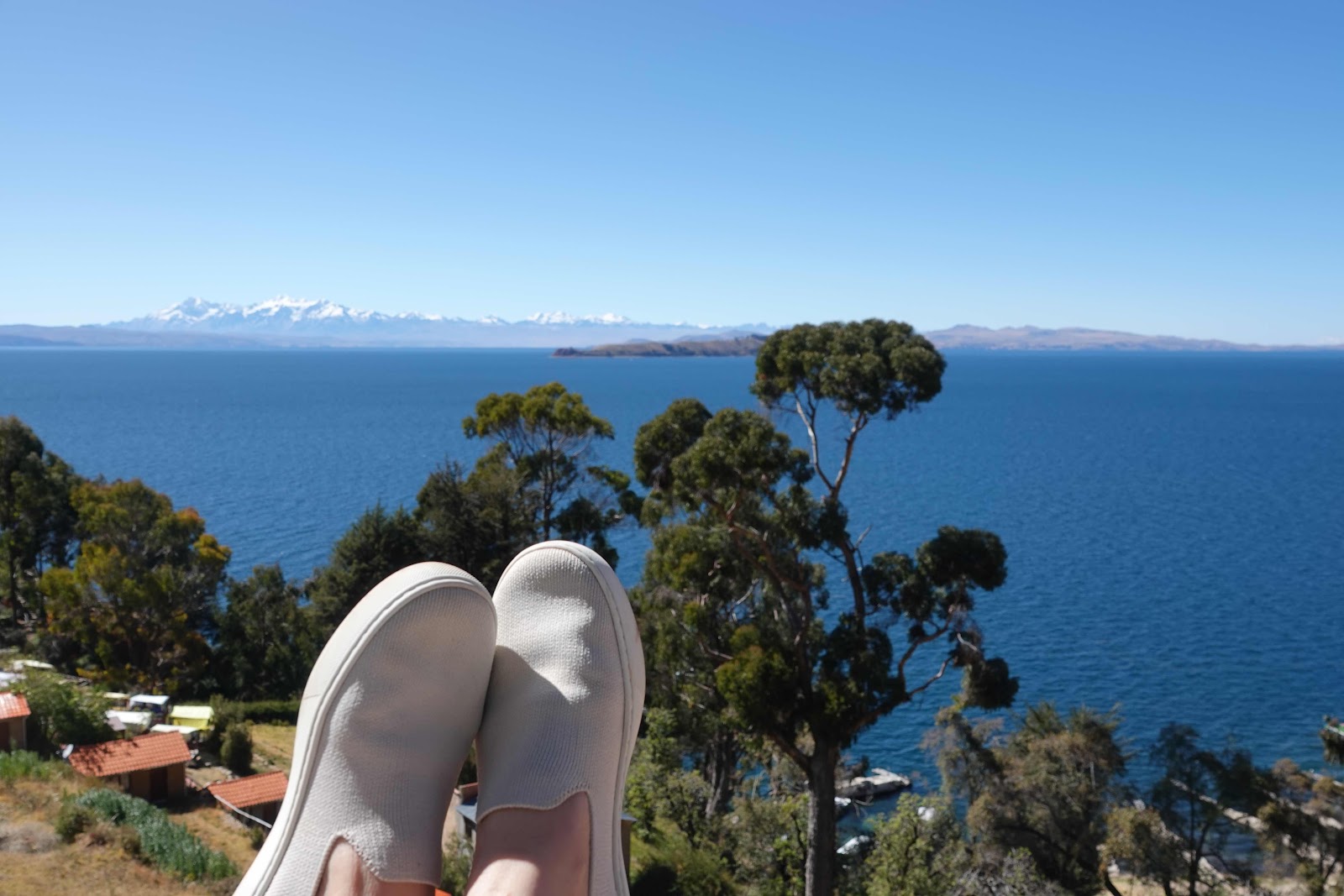
After several days of rigorous travel, and a few sleepless nights and odd hours, three nights on a remote island with no cars was exactly what we needed. Our time on this island in the sprawling Lake Titicaca has been perfectly restful and rejuvenating. Life on the island is simpler and slower. I say that as a tourist who is thankful for the absence of car horns and the presence of donkey brays. But, life for the islanders is far from simple.

This island, according to Incan myths is the birthplace of the Sun God as well as the world’s first two Incans. While Lake Titicaca itself is the highest navigable water in the world and reaches depths of 920 feet, the Island of the Sun stands even higher above sea level. So, when you arrive, you walk up the ancient Incan stairs to “the fountain of youth,” which, sadly, we felt drinking from may bring us other, unwanted things, rather than perpetual youth.

Unfortunately, I do not speak Spanish, and since we did not take any tours here (nor am I sure ones are offered), what I learned about this island is learned through research and observation. If I say something that is incorrect, please inform me!

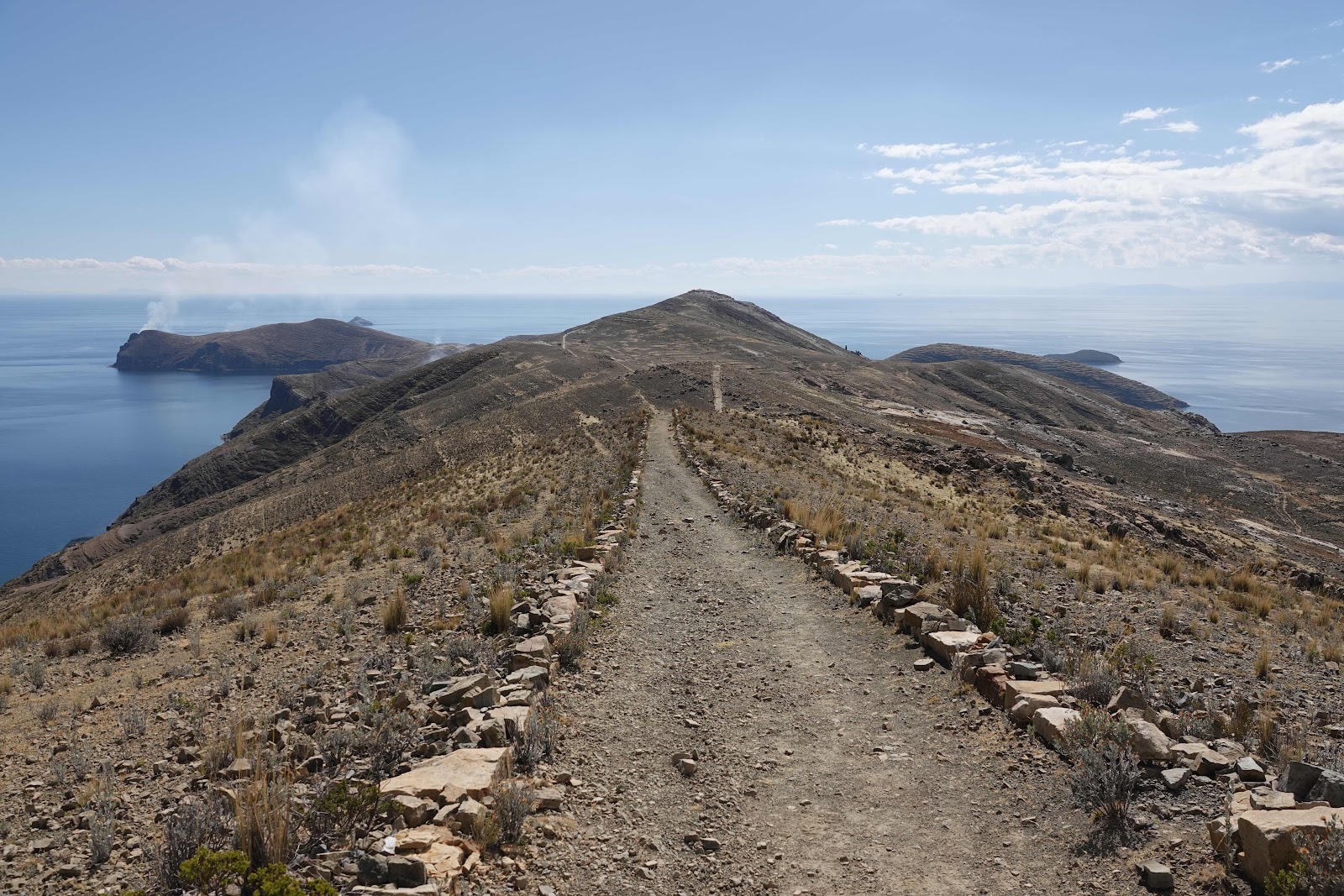
Our goal was to relax, rehydrate and enjoy some down time. An eight mile hike certainly doesn’t sound relaxing, but for these nature lovers, an opportunity to escape civilization, soak in sunshine, and enjoy the beauty of the island was exactly what we needed. A few years ago, I discovered the app All Trails which has been a lifesaver, especially for those of us that have a high tendency of getting lost. There was even a trail here and the app helped us stay on track!

Our initial ascent was difficult, as even a simple flight of stairs takes my breath away at this altitude. We first walked over the stone steps through the small village down an entire row of pizzerias before beginning our travels onto the lesser traveled paths. The land on this island is terraced, and probably has been for generations. What we witnessed was that it was probably used to help with a sort of crop rotation as not all pockets were filled with greenery. It also aided with the grazing animals that were often left in one small area during the day before being led back to their homes in the evenings.


Before our arrival, I had read that the northern two-thirds of the island was off limits to tourists due to disagreements to the people who call this land home. I even read about a tourist who had been killed when he crossed the border. But a more recent post had said that the conflict had ended and the island was open. Through Google Translate, our host seemed to say that we could go anywhere, but safe to say, we stepped with care and were courteous and cautious wherever we went.

The first part of our trail was stunning. We walked along the backbone of the island, staying high which meant the walk was fairly easy and comfortable. It was wide open with only a few patches of trees and even fewer dwellings. 


We did not make it all the way to the Northern tip of the island, but decided instead to cut across and catch up with the southbound trail on the eastern side of the island. The “cut through” trail was not nearly as clearly marked, and there were many a rock scrambles on our part, but we made it to the other side in the middle of a small community. The second half of the trail led us through three communities, much more populated than the first half of our journey. But even then, I’m pretty sure we saw more donkeys than people. Certainly more livestock of donkeys, sheep and pigs than people.

Donkeys are a vital part of life on the island. There are no motorized vehicles and very steep paths. How else do restaurants, lodges and individuals get what they need from the boats that deliver them? Donkeys of course! They expertly ease their way up and down the stone steps reaching for something to nibble on whenever their guide turns his/her gaze.


We often saw pigs and sheep seemingly left alone in the middle of no where tied to a bush or rock to allow them graze in a new place but not wander off wherever they please.

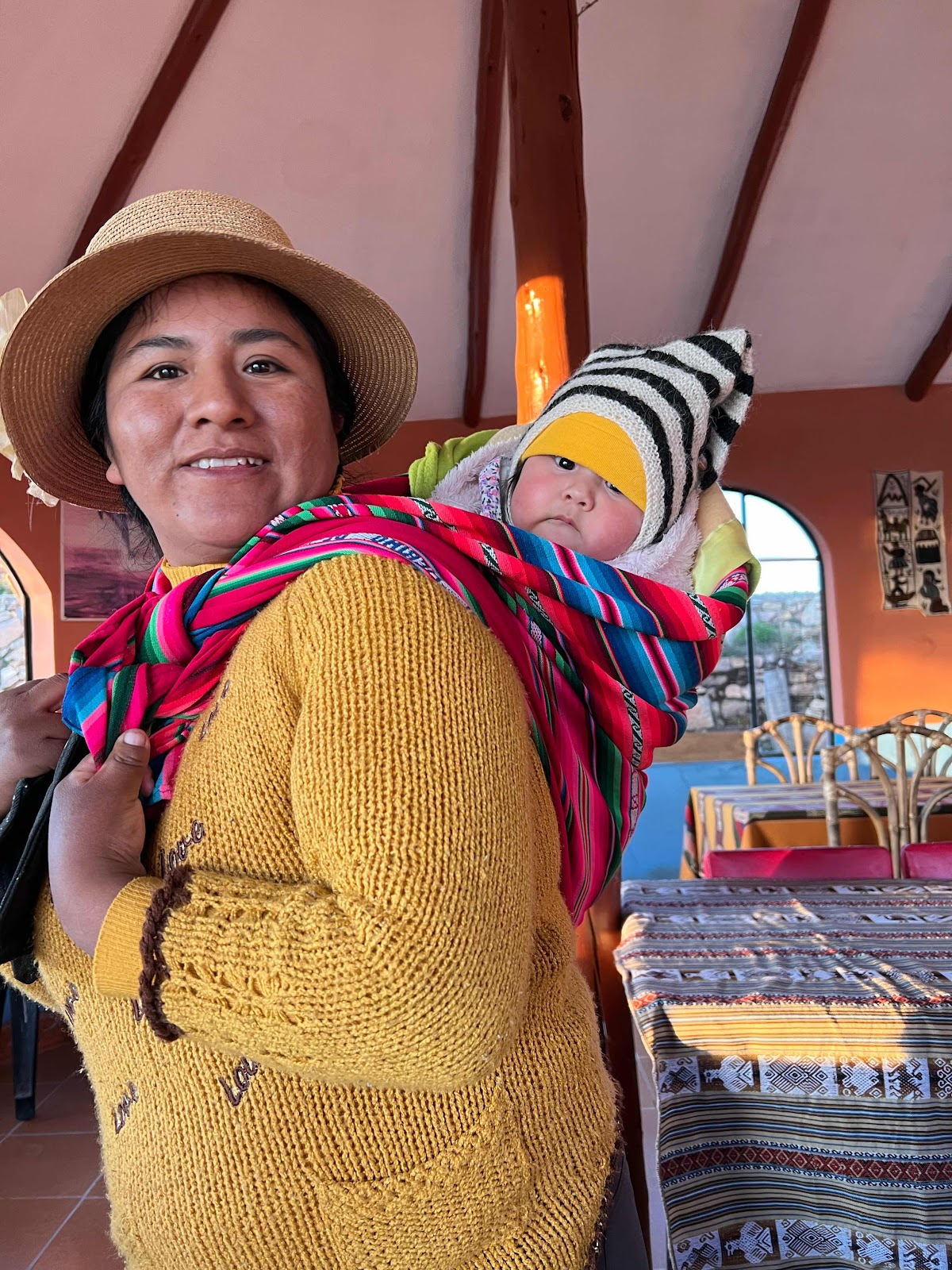
There are a fair amount of restaurants on the island, but it baffles me how they survive as there seem to be incredibly few tourists. We ate at our own tiny hotel for dinner as well as one of the pizzerias. In each, I believe we were the only customer for the night. They offer a fairly expansive menu, but with so few customers, nothing is pre-made. So, there’s no “fast food” here. Perhaps one reason pizza is so popular on the island is because it can be made so quickly. We watched the sunset from the pizzeria while the beautiful young cook prepared our pizza with a baby strapped to her back.


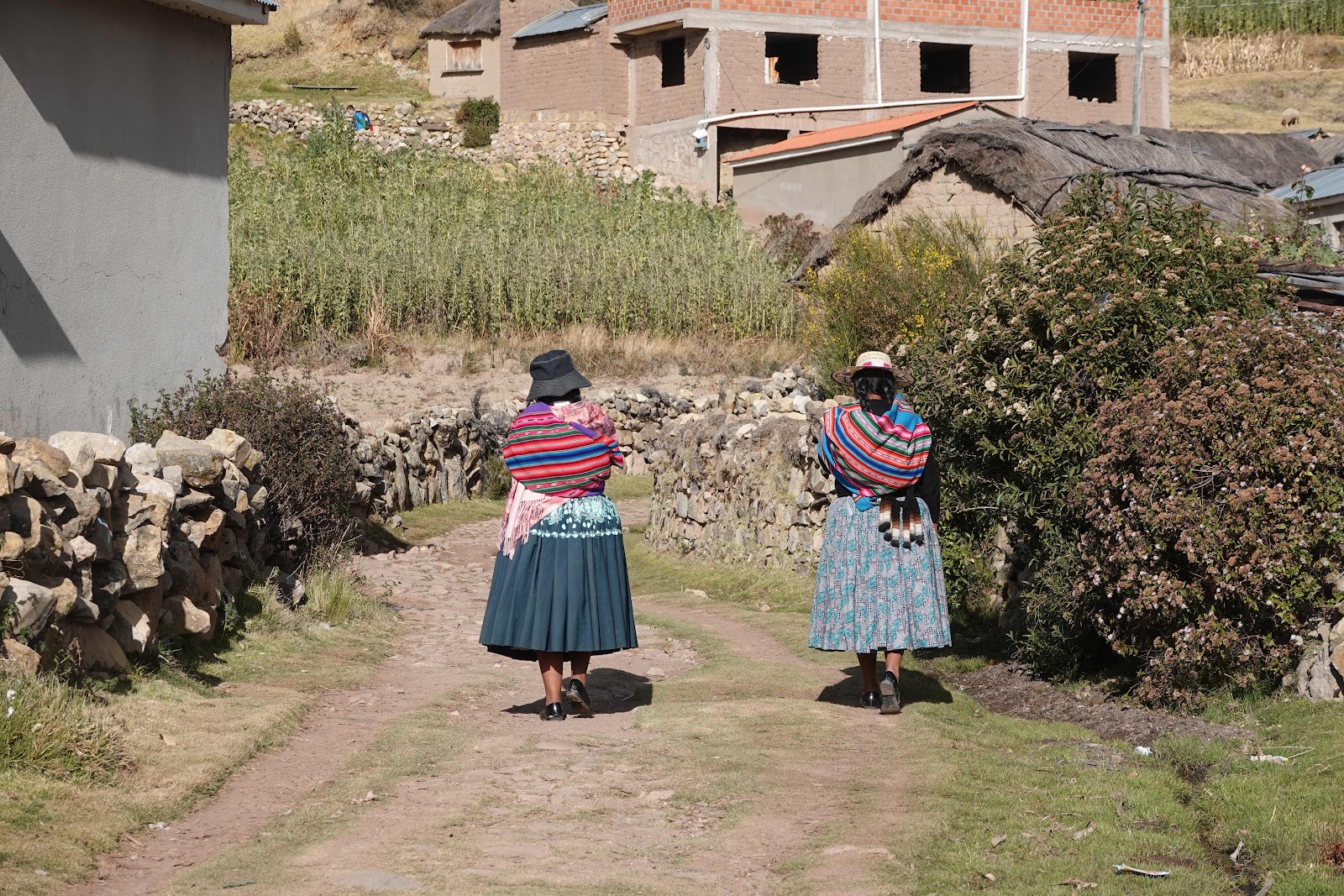
The women on this island are incredible. Most that we saw were dressed in traditional clothing that the cholitas would wear. They climb these hills with goods to sell or work in the fields not only in thick beautiful skirts but in dress shoes. I had a hard enough time on the ancient Incan steps in my hiking shoes while these women moved about in lovely, often ornate flats. Island life can’t be easy, but I imagine for many, it is all they know. There is electricity here and we’ve seen people on cell phones. Many try to make money off the tourists that visit although I can’t imagine there are ever all that many. So most seem to live off the land with crops they grow and animals they raise. We saw many women knitting and creating beautiful works of art from wool. These are hearty folks, and I mean that not only are they tough, but their hearts are also huge. What kind, generous people we have found here.


We also took time to sit on the balcony. The air was cool, but the sun was warm. It was one of those days where you could have been equally comfortable in a tank top or a jacket and we often rotated between the two, and it seems fitting that we both turned a bit pinker on the Island of the Sun. We sat for hours reading, blogging and observing. I would say people watching, but as there was little of that, it was more animal watching. The nursing home where my grandmother spent the last few years of her life had a donkey. Random, I know. But we learned that if you honked your horn, he’d come running and respond in kind. It always made us laugh. Here, anytime we hear the starting call of the hee-haw that will follow, the corners of our lips pull upward. We can’t help smiling at the silly sound they make! And what a reprieve it has been from honking cars. 


Nights have been cold, windy, and long. This again was perfect! After dinner, we got under the blankets for warmth and watched the Emperor’s New Groove on a phone screen and ate local treats or read and went to bed early. Simple joys of life on the island with no pressure of things that we must see and do.

Our hostess has been so incredibly gracious. She and her family run a small (3 room) hotel. The first night, the other two rooms were rented, but after that we were her only customers. I think most people who come here only stay for a night or two, so I think she’s enjoyed connecting with us as much as we have with her. She prepares a beautiful spread for us each morning. Her meals have been delicious, and I have loved watching her wait in anticipation for our approval. She washed our clothes for us (which was very needed!) and was patient with our American requests. She brought us a heater for our room and taught us how to make the water hot in the shower using only the cold knob. We communicated through small words and Google Translate, but she asked us about our days and showed us stunning sweaters she knitted. She has been an absolute delight!


We came to this island to rest and replenish, and we’ve done exactly what we needed. Walks with great views, delicious hand-prepared meals, time to read and ample hours of sleep have energized us for the next, exciting parts of our trip!

We leave Bolivia this evening. It has been incredible, and I’m so thankful we chose to come to this country. The people have been genuine, kind and overwhelmingly welcoming. The people have rivaled the amazing people of Thailand. And so, as we leave, it is a bit bittersweet. I doubt my roads will lead back here again, and so I say farewell. But to those of you reading, I strongly encourage you to add Bolivia to your list. You will not be disappointed!