Wednesday, June 19, 2024

Tarangire National Park

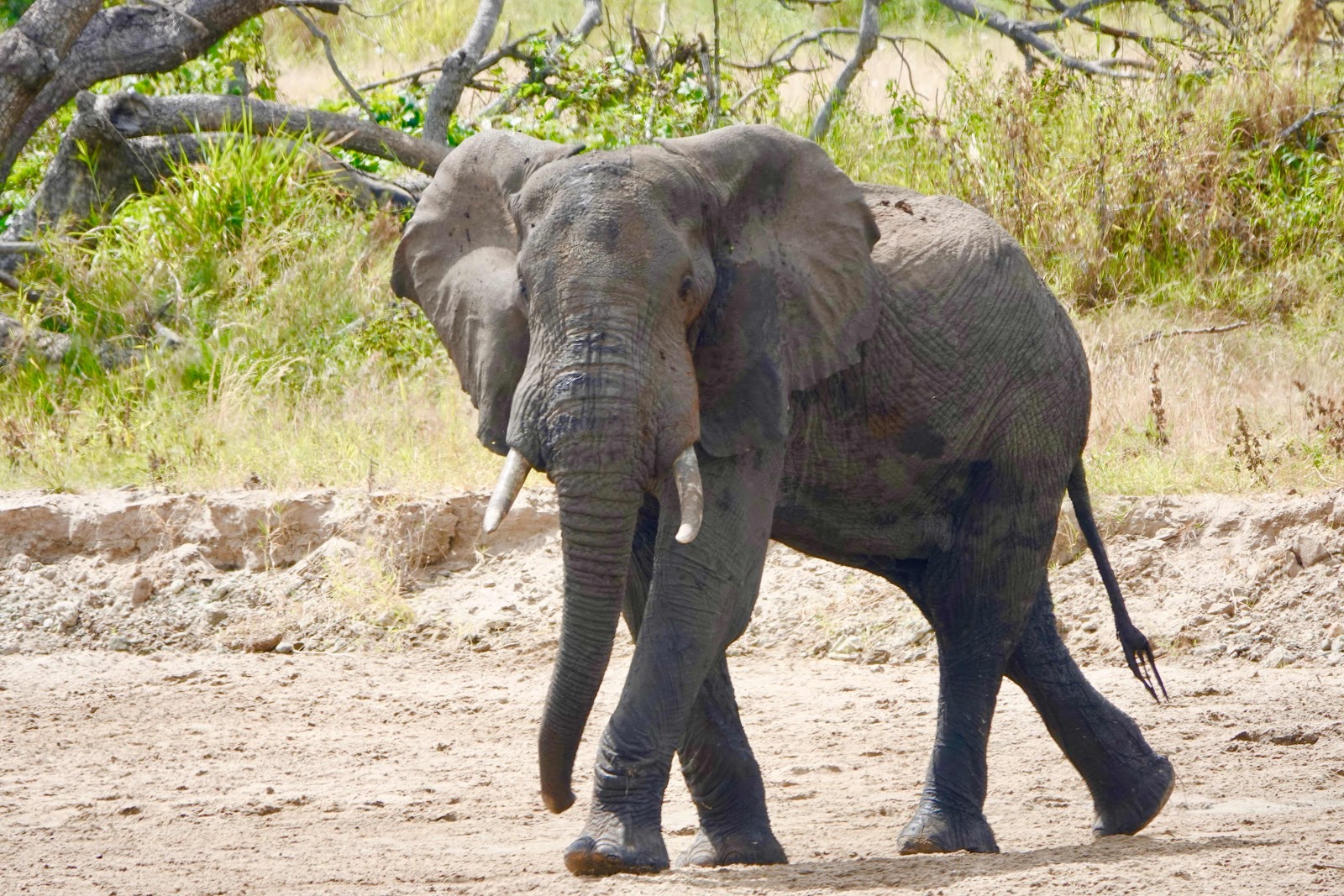
Is that an elephant or a termite mound? Wait, how did that elephant disappear? These are sentences I never thought I’d need to utter.


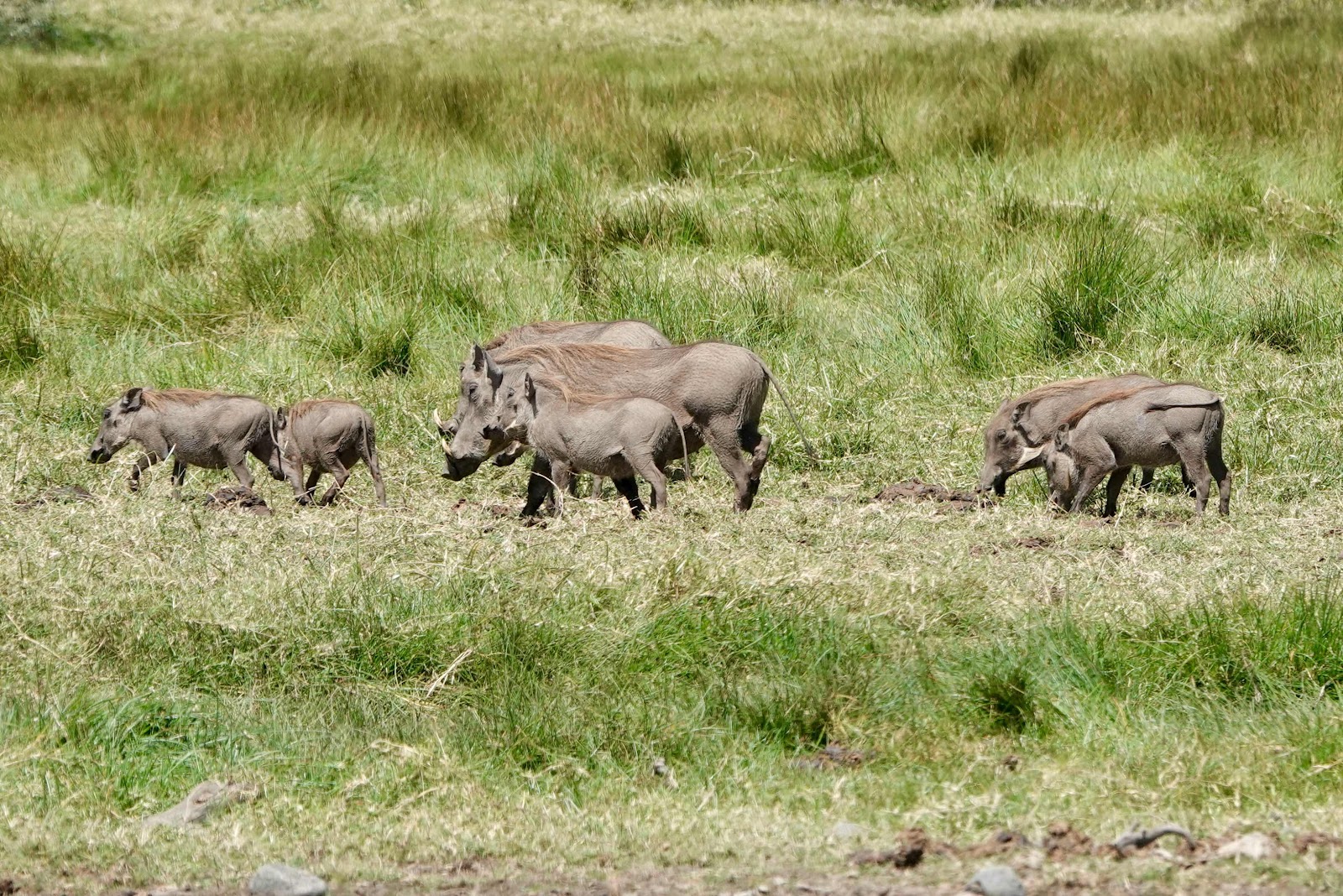
Tarangire National Park is our guide, Lou’s, favorite park. It is much larger than Arusha National Park and much more vast and expansive. The word Tarangire means river of the warthogs, although, we only saw a few of them upon our departure.


While the park is famous for their lions, the cats have eluded us. However, we spotted our second of the big five, so my hope is that we will continue to progress in this way!


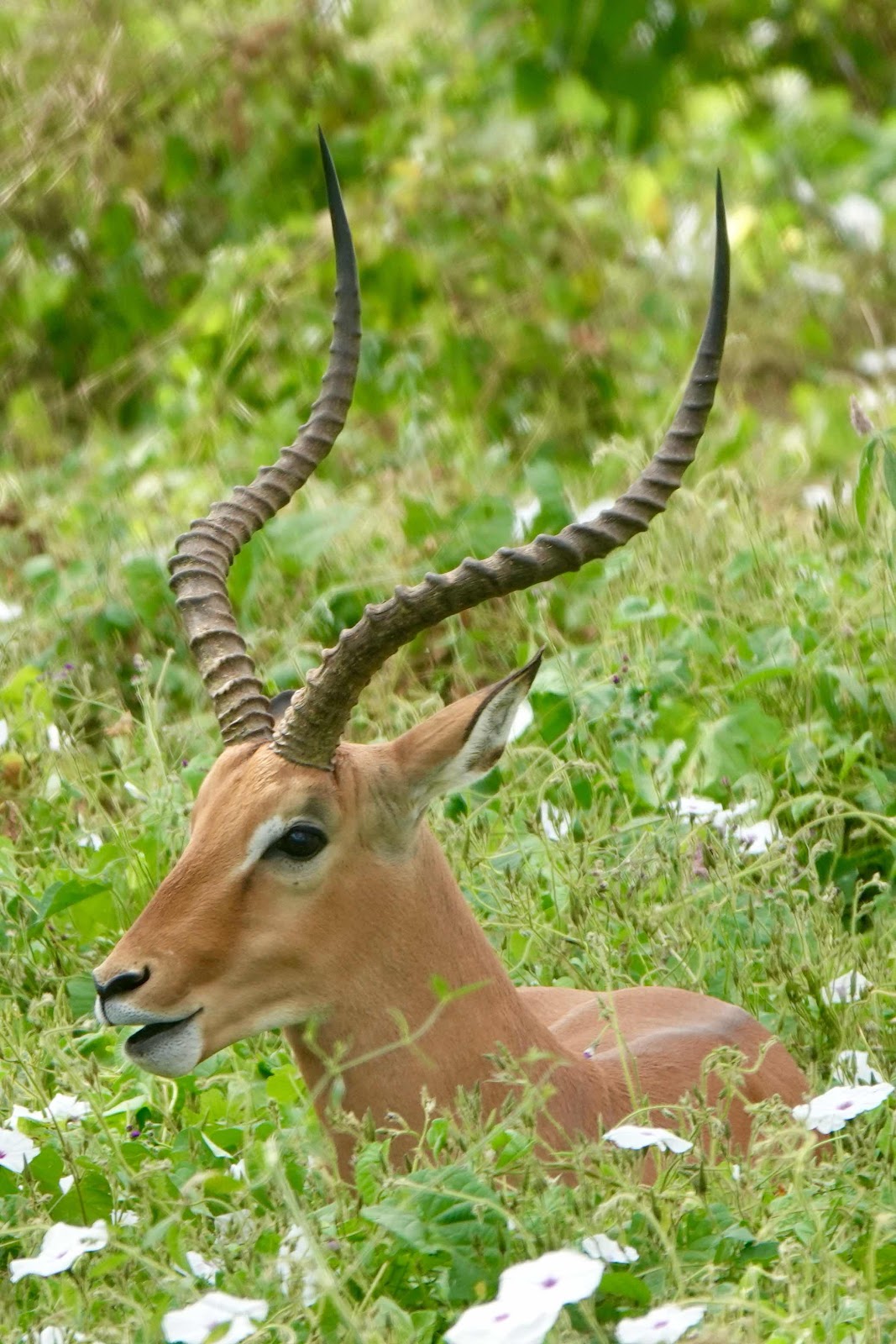
We saw an impala, another type of antelope. We saw a male ostrich with three female escorts. There was an adder snake safely spotted from the height of the truck. He was not terribly long, probably only measuring two feet or so, but he moved in a very unique way. Rather than slithering back and forth, he moved forward as if he was propelled by dozens of tiny feet.


This park is also famous for its baobab trees. These trees are massive, living hundreds, possibly thousands of years. They provide food and shelter to animals, and in the dry seasons, the bark even provides water to elephants.


The baboons and black-faced monkeys were so entertaining. Like rambunctious school children, they scurried about next to the road, on and over trees, eating flowers and grooming one another in between. At our picnic spot, Lou had to keep the monkeys at bay. They eagerly watched picnickers, hoping one would share a morsel or perhaps glance away leaving an opportunity for a cheeky monkey to steal a meal.


We did see a few giraffes, but the highlight of our day in Tarangire were the zebras and the elephants. The zebras were running about by the hundreds. They were playful and curious, and didn’t really seem to mind us. Although they reminded me of horses, the more time we spent with them, I realized it is actually donkeys they most resemble, mostly because of their high-pitched cries.


And unicorns, I guess!


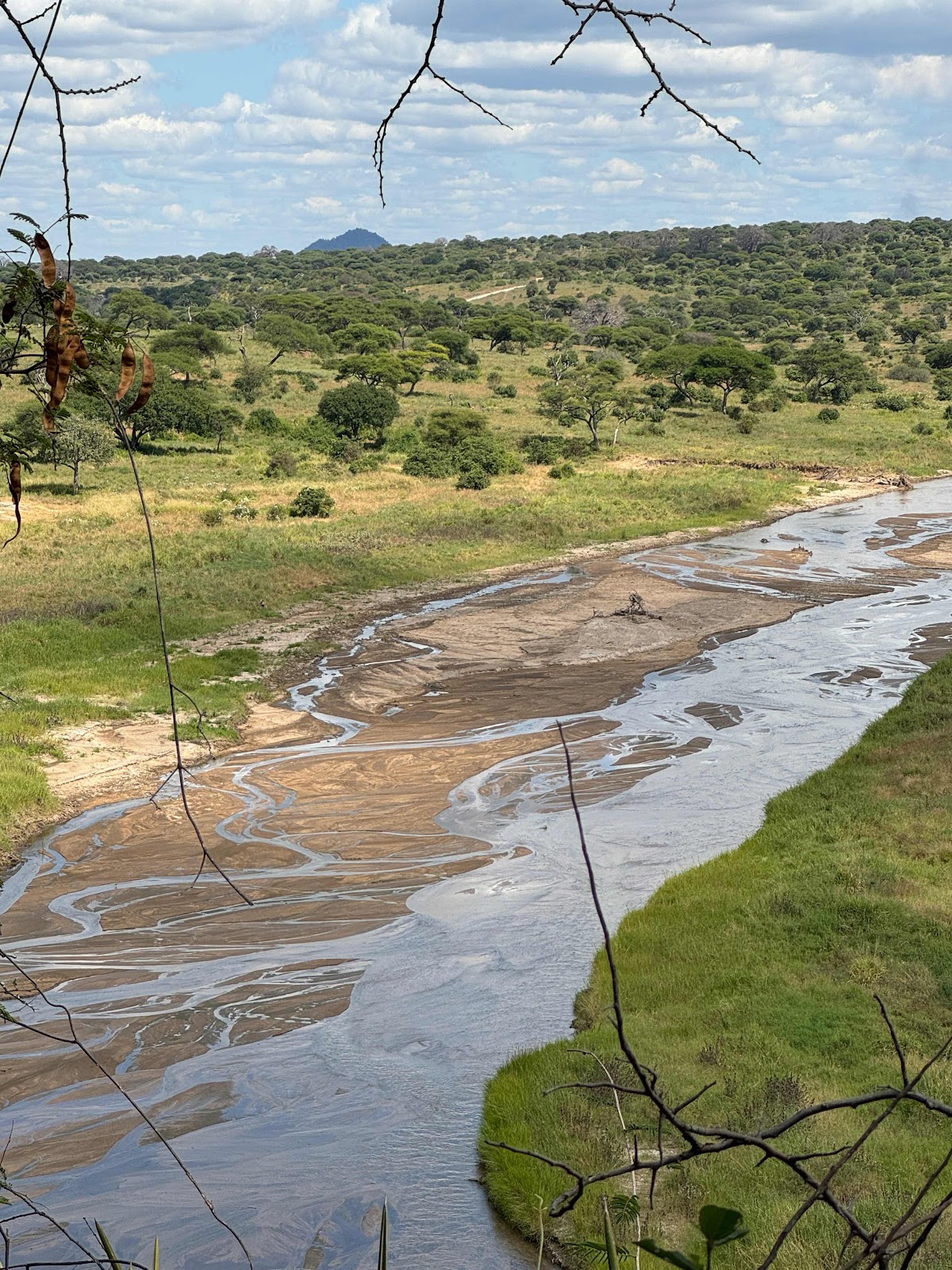
We spotted elephants from a distance several times, often across the river, but they were kind enough to come down and drink in front of us so that we could see them more clearly. Who knew that the shrubbery the elephants eat can even hide them? We saw many young ones, usually scurrying about, but never very far from the parents that protected them. As Lou explains it, though, the creatures in these National Parks really don’t fear people. Sure, they have a safe hesitation, but they are hunted only in game reserves, not the parks which is why they feel comfortable enough with us snapping photos of them!


Tuesday, June 18, 2024

Arusha National Park

Today was our first of seven game drives, and I couldn’t be more excited! As much of my time over the next week will be from a car, photographing anything that moves, I anticipate that my blogs will be more photo based as opposed to the novels that I’ve written so far on this trip.


Our safaris throughout the national parks here have been planned superbly, at least as far as I can tell after day one. This is because we started in Arusha National Park which is majestic and forest-rich, but also one of the smallest parks here with the fewest predators. We will make our way toward the Serengeti as the week progresses.


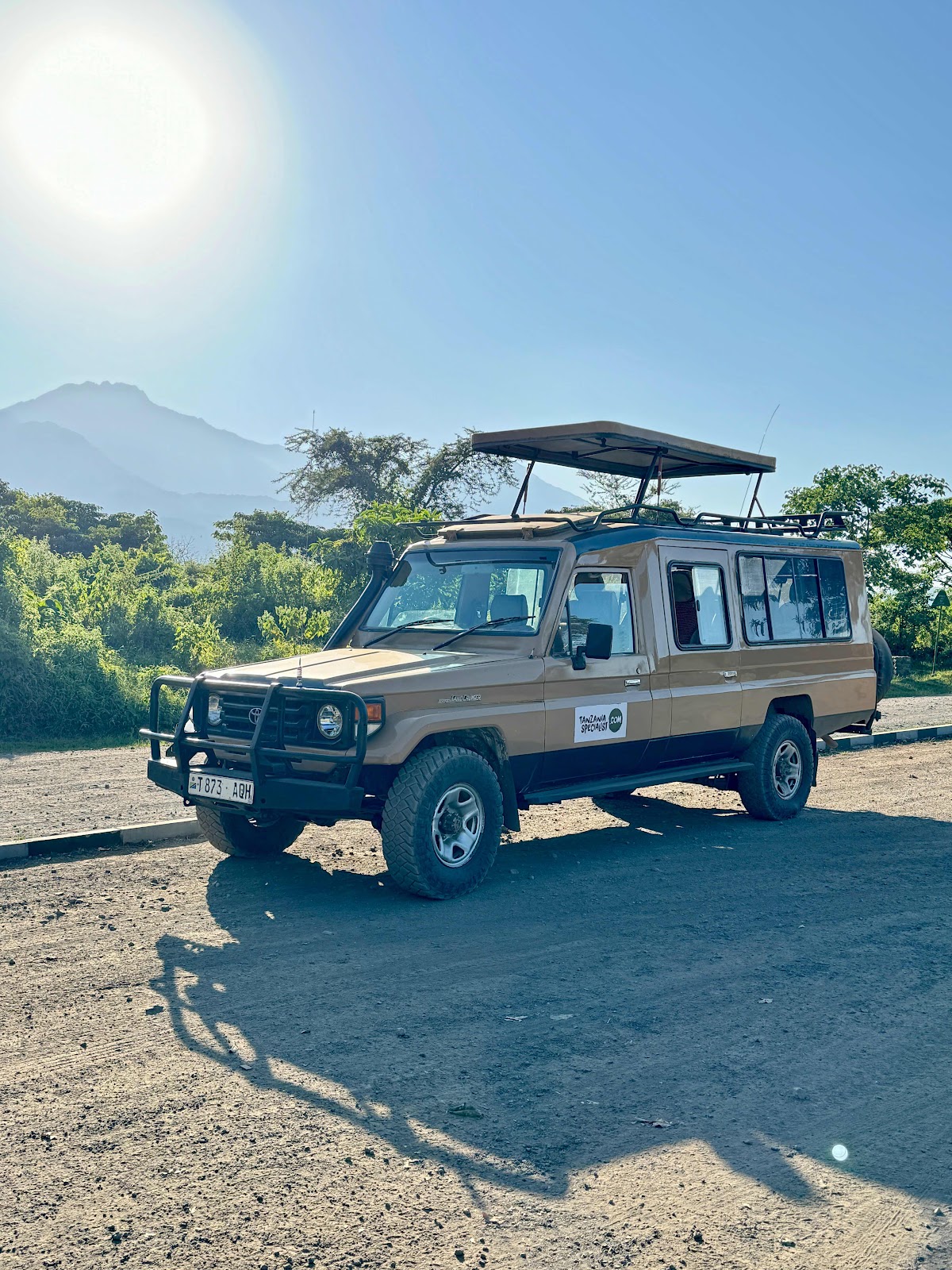
Jessica and I are in what is called a 4x4. It is a four wheel drive vehicle perfectly equipped for viewing wildlife with a top that pops up, allowing us to safely view from inside the vehicle.


Arusha National Park is home to the second tallest mountain in Tanzania, Mt. Meru with views of Mt. Kilimanjaro (the roof of Africa) in the distance. It is quite forested, so the monkeys thoroughly enjoy it. There are a few leopards in the park, but very few, so the animals feel safe and free to roam.


We saw zebras, buffalo and warthogs upon first entering the park. If you know the Lion King, you already know the Swahili word for warthog… that’s right, Pumba!


We went for a walk with a ranger through a part of the park (I don’t think we will have this opportunity at any other park later on in the week. Remember, I said that this park had very few predators.). He was able to guide us close to the warthogs who were not spooked because we were down wind of them. We got a little closer than I expected to one of the big five. The big five are categorized as such because these are the five hardest animals to hunt. This is because if you miss when shooting at the lion, leopard, rhino, elephant or the buffalo (just ten yards away from us), well, you’d be the one six-feet under as opposed to the animal you’re aiming the gun at. (The reason the hippo, truly one of the most dangerous animals is not on this list is because there is nothing on the hippo that is monetarily valued as the other five have in common.)


Our guide also told us about the African fig tree. If planted on its own, it only grows into a bush. But, when a monkey processes the seeds from a fig and “deposits” them somewhere high up on the branches, the fig tree slowly takes over the other tree, sucking its nutrients and turning into a tree itself.


We happened upon several different kinds of poop on our walk, and the ranger asked us to identify one. It looked like the pellets created by rabbits or goats. While the pellets themselves were larger, perhaps the size of grapes, the pile was extremely small (like the size of what a goat leaves behind). Any guesses? A giraffe! Apparently they drink very little water (it’s a long way down!), and so, they process less, and it is much dryer.


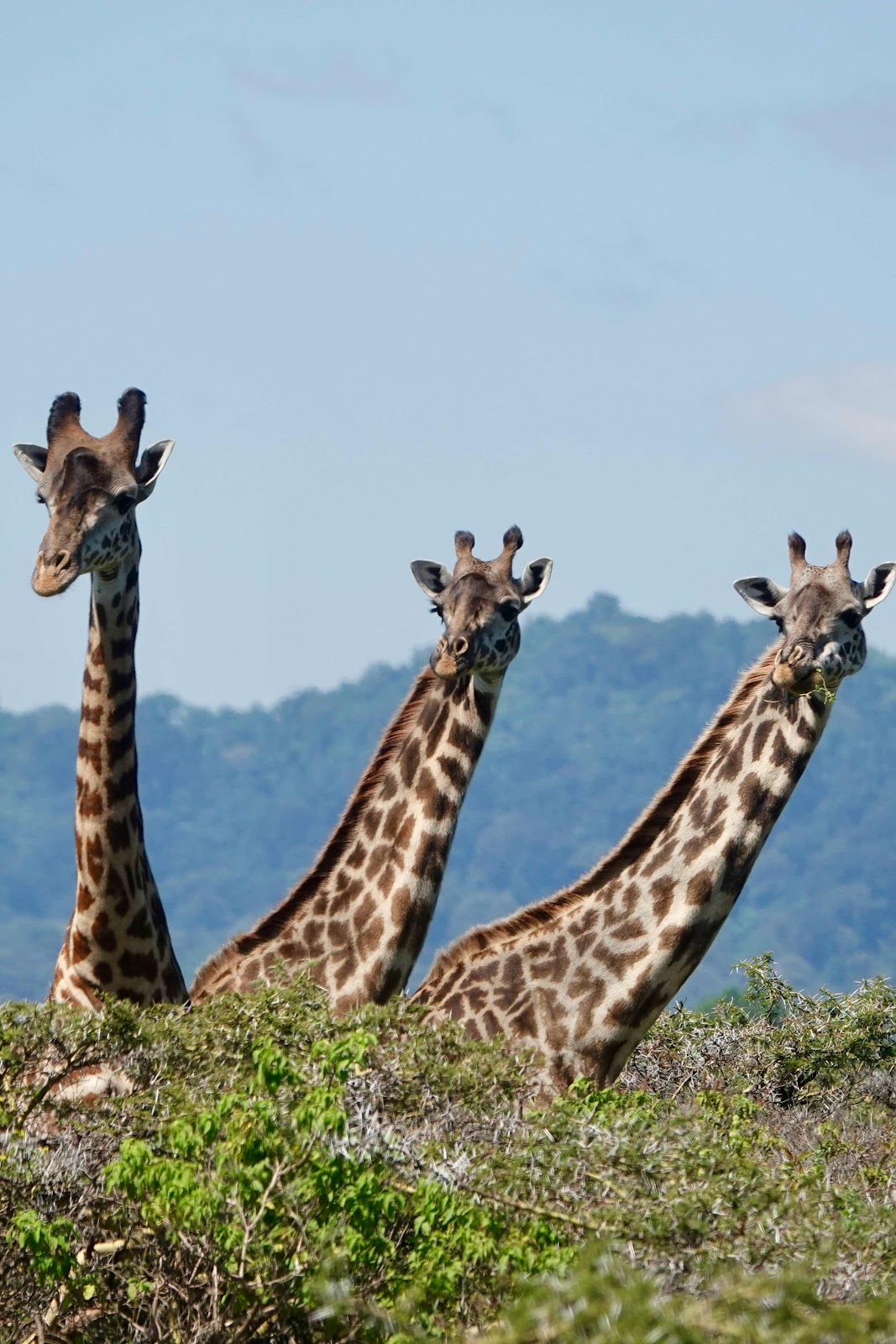
The giraffes eluded us at first, and I must admit that when our guide pointed toward one, I looked to the top of the trees as I did in Jurassic Park when I knew the tyrannosaurus rex was entering the scene. Giraffes are tall, the tallest land mammal, but they don’t tower over trees. In fact, they blend in remarkably well. Their heads poked up from the undergrowth, somehow reminiscent of prairie dogs. We were able to get within about twenty yards or so of them. Like llamas, they looked at us curiously, with skepticism and just kept chewing. They were truly majestic, these gentle giants. The ones we saw today were Masai giraffes (I did not know until today that there is more than one type of giraffe!). Later, back in our car after a delicious meal, we continued to spot these stunning quiet giants, and they continued just to stare at us with equal amounts of curiosity.


Did you know there are 200 types of antelope? We saw two types today! We saw the Waterbuck, with impressive horns, and the red duiker (I think!) which stood about as tall as the house cat I left at home.


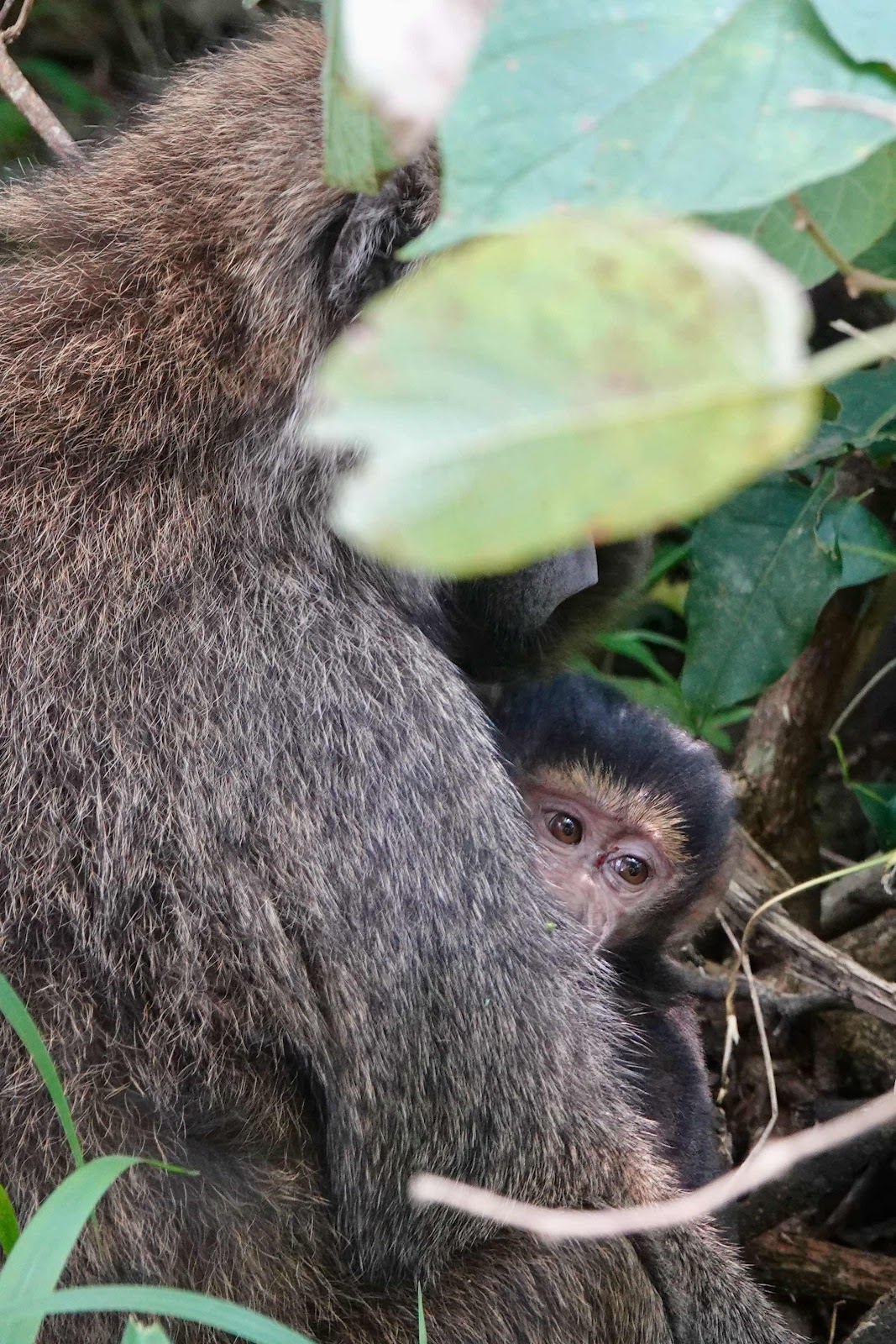
This park is especially known for their monkeys, as they, too, feel very safe here. We loved watching, just feet from the truck as olive baboons groomed one another, climbed trees and even suckled at his mother. The blue monkeys had bodies and features that reminded us of our cats, and faces that crossed somewhere between a wise old man and an adorable kitten.


We did not see the black and white colobus monkey that the park is famous for, but I’m not all too heartbroken as I didn’t even know that creature existed until yesterday!


I can’t wait to see what the coming days have to offer!

Monday, June 17, 2024

Rwanda

Our time in Rwanda was limited, varied and incredibly enjoyable. We arrived in the late afternoon and our hotel arranged a transfer for us. It is such an enjoyable perk to have someone waiting on you when you arrive in a foreign country rather than having to figure it all out in your first “boots on the ground” minutes.


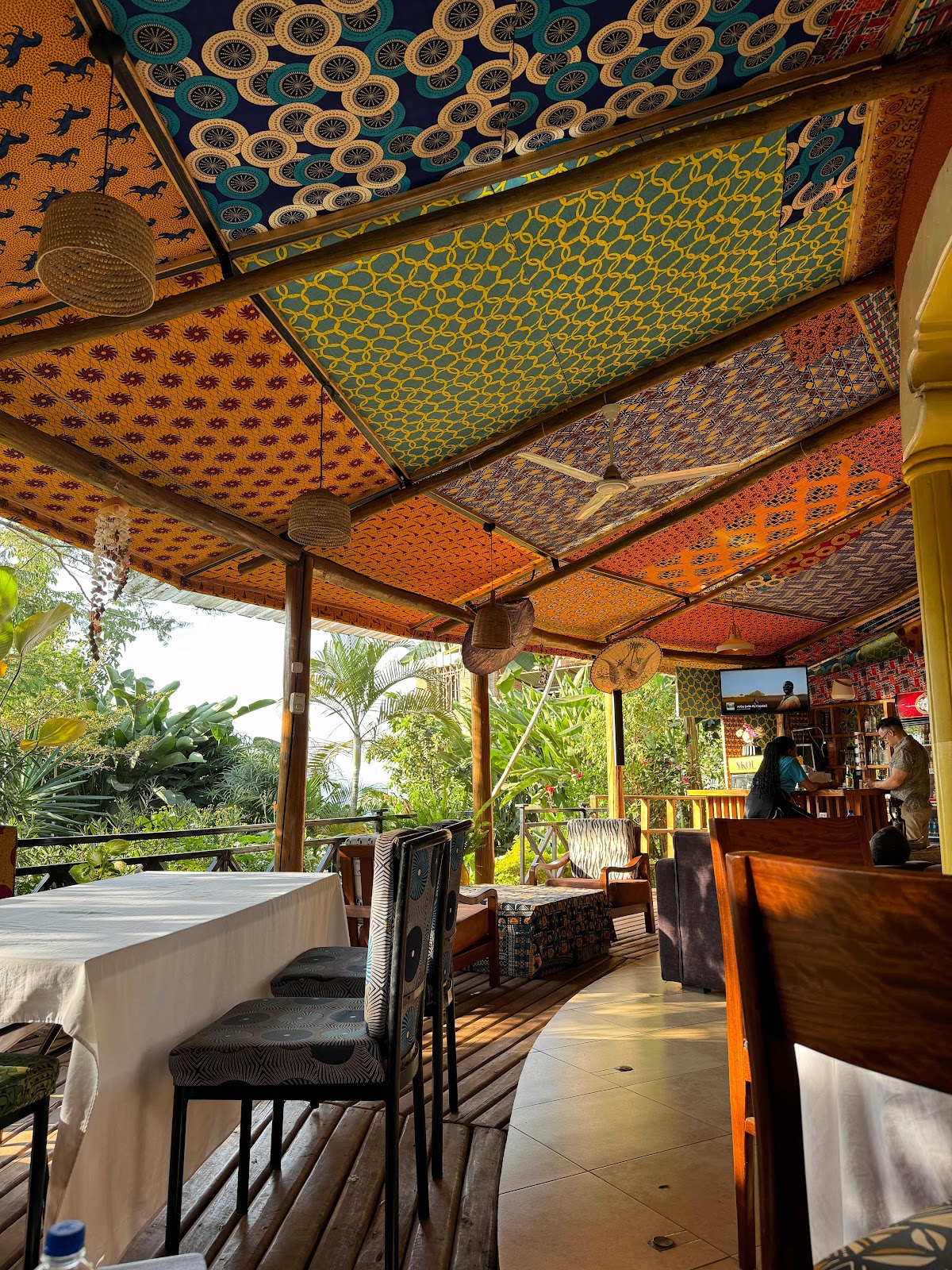
I usually do lots of research to find hotels that are in central, walkable locations. Absolute Africa, who was picking us up in thirty six hours said they picked up from two different hotels. One of them stood high above from the other, so Yambi Guesthouse was an easy choice. It was an oasis in a busy city with comfortable rooms and a vast porch surrounded by greenery and outlooks across the city. If I were to complain about Yambi, my only two complaints would be that its location was not central, so it made getting around difficult. Along with this, I’m afraid that Yambi made us feel too comfortable and too at home, so we really didn’t want to leave. While I felt perfectly safe, there was not necessarily something that was high on my list that I wanted to visit, nor was there really a great place to walk around nearby where we were, so we settled in and enjoyed some chill time on the back porch. The chef was amazing and always provided us with way too much delicious food.


Rwanda is known as the land of a thousand hills, and even its capital city of Kigali is evident of that! One reason we didn’t want to walk too far was the steep hills that surrounded us! Kigali has a population of nearly two million amongst these hills. The population of Rwanda is nearly fourteen million and it is about the size of Massachusetts.


Early the next afternoon, Yambi helped us organize a ride to our food tour. Now, remember, we love a food tour! I’m very glad that we did this food to her, but I will be honest that it disappointed me a bit. Our food tour consisted of a couple from Barbados and our young guide. He was amazing! In two weeks time, he is traveling to London, as he was in the top three in an international contest where people, typically at the university level, were sharing their ideas on how to best support refugees. His idea had to do with how best to support refugees in Rwanda being successful in higher education.


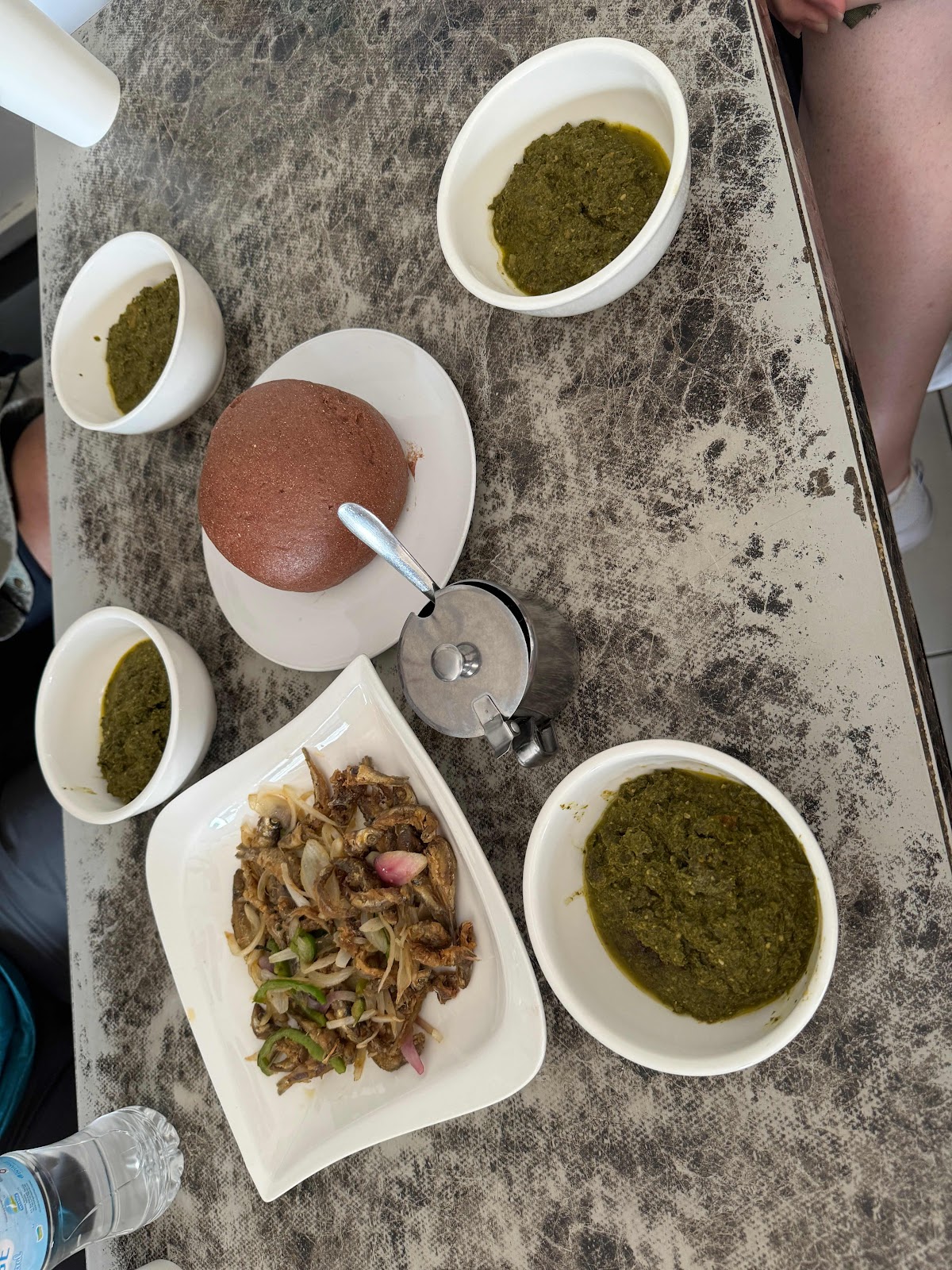
Our first stop on the food tour was three different types of rice along with some beans. All fairly simple, but all enjoyable. Our next stop was a ginger lemonade drink. It was delicious! I incorporate a fair amount of ginger into my food during the holiday season, but I really should use more ginger throughout the year! Next stop was some thing that I tried openly, but did not at all enjoy. There were fried anchovies. I don’t think I’ve ever eaten an anchovy hole. To be fair, the smaller ones were quite delicious. The larger ones were very fishy. Alongside this was something that resembled a large roll, but had a consistency closer to play-dough. It was red in color. We were to takeoff part of this ball and dip it into the cooked greens (cassava?) that resembled a bowl of green mush in front of us. I’m afraid I hated both the greens and the red ball. Our fourth stop was by far my favorite! We had some small skewers of beef roasted over a grill and chapati bread (very similar to naan). Our last stop was some fresh local fruit, including passionfruit, a tree tomato (which has no taste resemblance to a tomato), and pineapple. Usually, after a food tour, I feel like I won’t be able to eat for days to come. However, when we returned back to Yambi, after this one, Jessica and I split an entrée from our divine chef.


On our way to and from Uganda, we passed over many of these “hills” at an elevation similar to Denver’s mile-high status. The roads in the city were teeming with people. The majority of people walked everywhere they went. Another large portion are on motorbikes (which are also local taxis). The roads in the rural areas were well-paved, steep, curvy and also full of people walking. Some people were walking, often carrying some produce to sell high on their heads with ease and confidence. Many people, on these rural, twisty, climbing roads were sweeping the sides of the roads. Sometimes with a broom, sometimes with a branch, but all along the busy road they were just sweeping.


I must admit the Rwanda roadsides are pristine. There is no trash, and I mean none. But these people (mostly women) were sweeping up leaves and sometimes even pulling weeds. I asked Nash, our guide, about it later. He said, “Yes, they’re keeping it clean.” When I asked if it was a government paying job, he laughed. Sure, sometimes people must perform this as an act of community service, but most people do it because of the pride they feel for their country. Nash said that on the last Saturday of the month, all Rwandans get outside and clean-up together. Can we take a second here? This is the most beautiful, community-minded idea I believe I’ve ever heard. We have a lot to learn from this country.


As a large group, we visited the Rwandan Genocide Memorial. I will admit that I only knew about the slaughtering of one million people just thirty years ago because of recent research, not because of anything that I had learned before. Of that, I am ashamed.


I hope that you who is reading this knew more about this than I did, but I will give you a summarization as best as I understand it. Before colonization, Rwanda had been a seemingly peaceful place with a culture that united the people. When Belgium colonized this country, they labeled people as two hierarchical groups. The Tutsi people were ones that owned more than ten cows and the Hutu had less. This identity was passed down and included on an identification card that separated people by groups. As you can imagine, the Tutsi were the minority. After the Belgians left, the Hutus started gaining power and resentment toward the Tutsi grew. Extreme media began spreading lies and convincing Hutu that they must murder the Tutsi (the cockroaches). While horrific killings happened for years before this, it was during three months in 1994 that one million men, women and children were brutally slaughtered. The details we learned about these deaths in this gut-wrenching and thought-provoking museum were nothing short of utterly disturbing, so I will spare you the details. Rooms full of photographs of the loved ones who perished, items that belonged to loved ones, even a room full of skulls and femurs drove home just how many people were killed and how horrific the killings were. It was the room dedicated to the children that were lost that broke me. Their photos hanging along with information about their favorite foods, sports, their last words and how they were murdered. 


Even today, thirty years later, they are still finding bodies and giving them a proper, final resting place at the Memorial. This is why the outdoor space of the Memorial resembles a Botanical Garden. It’s a place where loved ones can come and spend time with their family members in quiet moments of reflection.


Another part of the museum included history on other genocides that had happened in the twentieth century. This part was showing us how decisions about genocide had changed policies at the UN, and yet, how these changes did not stop a genocide from happening in Rwanda in the 1990s. Of course the Holocaust was mentioned, along with the Khmer Regime in Cambodia, the events in Bosnia and one other that I was ashamed I had no recollection of. It took place in the early twentieth century when Germans killed many of the Herero people in what is now Namibia.


I’m so thankful for my time in Rwanda! Not only did I get to meet warm, welcoming people, and see stunning landscape, but I saw a nation who was broken just thirty years ago, who now, because of intensive work, can come together once a month to show pride in their country by cleaning it, together.

Sunday, June 16, 2024

Dian Fossey

I will admit that before I started looking into a visit to Africa, I had only a vague recollection of the name Dian Fossey. But, to prepare for my trip, I watched the movie adaptation of her book, Gorillas in the Mist(the book is now on my list) and reread a graphic novel I had in my classroom about Jane Goodall (chimpanzees), Birute Galdikas (orangutans), and Dian Fossey (gorillas).


Dian Fossey was a true pioneer. In the 1960s, she moved to Congo to complete extensive research on mountain gorillas, something that had truly never been done before. She was a young, single female living in the mountains of a country where she did not know the language. Civil War in Congo forced her to cross the border into Rwanda where, in the same mountain range, she set up a camp. With a team of 20-30 locals who supported her work by acting as guides, porters, support staff and fellow researchers, Dian lived and extensively researched gorillas for twenty years. During that time, she formed strong bonds with gorillas, naming them and spending time with them. She learned about how they communicated and communicated with them. She examined their excrement to learn about what they ate as well as their ailments. During this time, gorillas were heavily poached. Body parts such as hands, feet and even heads were sold for high prices along with infant gorillas who were sold to zoos. Dian’s deep understanding and love for the gorillas led her to react to the poachers in some seemingly questionable and perhaps boundary-pushing ways. This likely contributed to her death. While questions still surround her death, she was killed in her cabin by a machete at Christmas when much of her staff was home with their families. It seems we can all draw a similar conclusion here, but there are different theories.


All of this said, it makes sense that a hike to see her grave, in the mountains next to where she buried her favorite gorillas is a highlight for many and something we wanted to do.


When traveling to a foreign country, I find myself often agreeing to something without all of the details. To be fair, there are many times that I could easily be taken advantage of or put in a very compromising situation, but it has always worked out. Also, if there isn’t the tiniest bit of risk involved, are you ever going to have anything happen in your life? So, when traveling there are frequent times we get in someone’s car or enter a building with the hope that we’re doing the right thing and in the right place. Our hike was a similar leap of faith.


Ahead of time, we knew that we were interested in the hike, but we knew very little else. The minimal research I did on the hike itself described it as very manageable and worthwhile. We arrived at Red Rocks Intercultural Exchange Center (our campsite) and were given a list of optional activities we could choose from over our next two days. On the list were things like banana beer making and bracelet making (both of which we participated in) along with the hike to Dian Fossey’s grave.


We were prepared to sign up, but our questions led to confusion and misunderstanding. Most of the people who worked at the campsite were beyond generous, but one, well, there must have been something (upon arrival) we had done that had upset her, and well, she was not patient with our group’s questions. For example, in her spiel about our options, she mentioned that we had to be the Volcanos National Park at 6am for the hike and that it was a full day event. Our information had also included that the hike cost $100 due to the guide and the park permits.


My conversation with her went something like this:

“How much is the hike?” 

“$150” 

“Oh, wow, we were told $100.”

… “I called the park, it is $75.”


“Do you have any idea how long the hike is either distance or length of time?” (Keep in mind WiFi was not working due to a power outage.)

“I already told you, it is a full day.”

“Yes, but any idea how long?”

“I cannot tell you except it is a full day.”

“Ok, but we will be back for banana beer making at 3:30?”

“Yes, for sure.”


“What time do we need to leave?”

“As I already said, it starts at 6.”

“Yes, I understand that we need to be there at 6, so what time will our ride leave here?”

“6.”

“Oh, so it is close by?”

“No, it is a 40 minute drive.”


We stepped away and asked Nash when he had a chance if perhaps he could investigate more for us. He came back a little while later and said, “The car will be here at 6, it is a twelve minute drive, the hike is two hours and you can also go to the Ellen DeGeneres Museum for free.”


Spoiler alert… our car showed up at 6:45, it was a 45 minute drive, a five hour hike and we did not make it back for banana beer making, only the tasting. But even after the hassle and the misunderstanding, I wouldn’t have traded any part of our day! 


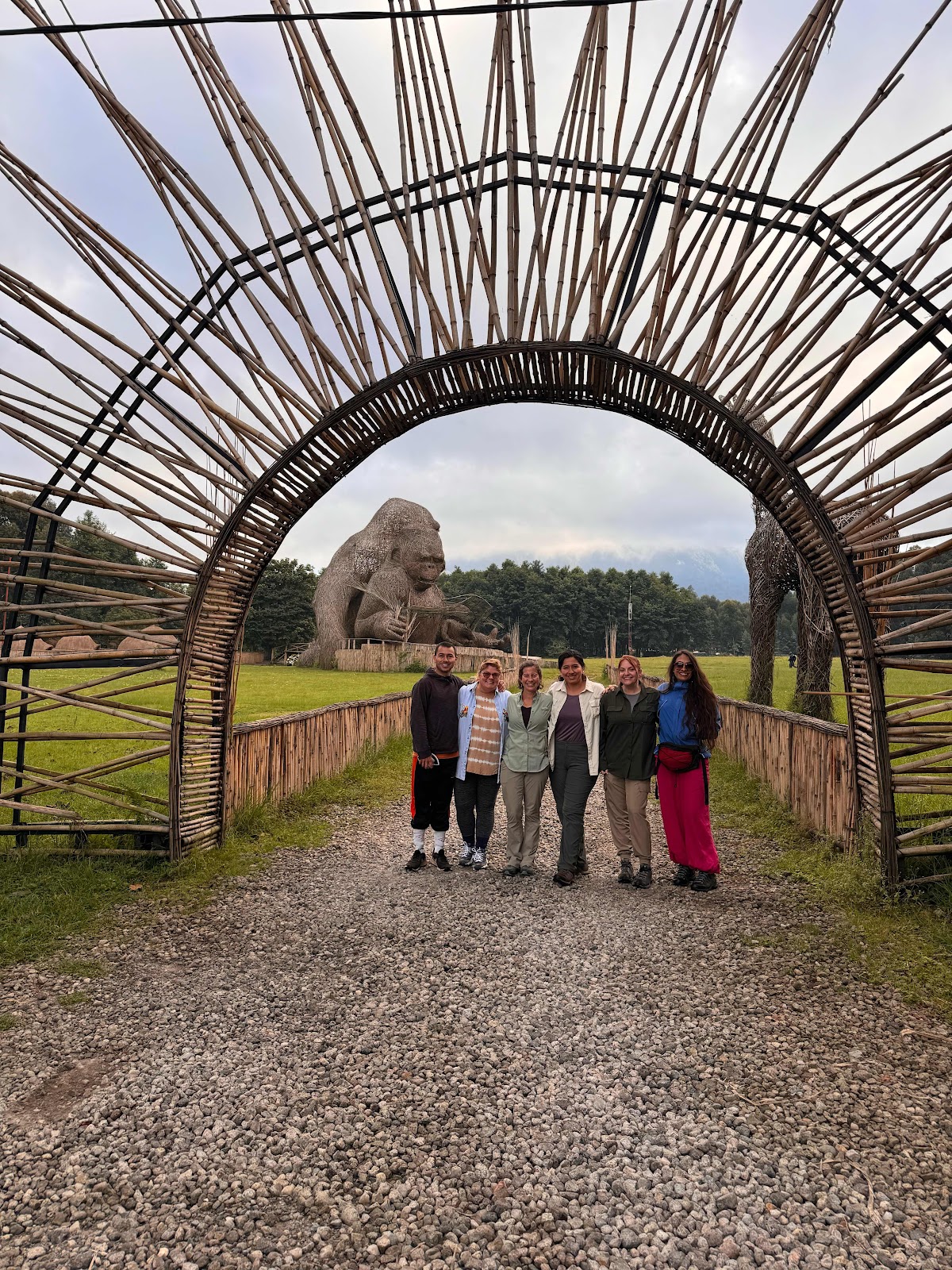
Steve picked us up bright and early and could not have been friendlier. Just before the entrance to the museum, he pulled over to an open park where huge recreations of gorillas were created out of bamboo and reeds. An expert in this, Steve told us where to stand and took photos of our group. 


Then we entered Volcanos National Park. The entrance was very different to the Impenetrable Forest. There, there had been one large covered seating area and a small, simple toilet area. This entry area had a circular concrete seating areas where small groups could sit, large elaborate restroom areas, multiple administrative buildings, and even a fancy barista which made free coffees to order. (Perhaps this is why it costs nearly twice as much to see gorillas in Rwanda than Uganda!)


Despite the fact that my permit had been booked for Rebecca Smith from Estonia, I was allowed in and our group of six was paired with a teacher from Colorado (the next town over from Jess!) and a couple from London. Cally, our guide, spoke with us for a few minutes before we got back in our car with Steve and drove about thirty minutes to the start of our hike. 


The drive there was an adventure in itself. We only thought we had been on tough roads! We went from dirt roads to a slightly rocky road to the last 2-3 miles of a rock road. I mean, it looked like a dry river bed. Did we have seatbelts? That would just be silly! Did we have good handles of which to grab? Why do you ask of such foolish things? So, we bounced, nearly hitting our heads, and were jostled so severely that our Fitbits gave us credit for active minutes.


(I would share the video, but I fear you may get motion sick watching it!)


But, eventually, we did arrive. Our group was joined by several porters who ended up being very helpful in tricky hiking situations, and we set off. The first part of the hike was through farmland where women, often with babies tied to their backs were busy hoeing the dirt mounds where potatoes were growing. The potatoes are harvested here three or four times a year. In alternating plots there were daisies growing. The daisies are made into insect repellent and act as part of a crop rotation to keep the soil healthy.


Even from the start, our walk was a fairly steady upward climb. While our camp was at 5,000 feet, our hike began around 8,500 feet and ended near 10,000 feet. 


Through the countryside, sheep bleated at us, cows stared, and women cared for the crops. We met a small chameleon along the way. The way his eyes made full circles about and his tiny hands gripped at limbs around him made us all cackle with delight.


Upon entering the forest, the true start of the National Park, we were joined by two armored guards. When I asked one of the guards if the guns were to scare or kill the buffalo in the forest (no forest elephants here), he said, “Yes.” 


There are gorillas in this forest as well (Hello, Dian Fossey!), but we were not on a gorilla trek, and so our chances to see them were slim. Cally was patient and sarcastic though as I often joked about when we would see them and if they were hiding around the corner. His answer was always accompanied with a sly smile. Although they were not around any of the corners we turned, we did find some of their droppings, so they were close!


Our hike was beautiful! After the lush farm land, we entered the National Park. It alternated between huge trees and lush open areas with thick undergrowth that went well above our heads. Our path was rocky and progressively upward. 


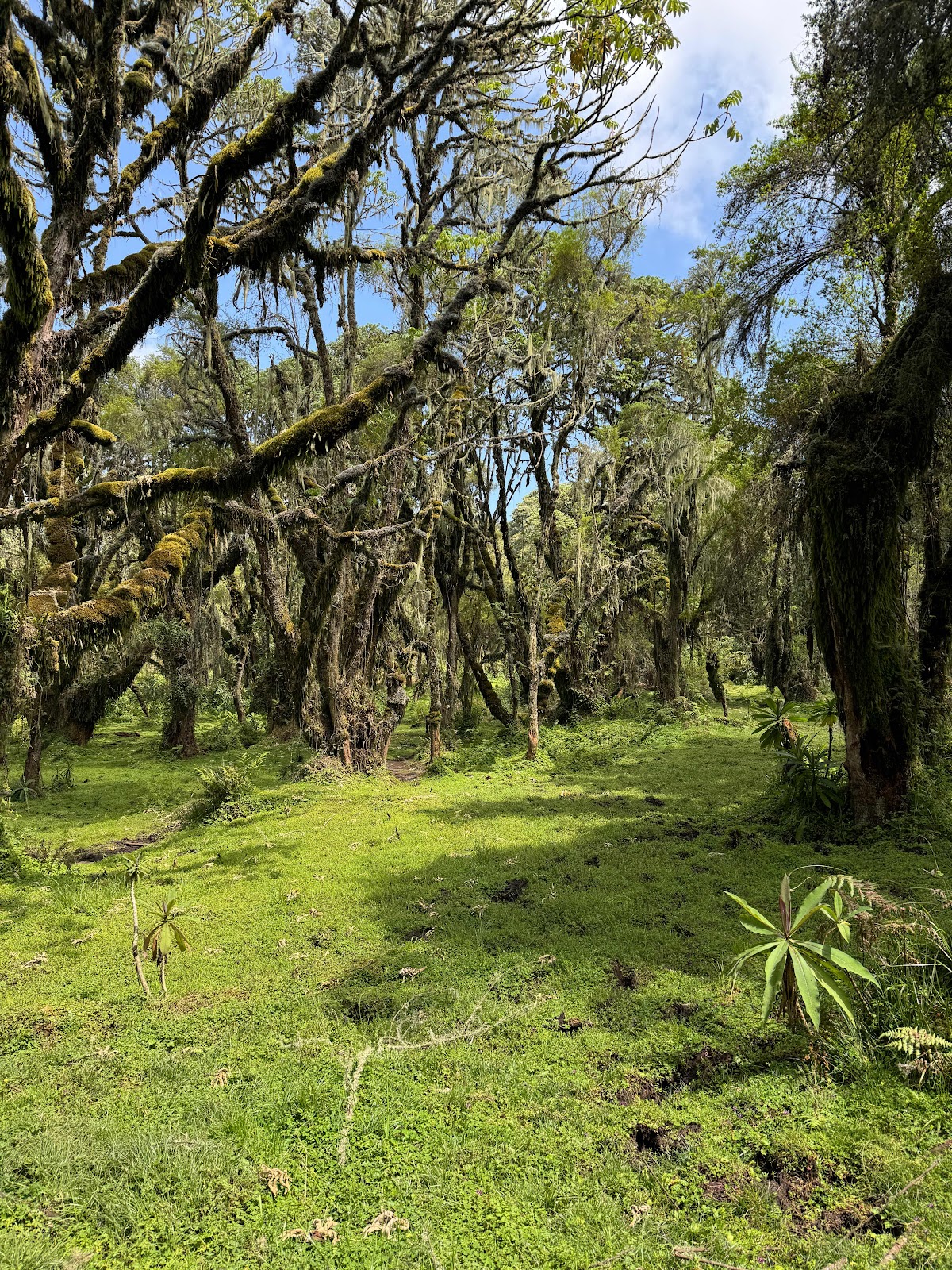
But upon reaching the area that Dian called home, we could tell why she chose it. The expansive trees spread over bright green ground-coverings that made for a truly stunning, welcoming place. After sneaking through narrow paths surrounded by stinging nettles, this place felt like a retreat.


Thanks to a donation from Sigourney Weaver, the actress who played her in the movie, Dian’s cabin and all of its belongings have been moved to the museum down the hill. So while there are no structures where her base camp and research center once stood, signs tell you where the different buildings once stood. Just beyond the base camp is the graveyard where she had buried many of her favorite gorillas over the years. It is here, next to the animals she loved and spent so much time with that she buried.

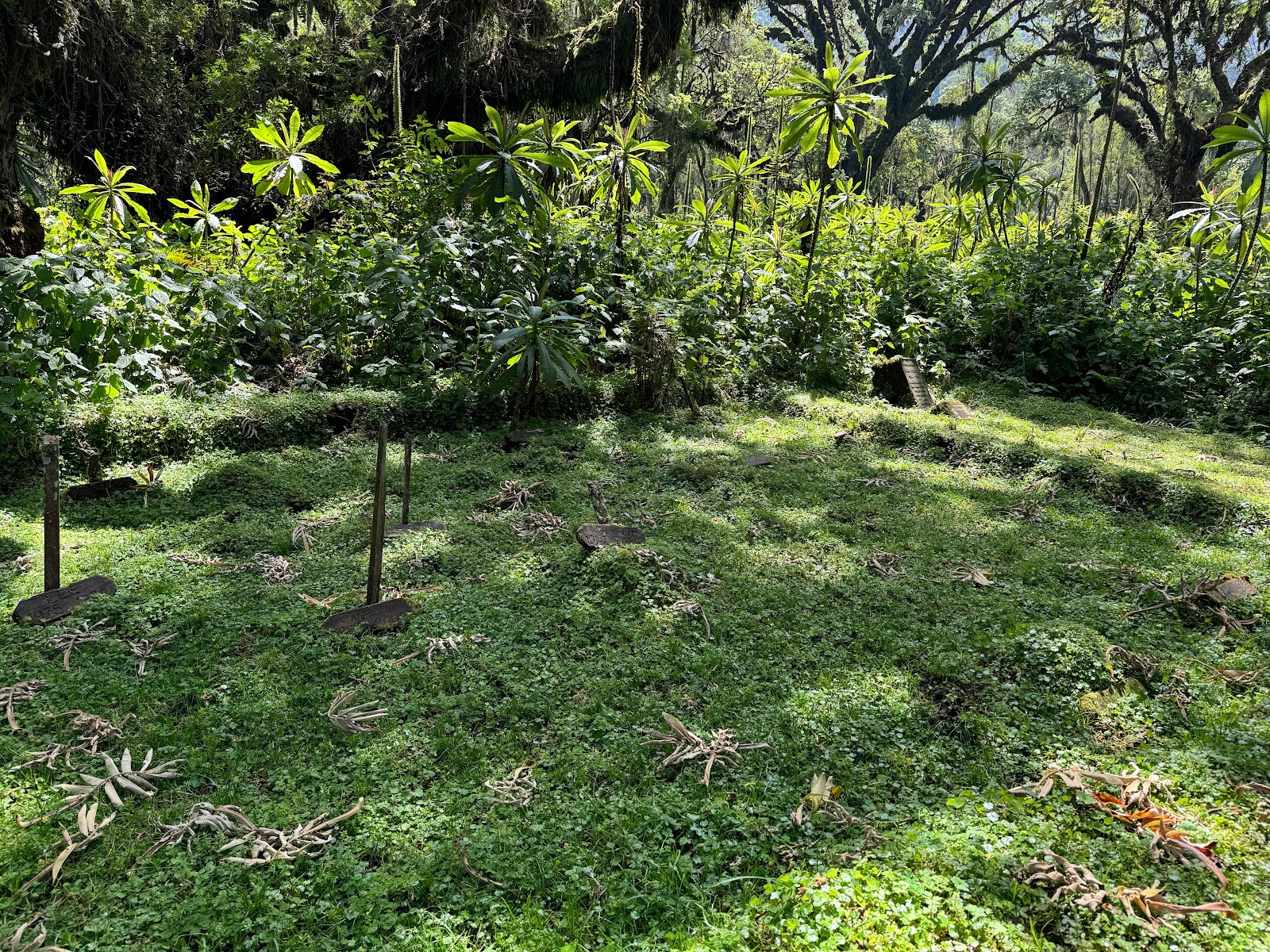


We took a break in a small gazebo near her camp for a snack, then headed back down the hill toward the gorgeous countryside and the empty riverbed that doubled as a road.


Ellen DeGeneres has always loved and admired Dian Fossey’s work and as such loved gorillas. So, for her 60th birthday,  Ellen’s wife gave her a center in Rwanda meant for research and education. It is now a stunning and incredible place to visit. It is free of charge, but you are asked to donate to the Dian Fossey Gorilla Fund. Inside is a wealth of information about Dian Fossey, her research and gorillas. There are plaques about some of her favorite gorillas of which she formed tight bonds with. There’s a quiz you can take to find out which one you are most like (I’m most like Titus!). There’s something that teaches about the different gorilla sounds and allows you to mimic the sounds, grading you on how well you do. There’s even a virtual reality experience where you can get up close and personal with a gorilla family. It was a beautiful, and well done facility.
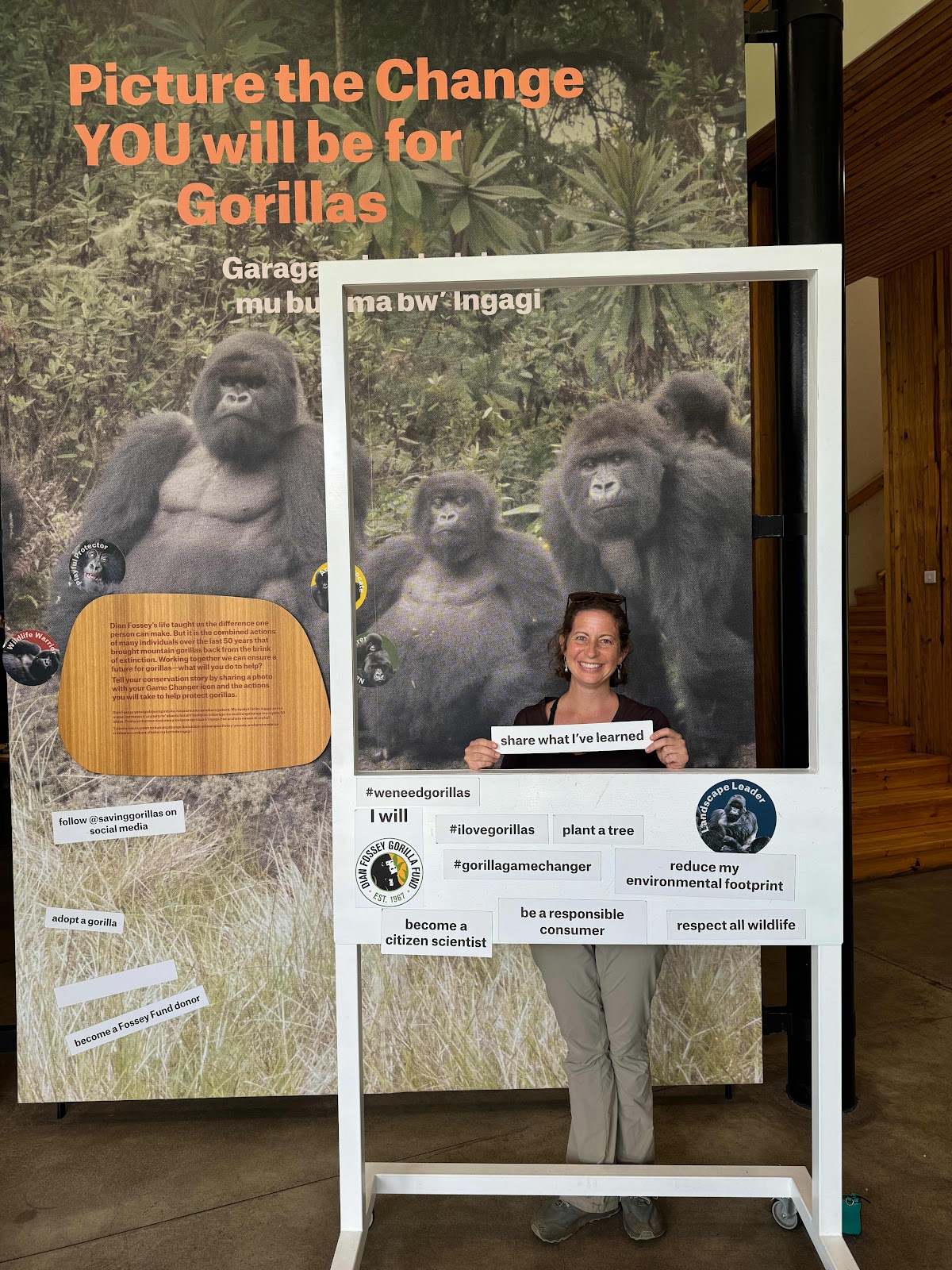


I’m so thankful we took the day to enjoy a gorgeous hike and learn more about a remarkable woman. For the record, we did in fact make it back in time to taste the banana beer, and I’m only sorry we didn’t completely miss the activity…
Saturday, June 15, 2024

Uganda

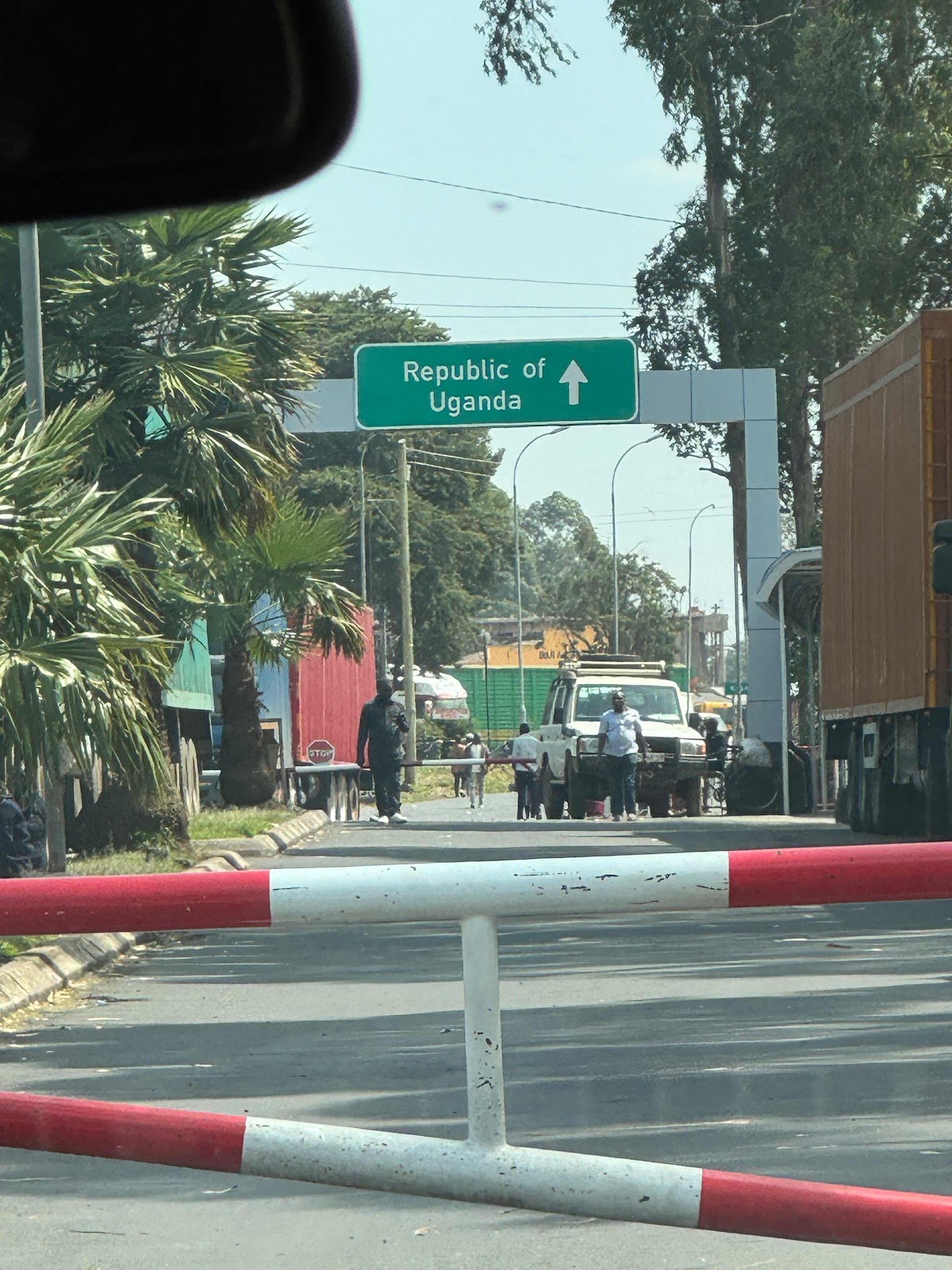
We crossed from Rwanda into Uganda and you wouldn’t have been able to tell one mountainous African country from the next, aside from the heavily militarized zone in between, the passport checks, cars driving on the opposite side of the road and an hour’s time difference. 


Our time in Uganda was short and sweet and mostly gorilla focused, but any of the people we encountered were warm, welcoming and very proud of their home.


The scenery of this country is stunningly beautiful. It is mountainous and at a high altitude, above 6,000 feet. The mountains are lush and green. The river valleys are filled with farming plots full of bananas, beans and others that I can’t quite identify. Mountain sides are dotted with simple, adequate structures.


A few facts about Uganda: It is a country of 47 million people and is roughly the size of Michigan. About 10% of the country is dedicated space for National Parks. English is widely spoken, and taught in schools, but there are 52 regional languages based on the local tribes.


We enjoyed talking with our driver who took us to see the gorillas, Moses, and I asked him all sorts of questions, particularly about schools. We passed many kids in uniforms, walking down dirt roads in the dark to get to school on time. They often walk a mile or more to get to school, and private schools often start early with extra classes, then serve a simple porridge for breakfast before the true classes begin. English is taught thoroughly at a young age, and it is later in school that other options of languages are offered. Speaking many languages is very common.


I also asked Moses about politics. Every five years, Uganda holds a presidential election. However, for the last five elections, the same man has won. Moses said the younger generation is beginning to show frustration with this, so there is hope that there will be a change soon.


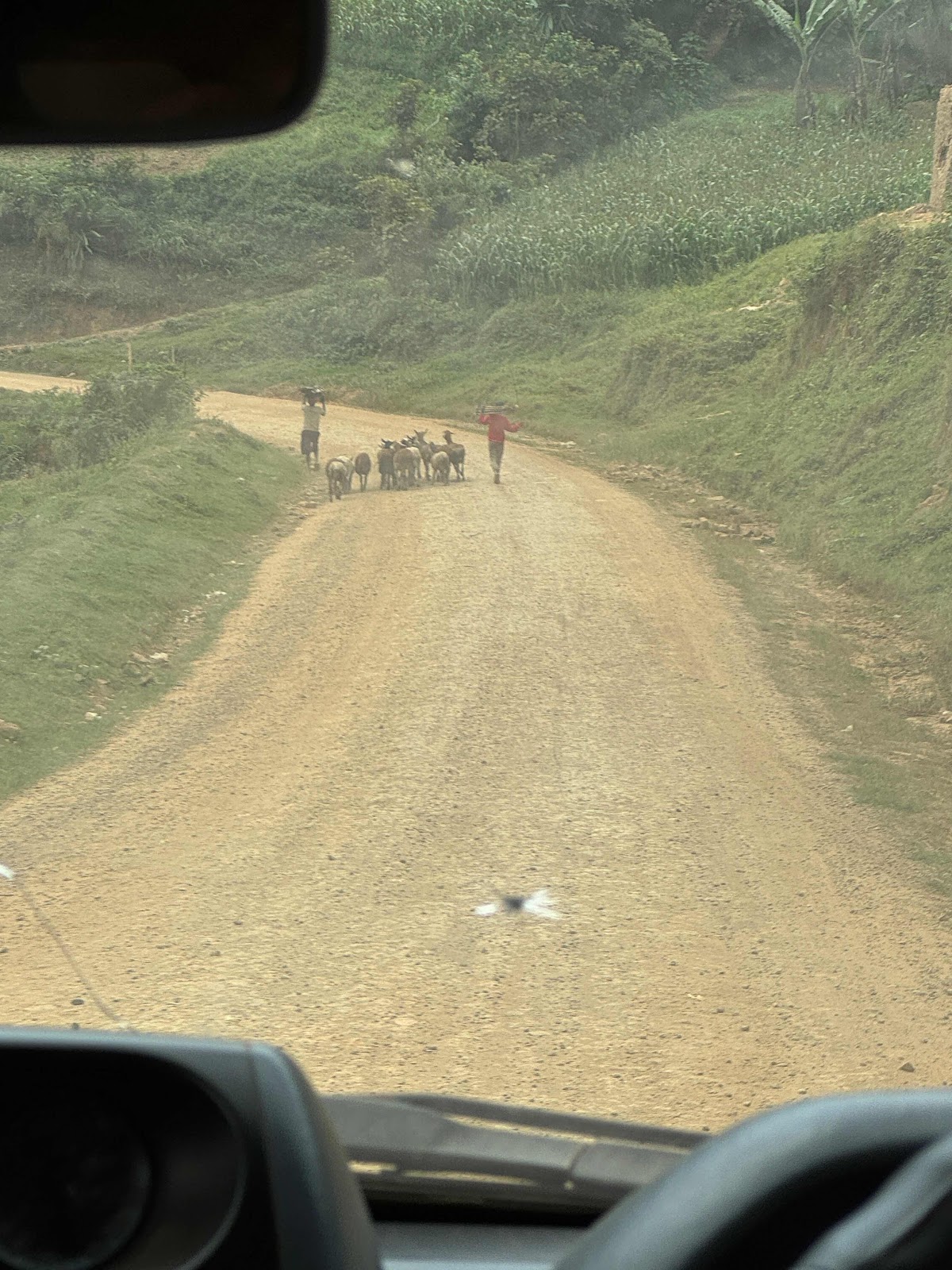
The roads we traveled on were a varied. The roads in town were all paved and in fairly good condition with sets of five speed bumps in a row scattered throughout. The other roads we encountered, just outside of the city were red, dusty roads. This meant that if you had a car, it needed to be one that could withstand some bumps! Most people we encountered, though, were walking. Students started their long trek to school while it was still pitch-black, as did men in suits. Everyone walked. It was a way of life. The tiniest of children, appearing around age three, walked down the road independently, knowing to step to the side as cars drove by.


Power outages happened frequently. This meant at the restaurant, there were certain things that could be made over the grill or perhaps in a stove heated with gas or fire and other menu choices that were not available. This meant that our electronics that were being charged as we slept didn’t always fully charge. I promise I know how minor these “issues” are, it is just a reminder of how fortunate we are and how accustomed we are to our way of life!


I’m thankful to have had a few days in Uganda! It’s a beautiful place with lots more to explore!