Kanazawa was sort of a last minute add to our itinerary, mostly based on a location that worked to help us see some other things, and we heard it was a beautiful spot to see, so we added two nights in to this city on the western coast of the main island.
We had picked up a car when we left Hakone. Sure, driving is intimidating and probably not necessary in this country with so much public transportation, but after this, we head into the national parks with hopes of doing some great hikes, so a car makes sense. It meant we got to enjoy the countryside yesterday, with some entertaining roadside stops and a visit to a remote village. Driving on the other side of the road takes some concentration, but thankfully a year in England helped prepare me! Apple Maps made things easy, drivers seem to be understanding with very little road rage, and signs to places are generally in Japanese and English, so it was not too bad! 
Much of the drive was on a large highway, sometimes with Fuji in the rear view. We stopped at a large roadside stop with absolutely stunning bathrooms and an entire food court. Why not try a little something? So, we tried some venison dumplings, and well, they did not disappoint! When we needed some more snacks later on in our five hour drive, we stopped by a Lawson’s. 7-11s, FamilyMart and Lawson’s are all over the place and offer a similarly wide variety of items, but we had not really explored a Lawson’s yet. Well man, we hit the jackpot! The candy type cheese (which tasted like tiny babybels) and the crispy croissant snacks in truffle butter flavor were truly fantastic!
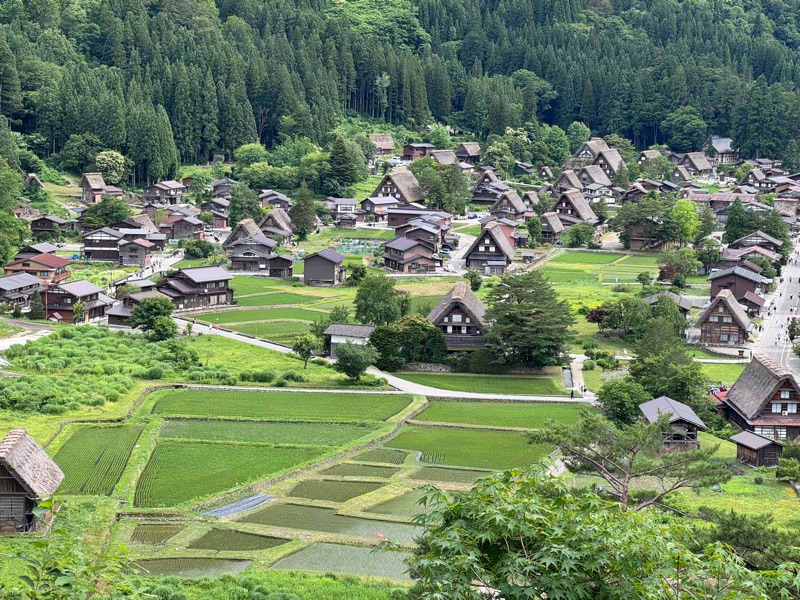
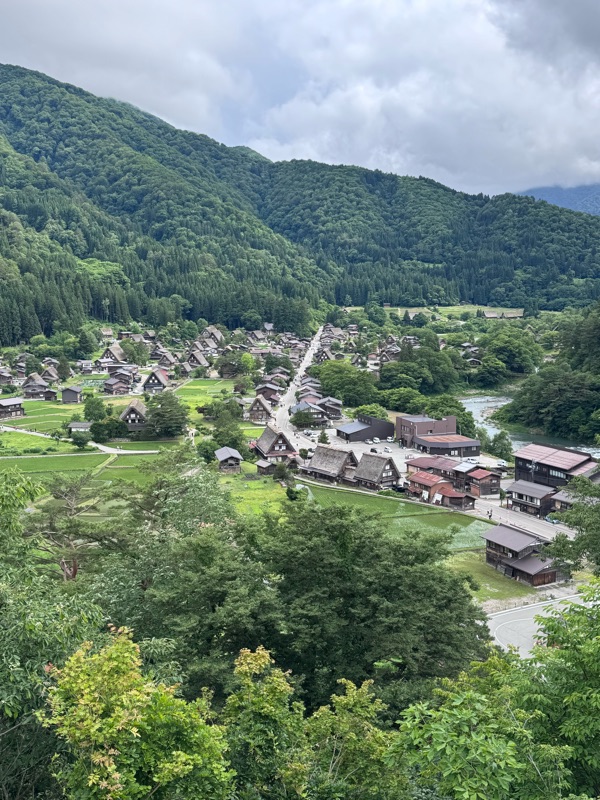
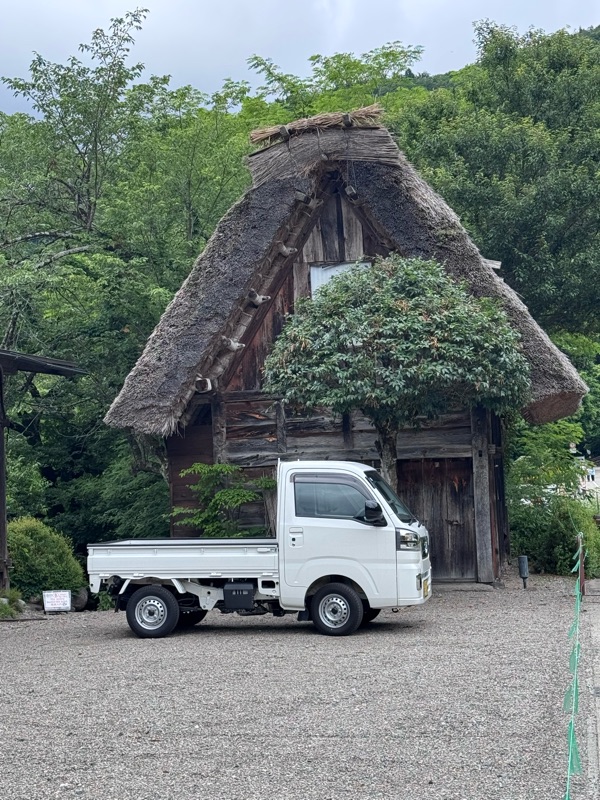
Shirakawa-go was our first destination of this road trip, and it was adorable and in a gorgeous setting. The tiny village in the valley has ancient roots, but it became more of what it is today about 300 years ago. It was often used as a hideout for samurai and their families that had lost or fallen from grace. The homes with thatched roofs were designed to look like praying hands. The attic levels are meant for silkworm farming. We enjoyed just wandering through the village, looking at the small rice paddies, and eating a delicious sugar and cinnamon crepe (I’m sure they had those in ancient times!). 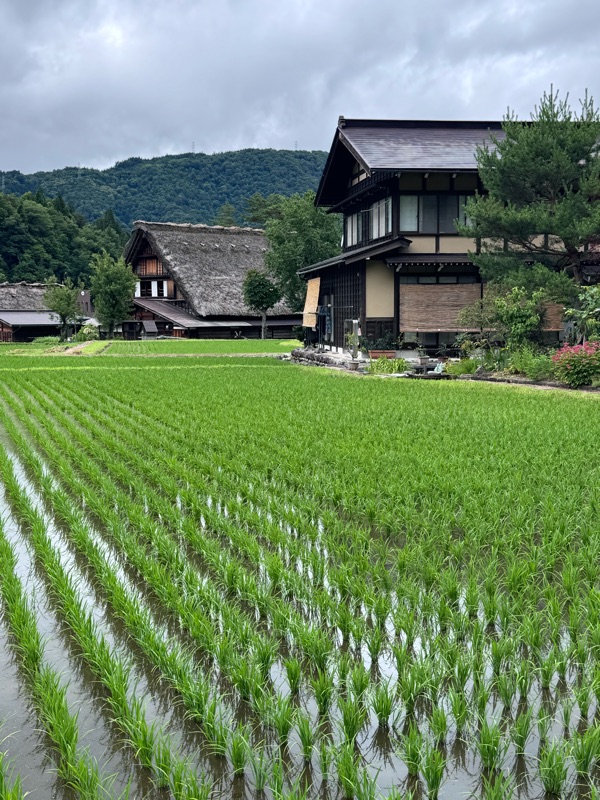
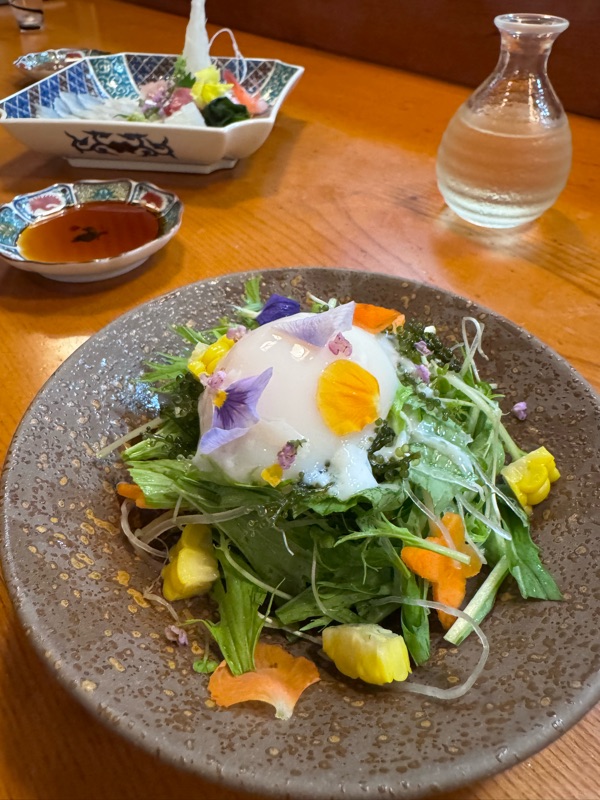
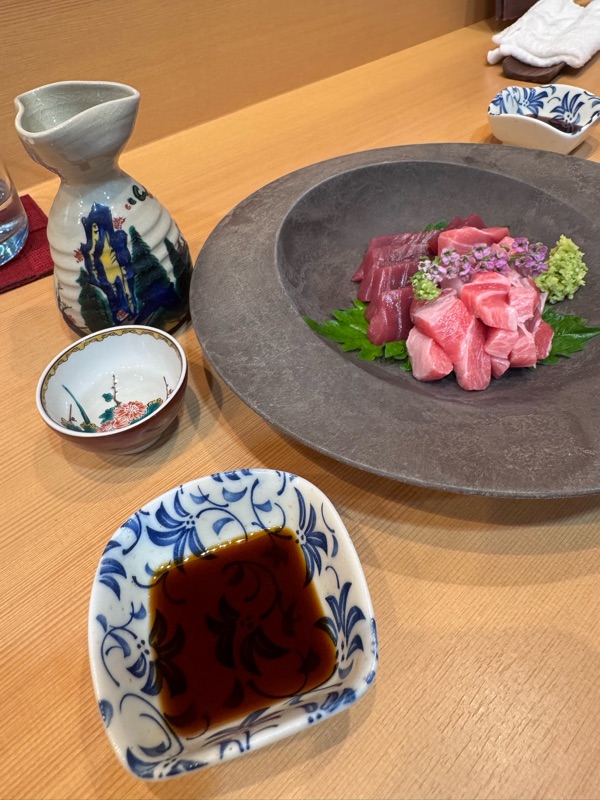
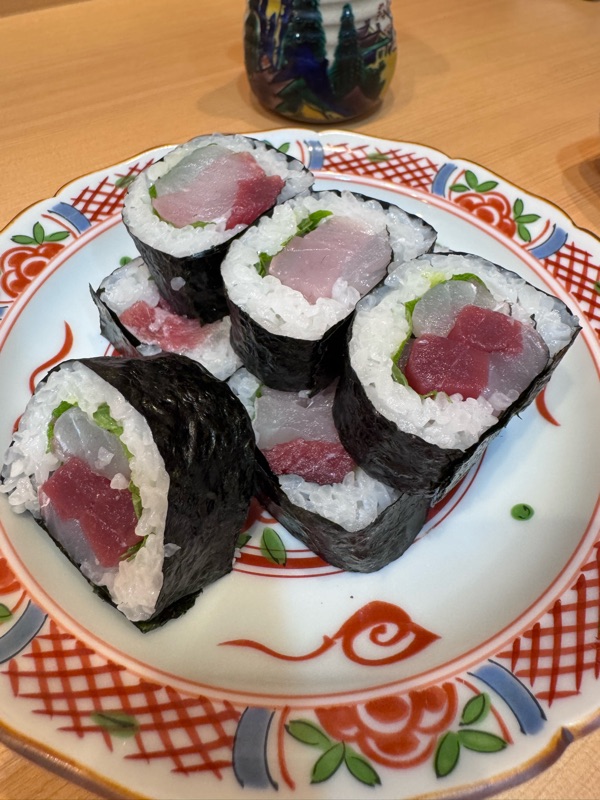
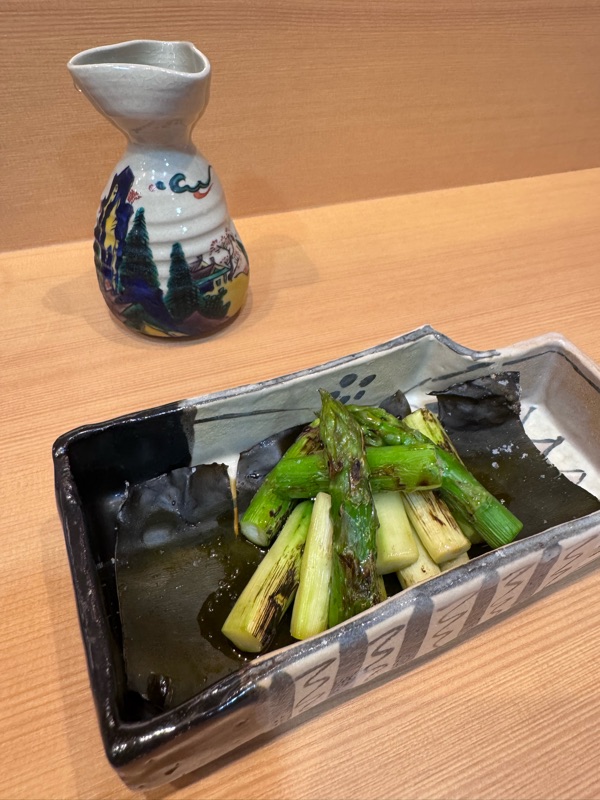
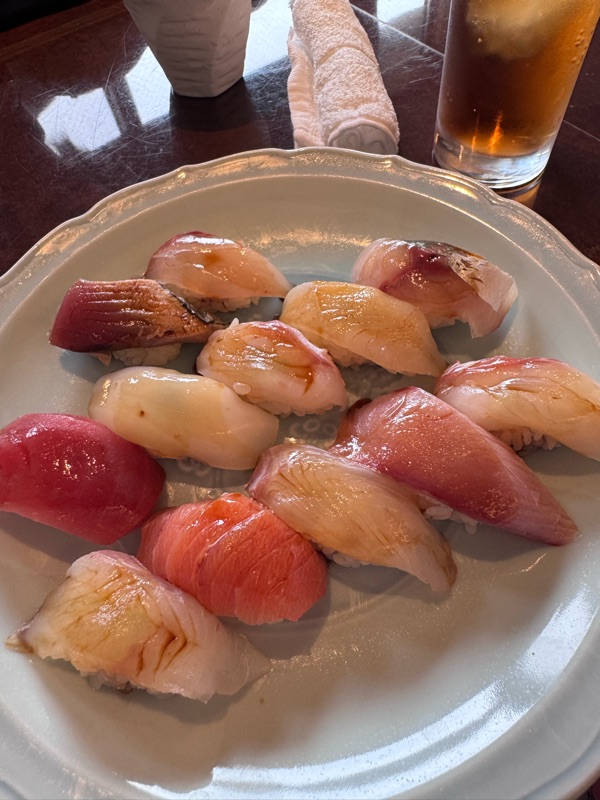
While in Kanazawa, which is a coastal city, we ate three delicious meals of sashimi. It was all utterly delicious, even though I feel like I’ve eaten a whole koi of raw fish (don’t worry, I don’t think any of it was actually koi😉). Our first night we were the only customers at Katzumoto Katzumoto. We sat at the counter, and had a gorgeous salad with flowers, an egg, and even carrots cut in the shape of a butterfly. For lunch the next day, we ate lunch in a former geisha’s house at Banrai with an amazing spread of sashimi. On our last night, while we spent more than intended, our meal at Shokudo Tsuki of grilled asparagus, tuna sashimi, and sushi rolls was divine! 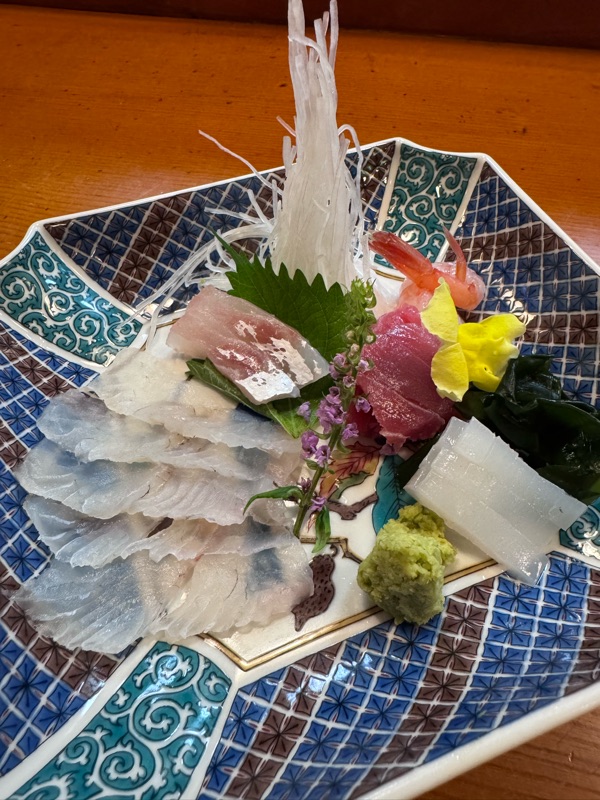
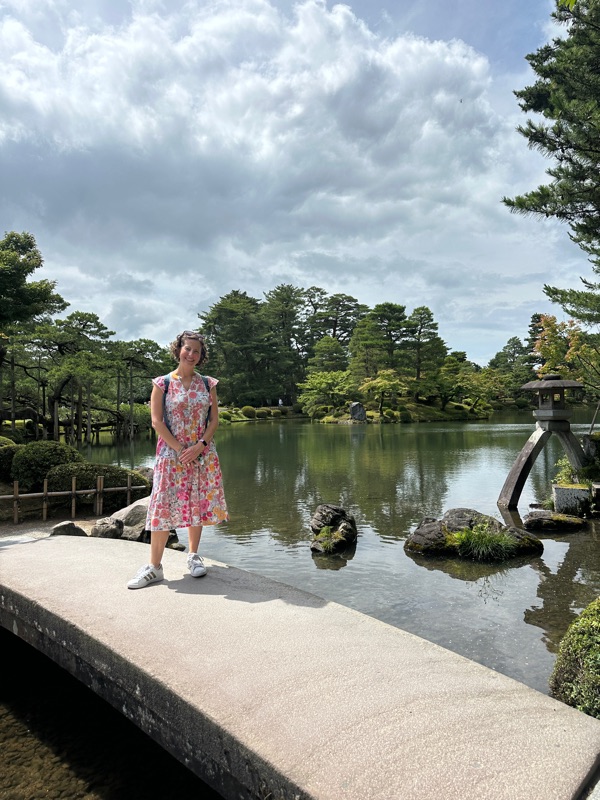
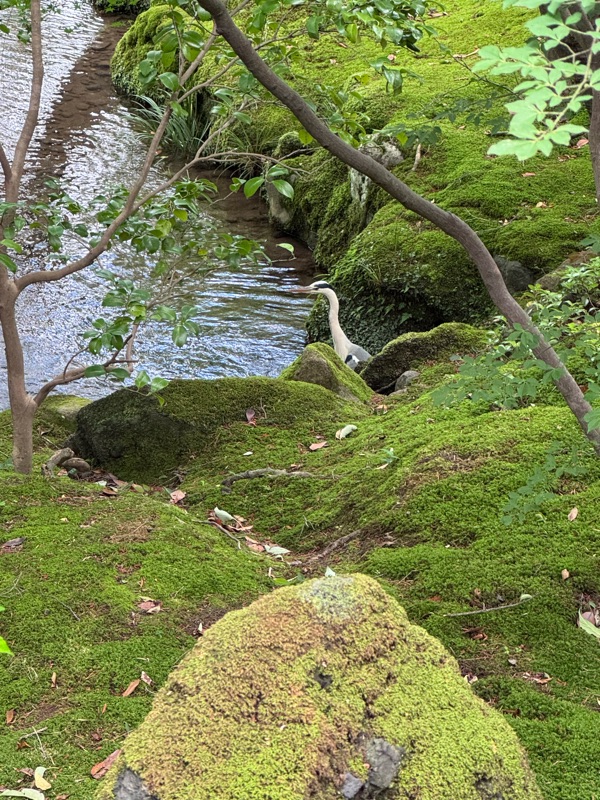
We started our touring of Kanazawa at Kenrokuen, the famous gardens on the hillside overlooking the city. They were tranquil and elegantly simplistic. Water flowed freely and the grounds were covered in moss. 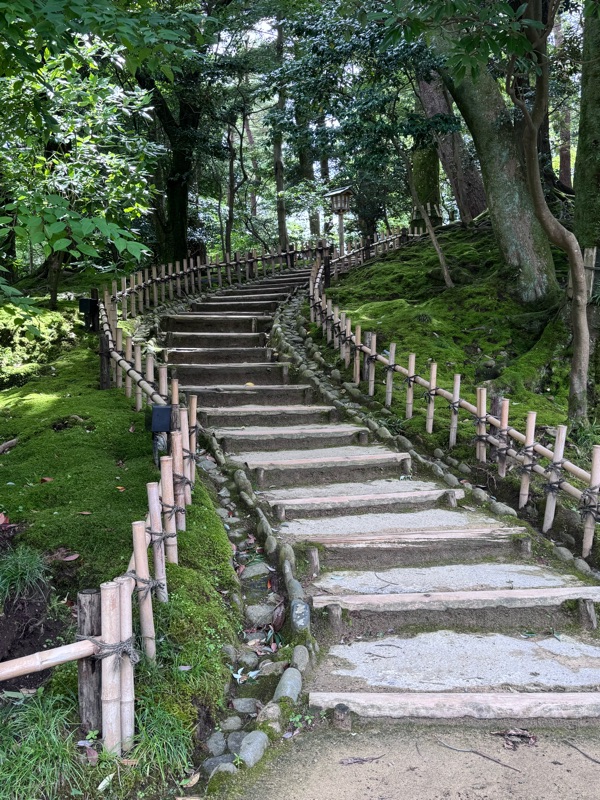
When we decided to visit Kanazawa, we could tell that it was not nearly as much of a tourist city as some that we have visited as there were not nearly as many tours offered. But, we found one that worked perfectly, a walking tour of the city that included some visits to learn more about old crafting techniques along with a traditional lunch. When we showed up to meet our guide, we realized we were in for another incredible treat: our own personal tour with another retired teacher! Tomo was delightful, and such a joy to spend our day with!
We walked through a shrine and learned a little more of the history of the area. At one point, several hundred years ago, Kanazawa was a powerful area. (Also, since it has not been a powerhouse in a few hundred years, it bypassed damage from many recent wars, so more buildings remain intact here.) When shoguns had the power above the emperor, the areas around the country were generally ruled by lords. The former lords of this area was the wealthiest, so they were viewed as a threat to the shogun. The lord built up a castle with large defensive walls, and around the city, several samurai neighborhoods were built as an outer layer of protection for the lord. Although much of this time was peaceful, and one lord greatly valued the arts, defensiveness was still crucial for this area. 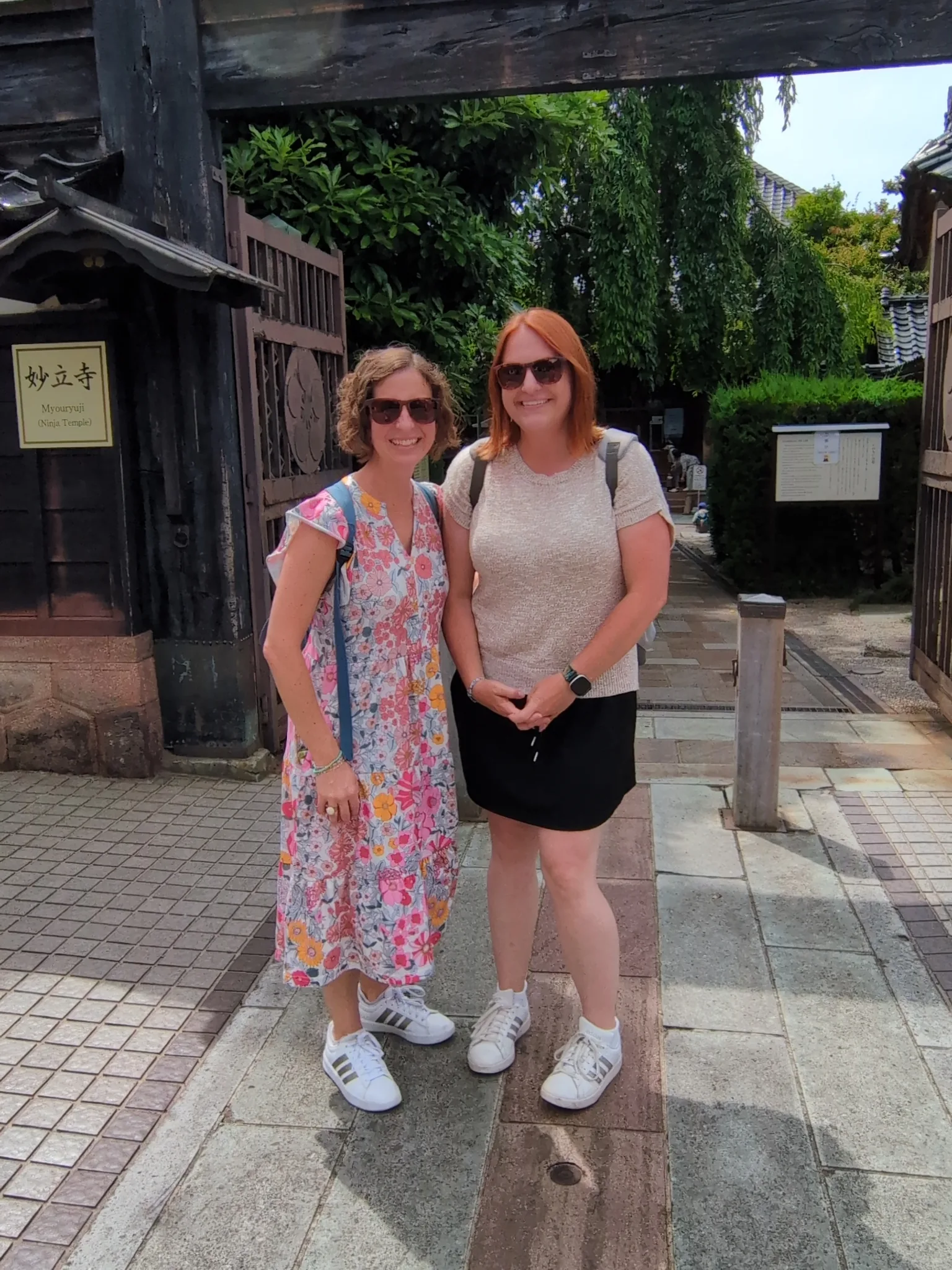
We even visited the “Ninja Temple.” It was one of the coolest buildings I’ve been in. While it is still a Buddhist Temple, it was built as a defensive building. It is not all that large, in fact at the time it was built, buildings were not allowed to be over two stories tall. While it appears that way from the outside, it is actually four stories and multiple “layers.” There are twenty-nine staircases, including hidden ones that are revealed by moving planks of wood or in the backs of closets. One staircase is light colored so that from the inside, servants could see where feet landed and puncture the thin fabric to easily injure approaching enemies. The well is said to have connected to a tunnel that went all the way to the castle, miles away. There were sliding doors that revealed new passageways designed to confuse attackers and the money collection area could easily be lifted and become a deep trap. Truly incredible architecture! We couldn’t take photos inside, but here are the light stairs from the outside: 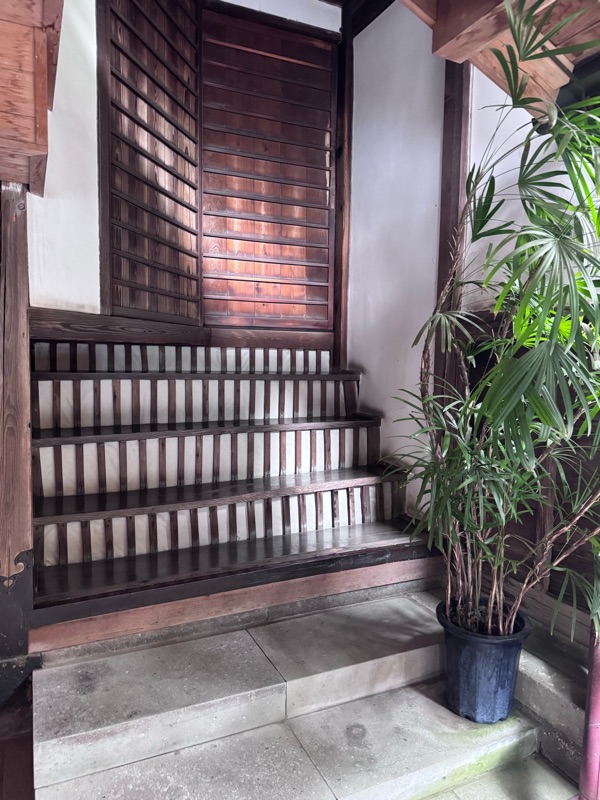
Tomo’s first stop on the crafting part of the tour was to a Japanese lacquer studio. This practice has been in place, in some form or another, for thousands of years, finding ways to protect and water seal works of art. For the last few hundred years, it has been made in a similar way by taking sap of a particular tree. The urushi is cleaned, purified, and mixed with different chemicals to creat different colors. (We were told not to touch anything in the studio as it may cause us to itch. The internet has now told me it is a relative of poison ivy, so no wonder!) It’s a long, careful process which is most often passed down by generations like the mother and son that we met. 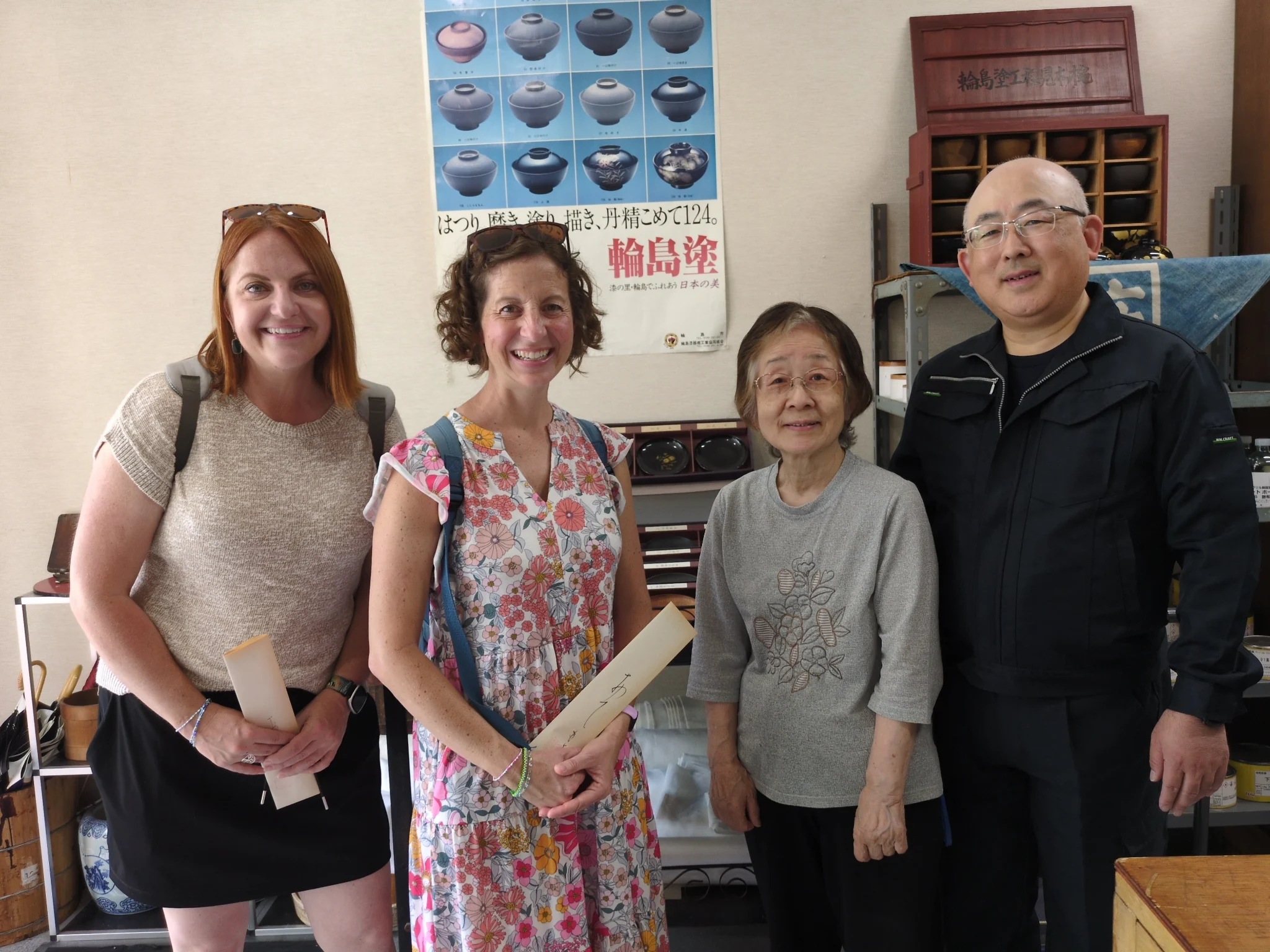
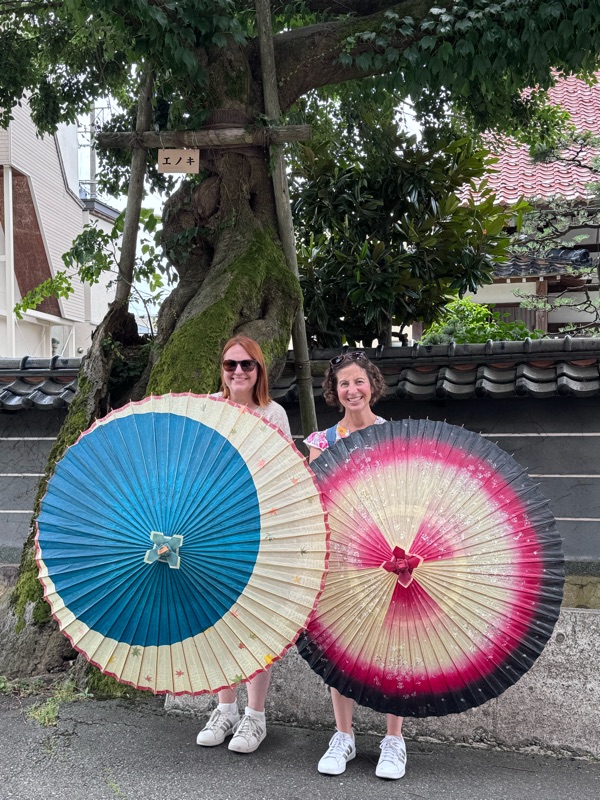
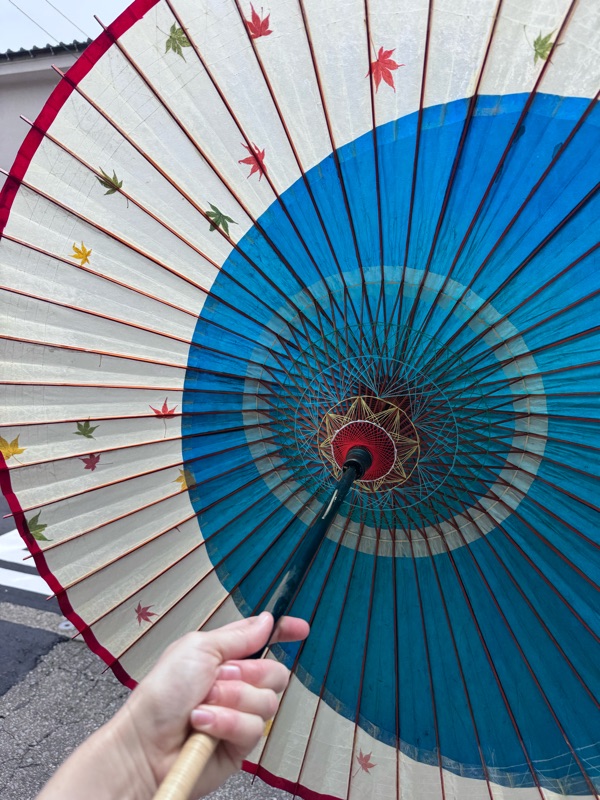
We also visited a wagasa factory. These are the carefully and ornately decorated paper umbrellas you see in Japan. The factory we visited had been in place since the late nineteenth century. The handmade paper that covers the bamboo pieces is so strong that snow and rain don’t damage it. Not only is the outside a work of art, but the woven string on the inside adds a glorious touch. The factory we visited is the only one left in the area, but celebrities from Michael Jackson to David Attenborough to the emperor of Japan have all visited the shop. 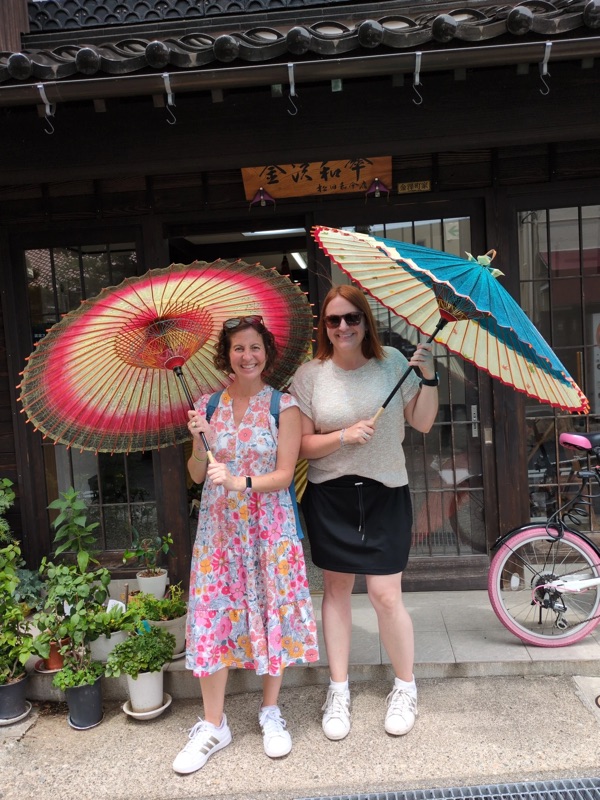
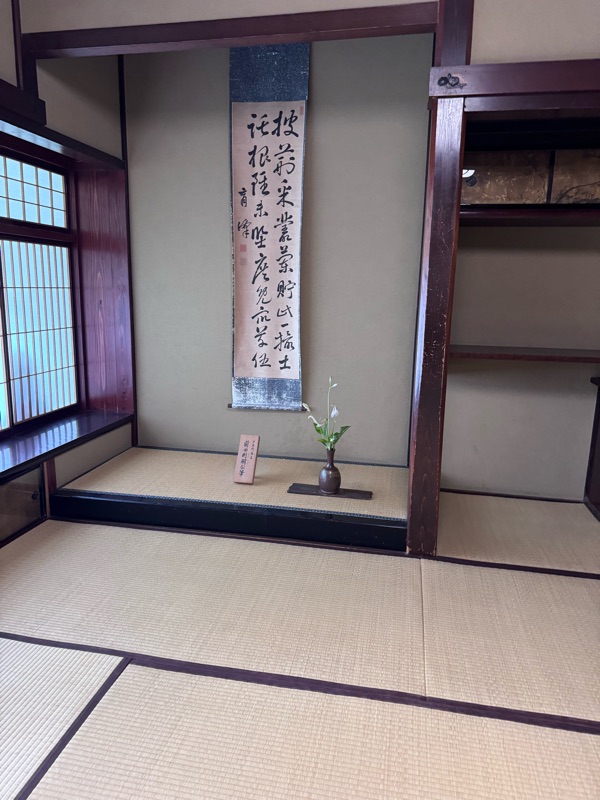
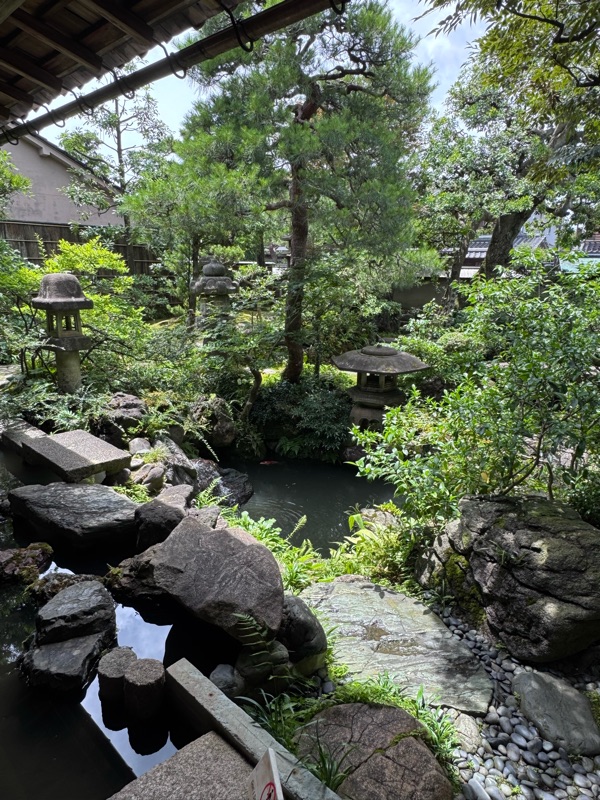
Tomo also took us to a gorgeous, well preserved home in the samurai district. When I think samurai, I think of a warrior with a sword. This is not exactly correct. Think of it as more of an aristocrat who probably had a job/high role in the community. Sure, during times of war, they were called up to fight, but most of the time they were more right hand men to the lords. It was a title that was inherited. The simple, but elegant house had no furniture (which was common), but had glorious private gardens. Our time with Tomo was delightful and educational! 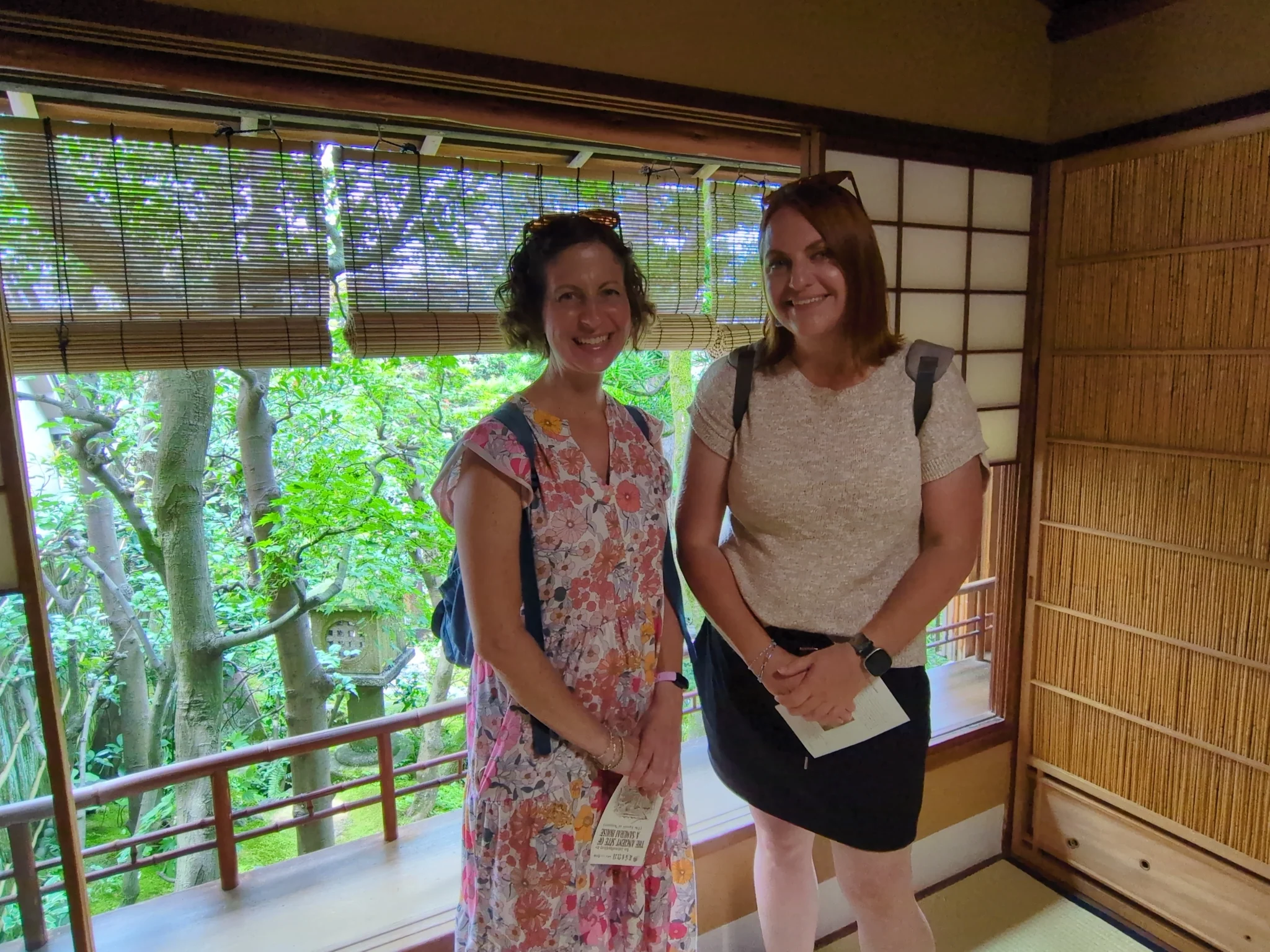
With only a little bit more free time in Kanazawa, we wandered through the fish market as well as the wide variety of shops that were in the stunning train station. Yes, although we drove a car to Kanazawa, we visited the train station just to try the shopping, and I’m so glad we did. Notice the clock outside. Look closely. 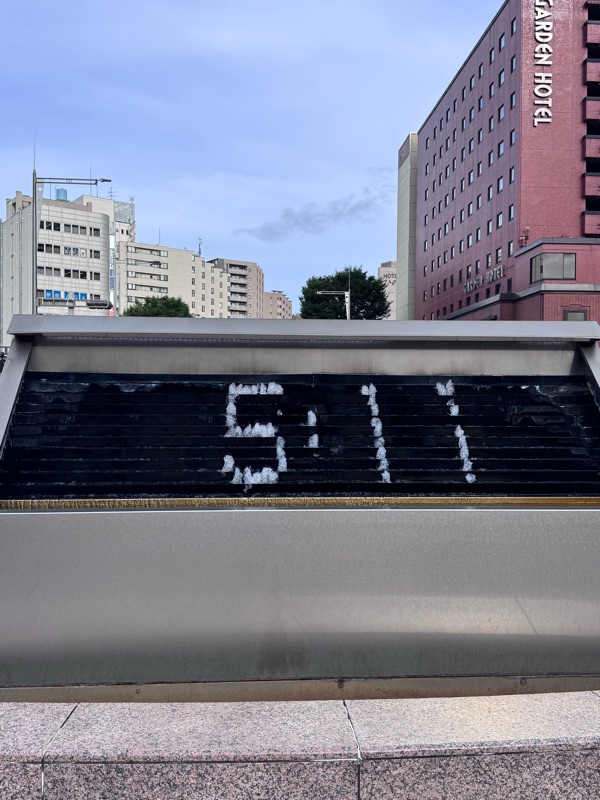
Yep, the CLOCK is a fountain! Amazing!
Our time Kanazawa was brief, but I think it was enough for us to get a great taste (we did eat a lot…). Our hotel (Hotel Amanek) was in a very convenient location and it was simple and perfectly adequate. I enjoyed our time here, but I’m not sure I’ll feel the need to come back here on my next trip to Japan.

What a wonderful journey!!!
ReplyDeleteVery interesting. Love the umbrellas!!!
ReplyDeleteLove you all💕
It all looks wonderful!
ReplyDelete