Once again, Instagram got us started in the right direction. I had seen something about the possibility of renting a grandfather for the day in Japan to help show you around and teach you about Japanese culture. I absolutely loved the idea, but when trying to Google this possibility, I must admit that I was not able to find what I wanted, and Googling “rent a grandfather” honestly took me down some weird turns. Thankfully, a parent of a former student had told me a bit about her trip to Japan and had talked about renting a grandmother in Kyoto. When I told her I was struggling to find this opportunity, she sent me the WhatsApp number of the woman who had been their grandmother for the day. I got in touch with Akemi, and the magic happened from there!
Before arriving in Kyoto, she sent me a message and said that someone else in her travel company was starting a new tour and was hoping to try it out on some people. If we have the time and were interested, they would offer this experience to us without charge as long as we were willing to write reviews later. We are not one who often say no to such generosity, so we jumped at it!
Akiko picked us up at our hotel the evening after our bullet train ride into Kyoto. She could not have been more precious, and I’m so frustrated at myself for not taking a photo with her! She walked us to a small studio for some craft time.
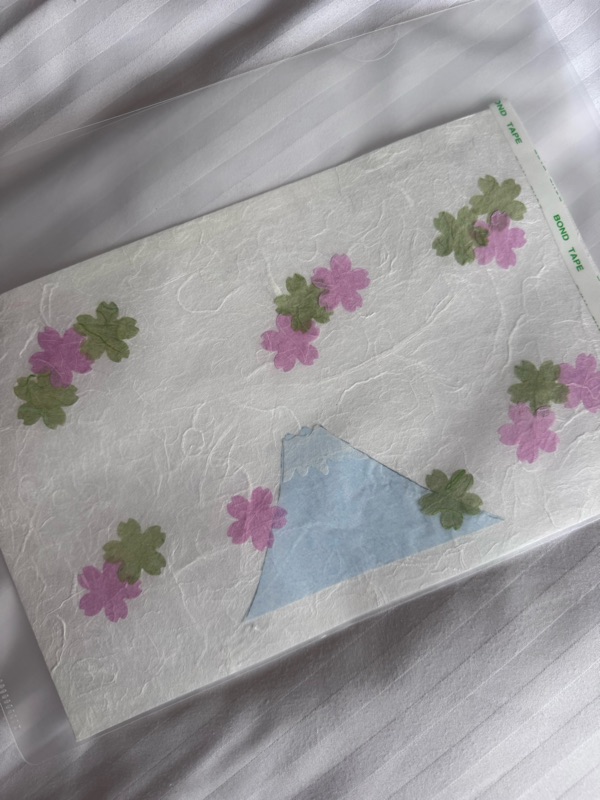
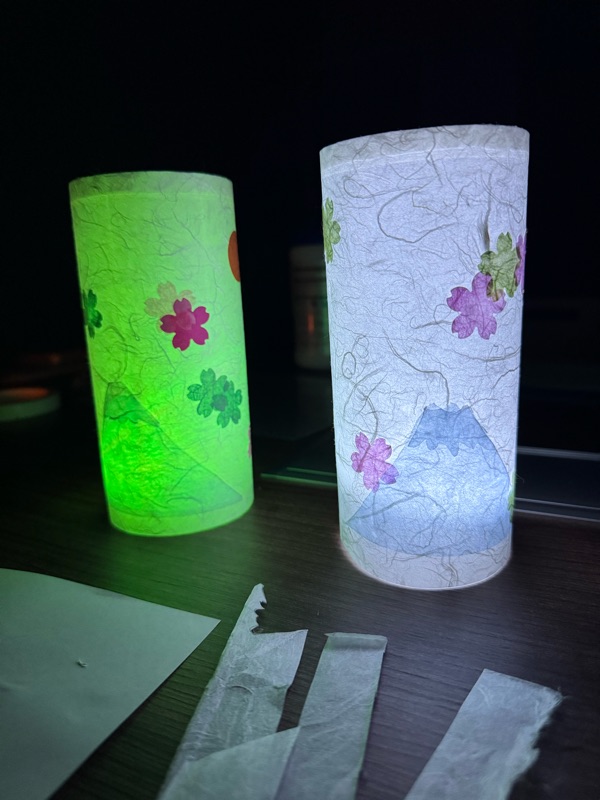
She told us about the art of Japanese paper making, showing us how strong the traditional paper is. Apparently, in pre-electronic days, if a fire was coming, accountants would throw their paper books into the water to protect the information as the ink had set into the paper and the paper was strong enough that it would not rip. This strong paper is now used to make Japanese lanterns. We chose a shade of paper, carefully cut it to fit on the plastic protective sheet, and then set to work decorating it. We used other colors of paper and stencils to create the perfect pattens we wanted. Then, we chose a small electronic light to put inside it. When we get home, we will fold up the now flattened lantern, and joyfully think of our adorable teacher, Akiko, when it lights up our homes!
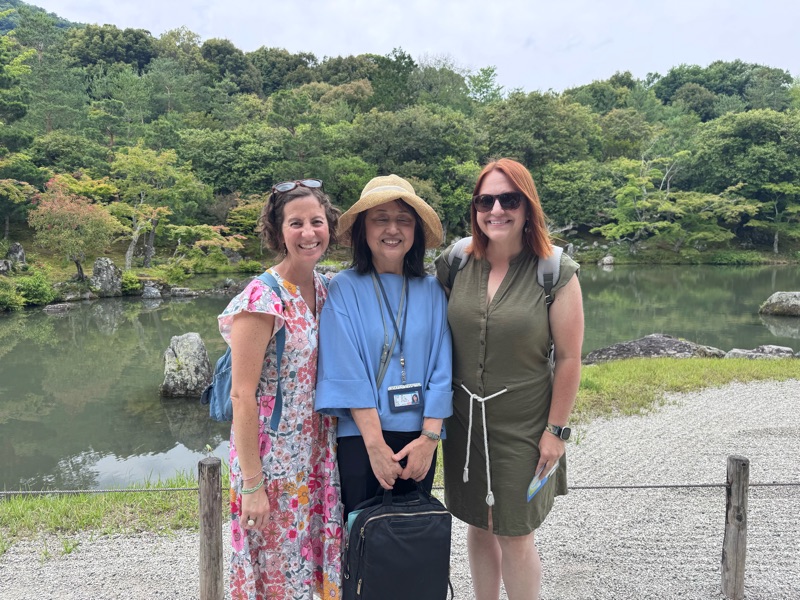
Sunday morning, our tour started with Akemi at 9, but she said she’d meet us in the lobby at 8:40, so I wasn’t at all surprised when I got a text at 8:20 that said she was downstairs. She was exactly what you would picture of a grandmother and former elementary school teacher. She had lived in Iowa City for a year where her second daughter was born, and now has three small grandchildren, but she had been an elementary school teacher and an English teacher. While she didn’t give us peppermints or Werther’s from her purse, she did give us some delicious lemon candies! When we were on trains or in taxis, she would pull out her small binder with facts and photographs to teach us something new about what we were going to see. I learned SO much from her, particularly about the religion here.
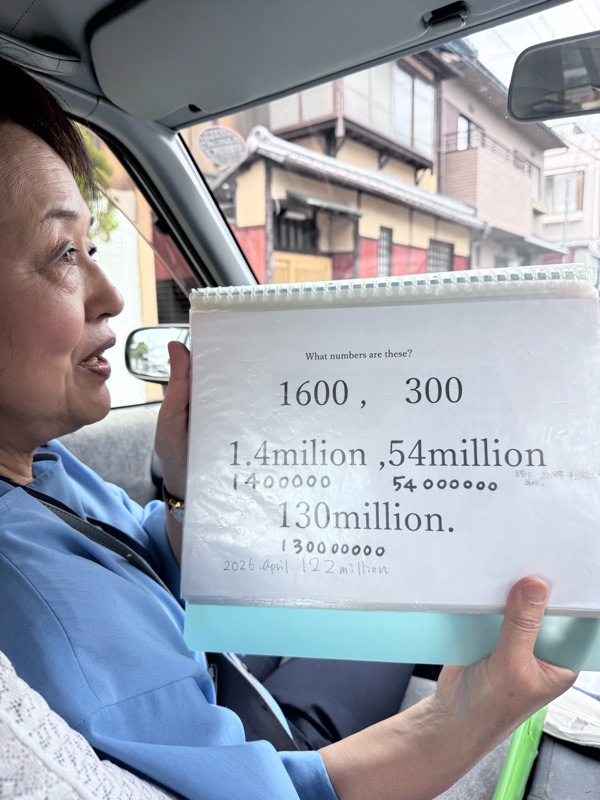
Let’s start here with some numbers. 1600 is the number of temples in Kyoto. 300 are the number of major shrines here. While 1.4 million people call this place home, 54 million visit it annually. (There’s no wonder we’ve heard lots of different languages!) For 1,000 years, Kyoto was the capital city of Japan. It only moved to Tokyo 150 years ago. The Japanese population is decreasing, from 130 million to 122 million in just a few years. (Grandma, mother of two daughters, said, “It’s because we don’t have good men here.”) Oh, and there is one vending machine for every 23 people in Japan. (They are everywhere!)
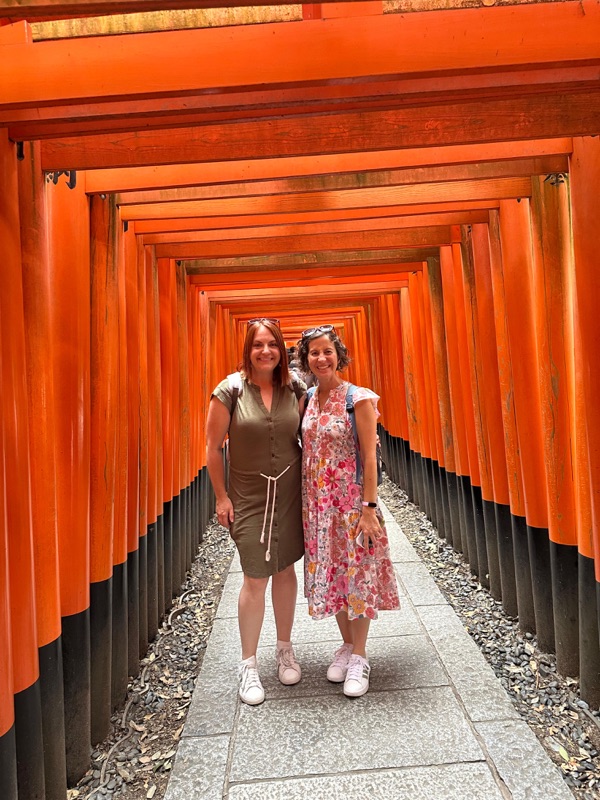
We went to lots of temples with Akemi, and they were all beautiful. The Golden Temple or Kinkaku-Ju was first with its stunning gardens followed closely in beauty was the Tenryu-ji Temple. The Fushimi Inari Taisha Shrine with the thousand torii gates was magical, even with the crowds! Kiyomizu-dera Temple has great views of the city. But it wasn’t just checking off all of these must see places that I loved. I loved learning from her about the religion and the significance of these places. 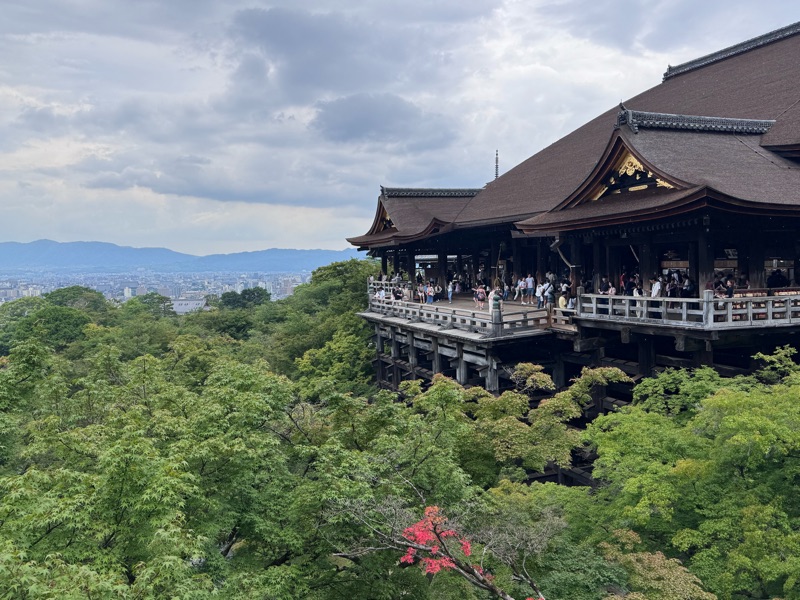
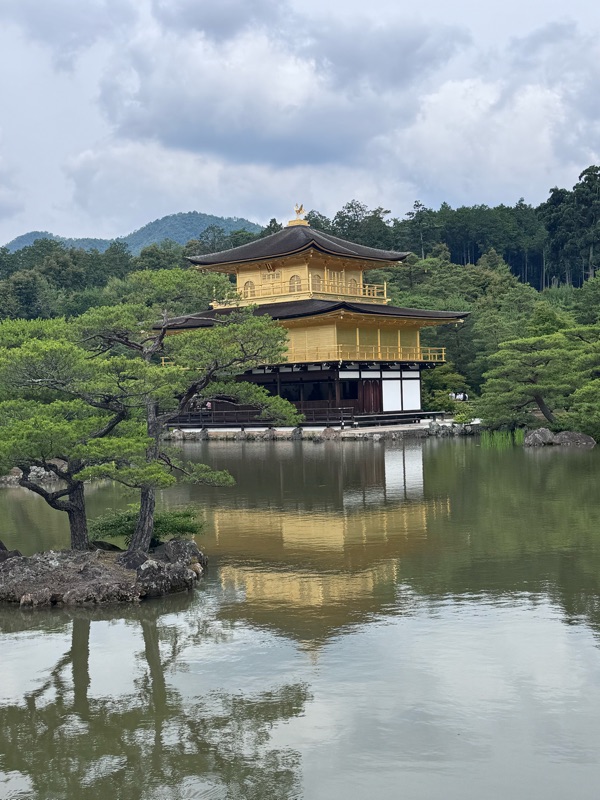
Shinto is the indigenous religion in Japan. While there is no primary god, it is made up of over 8,000 deities that especially represent nature and our connection to it. About 1500 years ago, Buddhism was brought to this country. Most Japanese people (Grandma said 80%) believe in both Buddhism and Shinto which is why many shrines and temples are in the same places. There are thirteen schools of Buddhism, but none believe in a god, rather the reaching of enlightenment. Some focus on the absence of judging (I realized how much of this I do without even knowing!) while some focus more on simplicity. This is why the beautiful gardens that surround the temples and shrines, while stunning, are instead more natural areas rather than manicured lawns with symmetrical rows. In fact, we learned a new Japanese term we love: wabi-sabi. It means beautiful, but in a way that accepts the imperfections and appreciates the uniqueness. So, the ponds in the gardens are not rectangular, the pathways are not straight, and the plants are not symmetrical. Japanese gardens also are often blended in with the mountains so that they look like they are larger than they are. In fact, Kyoto has no high rises allowed, not because of earthquakes, but so that the mountains are always in view.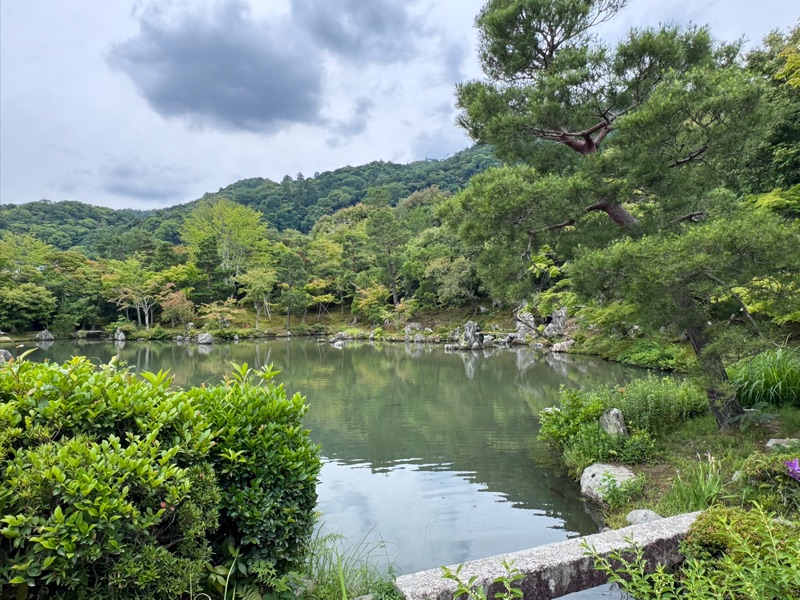
In Buddhist Temples, even when you do not enter, you can see the Buddha inside. So, you bow respectfully and make your wish or prayer. For Shinto Shrines, the deities are flying around close by. So, the doors to their temples are closed tight. You must clap loudly, twice, to get their attention before making your request. At the shrines, we usually found guardians at the gate. For the Inari Shrines, it is dedicated to the god of agriculture, of which rice is obviously a focus. Who eats rice? Mice. Who eats mice? Foxes. This is why foxes guard the many torii gates there. Other torii gates have pairs of samurai guards. When in pairs, one of these statues has an open mouth and another has a closed mouth. This represents the sounds made by the first and last letters in the Japanese alphabet, so they represent the beginning and the end.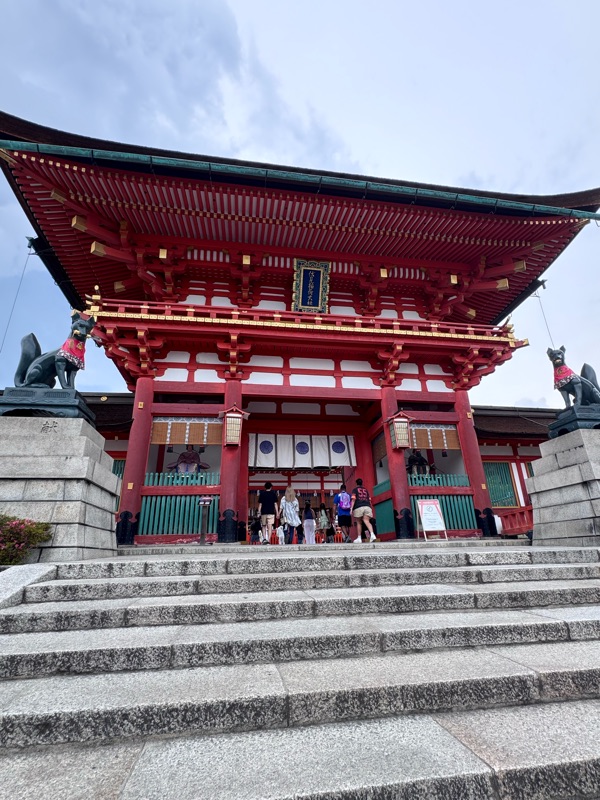
Akemi also took us to a beautiful bamboo forest. Even though my Dad is working to create his own, I loved seeing this one and marveling at it. The bamboo is huge; not only taller but at least twice as wide as what I’m accustomed to! Akemi said that they eat the fresh bamboo shoots in the spring. Also, did you know bamboo blooms? But only once every 100 years. Then, when it does bloom, the next year, that root system dies and a new one begins!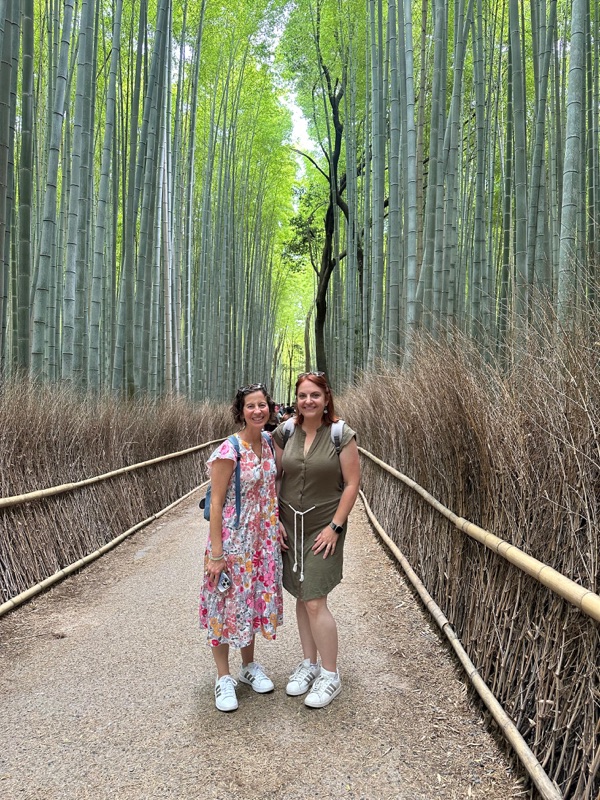
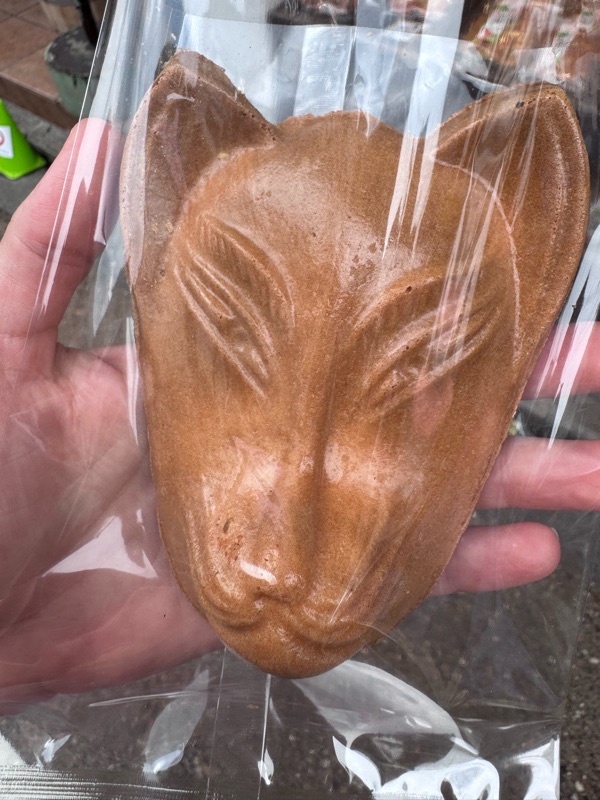
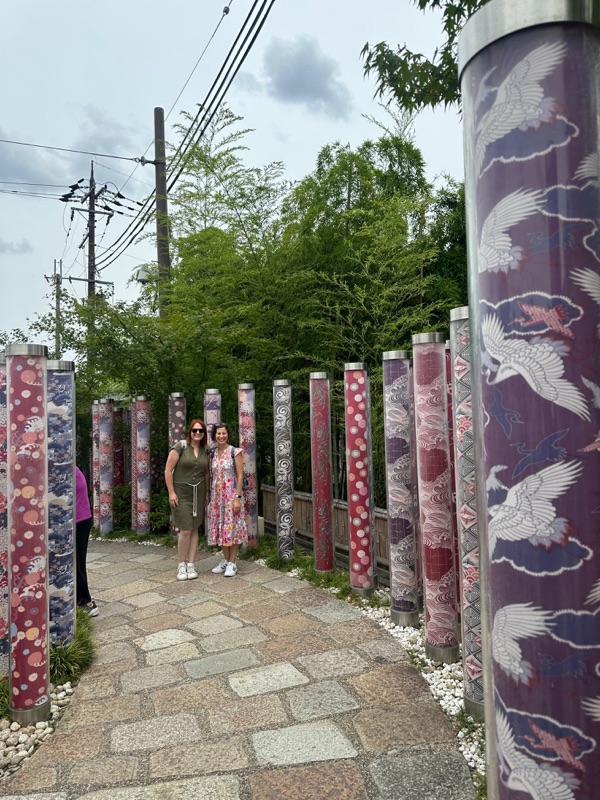
Grandma suggested we stop for some cherry blossom ice cream, and well, you should always listen to your grandmother! It was a unique and delightful flavor! She also treated us to a fox face rice flour cake, walked us through the “kimono forest”, helped us navigate trains and taxis, and gave us wonderful suggestions on how to spend the rest of our time in Kyoto! 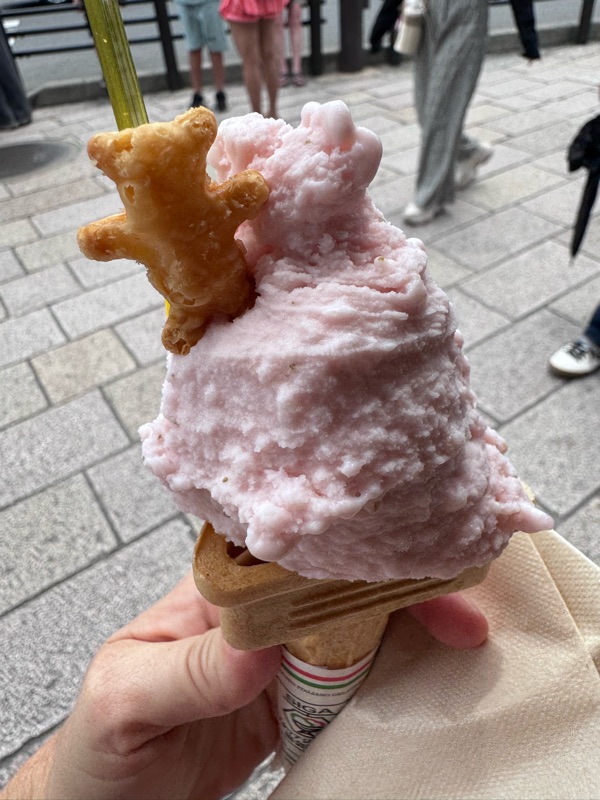
Now, when I reviewed Akemi on TripAdvisor, it said nothing about “renting a grandmother,” nor do I know a way to guarantee that your guide is of the older, more experienced generation rather than someone else from the company. However, I now have the phone numbers of two absolutely lovely grandmothers in Kyoto, so if you are headed this way, let me know, and I’ll put you in touch with them! I would never turn down an opportunity to get to learn from someone older and wiser than myself. I’m so thankful we met Akemi and Akiko, and I’m so thankful I now have some adopted grandmothers in Japan!

Love these stories and pictures. Love you and Jessica Grannie Smith
ReplyDelete