Tuesday, July 2, 2024

Cape Town Food Tour

New country means a food tour! I absolutely love a food tour. It’s a way to get to know at least one local, often some fellow travelers, and try some food that I would not have tried on my own. Food is such a part of each of our cultures and heritage, that trying food in new places is almost like visiting the heart of a place. We found the food tour that we did today on Tripadvisor, and it had glowing reviews. We were very excited about it, but as our only other food tour in Africa had been a bit of a disappointment, we certainly went into this afternoon with a bit of hesitation. There was no reason whatsoever for us to be anxious.


Our guide, Sifiso, was incredible. He was gentle, kindhearted, and passionate about his home. He is from the other side of South Africa, but has lived in Cape Town for the past 10 years. He is a small business supporter, and he and his girlfriend have been handcrafting beautiful leather bags that they are trying to find a market for. He did not begin this particular food tour, his teammate, Dennis, an ex patriot from Germany, did. Their goal is not only to share food with travelers, but also stories. None of the places that we went into today were ones that I ever would’ve wandered in on my own, and the food was simply divine. He said it was hard to even call many of them restaurants, but they were called kitchens.


The history of South Africa is one that I have much to learn about. I do know, however, that it is one that is recent. This is a country that has only recently grappled with horrific inequalities. As such, however, it seems that they are eagerly moving forward, and in many ways by-passing other countries who have not dealt with the same recent struggles. We started our tour in a square where a famous Dutch church sits that has been in that same place for 300 years. Just outside the church steps, was a market where enslaved peoples were sold right after church services. There are plaques that include names of those people, of course, most of the names were not ever truly recorded, and the ones that were were rarely the names that their mothers gave them. And yet, today, the church stands. It holds services weekly for all to enter, but the service is spoken in Afrikaans. There is dark history here for sure, but beautiful irony as it moves forward.


The first place that we walked into was a tiny little hole in the wall with the sign over the top of a name that I do not remember, but it is of no importance. For the last 14 years that restaurant has not been the one whose name is on the board. Nor does the restaurant serve the food on the giant placard that takes up 2/3 of one of the walls of the restaurants. Sifiso told us he asked why they didn’t take the signs down, and they simply responded, “Well that takes money.”


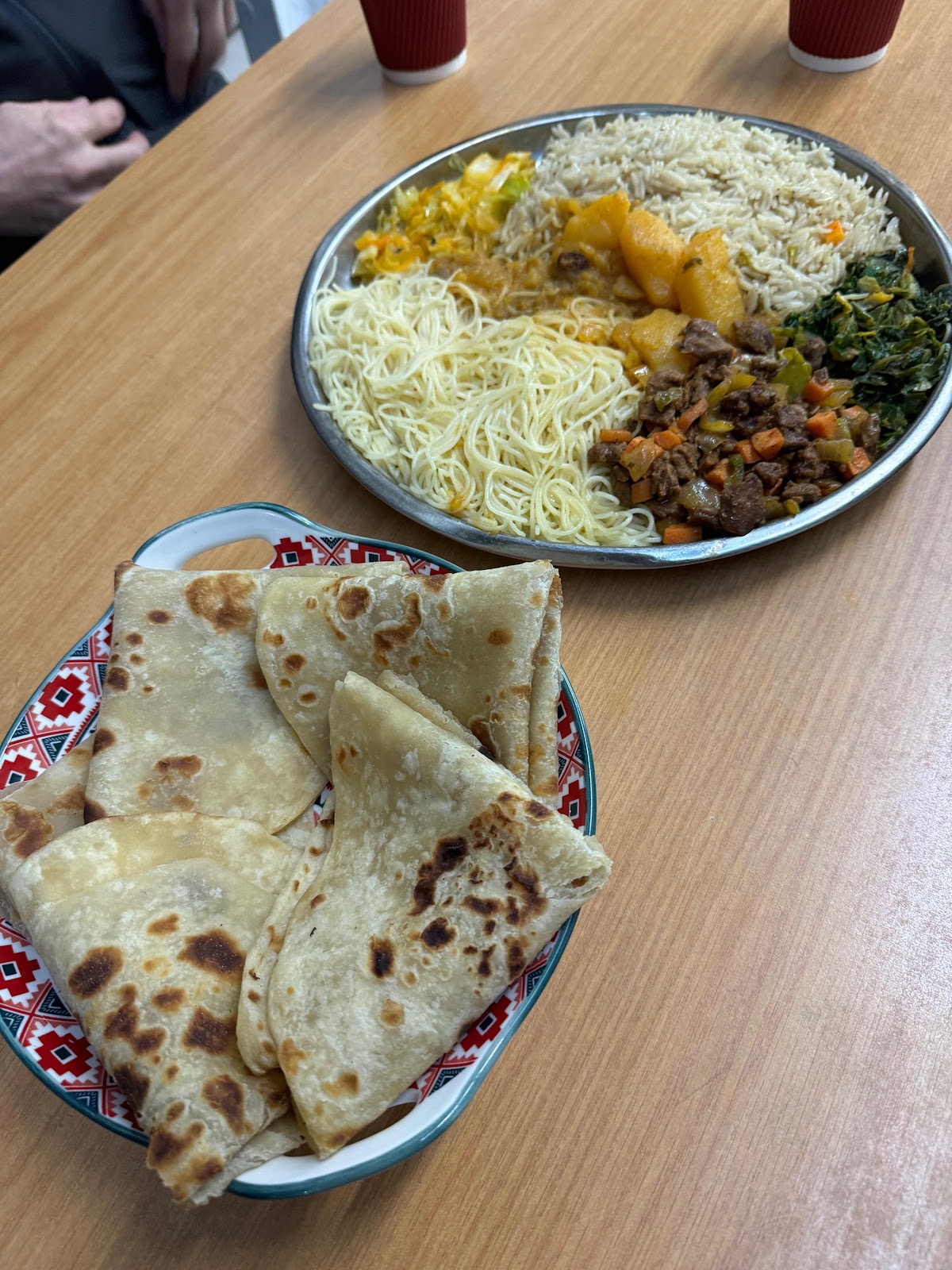
The restaurant is a Somalian restaurant. South Africa is home to refugees from around the continent. The largest percentage of those refugees are from Somalia. We joined our fellow American tourists by eating with our hands using chapati bread to help us scoop up rich bites of rice, beef, cabbage, and potato. There were also spaghetti noodles on the plate. While these did not seem to fit with the rest of the traditional foods, as the story apparently goes, the Italians tried to colonize Somalia. It did not work, but Somalia kept some of the things that they liked about the Italians!


We walked around the city some, allowing our first course to digest. Sifiso told us about some ins and outs of the city, explained some street names, walked us through a flower market that has been in place for a number of years thanks to the generosity of someone who once owned the land it now sits on, and took us into the old post office building. It appears that many big old buildings here in the city that are no longer needed for their original use are being creatively repurposed. Throughout the large post office building, small booths and tables of vendors are set up and pay a moderate fee for being there. We were introduced to one entrepreneur who specializes in educating South Africans. He searches for used books on African history, business, interesting biographies, and self-help books.


Our next restaurant, a Xhosa one, represents one of the largest ethnic groups in South Africa. We had a traditional Sunday lunch of seven colors on a Monday evening. The rice and the meats represented two different colors while the vegetables and side items represented the other five. It was as beautiful as it was delicious! The bread like soft sourdough, but apparently it is cooked in boiling water.


Our next treat came from an ethnic group that I must admit I knew nothing about. They are called Cape Malay. They are a mostly Muslim group of South Africans, who trace their descendants back to enslaved people that the Dutch and British brought with them from Asia, specifically Indonesia. The chili bite that we ate was similar to a hush puppy in texture, but bursting with flavor as well as, yes, bites of chili.


At each of our stops, we always had some leftover food. Sifiso and his incredible kindness and thoughtfulness would get a take away container each time. He carried these with us, and I assumed they would be his lunch for tomorrow. However, slowly as we went, he found people that needed these meals and graciously passed them off. He didn’t want us to see him doing this, as he did it quietly and with intention on who he chose, but his generosity added depth to our tour. His simple acts of kindness showed the deep love he has for this country.


On our next stop, we went to Heaven. No, that’s not a metaphorical speaking of how delicious the food was, but rather a geographical location. If in fact, you are looking for Heaven, look no further than Central Methodist Mission Churchyard in Cape Town. It’s a coffee shop. This beautiful church is not much more than a century old, but it’s activism in the community rings truer than the bell that has only been rung once in it’s tower as it shook the foundation of all of the buildings around. The coffee shop has some outdoor tables, but if you want to sit inside, just pick a pew. The pews and altar cushions are covered in vibrant cloths in rainbow patterns. The church is known for being active in the community and speaking up when people are not being treated fairly. I was touched by this humble church and the beautiful work she does, especially after my own, home Methodist Church recently went through a great division, mostly due to the rights of the LGBTQ community. Looking around at the rainbows sharing God’s love for all was a perfect way to enjoy tea brewed by a man who had been so moved by the AA meetings held in this church that he wanted to help others by bringing Heaven to them. While many African countries still do not permit people to love who they love, some even punish it as a crime, South Africa has had legalized gay marriages since 2017. It appears that Cape Town is a haven for all sorts of people seeking refuge on this continent.


While sipping on our deliciously brew coffees and teas, we also had a delicious cake bite of sorts. It was called a Koek sister which simply translates to cake sister. It was somewhere in between a donut hole and a cake bite, and it was delicious!


Our last stop on the tour was a place called Fatima’s. Fatima and her sister come from the western part of Africa from the country of Mali. One of the reasons this restaurant has become so special, is that they have found ways to represent many different western African countries in their dishes, making people from all over this great continent feel like they are at home at this welcoming kitchen. Many of the flavors were similar to those that I enjoyed while in Senegal. We drank bissap and tamarind juice, dipped our food in peanut sauce, and enjoyed jollof rice along with our fish and beef. What a treat!
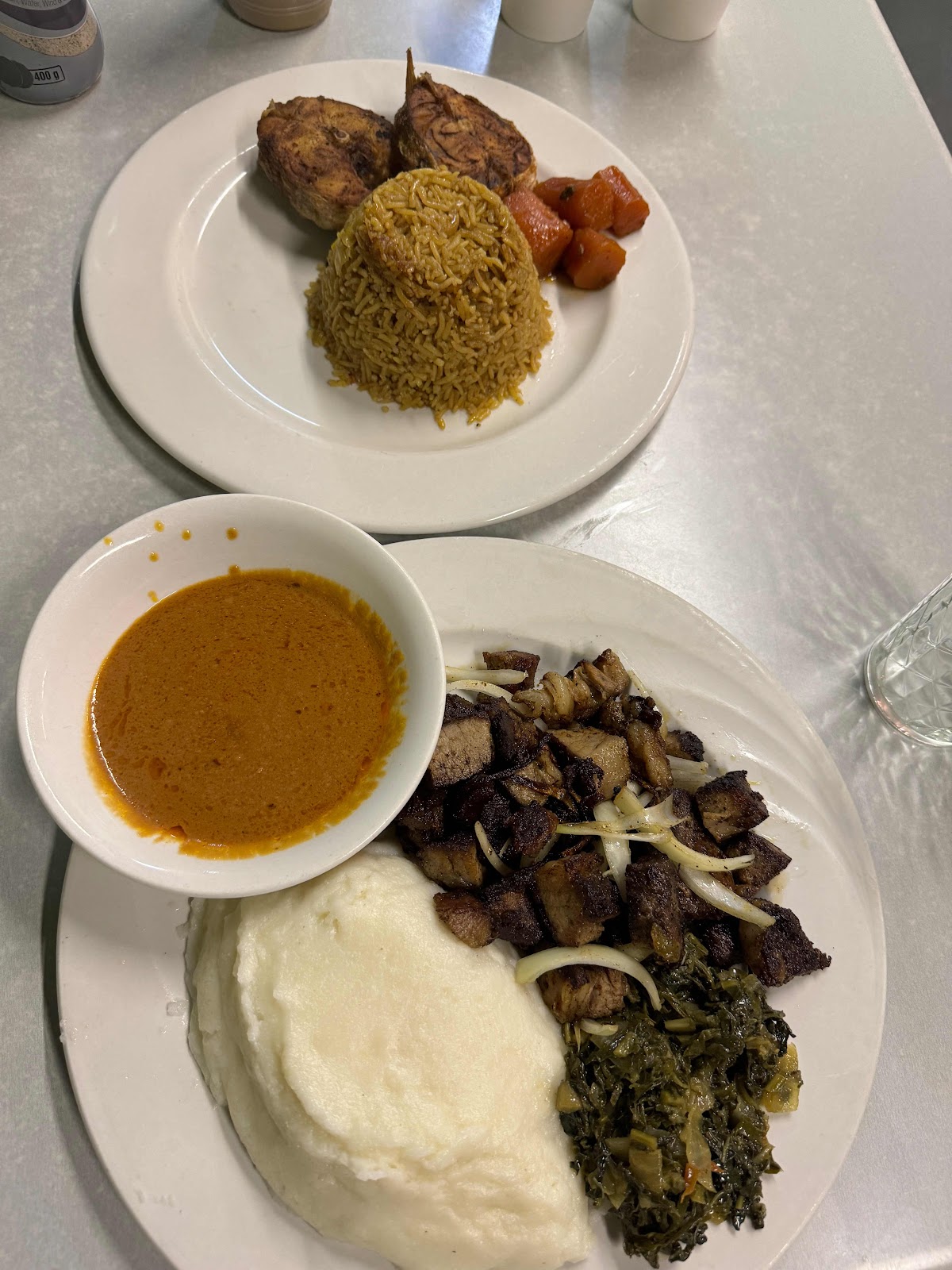


A few months ago, my Mom sent me this article. I read it, but I didn’t take note of the food tour as I should have. How lucky I was to find out on my tour, that this was the same one that a New York Times journalist had been on and enjoyed. It was not only the food that was delicious, but the spirit of the city that seemed to be conveyed by the people that we met and the stories that we heard.




Sunday, June 30, 2024

Pole Pole in Zanzibar

In planning our trip, Zanzibar was in my realm of knowledge, but not high on my list of destinations. However, we both talked to enough friends that sang her praises with flying colors, so we added some time on this lovely little island, and I’m so very thankful that we did!


Zanzibar is a fair amount smaller than Rhode Island with a population of about two million people. It is an island that lies about twenty three miles off the coast line of Tanzania. Before 1961, when Tanzania was ruled by the British, the main land country was called Tanganyika. After 1961, the island nation and the mainland joined together, combining their names into one. While they are a joint nation in many ways, there are many in which they are separate entities. For example, there is a president of each. While the mainland has a higher rate of Christianity, the island is close to one hundred percent Muslim, so different holidays are observed by schools.


The island has a long history of being a trade capital, connecting east Africa to the Middle East and Asia. The island was an ideal climate for growing spices, cloves and cinnamon specifically. Unfortunately, it was also a major hub for the East Africa slave trade. This did not completely end until 1907, yes, just over one century ago.


Today, the busy city of Stone Town (so named because the buildings, still today, are made of stone) is central for tourism and trade. We spent a day in this city, with an informational tour guide who shared with us much of the history, most of which, I had little to no clue about.


There are four small islands off the coast of Stone Town. One, called Snake Island, not because of the slithery residents, but because it is really just a grove of mangrove trees whose roots resemble snakes. Another is popular for beach days and snorkeling. Another one is being developed into a fancy hotel resort. The fourth, the one we visited, is called Prison Island. 


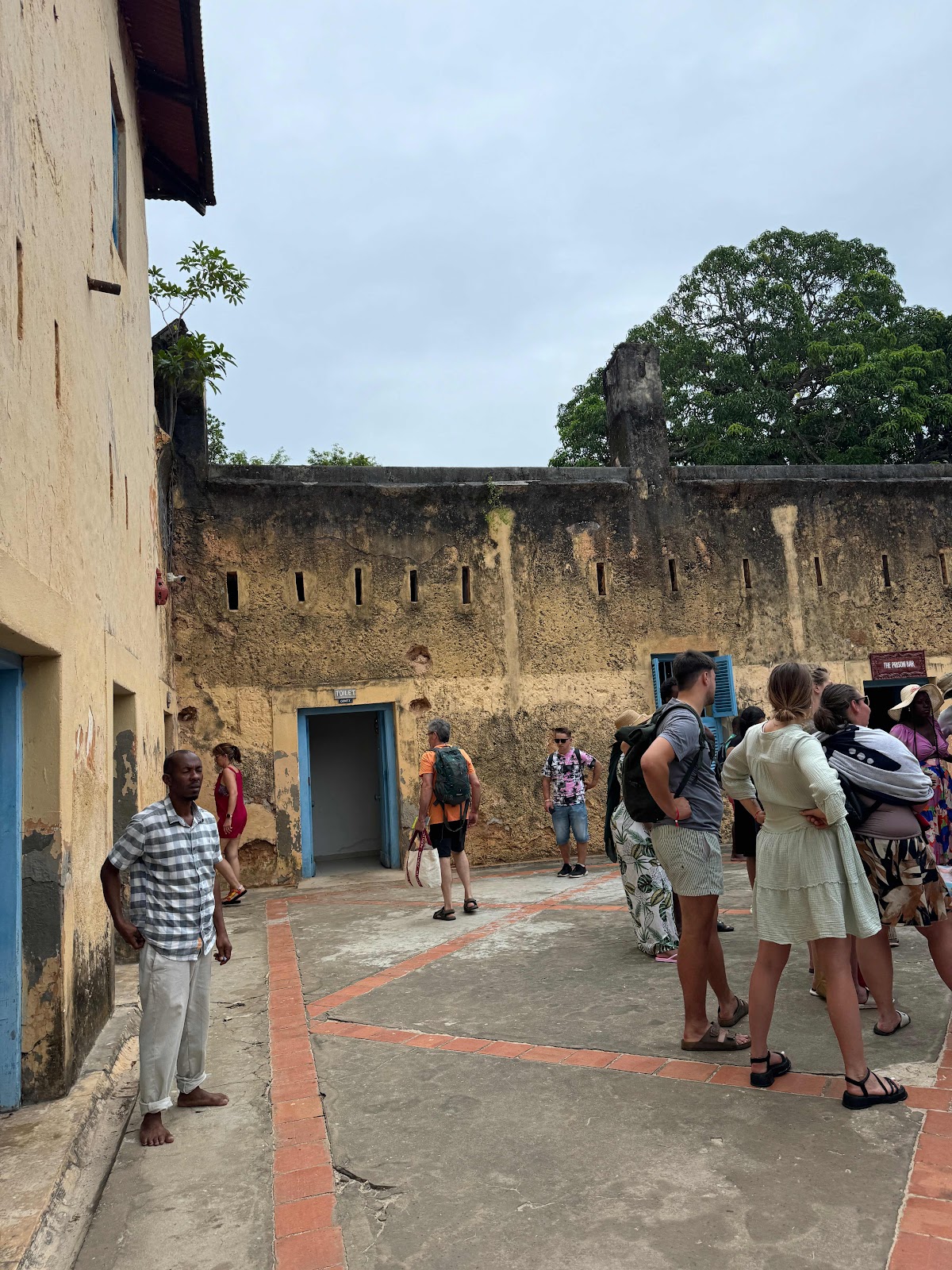
After a twenty minute, questionably stable boat ride, we made it to the tiny island. It has great potential for a day escape, but as of right now, there is a lot left to be desired. In the 1800s, the island started as a hospital for those with yellow fever as a way to isolate them from the public. Afterwards, for a few years, while a prison was being built in Stone Town, the hospital was converted to what I can only imagine was a pretty horrific prison. It was only a prison for a few years. Then, in the recent century, a lovely hotel with a luxurious pool looking over the water was built. Sadly, it is now in a state of ruins, but there are hopes of someone building it back up. The prison itself has been turned into a fun, funky bar, a book store, a small museum, a restaurant, and even a space for some artistic demonstrations. 


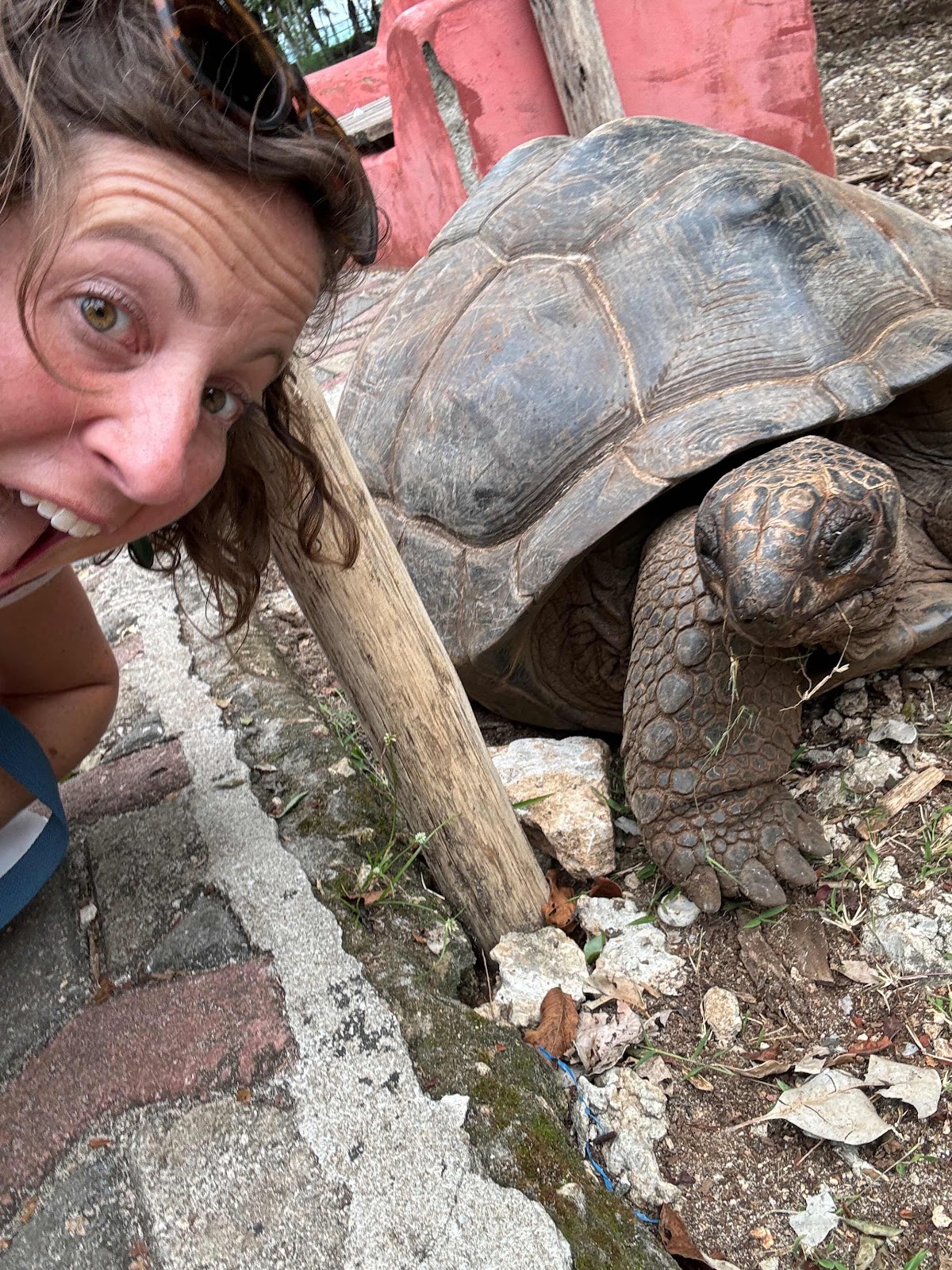
But the real reason we wanted to go to Prison Island was to see the tortoises. After the island played host to people infected with yellow fever, as a thank you, the island nation of Seychelles sent four tortoises. Today, only one of them remains, and he just celebrated his two hundredth birthday. But don’t worry, he’s not lonely. He’s surrounded by one hundred of his descendants, as well as some peacocks. The young tortoises are kept in enclosures to ensure they don’t accidentally get crushed by their relatives. We did not get as much time with them as we wanted nor did we get to touch them as we had hoped (signs said not to!), but they were still so much fun to see.


Walking around the narrow, hectic streets of Stone Town was a history lesson itself. There were intricate doors carved in Arabic style or Indian style. While the city still has many evident signs of an eclectic mix of cultures, the city is nearly all African now. Freddie Mercury, once the lead singer of Queen, was born here. His home is now a museum. An old fort once used for protection, then for horrific slave markets, is now a venue for performances and a market for local goods. A walk through the food market is always interesting, and perhaps a bit of an olfactory overload.


Our guide picked a local Swahili restaurant where we got to try some pilau rice, vegetable samosas, chapati bread, and rice cake doughnuts (of sorts). All was delicious!


A spice farm tour was also on our agenda, and I learned so much about spices and how they are grown! We saw a nutmeg tree, turmeric and ginger plants along with lots of coconut and banana trees. Did you know that cinnamon is called the “queen of spices”? This is because all parts of the plant can be used. Leaves are dried and ground up into the cinnamon we use. The roots are used as a local replacement for Vicks VapoRub, giving off a strong soothing smell that opens up the naval cavity. And my favorite part…. Do you know where cinnamon sticks come from? I had absolutely no clue, and perhaps that puts me in the minority here, but they come from the bark. They shave the bark off the tree, then, as it dries, it curls into the beautiful sticks we know! Cloves are known as the “king of spices” because behind tourism, they are still the second biggest money maker in Zanzibar. Our tour also included some creative touches of palm woven rings with lantana “gemstones”, palm woven crowns ordained with red flowers, and a man who shimmied up a palm tree faster than I can climb a ladder.


We enjoyed our day in Stone Town, but that was not why we came to Zanzibar.  On our safari, we often heard people say in Swahili, “pole pole” which meant to slow down. Sure, it’s a fun phrase to say (with an accent on the e, not like the thing that holds up a flag), but on the island, people said it to us constantly. Was it just because it was a fun phrase many people knew in Swahili? “Hakuna Matata” was also frequently spoken here. It wasn’t until the end of our time that we learned that “pole pole” is a lifestyle in Zanzibar. It’s to live life slower, to enjoy life at a slower pace. That’s why we came to Zanzibar.


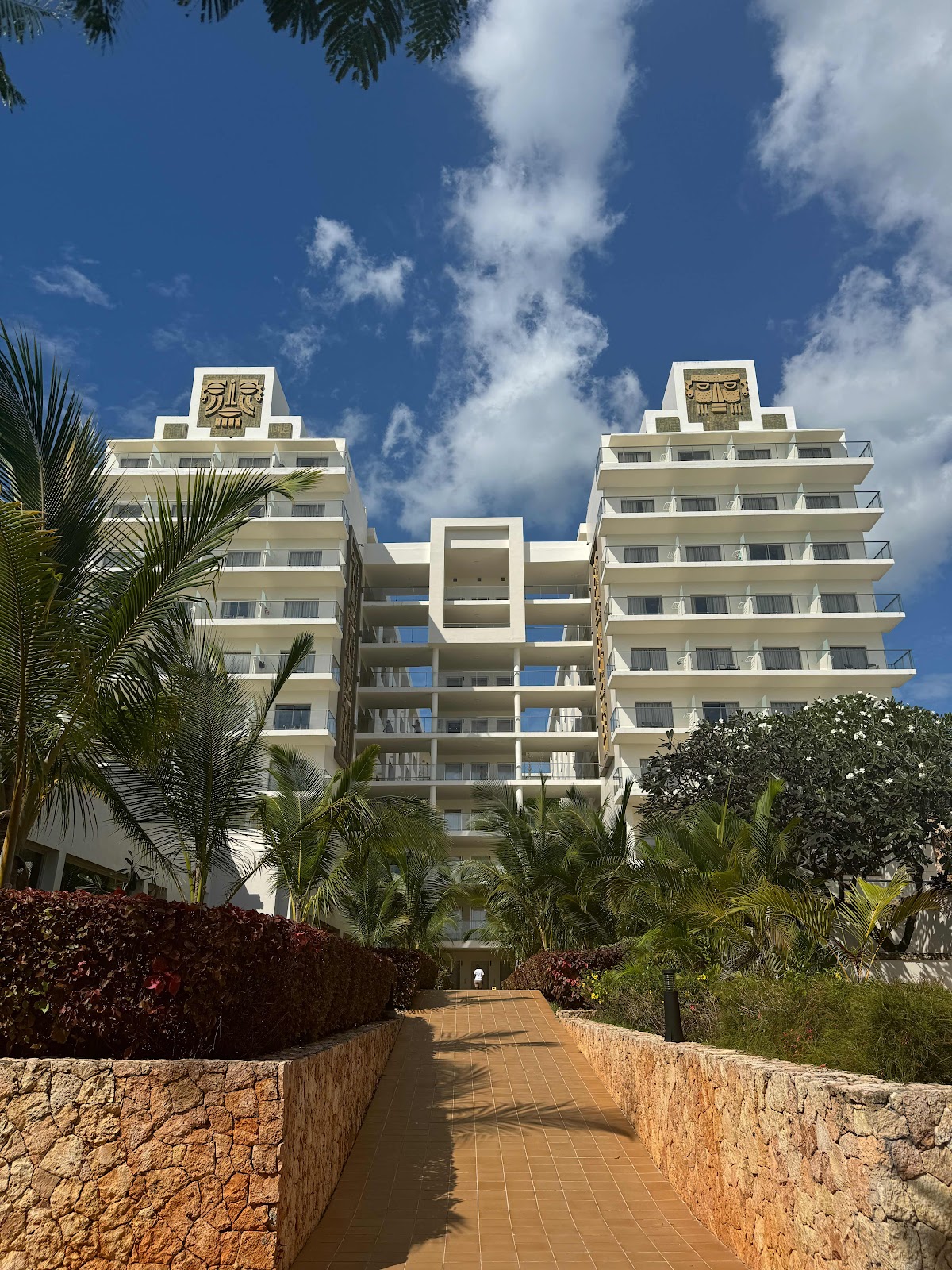
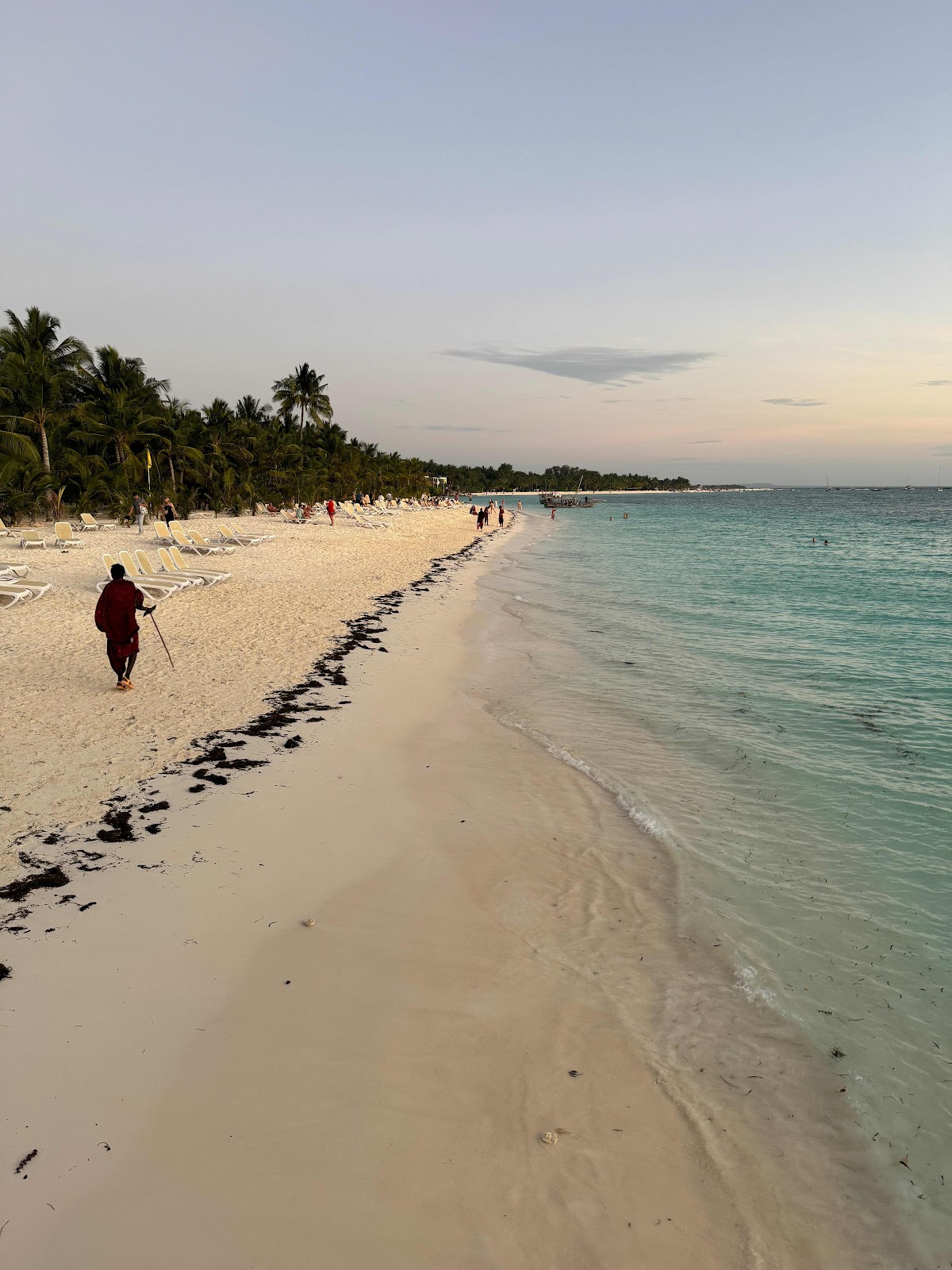
Most of our five days, outside of the one in Stone Town were spent on the beach. We were at an all inclusive resort where the fruity drinks flowed freely, and we were never in want of food. Beach chairs were plentiful and blue water shimmered in the sun. Palm trees offered shade and tiny divisions between groups of tourists. For some reason, standing in a truck, searching for animals for seven days had been exhausting, so this time of relaxation came at the perfect time. Our weather was not perfect, with strong winds and light passages of rain, but we had plenty of sunshine and the winds were not a bother for me to read my e-book on my phone.


We met two cats at the resort, and well, who can think of a better place for a cat to live than a resort? The two were happy, healthy and friendly, making the resort their own, just as most cats take ownership of whatever they see. The calico figured out how to slip by the staff (or more likely they had given up fighting that battle) in the main dining area and walk among the patrons, quietly asking for a small morsel. The large tabby’s domain was the snack bar by the beach where we often found him lounging on chairs.


Jessica, growing up with two older brothers, has a much more adventurous spirit about her when it comes to motor vehicles. So, one day, we satisfied her need for speed and rented a JetSki for a half hour. We zoomed around on the open waves filling our mouths and glasses with salt water. It was fun to be out on the blue water.


Other days, we laid and read. Sometimes we walked along the beach, marveling at the turquoise water and sugar-white sandy beaches while gathering tiny shells and bits of coral. We saw starfish during low tide, but unsure if I was hurting or helping, I only tossed one who had gotten caught upside down on a rope back into the water. My hope is that with quick changes in the tide, they all made their way back in!


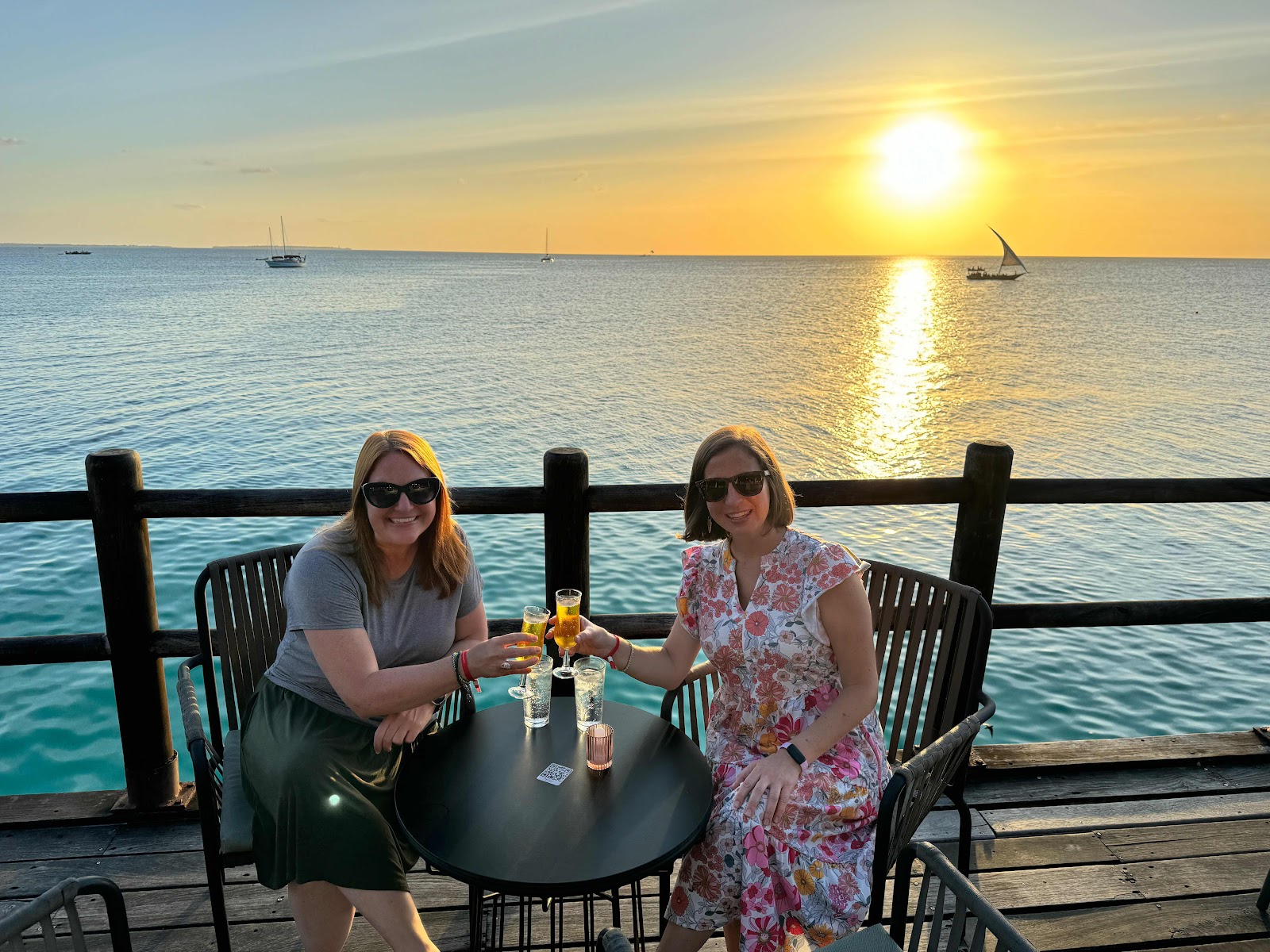
Like a cruise, the all-inclusive offered lots of food and entertainment options. We were able to book dinner at the non-buffet restaurants a couple of nights that set out on a jetty over the water. A bar out here also offered stunning views of the sunset. One night, we competed in a Kahoot challenge, but sadly, I don’t know as many flags as I thought I did (and perhaps sitting where you cannot see the first few letters of all the choices would be more helpful). We watched an acrobatic performance one night, although, it was fairly similar to the show the “street performers” on the beach showed us multiple times each day.


The swim-up bar called Hakuna Matata was a fun way to spend afternoons, and I must say, I think I’d have a much better outlook on life if I could accept that as a way of thinking! For now, as I continue to work on this life goal, I’ll just be thankful for the pole pole time I had in Zanzibar!


Thursday, June 27, 2024

Tanzania

While I am still technically in Tanzania, I have left the mainland behind, so I feel it is time to sing the praises of Tanzania! Please keep in mind that I realize when writing this that I was pampered throughout my week, and I know that contributes greatly to my opinion. But I do believe it was much more than that that contributed to my high praises. However, on our first day, we had woken up in a tent that we put up in an old parking lot in Rwanda and arrived in Tanzania to hot washcloths, a fresh smoothie and a clean, white bedspread with rose petals.


First off, I heard the name of this country pronounced three different ways by the people here, so I’m not certain which is correct:Tan-zuh-nia, Tan-zah-nia and Tan-zay-nia (rhymes with mania).


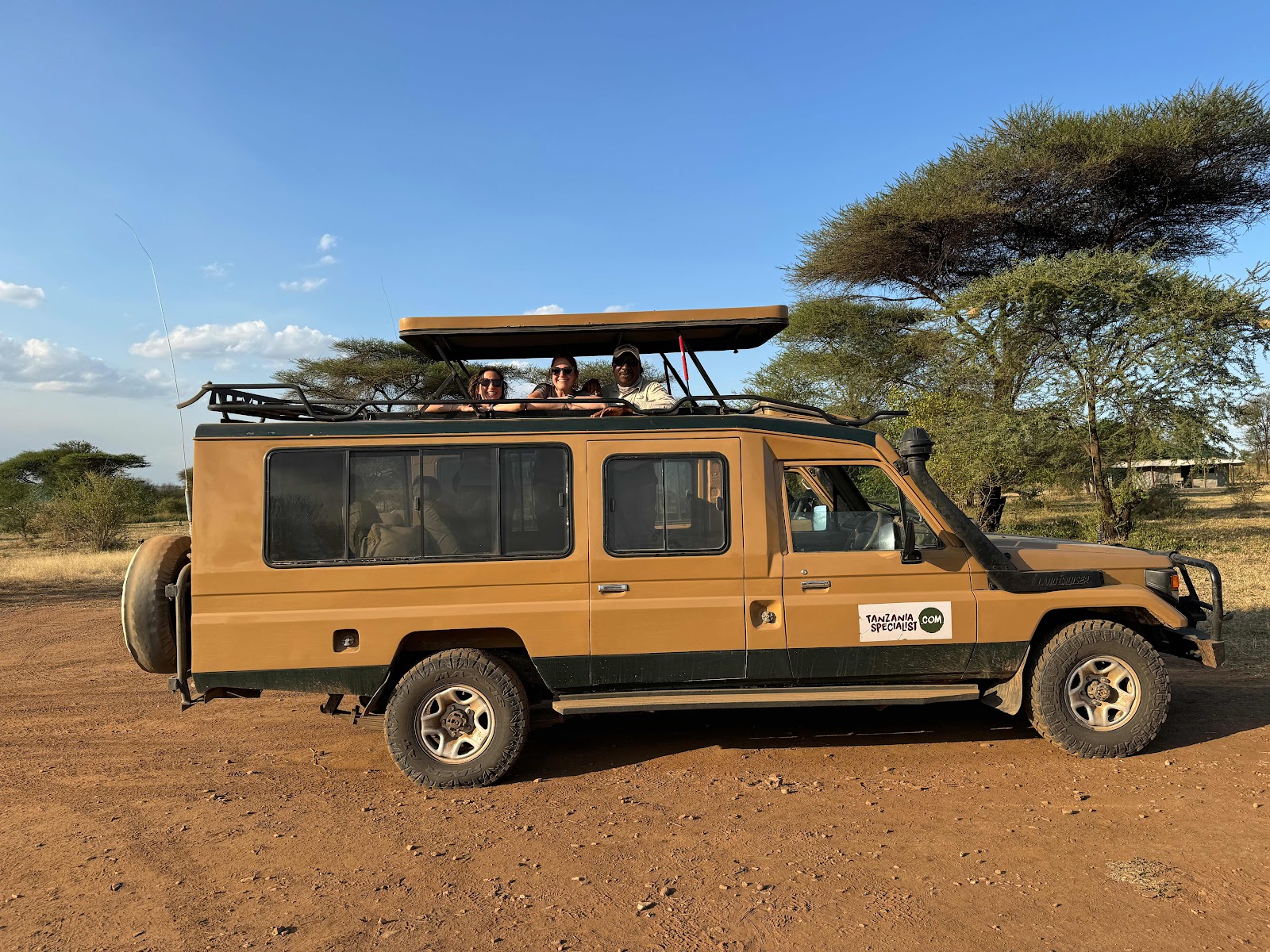
A lot of our praise needs to go to Tanzania Specialists. Jess had found them through an Instagram ad, and it couldn’t have been a bigger success. They worked with us to plan the perfect safari for us, and while no, it was not cheap, for all that we got, we felt it was incredibly reasonable. There are more safari companies here than you could ever count, but I will say that Tanzania Specialists stood out as the most commonly seen one. So, I can confidently recommend them, not just based on our excellent experience.


They sent us a Swahili guide to practice before we arrived. It came with some incredibly useful phrases like “My name is_,” “Go back, there is an elephant,” “Can I try to carry this bucket on my head,” and “I’m surprised you can sit on a motorcycle with five people.” Sadly, we only mastered a few things like asante sana (thank you, and yes, that’s what Rafiki sang), simba (lion), pumba (warthog), twiga (giraffe), mbu (mosquito), hakuna matata (no worries), mjoa mbili tatu (1, 2, 3) and simama, paka (stop, a cat!). I told Innocent, who picked us up from the airport, that I had been practicing “Simama, paka!” and he laughed a lot. He said, “You know that won’t stop the lion from eating you.” 


Tanzania Specialists also provided us with a beautiful metal water bottle, a map, a detailed itinerary and an in country Happiness Manager. Yes, that’s correct. We were able to text Irene at any time if we were not happy. We never texted her.


Tanzania is dotted with huge sunflowers everywhere you look. These giant yellow flowers seem to be welcoming you, showing you just how bright and cheerful this country is. Sure, they are grown for their cooking oil, but I’d say they’re quite symbolic of the people they represent as well.


Tanzania’s animal is a giraffe. As Lou tells it, this seems to match the personality of their government. Other countries near by have mascots of lions and gorillas. Lou said their governments often get into squabbles and struggle where here, things seem to go smoothly. Tanzania is a country, larger than Texas, with a population of nearly seventy million people. There are one hundred twenty local and tribal languages spoken, but Swahili is spoken by all, uniting them with a mother tongue. They currently have a female president (yes, before we do!). She was the vice president when the president died in office. Her picture is posted everywhere! She is Muslim like a third of the people here.


Our first hotel, Pazuri Inn was a dream, and the most amazing part was, we only thought we were spoiled there. At night, the air filled with the sweet smell of jasmine where the flowers only open after dark releasing their fragrance. The staff were friendly, welcoming and eager to get to know us. Emmy took us on a tour one day so that we could see the fresh garden where lettuces and strawberries were grown and the lush orchard where fruits I had trouble naming grew in plenty. There was guava, papaya, avocado, orange, mango, banana, passion fruit and coconut. The food was delicious and plentiful, and one night we even got to help the young chef celebrate his birthday!


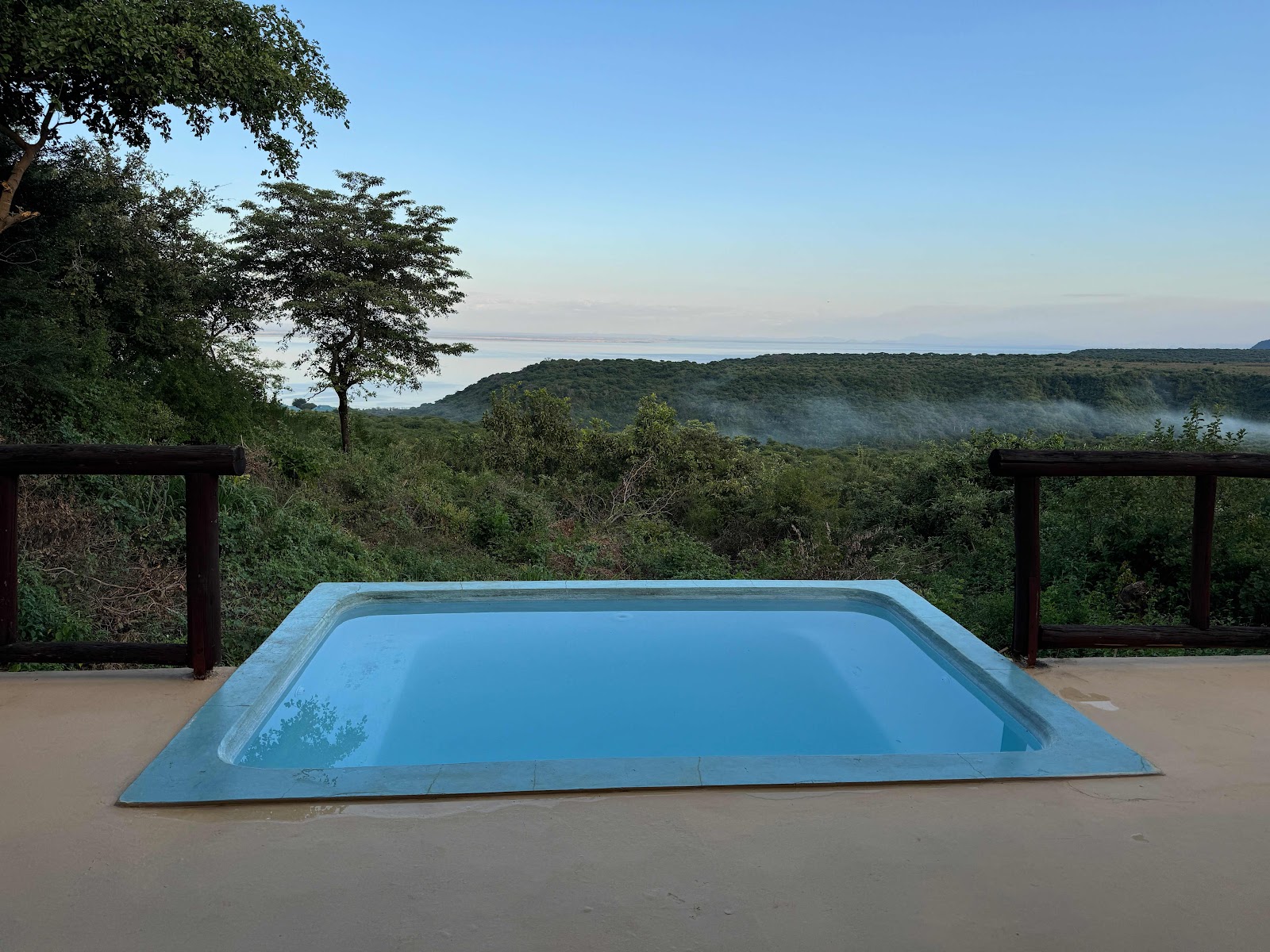
Our next stay was at Mawe Mawe Manyara Lodge. I don’t think I’ve ever stayed in a room this nice, nor can I imagine doing that in the future. Our room was more like an apartment with an open concept with two large beds, a seating area, a changing room, a full bathroom and three sliding glass doors that opened onto our private balcony overlooking the lake with our own chilly pool and outdoor shower. Our first night there, some adorable creatures scurried about outside while we dipped in the pool. They seemed to yell at us in frustration of being in their space. Lou told us later that they were dwarf mongooses! So cute!


The staff at Mawe Mawe were also exceptional. At night, we had an escort of a Masai armed with a flashlight and a stick. One night, although he did not disturb us, an elephant was spotted mere yards from our room! Meals were high class and delivered with a silver cloche covering each course (this is where we learned to count down).


Our stay in the middle of the Serengeti was called Sueños De Africa Luxury Camp. We were in tents, yes, but these tents were luxurious with steaming hot showers and four poster beds. Here, too, our escorts in the dark were armed with flashlights. Food was not as divine, but for being in the middle of the Serengeti, it was quite delicious and the boxed lunches were some of our best!


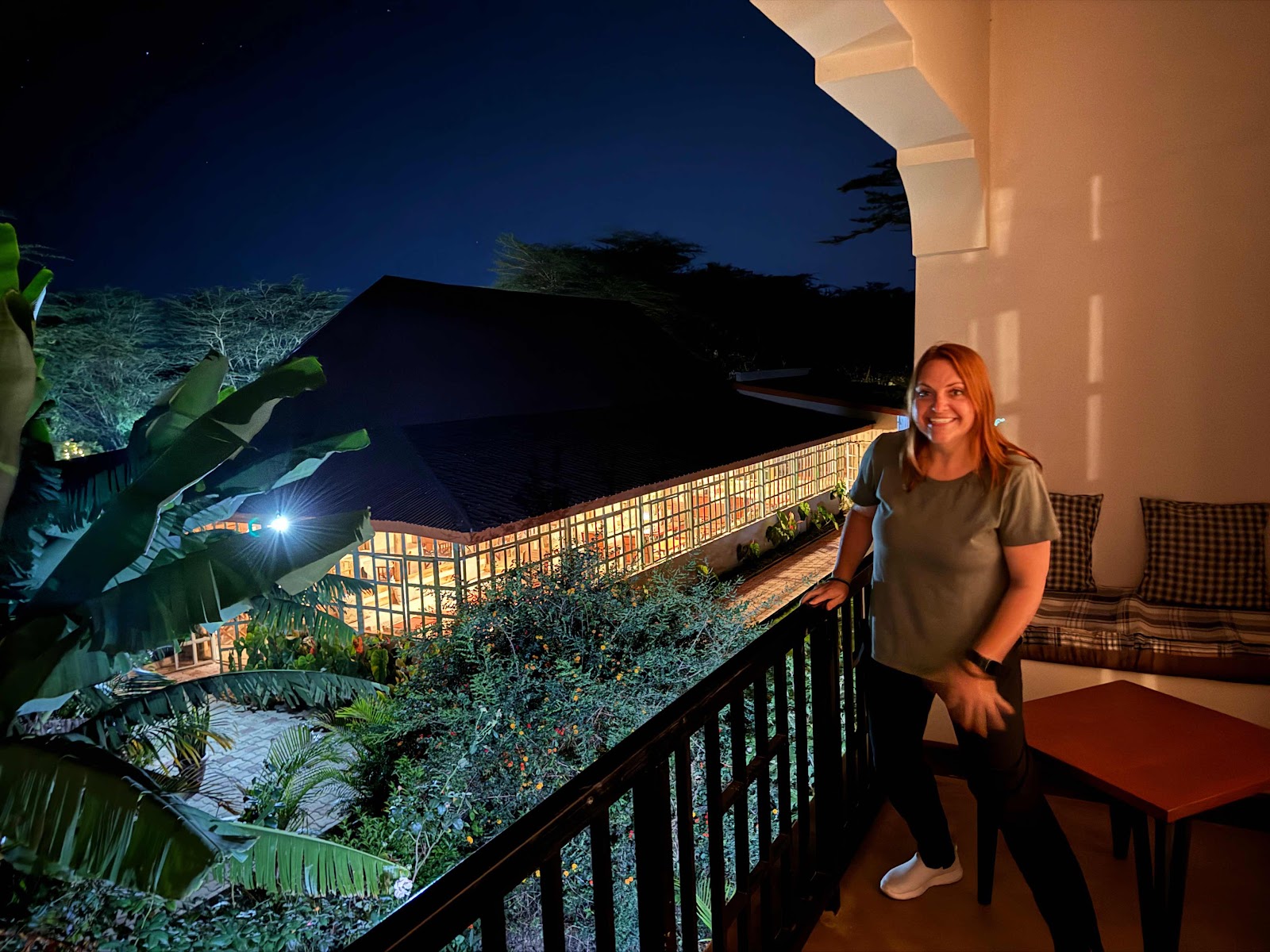
Our last stay in Tanzania was at a place called Manyara Best View Lodge, and it lived up to its name! We watched the moon rise over distant mountains above the banana fields below, and watched the sunrise in a similar place the next morning. Food was beautifully presented and equally delicious, while the service was above and beyond.


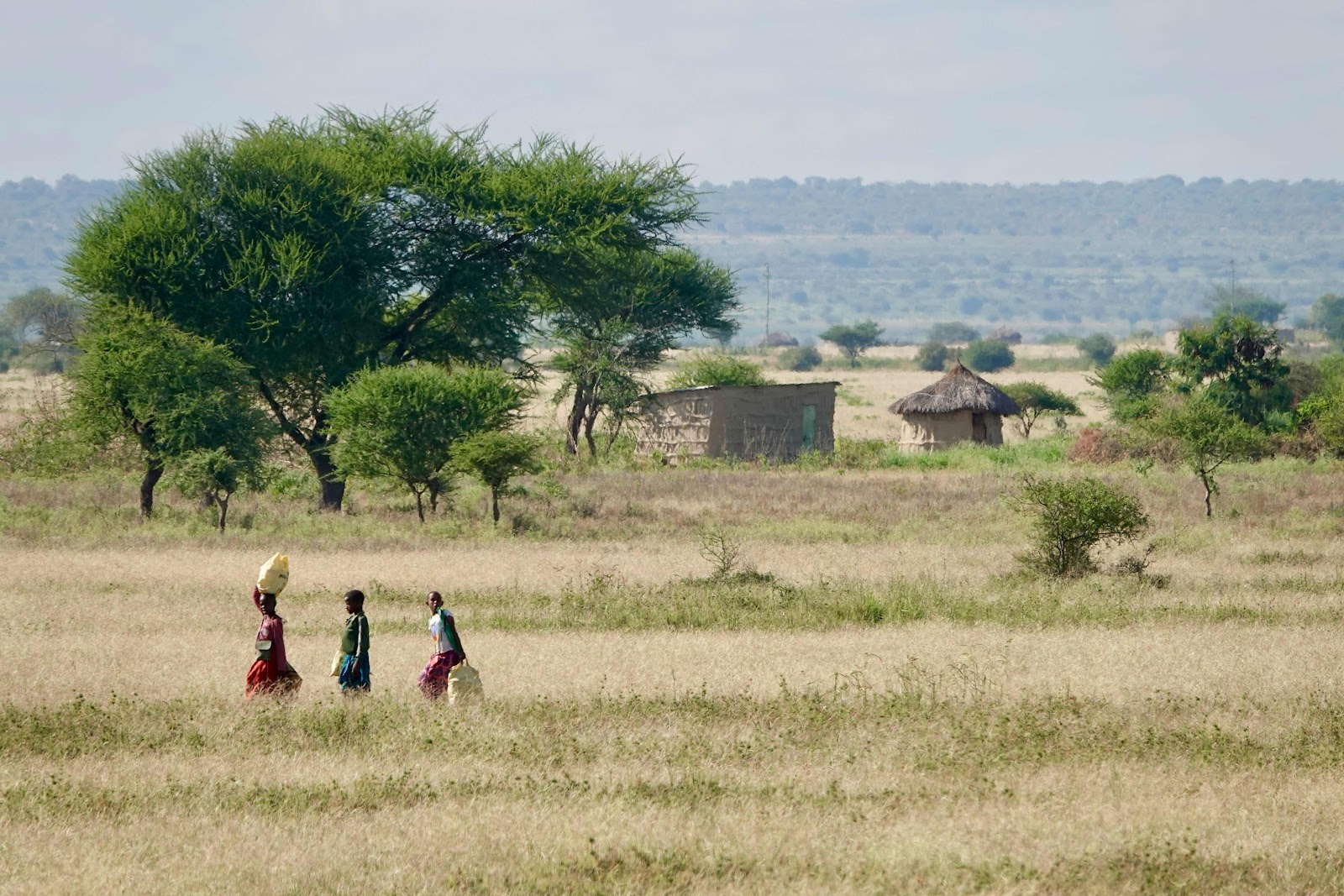
When you are as fortunate as we were to see so many different parks, you certainly spend your time driving throughout the countryside. Of course, this was a beautiful way to see the country. There were places that were lush and green and full of crops, while others were barren, dry, and stark. As we rode, Lou told us a lot about the Masai people who called this place home. They were easy to identify by their clothing. While some wore clothes that we would deem “regular”, almost all also wore brightly colored checkered fabric. Most often, it was red, and worn perhaps as we would wear a toga. They are the local, indigenous tribe that still call this part of the country, as well as the sister part just across the border in Kenya, home. They live in harmony with the land and the animals. While they eat meat, they only eat the cows, goats, and chickens that they themselves raise. Sort of like the reservations set aside for our Native Americans, while they do follow the laws of the land, there are aspects of their lives that keep them separated, and are not as regulated by the government. They live in small communities with huts, built of sticks and cow dung in a circular pattern surrounded by bushy branches that protect from predators. They are somewhat nomadic, but move by the seasons, or when there is no more food left for their grazing herds. Their cows are their life. Not only are they providers of food and strength, they are representation of wealth. I have a beautiful picture book in my classroom called 14 Cows for America  that highlights the gift of cows given in honor of America after the events of September 11. After seeing these people and the way that they live, I was even more touched by their gift.


If all you learned about Tanzania is that they are a people of giraffes and sunflowers, I feel that is enough to understand them. What a beautiful country!

Tuesday, June 25, 2024

Ode to Ludallah

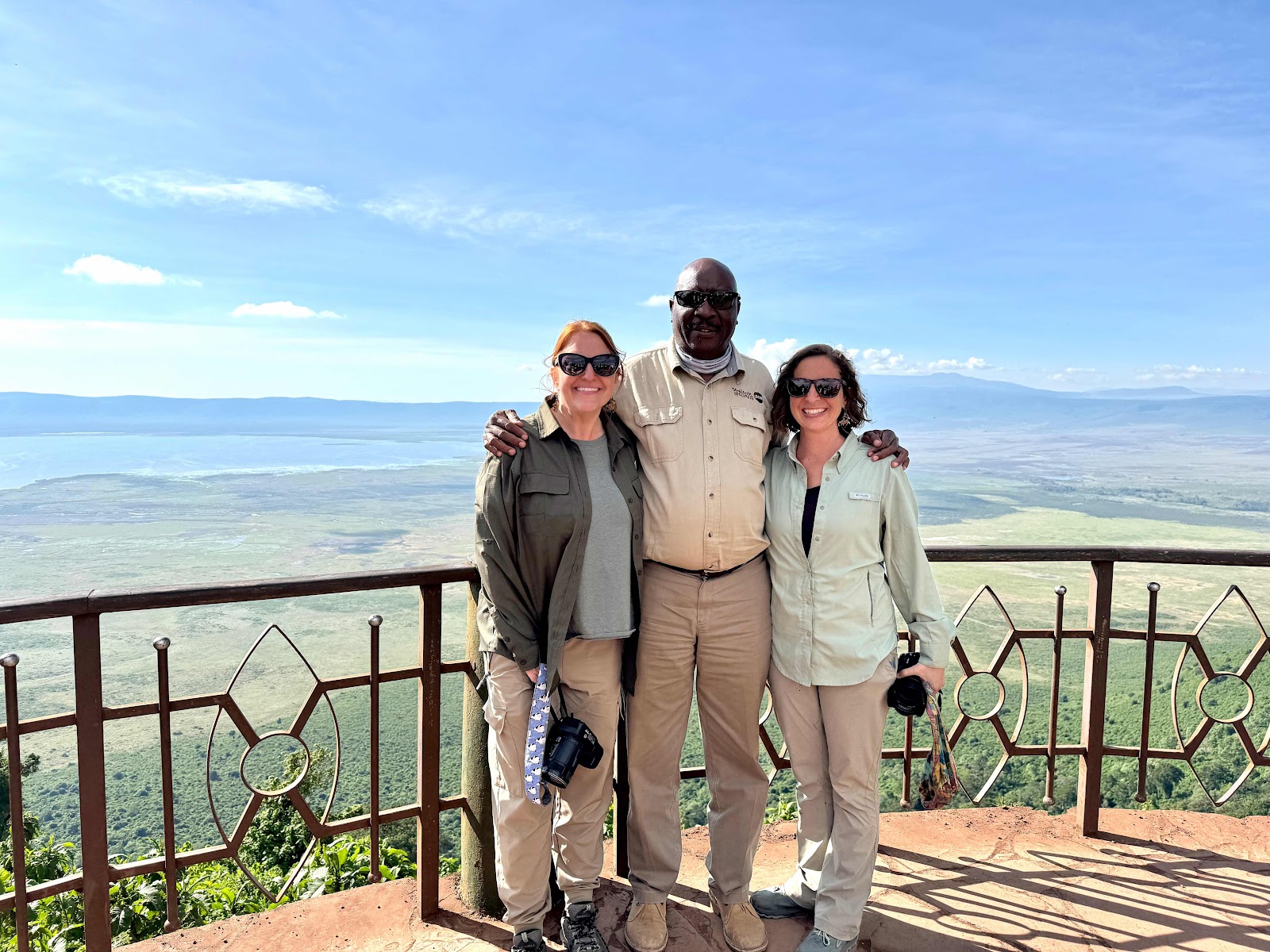
For seven grand days, Lou was our guide.

He showed us dozens of animals though some did hide!

On first impression we found him a bit curmudgeonic,

But we learned he was just very wise and stoic.

It’s no wonder a giraffe is his favorite animal,

As he, too, is quiet, tall, and stable.

He did not ask us a question, not any.

But with great patience he answered my very, very many.

He started as a guide thirty seven years ago,

So there was not very much that he did not know.

His English was deliberate and oh so thoughtful,

To understand it all, I had to listen real careful.

He drove us around from park to national park,

Through landscape that was beautiful and stark.

Sometimes he drove with great speed,

But was careful if it was the need.

It took him awhile to begin to joke with us,

But then when he did, his laugh was infectious.

At lunch while we ate, he kept the monkeys at bay,

I think they were just worried about what he might say.

While driving, he listened to others on the radio,

Hoping they would lead us to the lion and rhino.

No matter how many times I would joke, “Now we find the cat?”

He would always solemnly answer, “I cannot guarantee that.”

We’d often stop for the guides to have a chat,

But thankfully they usually shared how to find a cat!

He tried his hardest to find us a lay-oh-pard in a tree,

And finally, finally, on our last night we did see!

In fact, he led us to all of Africa’s big five,

And thankfully in the process he kept us alive!

He called us “Wonderful Women” when we learned how to put up the top,

But never learned our names and instead called us clients nonstop.

Perhaps we were just too common for dear Lou,

After all, he’s been on the National Geographic crew.

Lou certainly had his rules and many particular ways,

But who doesn’t with more experience and aged on in days?

He pulled over on roadsides to show us plants or share some info,

And when viewing animals, he’d find the best vantage spots to go.

Lou often turned left when all the others turned right,

Finding animals with keen instinct and solely on insight.

Despite his indifference, he cared for us, I have quite the hunch,

For he found us lions, opened our doors, and carried our lunch.

I give thanks for this full week I will always treasure,

And Lou, dear sir, it has been quite the pleasure.


Many thanks for Jessica for help with some rhyming couplets. And apologies to Mrs. Tuohy, my late, great English teacher as I hope my poetry writing skills would make her giggle rather than cringe.